Freeze Frame: When Will the US Move Following Last Weeks’ 9-1 Vote?

  |   Por  |  0 Comentarios

October, December or 2016? Following the 9-1 vote to keep US rates at the same level they have been for almost seven years, near zero, speculation has started as to when a rate hike may occur. Here, portfolio managers from across BNY Mellon boutiques discuss the 17 September decision and outline what they think may happen next.

Opinions are somewhat divided as to whether or not the US Federal Reserve will raise rates in the final months of 2015 or if this has been pushed back into 2016.

More data, particularly employment figures, is needed to assure members of the Federal Reserve the US economy is on a strong footing, says Sinead Colton, head of investment strategy at Mellon Capital, part of BNY Mellon. Volatility in China, the strengthening of the US dollar and weakness in commodities were other concerns the Fed cited post its decision to keep rates near zero, Standish’s co-chief investment officer, Raman Srivastava notes (Standish is also part of BNY Mellon).

Srivastava believes the base case remains for a hike this year, either in October or December, although he notes the market appears to have less faith a rate rise is a surety this year, pricing in a lower probability of it occurring. Robert Bayston, Standish managing director of US rates and securitized strategies, says the Fed’s statement appears to indicate committee members expect appropriate policy to include at least one rate hike in 2015.

Colton believes a December rate rise is likely. She says: “While unemployment has come down, wage growth has slowed and long-term unemployment remains significantly above historical averages, raising the question of whether a reasonable amount of slack may still exist in the labor market. The last thing the Fed wants to do is raise rates too soon and reverse the progress the economy has made over the past six years. Also, the strong dollar has already provided a de facto tightening of policy that’s restraining growth somewhat. Nevertheless, the US is still the engine of global growth so any dollar weakness in the immediate aftermath of the announcement is likely to be temporary.”

Todd Wakefield, senior managing director at The Boston Company Asset Management (TBCAM) – part of BNY Mellon, notes the Fed has had policy tightened on them by a 15% movement in the trade-weighted dollar over the past year. “They would really like to have some bullets to shoot to fight off the next recession, but they also recognize the potential drag that the tightening that’s already occurred may be placing on the economy.”

Contrarily Peter Hensman, global strategist at Newton, is of the belief US interest rates will remain lower for longer. He notes the Fed has been continually pushing back the date of ‘lift off’ for rates and believes the global backdrop is far more challenging than the Fed would like to believe. Hensman believes lower growth from China and the decline in the oil price may drag on global growth and prolong existing disinflationary pressures.

Cliff Corso, North America CEO at Insight (part of BNY Mellon) notes that while the Fed’s decision was not a surprise given recent volatility, he agrees with Wakefield that the Fed needs room to move. “It wouldn’t be great if a recession hit with rates at zero and the Fed had to try a whole new round of experiments. Equally importantly is to engineer a much flatter yield curve on the way to tightening. The economy is most levered to intermediate and longer term maturities, rather than the front end, so keeping the long end under control is critical in a hiking cycle. A flatter yield curve and higher rates are not bad for risk assets. In five out of the six tightening cycles that have taken place since 1988, risk assets performed well throughout the cycle. We believe as long as rates are rising for the right reasons – meaning a stronger economic recovery and inflation that is not out of control – the outlook for risk markets is not bad.” A rate rise due to improving economic conditions has historically been supportive of both equities and credit spreads, he adds.

Alcentra’s managing director and global head of high yield, Chris Barris also believes a 2015 hike is still probable. He says from the perspective of a sub-investment grade debt investor, the Fed’s September decision and the language used, was benign, balanced and prudent. “Sub-investment grade credit including high-yield has historically responded well to initial rate hikes. Also, while the Fed lowered its projections for 2016 GDP from where they had been in June, we see the new projections as still being constructive for this asset class.”

Srivastava notes the biggest initial reaction following the Fed’s decision came on the front end of the yield curve where there was a drop in rates. He says indications are the market now expects only two and half rate hikes by the end of 2016. “That means the market continues to believe the Fed will be extremely gradual. If there is near term stability in China and commodity prices as well as a weaker dollar, it will leave the door open for a Fed rate hike yet this year assuming employment trends continue.”

Given the intense speculation that surrounded the September meeting, even though rates were unchanged, market reactions have been closely watched. Japan’s market closed slightly down while European markets opened on the 18th slightly lower.

Wakefield says: “Investors do not like uncertainty and that dislike creates the potential for volatility. Until the Fed starts to normalize and investors see reduced uncertainty, potentially we’re going to see increased volatility.”

Srivastava says he is concerned about how the Fed’s decision and the dollar sell-off impacts other major banks such as the European Central Bank (ECB) and the Bank of Japan (BoJ). He believes it could pose a dilemma for Europe where quantitative easing is under way and the euro is rallying. “Continued dovishness from the Fed may mean the ECB and BoJ will need to become even more dovish and they’ll need to determine that soon.”

Corso also adds that the decision not to move risks keeping uncertainty in the market and increases the possibility that the Fed’s «data dependency» more seriously weighs global markets in addition to US data. “This shift raises the concerns that the Fed is now led by the market and can be held hostage by equity market volatility. Given this, there is a risk volatility remains elevated as investors attempt to game out when the Fed will move. The Fed eventually needs to decide the risks of not moving exceed the risks of moving. We believe the US economy is rapidly approaching that point if it has not already,” he concludes. 

Curtis Arledge, CEO of BNY Mellon Investment Management, says: “A zero rate environment has created some challenging dynamics in the way that money moves in the banking system. The Fed doesn’t want to hurt the recovery, but they also don’t want rates at zero. They were looking forward to September being the first chance to raise rates above zero, but markets didn’t cooperate.

If the Fed believes a rate hike could potentially create volatility, they’re more likely to do it at a time when they think the markets and the economic recovery could weather the storm. I think everybody is watching what happened in China and watching S&P futures move up and down substantially and concluding the market feels spooked. I think they want to raise rates and not be viewed as creating uncertainty in the marketplace.

It’s become a much more data-driven Fed and one that’s much more sensitive to what’s going on in emerging markets and sensitive to market volatility. Members of the Fed understand they’ve created a market environment that is unusual and they want to be as thoughtful as possible about the way they get out of that.”


Aberdeen To Acquire Advance Emerging Capital To Expand Its Alternatives Capabilities

  |   Por  |  0 Comentarios

Aberdeen Asset Management has announce that an agreement has been reached with Advance Emerging Capital Ltd whereby Aberdeen will acquire 100% ownership of AEC.

AEC is a London based specialist investment manager with nearly two decades of experience managing portfolios of primarily closed end, but also open end, fund-of-fund vehicles. As of 30 June 2015, the company managed £409 million across a range of investment funds. The two largest vehicles that the team manages are Advance Developing Markets Fund Limited and Advance Frontier Markets Fund Limited, both of which are closed end. Following the transaction Aberdeen will manage 33 closed end funds with aggregate AuM of over £8.5 billion.

The AEC team includes four investment professionals with over 50 years of combined investment experience. They will be based in Aberdeen’s London office and will be part of the Group’s Alternatives business which is led by Andrew McCaffery. This step will provide the opportunity to expand the offering globally, across a wider range of additional strategies within the fund of closed end funds sector, when combined with the broader Aberdeen Alternatives capability. The team will be independent of Aberdeen’s direct equity and fixed income teams. In line with Aberdeen’s fee policy, the AEC funds will not be double-charged on any Aberdeen funds held in the portfolios.

Martin Gilbert, chief executive at Aberdeen Asset Management, comments: “The acquisition of Advance Emerging Capital brings to Aberdeen a dedicated and highly experienced fund management team, expands further our closed end fund business and adds to the range of alternative investment capabilities we already offer. AEC investors will benefit from the management team being part of a larger, independent asset manager and the ability to draw on the Group’s established distribution and operational expertise in regard to closed end funds.”

Andrew Lister, Co-Chief Investment Officer, Advance Emerging Capital, comments: “Aberdeen is an investment house we have immense respect for, and with which we share a similar investment philosophy and appreciation of the benefits of the closed end fund structure. We are therefore delighted to be joining them, where we will continue to implement our current strategy and process with significant additional support provided by Aberdeen’s Closed End Funds team and the operational infrastructure that comes with being part of a FTSE 100 company. Sitting within Aberdeen’s rapidly growing Alternatives business will, we believe, enable us to share ideas and best practice to the benefit of our existing investors.”

Eurozone Growth Disappoints but Remains Steady

  |   Por  |  0 Comentarios

Although economic growth in the eurozone slowed in the second quarter, we continue to expect an acceleration in the second half of the year as ongoing oil price weakness boosts households’ spending power.

Eurozone economic growth slowed to 0.3% in the second quarter compared to 0.4% at the start of the year. The slowdown in growth comes as a slight disappointment for markets where consensus expectations were for 0.4% growth, but given the concerns over Greece during the period, the latest figures show robust and steady recovery.

For Germany, consensus expectations were for 0.5% GDP growth, so an actual growth rate of 0.4% only represents a slight miss. Industrial production had indicated much weaker growth, but it appears that the services sector, boosted by a surge in retail sales of late, helped to maintain steady growth in aggregate.

The biggest disappointment came from France, where the pick up in activity seen in the first quarter turned out to be too good to last. The French economy was stagnant in the three months to June, compared to 0.7% growth in the first quarter (revised up from 0.6%). Much weaker domestic demand was rescued by an acceleration in exports growth. Household consumption continued to grow in the latest figures, albeit much slower than the past year. However, the most disappointing aspect of the French data is that the recession in investment has continued. Investment in France has failed to grow for six quarters.

Italy also disappointed, missing consensus expectations of 0.3% by managing just 0.2% growth, and compared to 0.3% growth in the first quarter. Industrial production held up reasonably well in the second quarter, along with retail sales. However, the Italian economy continues to struggle with domestic rigidities against an increasingly competitive international backdrop.

Elsewhere, Spain had released its preliminary estimate for growth earlier, showing another strong quarter of 1% growth (now up to 3.1% year-on-year). In addition to Spain, Greece also beat expectations with the crisis-struck state having achieved a miraculous 0.8% growth rate. Expectations were for a sharp fall in activity given the introduction of capital controls. The negative impact may yet hit in the third quarter.  Elsewhere, Portugal delivered another solid quarter of 0.4% growth – unchanged for the third quarter.

Looking ahead, we forecast a slight acceleration going into the second half of the year as further falls in global energy prices should boost the purchasing power of households. Concerns over growth in emerging markets, China in particular, may hit investment in Germany, the Netherlands and Austria, which all disappointed in the second quarter. However, our expectations for stronger growth in the US over the rest of this year should offset emerging market weakness.

QuickView by Azad Zangana, Senior European Economist & Strategist at Schroders

BBVA Open Talent Latinoamérica selecciona dos startups chilenas como ganadores de su séptima edición

  |   Por  |  0 Comentarios

BBVA Open Talent Latinoamérica selecciona dos startups chilenas como ganadores de su séptima edición
Foto: Bitnexo y Destacame.cl, ganadores de la séptima edición de BBVA Open Talent Latinoamérica / Foto cedida. BBVA Open Talent Latinoamérica selecciona dos startups chilenas como ganadores de su séptima edición

BBVA Open Talent Latinoamérica ya tiene ganadores: Bitnexo, una solución de pagos para pequeñas empresas que comercian con Asia basada en la tecnología Blockchain y Destacame.cl, reconocida previamente con el Premio Especial de Inclusión Financiera, con su sistema para crear perfiles de riesgo de crédito a partir del pago de facturas de suministros básicos. Ambos ganadores son chilenos y han logrado destacar entre los 15 emprendedores que han competido en la final latinoamericana de la competición de startups de BBVA.

BBVA Open Talent 2015 reconoce en México, durante la celebración de Finnosummit, a los primeros ganadores de esta séptima edición, que por primera vez, se ha especializado en servicios financieros y tecnologías directamente relacionadas con el negocio bancario.

“Las startups latinoamericanas han demostrado que tienen propuestas realmente innovadoras dentro de las fintech”, destaca Hugo Nájera, director de Banca Digital de BBVA Bancomer, quien recordó que las candidaturas procedentes de América Latina han representado un 30% del total de todos los participantes en la competencia.

BBVA Open Talent supone una oportunidad única para identificar las mejores de startups y poder tender lazos para colaborar en la construcción de una nueva generación de servicios bancarios”, añadió Gustavo Vinacua, director de los Centros de Innovación e Innovación Abierta de BBVA.

Ambas compañías recibirán un premio de 30.000 euros respectivamente; y se unirán a los dos finalistas de Europa y a los dos de Estados Unidos y resto del mundo en dos semanas de inmersión en México y Londres. Igualmente, los seis ganadores podrán disfrutar de un día de innovación en la cocina del Celler de Can Roca, reconocido como el mejor restaurante del mundo 2015.  

BBVA Open Talent continúa su andadura con las finales de Estados Unidos y Resto del mundo, que se celebraron el 14 y 15 de septiembre en Nueva York; y la final europea que tendrá lugar el 21 y 22 de septiembre en Barcelona.

BTG Pactual concluye la compra del banco privado suizo BSI por 1.290 millones de dólares

  |   Por  |  0 Comentarios

BTG Pactual concluye la compra del banco privado suizo BSI por 1.290 millones de dólares
Foto: Patrick Nohuailler. BTG Pactual concluye la compra del banco privado suizo BSI por 1.290 millones de dólares

El banco de inversión BTG Pactual ha recibido aprobación de la Autoridad de Supervisión del Mercado Financiero Suizo (FINMA, por sus siglas en inglés) y del Banco Central de Brasil para adquirir el banco privado suizo BSI, hasta entonces controlado por el grupo italiano Assicurazioni Generali, según informa Reuters.

El grupo brasileño BTG Pactual acordó pagar una cifra final de 1.250 millones de francos suizos (1.290 millones de dólares), lo que representa una rebaja de 250 millones sobre el precio inicial acordado en julio de 2014. En un comunicado a la prensa, un representante de BTG Pactual comentaba que la diferencia correspondía a la multa impuesta a BSI por el Departamento de Justicia de Estados Unidos en marzo de 2015, por sospechas de fraude y evasión fiscal.

BSI, banco fundado en 1873 y basado en Lugano, es uno de los bancos suizos con más antigüedad del país, por lo que mantendrá el nombre de la entidad y operará de forma independiente a BTG Pactual. Su actual presidente del Consejo de Administración, Alfredo Gysi, será sustituido por Joseph Rickenbacher en sus funciones a partir del 16 de septiembre.

La adquisición del banco suizo dará paso a una franquicia global de banca privada con activos bajo gestión de 186.500 millones de dólares, lo que supone un aumento considerable para el banco brasileño que reportaba unos 99.000 millones a cierre de junio de 2015. En términos de empleados, la firma crecerá de 3.500 a 5.400.        

La compra se concluye en un momento en el que Brasil atraviesa una recesión económica, y la reciente bajada en la calificación de la deuda soberana del país por parte de Standard & Poor’s ha afectado a todas las entidades financieras, aumentando la presión para diversificar sus mercados.

Invesco

  |   Por  |  0 Comentarios

Untitled Design (24)
. Invesco

Invesco es una de las principales gestoras de inversión independientes a nivel mundial. Cuenta con más de 800.000 millones de dólares bajo gestión en todo el mundo. Más de 750 profesionales de la inversión y 6.000 empleados dan servicio local en más de 20 países prestando apoyo a clientes de más de 120 países. Cuenta con 13 centros de inversión en todo el mundo, donde equipos de inversión especializados gestionan inversiones en un amplio abanico de estilos y clases de activos. Cotiza en la Bolsa de Nueva York, con una capitalización que ronda los 15.000 millones de dólares, formando parte del índice S&P 500 que engloba a las 500 compañías más importantes de Estados Unidos.

El objetivo de Invesco es ayudar a los inversores en todo el mundo a alcanzar sus objetivos financieros. «Nuestros elementos diferenciadores son el compromiso ineludible con la excelencia de la inversión, la profundidad de nuestras capacidades y la fortaleza organizativa. Gracias a la unión de todos estos factores, nuestros clientes se benefician de un disciplinado proceso y filosofía de inversión, de unas capacidades que cubren sus necesidades y de una experiencia superior».

Teléfono de contacto: +34 917 813 028

Web: www.invesco.es

Highland Capital Management & Credicorp Capital Announce Exclusive Distribution Agreement for Chile, Peru and Colombia

  |   Por  |  0 Comentarios

Highland Capital Management, the US$ 22billion asset management firm headquartered in Dallas, TX, and Credicorp Capital, the leading investment banking platform in the Andean region, announced today to have entered into an exclusive distribution agreement that will allow the distribution of Highland Capital’s funds throughout institutional investors in the Andean region, specifically in Chile, Peru and Colombia.

“We have built a great working relationship with Credicorp and are happy to see this partnership come to fruition,” said James Dondero, president and co-founder of Highland Capital Management. “The Andean region invests much of its institutional and pension assets in the international markets and we believe our funds provide attractive investment options to meet their objectives.”

Alejandro Perez Reyes, head of asset management at Credicorp Capital, stated “the agreement will allow us to offer our clients Highland Capital Management’s long track record and strong product offering that will allow investors across the region to diversify their international investment portfolios

The collaboration between both firms will offer new solutions in the Andean region by combining Credicorp’s distribution expertise and network in the area with Highland Capital Management’s extensive experience and best in class fund management offerings

Credicorp Capital y Highland CM anuncian un acuerdo de distribución exclusiva en Chile, Colombia y Perú

  |   Por  |  0 Comentarios

Credicorp Capital y Highland CM anuncian un acuerdo de distribución exclusiva en Chile, Colombia y Perú
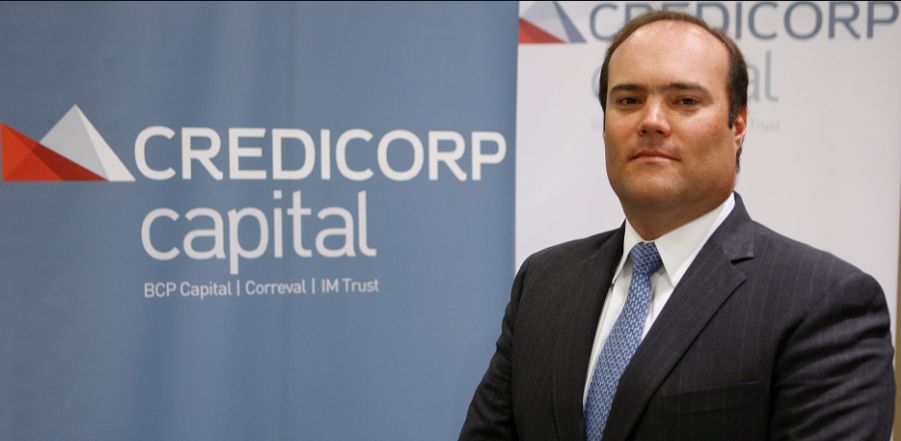
Foto: Alejandro Perez-Reyes Zarak, gerente regional de gestión de activos de Credicorp Capital / Foto cedida. Credicorp Capital y Highland CM anuncian un acuerdo de distribución exclusiva en Chile, Colombia y Perú

Highland Capital Management, L.P, firma que gestiona unos 22.000 millones de dólares en activos y con sede principal en Dallas, Texas, y Credicorp Capital, plataforma de banca de inversión en la región andina, anunciaron el acuerdo de distribución exclusiva que permitirá la distribución de los fondos de Highland Capital entre los inversionistas institucionales de la región andina, específicamente en Chile, Perú y Colombia.

“Hemos construido una excelente relación laboral con Credicorp y estamos felices de ver cristalizada esta asociación”, dijo James Dondero, presidente y co-fundador de Highland Capital Management. “La región andina invierte gran parte de sus activos institucionales y de pensiones en los mercados internacionales, y creemos que nuestros fondos tienen opciones atractivas de inversión para cumplir sus objetivos».

Alejandro Perez-Reyes Zarak, gerente regional de gestión de activos de Credicorp Capital, declaró: “El acuerdo nos permite ofrecerles a nuestros clientes el largo historial y la sólida oferta de productos de Highland Capital Management, lo cual les da a los inversionistas de la región la posibilidad de diversificar sus portafolios de inversión internacional”.

La colaboración entre ambas firmas brinda nuevas soluciones en la región andina, al combinar la experiencia en distribución de Credicorp y su red en el área, con la extensa experiencia de Highland Capital Management en ofertas de gestión de fondos.

Grupo SURA recompra a JP Morgan su participación en SURA Asset Management por 267 millones de dólares

  |   Por  |  0 Comentarios

Grupo SURA recompra a JP Morgan su participación en SURA Asset Management por 267 millones de dólares
Foto: Edificio Sura Asset Management en Medellín, Colombia / Foto cedida. Grupo SURA recompra a JP Morgan su participación en SURA Asset Management por 267 millones de dólares

El pasado 14 de septiembre en una junta especial del Consejo de Administración, el Grupo SURA aprobó la ejecución de un programa de recompra de acciones donde el grupo colombiano adquirirá la participación que JP Morgan SIG Holdings mantiene en la actualidad en la filial SURA Asset Management SA.

La operación anteriormente mencionada se cerrará el próximo 18 de septiembre, y supone un incremento de la participación del Grupo SURA en su filial de un 67,05% a un 71,38%.

En junio de 2012, JP Morgan compró menos de un 5% de participación en la gestora SURA Asset Management por unos 178 millones de dólares. Mientras que la operación de recompra se cerrará por unos 267 millones, lo que representa una prima del 50% sobre el precio de venta.

SURA Asset Management, gestora que se especializa en pensiones, ahorro e inversiones en Chile, Colombia, México, Perú y Uruguay, es una subsidiaria del Grupo SURA que hasta ahora estaba participada por otros cinco socios minoritarios: International Finance Corporation, Grupo Bolivar, Bancolombia, el fondo de inversión internacional General Atlantic, y JP Morgan.

Ampliar

Estructura de accionistas en septiebre 2014 / Fuente Grupo SURA

A cierre de junio 2015, en los últimos doce meses, SURA Asset Management había publicado un ebitda de 456,8 millones de dólares, unos activos bajo gestión de 112.800 millones, un ingreso acumulativo de 902,3 millones y una deuda neta de 674,3 millones de dólares.

La decisión de expandir la participación del Grupo de Inversiones Suramericana SA en su filial SURA Asset Management fue tomada para mejorar y complementar la estrategia de inversión a largo plazo del grupo colombiano en Latinoamérica. De hecho, la recompra de esta participación cumple las expectativas de generación de caja y mantiene una perspectiva de crecimiento positivo para el grupo, y representa una oportunidad de mejorar la estructura de capital de la filial, teniendo en cuenta los términos de las tasas actuales.

Los fondos de pensiones chilenos pueden invertir en nuevos fondos de Rothschild, Neuberger Berman o Santander AM

  |   Por  |  0 Comentarios

Los fondos de pensiones chilenos pueden invertir en nuevos fondos de Rothschild, Neuberger Berman o Santander AM
Foto: Cristian Santana. Los fondos de pensiones chilenos pueden invertir en nuevos fondos de Rothschild, Neuberger Berman o Santander AM

La Comisión Clasificadora de Riesgo en Chile, ente regulador encargado de clasificar y aprobar instrumentos financieros para los fondos de pensiones chilenos, aprobó a finales de agosto doce nuevas estrategias de fondos pertenecientes a gestoras extranjeras.

Edmond de Rothschild fue la gestora más beneficiada con la aprobación de cuatro fondos, seguida de Neuberger Berman y Santander AM, que empatan con dos fondos aprobados cada una.

En cuanto a la clase de activo, hay paridad en el número de estrategias de renta variable y las estrategias de renta fija, con cinco fondos cada una. Asimismo, el organismo regulador chileno aprobó un fondo de mercado monetario y un fondo con composición mixta. En relación a la región de inversión, existe un predominio de fondos que invierten en mercados emergentes y globales, seguidos de los fondos asiáticos y europeos.