Despite Concerns, Evergreen Funds Continue to Gain Traction

  |   By  |  0 Comentarios

Pixabay CC0 Public Domain

The growing adoption of semi-liquid strategies has transformed the alternative investments landscape in recent years, opening the door for high-net-worth clients and wealth management channels to access portfolios and returns that were once reserved for large institutional investors. And although developments in large private credit funds have raised questions about liquidity and the ability to meet sustained redemption requests, the industry still sees demand remaining strong.

“Some media outlets have warned that recent redemptions in certain evergreen private credit funds could trigger a cascading effect. However, net flows into U.S. evergreen strategies have in fact remained healthy,” specialist asset manager Neuberger Berman noted in a recent report.

According to the firm, investor interest has remained resilient. Through the end of last year, the private equity evergreen fund industry recorded 60 consecutive months of positive flows, from 2021 through 2025. A similar trend occurred in private credit vehicles, although that streak ended in December last year when net flows turned negative.

This demand has fueled significant growth in the semi-liquid segment. For example, evergreen fund launches reached their highest level in a decade last year, with 123 new vehicles introduced, according to data from private markets specialist Preqin.

In addition, assets in evergreen funds reached 530 billion dollars by the end of 2025, an increase of more than 100 billion dollars compared with 2024. The most popular structures were BDCs (Business Development Companies), while alternative credit strategies accounted for the largest share of activity.

Given that alternative credit was also the segment at the center of liquidity concerns, it naturally became the focus of market attention. “The final quarter of 2025 and the opening months of 2026 have seen a wave of headlines surrounding actual and potential redemptions in several credit funds, including some managed by the industry’s most prominent firms,” Morningstar noted in a recent analysis.

The Liquidity Question

Rather than extinguishing interest in the evergreen format, however, Morningstar argues that these episodes “ultimately reflect a structural reality of which investors are becoming increasingly aware.”

Specifically, “outside of interval funds, the liquidity terms of semi-liquid structures remain at the discretion of fund boards and allow redemption restrictions during periods of market stress, and managers will exercise that ability when they believe it is in the best interest of the fund.”

The bottom line, according to the financial services firm, is that liquidity is not guaranteed, and it is the responsibility of asset managers to protect investors from destabilizing events. That said, liquidity management has become a reputational risk that investment firms must carefully consider.

In this regard, Morningstar data show that semi-liquid private equity funds hold, on average, 15% of their portfolios in liquid assets, while private credit funds hold roughly half that amount.

This is where managers face a delicate balancing act. “If they hold too little cash or too few easily marketable assets, they may struggle to consistently meet oversubscribed redemption requests. Holding too many liquid assets, however, can weigh on returns,” the firm warned.

Market Sentiment

Although liquidity concerns are centered on the intersection between wealth management channels and alternative investment structures, demand remains strong.

According to a survey of global private banks conducted by Hamilton Lane at the end of last year, 86% of clients plan to increase their allocation to alternative investments this year.

The experience of alternative investment platform CAIS supports that trend. Based on nine advisor-focused events held this year, the firm says it has observed a structural shift.

“As the alternatives landscape has expanded and implementation has become more accessible, the conversation around portfolio construction has evolved,” the company noted.

Advisors now have access to a broad range of strategies across private equity, private credit, real assets, and structured investments, moving beyond the traditional practice of grouping everything under a single “alternatives” umbrella.

Looking ahead, the expectation is that wealth management channels will continue gaining ground within the alternative investment ecosystem. Estimates from consulting firm PwC suggest that total investable global wealth could reach 481 trillion dollars by 2030, with two-thirds of that amount linked to the mass affluent and high-net-worth individual (HNWI) segments. According to PwC, these pools of capital are expected to grow at compound annual growth rates of 5.7% and 6.5%, respectively.

Geopolitics or Monetary Policy: Which Matters More for the Evolution of Gold Prices?

  |   By  |  0 Comentarios

Canva

During the first six months of the year, gold’s performance has been remarkable, delivering a year-to-date return of 5%. After decisively breaking through previous psychological barriers, gold reached an all-time high on January 29, 2026, touching $5,595.42 per ounce. In the months that followed, the market began to stabilize and gradually correct as central banks maintained—or even increased—interest rates to contain inflation.

“The precious metal became, to some extent, a victim of its own success: significant profit-taking emerged, particularly in U.S. ETFs, while some central banks—such as Turkey’s—had to draw on their reserves to support their currencies,” acknowledges Diego Franzin, Portfolio Manager of Strategies at Plenisfer Investments (part of Generali Investments). However, he notes that the asset is still widely perceived as the “ultimate solution” for diversifying and protecting portfolios against market risks.

Price Dynamics

In Franzin’s view, gold price dynamics remain closely linked to developments in the Middle East and the trajectory of black gold.

“Any stabilization of the geopolitical landscape could ease the economic pressure stemming from energy costs and moderate expectations of further rate hikes, a scenario that would likely reduce gold’s short-term appeal, given that it does not generate income. Beyond short-term volatility, we believe gold will continue to play a structural role in portfolios thanks to its function as a store of value and a tool for financial independence in an increasingly complex geopolitical environment,” he argues.

However, Charlotte Peuron, Precious Metals Portfolio Manager at Crédit Mutuel Asset Management, believes that gold prices are influenced more by monetary policy than by geopolitical risks.

“Currently, gold prices are being driven more by changes in real interest rates and monetary policy than by geopolitical risks. The oil supply crisis, together with its potential economic and inflationary consequences, has effectively eliminated expectations of further rate cuts by the Federal Reserve, which is also weighing on precious metals prices. Given the current situation, this volatility is likely to persist until these uncertainties are resolved,” she says.

This view is also shared by UBS Global Wealth Management. Its experts note that while gold has historically benefited from safe-haven demand during periods of heightened geopolitical tension, this time the precious metal has come under pressure due to concerns that elevated energy prices could prompt a more restrictive monetary policy stance from the Fed and other central banks, thereby increasing the opportunity cost of holding gold.

Nevertheless, they acknowledge that although headwinds for gold have intensified recently, the metal could regain momentum as concerns about future Fed rate hikes begin to fade.

“We remain positive on the outlook for gold and continue to view the precious metal as a source of diversification within portfolios. While short-term performance may remain sensitive to headlines related to the United States and Iran, energy prices, U.S. bond yields, and the dollar, the medium-term bullish thesis continues to be supported by central bank demand, reserve diversification, elevated global debt levels, and the prospect of a more accommodative Fed later this year,” says Mark Haefele, Chief Investment Officer at UBS Global Wealth Management.

Gold in Portfolios

Both experts agree that gold is becoming increasingly entrenched in investor portfolios.

“If inflation becomes entrenched, gold is likely to regain its role as a safe-haven asset following the new cycle of rate hikes. Conversely, if the conflict with Iran ends quickly without triggering a surge in inflation, the Federal Reserve could seek to stimulate the economy by resuming its rate-cutting cycle. Both scenarios are favorable for gold. Finally, currency weakness driven by fiscal deficits and rising public debt has supported gold prices in recent years. In the current environment, some governments may expand deficits even further, which would likely be positive for gold,” adds the Crédit Mutuel AM specialist.

Meanwhile, UBP notes that investor activity in gold and the broader precious metals complex has stalled since the end of February.

“IMM futures data remain virtually unchanged, indicating that institutional investor interest in gold has leveled off. Open interest has also remained flat. ETFs experienced significant outflows in March—the largest monthly decline since 2021—and since then, inflows have slowed to a trickle. Retail interest in gold has also declined substantially overall,” the firm states in its latest report.

For the experts at UBP, the data and overall market sentiment point to a substantial decline in short-term appetite for long positions in gold. “However, the longer-term outlook for gold remains constructive, suggesting that the recent weakness is best viewed as a pause within gold’s broader upward trend,” they note.

Global Diversification and Comprehensive Services: Bci’s Formula for the Offshore Market

  |   By  |  0 Comentarios

Photo courtesy

Over ten years of operating in Miami, Bci Securities has learned a great deal by observing the evolution of the offshore wealth management industry and the Latin American investors it serves. As client needs have become more mature and sophisticated, competitive advantages increasingly lie in areas such as global diversification and truly comprehensive advisory services that go beyond simply providing products for the international portion of portfolios. This is the formula the Chilean-owned brokerage and wealth management firm is relying on to continue growing.

“The core of our client base has remained the same. They are high-net-worth individuals, entrepreneurial families, and Latin American companies seeking to diversify assets outside the region and access global markets with expert advice. What has changed is the depth with which we can support them,” Carlos Martin, CEO of the firm, told Funds Society.

Since opening its first account in March 2016, the firm has become an important part of Bci’s international platform, the executive noted. Looking ahead, he sees positive prospects for the wealth management business in the United States, particularly in Florida.

The financial group’s goal in the U.S. market is ambitious: to double its client base in the Sunshine State by 2029, focusing on Latin American individuals and businesses. The plan is to leverage the group’s strengths—which connect Chile, the United States, and Peru—and offer a robust service proposition for the high-net-worth segment.

International Investing

According to the CEO of Bci Securities, one of the main trends observed in recent years has been a growing need for international diversification, both geographically and across asset classes.

“Clients are looking to reduce their concentration in local risks and gain access to global opportunities, especially in the United States and developed markets,” he explains.

In today’s environment of heightened uncertainty—marked by greater volatility, inflation, interest rates, geopolitical tensions, and regulatory changes—clients increasingly value expert advice, active management, and ongoing monitoring.

At the same time, the way investors view their international portfolios has evolved, reflecting greater sophistication.

“Latin American investors are moving beyond the idea of offshore investing as a temporary safe haven and increasingly view it as a permanent structural component of their portfolios,” Martin says.

As a result, the focus is on building sophisticated strategies that complement local investments. In the case of Bci Securities, the firm benefits from combining its understanding of Latin American clients with its strong presence in the United States.

This becomes particularly relevant given that many of the firm’s clients have businesses, investments, families, or interests across multiple countries.

“They do not view their wealth in isolation,” the executive notes.

The Evolution of the Business

“More than a change in the client profile, we are seeing an evolution in client needs. They still seek diversification, but they also want more comprehensive, personalized advice that is connected to their regional reality,” says the CEO.

One of the major developments the firm has observed during its decade in Miami has been the margin compression affecting the wealth management industry. According to Martin, this trend has been driven by the increasing commoditization of traditional brokerage and investment products and the availability of lower-cost solutions.

Bci’s assessment is that this trend underscores the importance of differentiating beyond investment product distribution.

“In many ways, margin compression is accelerating the evolution of wealth management from a product-driven industry to a service- and advice-driven industry,” he says.

For the Chilean firm, this platform includes banking, lending, payments, brokerage, and financial advisory services. Martin believes that “clients increasingly want a trusted advisor who can coordinate all aspects of their financial lives, including cross-border banking and investment needs, rather than relying on separate providers for each function.”

This network of services is anchored by the various entities within the financial group: Bci Chile, Bci Miami, City National Bank of Florida, Bci Peru, and Bci Securities.

The firm is also making a significant technology investment, Martin highlights. After investing 500 million dollars in technology over the past five years, the group plans to deploy an additional 600 million dollars in the future, focusing on technology platforms, innovation, and artificial intelligence.

Changes in Portfolios

Regarding portfolio trends, the CEO of Bci Securities notes a broad rotation toward quality, liquidity, and global diversification.

“Many Latin American investors have increased their exposure to international assets, particularly in the U.S., seeking institutional stability, market depth, and access to structurally attractive sectors,” he explains.

In fixed income, higher interest rates have renewed investor preference for investment-grade bonds, U.S. Treasuries, and income-oriented strategies. In equities, demand remains strong for companies linked to technology, artificial intelligence, digital infrastructure, and healthcare.

There has also been selective interest in the energy and infrastructure sectors, driven by energy-transition trends and U.S. reshoring initiatives.

In addition, Martin says many clients are incorporating alternative assets and more sophisticated investment strategies into their portfolios, including structured products, global ETFs, and discretionary mandates, “seeking more dynamic management in response to market volatility.”

Conversely, the current environment has reduced appetite for more cyclical assets, such as small-cap equities and traditional commercial real estate in developed markets. High-yield fixed income has also become less attractive given the global interest-rate backdrop.

“The industry’s current trend is toward greater selectivity,” emphasizes the CEO of Bci Securities, adding that “the most significant paradigm shift is the abandonment of overconcentrated strategies, both geographically and in individual assets.”

Global Economic Outlook Wavers Between Geopolitical Headwinds and the Momentum of AI

  |   By  |  0 Comentarios

Canva

Global economic prospects have deteriorated sharply in recent weeks, according to the latest edition of the World Economic Forum’s Chief Economists’ Outlook. Nearly nine out of ten chief economists surveyed expect global growth to weaken over the next 12 months, reversing the cautious optimism seen at the beginning of the year, as conflict in the Middle East and the closure of the Strait of Hormuz fuel fears of a major global economic shock.

Chief economists now view the current duration of the Strait of Hormuz closure as significantly more disruptive than last year’s tariff-related turbulence. If the closure extends into the second half of the year, they believe its impact could approach the severity of the COVID-19 crisis, triggering knock-on effects across global supply chains as well as energy and food costs. An overwhelming 94% of respondents expect global inflation to rise over the coming year.

“Just a few months ago, the community of chief economists was cautiously optimistic. The conflict in the Middle East has changed that, and the economic scars from the situation so far are already expected to persist in the months ahead,” said Saadia Zahidi, Managing Director of the World Economic Forum. “The longer the disruption lasts, the greater the long-term cost for those least able to afford it.”

An Uneven Regional Outlook

The consequences are expected to be particularly severe in the Middle East and North Africa region. After being viewed only a few months ago as one of the world’s most dynamic economic regions, 88% of surveyed chief economists now expect weak or very weak growth there, representing the largest regional downgrade in the study.

Elsewhere, the outlook is mixed. Inflation expectations have risen sharply in Sub-Saharan Africa, which now records the highest levels among all regions, while Europe faces increasing stagflation risks amid weak growth and rising inflationary pressures. In contrast, India and the United States are showing greater resilience, supported by domestic demand and investment.

Low Recession Risk, but High Volatility

Despite the significant deterioration, the survey does not point to a major recession. Most chief economists do not expect a recession over the next 12 months, although neither do they foresee a clear improvement in economic resilience in the near term.

Developments will depend largely on the duration of the disruption: a short-lived shock could allow for recovery, whereas a prolonged closure would intensify pressure on the global economy.

Financial markets are also expected to face increased stress. A total of 79% of respondents anticipate greater volatility in private debt markets over the next year amid signs of strain in private credit. Meanwhile, 74% expect higher volatility in government bond markets and 68% foresee increased volatility in equity markets.

Optimism on AI, but More Measured

Artificial intelligence continues to act as a positive force for the global economy, with 92% of chief economists expecting greater AI adoption over the next year.

However, optimism regarding the speed of productivity gains from AI adoption has become more restrained. Significant productivity improvements are now expected to take longer to materialize across almost all sectors compared with forecasts made in January 2026.

Only the information technology and education sectors maintain stable expectations, while the largest delays in productivity gains are expected in engineering, construction, utilities, healthcare, and care services.

The Market Is Anticipating an Overly Benign Scenario

  |   By  |  0 Comentarios

Pixabay CC0 Public Domain

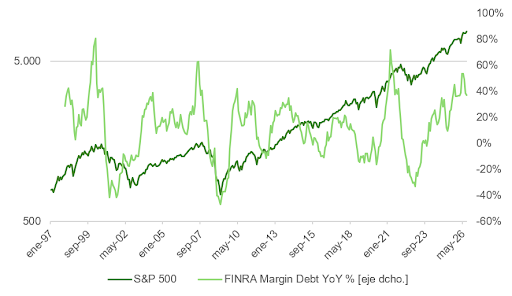
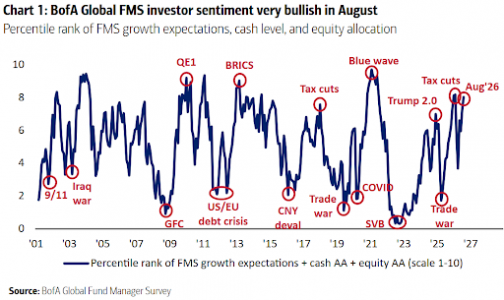
Markets had chosen to ignore the latest U.S. military strikes against Iran, anchored to the narrative of an imminent agreement that would reopen the Strait of Hormuz. Brent crude fell from $104 per barrel on Friday to $93.7 per barrel, while equity markets consolidated gains, with the S&P 500 reaching a new high during Tuesday’s session.

The problem is that market optimism far exceeds the available evidence. A preliminary agreement—featuring a 60-day ceasefire, the lifting of the naval blockade, and the start of nuclear negotiations—faces difficult obstacles, including frozen Iranian assets, Israel’s position, demands regarding the nuclear program, and the fragility of any lasting regional peace framework.

The agreement reported by Axios on Thursday, which would extend the truce for an additional 60 days, would require Iran to remove mines from the Strait in order to restore normal maritime traffic. However, the probability that such an arrangement will lead to lasting peace is not particularly high. In our view, the market is pricing in an excessively benign scenario relative to the actual balance of risks.

The S&P 500 responded to the Axios report with a modest gain of 0.58%, while the Bloomberg Global Equity Index rose 0.41%. Since the ceasefire announcement at the end of February, global equities have gained 7%, led by cyclical stocks and technology. Is it possible that the market has already priced in the good news?

This assessment has also been shared by prominent European Central Bank officials, including Philip Lane, Olli Rehn, and Luis de Guindos.

The Cumulative Cost of Three Months of Closure

We have now spent nearly three months with the Strait of Hormuz effectively closed, and the cumulative impact on the global economy is becoming increasingly difficult to ignore. Crude oil remains above $90 per barrel, while gasoline prices in the United States are approaching the record highs seen after the 2022 invasion of Ukraine.

The impact, however, extends well beyond the energy sector. It affects fertilizers, petrochemicals, sulfur, and helium, disrupting supply chains whose consequences are only beginning to appear in macroeconomic data.

U.S. GDP, released on Thursday and weighed down by net exports, is growing at an annualized rate below the economy’s long-term potential (1.6% versus 1.8%) and below consensus expectations (2%). Consumer spending is also beginning to show signs of strain, as household income lags expenditure (personal income was flat compared with March, while nominal spending rose 0.05%). The gap is being financed through savings, which at 2.6% are starting to run thin.

Possible Scenarios and Positioning

The situation is extremely difficult to manage. If the memorandum referenced by Axios does not materialize, another two or three months of closure would exhaust available reserves, force refinery cutbacks, and ultimately lead to demand destruction and a global recession. The political incentive to resolve the situation is clear: with the midterm elections on the horizon, the Trump administration cannot afford to let energy prices continue to erode consumer confidence, which, according to the latest University of Michigan survey, is at historic lows. In light of recent developments, the possibility of an “escalate to de-escalate” strategy cannot be ruled out—briefly resuming attacks in order to force Tehran back to the negotiating table. If that tactic were to succeed and the Strait of Hormuz were reopened, the decline in oil prices could be just as dramatic as the previous surge.

Our six- and twelve-month outlook is that both oil prices and bond yields will be lower than current levels. The key positioning question lies in the path we will have to travel to get there.

The Federal Reserve at a Historic Crossroads

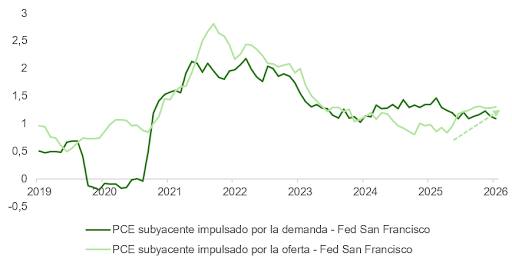
These uncertainties do not affect only investors. The inflationary environment has created one of the most challenging monetary policy situations in years for central banks, and particularly for the Federal Reserve.

Core inflation has rebounded sharply: the Final Demand Producer Price Index, excluding food and energy, currently stands at 5.25%. At the same time, the yield on the two-year Treasury note has risen above the federal funds rate, a signal that has historically preceded interest-rate increases over the past thirty years.

The Taylor Rule also suggests room for a 25-basis-point rate hike in December, a move to which the market currently assigns a 72% probability.

The Federal Reserve finds itself at a crossroads. If it raises interest rates, it will put pressure on equity valuations and weigh on economic growth. If it refrains from doing so, the bond market could conclude—as it did in 2022–2023—that the central bank has fallen behind the curve. In either scenario, equities would likely react negatively.

That said, there are important nuances. Core inflation excluding housing has remained close to the Fed’s 2% target for nearly three years. The recent increase in the housing component reflects a statistical effect linked to the government shutdown the previous year and should reverse in the coming months.

At the same time, unemployment continues to rise across most G10 economies, reducing the risk of a wage-price spiral.

And although household spending-intention surveys indicate caution in response to persistently higher fuel prices, tax refunds associated with the OBBA plan have so far offset that effect, according to estimates from Brown University.

According to the Tax Foundation, as of April 3, 2026, the cumulative value of refunds issued by the IRS totaled 241.7 billion dollars, 30.7 billion more than during the same period in 2025. The agency processed 69.8 million tax returns, compared with 67.7 million the previous year, and nearly 70% of filed returns resulted in refunds.

Taken together, these refunds amount to approximately 1.7% of U.S. GDP, compared with an estimated negative impact of 0.7% from higher fuel prices.

VanEck Launches the First Spot BNB ETP

  |   By  |  0 Comentarios

Canva

VanEck ha lanzado el VanEck BNB ETF (VBNB), el primer producto cotizado en bolsa (ETP) en Estados Unidos diseñado para ofrecer exposición spot a la evolución del precio de BNB, el activo nativo de uno de los mayores ecosistemas blockchain del mundo en función del número de usuarios y de la actividad on-chain. Las participaciones de VBNB están respaldadas físicamente por BNB custodiados en almacenamiento en frío con un custodio cualificado. Este producto cotiza en el Nasdaq estadounidense.

BNB se encuentra entre las cinco mayores criptomonedas del mundo por capitalización de mercado y entre las tres primeras en usuarios activos diarios, aunque hasta ahora había permanecido inaccesible para los inversores que buscaban exposición spot a través de la estructura de un ETP.

La BNB Chain también figura entre los mayores ecosistemas de stablecoins del mercado cripto, con una sólida base de activos mantenidos on-chain y una intensa actividad transaccional en la red. Esto contribuye a generar una demanda recurrente de BNB dentro del ecosistema, ya que el activo se utiliza para pagar las comisiones (“gas fees”) de la red. Además, BNB cuenta con un mecanismo de oferta deflacionaria singular, basado en distintos sistemas de quema de tokens diseñados para reducir progresivamente el suministro hasta un objetivo de 100 millones de tokens.

“BNB ha sido una de las principales criptomonedas más resilientes durante el reciente ciclo de mercado, manteniéndose prácticamente estable en el último año mientras que la mayoría de sus competidores de Layer 1 registraron caídas significativas”, afirmó Patrick Bush, analista sénior de inversiones de VanEck. “Esto se debe, en parte, a que BNB es una de las blockchains más utilizadas del mundo, procesando más de 14 millones de transacciones al día y respaldando a más de 2,5 millones de usuarios activos diarios. También cuenta con una sólida base de usuarios y abundantes recursos, incluyendo más de 16.000 millones de dólares en stablecoins y 3.600 millones de dólares en activos del mundo real (RWAs)”.

VBNB es la última incorporación a la gama de productos cotizados de VanEck que ofrecen exposición spot a criptoactivos, entre los que se incluye el VanEck Bitcoin ETF (HODL), que sigue siendo el ETP spot de bitcoin de menor coste del mercado gracias a una exención temporal de comisiones vigente hasta el 31 de julio de 2026 o hasta alcanzar los 2.500 millones de dólares en activos bajo gestión (posteriormente, la comisión del patrocinador será del 0,20%. Pueden aplicarse comisiones de corretaje; consulte con su intermediario financiero).

Además de los productos spot sobre criptoactivos, VanEck ofrece el VanEck Digital Transformation ETF (DAPP), un fondo indexado diseñado para proporcionar exposición a empresas vinculadas a la economía de los activos digitales, así como el VanEck Onchain Economy ETF (NODE), un ETF de gestión activa orientado a compañías estrechamente relacionadas con la economía on-chain, incluyendo infraestructuras blockchain, servicios de activos digitales y exposición a activos digitales.

“Hasta hoy, BNB destacaba entre los principales criptoactivos por ser uno de los pocos que aún no estaba disponible mediante un ETP spot en Estados Unidos”, señaló Kyle DaCruz, director de producto de activos digitales de VanEck. “Estamos encantados de cambiar esta situación con el lanzamiento de VBNB, ofreciendo a los inversores estadounidenses acceso cotizado a una de las redes económicamente más relevantes dentro del ecosistema de activos digitales”.

WisdomTree Launches an ETF Investing in Rare Earths

  |   By  |  0 Comentarios

Pixabay CC0 Public Domain

WisdomTree has announced the launch of the WisdomTree Efficient Rare Earth Plus Strategic Metals Fund (WDIG), a fund listed on the Chicago Board Options Exchange (CBOE). The product expands WisdomTree’s suite of capital-efficient strategies, providing investors with access to companies and commodities linked to areas of growing importance for global economic and geopolitical trends, including critical materials used in electrification, AI infrastructure, and advanced industrial technologies.

WDIG seeks to generate total returns by combining exposure to equities with futures contracts on base metals and international companies primarily engaged in the extraction of strategic metals and rare earths, offering investors a differentiated way to capitalize on the increasing importance of critical minerals in the global economy.

“From electric vehicles and wind turbines to AI data centers and autonomous systems, many of the technologies shaping the future share a common foundation in strategic metals. At the same time, supply chains for many critical minerals remain highly concentrated, elevating their importance from commodities to strategic assets for both governments and industries,” said Christopher Gannatti, Global Head of Research at WisdomTree.

According to the executive, WDIG reflects “this convergence between growing demand and evolving supply dynamics, offering a way to access both the metals themselves and the companies that produce them.” Gannatti added that by combining commodity exposure with mining equities in a single structure, the strategy “provides investors with diversified access to a theme that, in our view, is becoming increasingly important for the next phase of the global economy.”

Cross-Border Investment Funds Reach 8.5 Trillion Euros While

  |   By  |  0 Comentarios

Canva

The 2026 edition of the ALFI-Broadridge study on cross-border fund distribution provides a comprehensive analysis of the latest trends shaping the international distribution of UCITS and other cross-border fund vehicles.

The study concludes that cross-border assets increased to 8.5 trillion euros in 2025, with a record 16% now coming from outside Europe. Luxembourg continues to lead the global cross-border fund landscape, representing 42% of worldwide cross-border assets under management. The report highlights how the industry is becoming increasingly global, concentrated, and competitive, driven by scale, the growth of ETFs, and evolving investor preferences.

After Europe, the Asia-Pacific (APAC) region continues to be the fastest growing, with Hong Kong, Singapore, and Taiwan driving demand for cross-border products. Meanwhile, markets in the Middle East, Africa, and Latin America are showing growing adoption of UCITS structures, reflecting sustained confidence in European regulatory standards and investor protection frameworks.

The report also points to a clear shift in investor behavior. Although exposure to North American equities remains significant, investment flows are increasingly favoring broader diversification, including European and emerging market equities. At the same time, new themes linked to geopolitical resilience, security, and defense are gaining traction, particularly through ETFs. Product innovation also continues to accelerate, with new fund launches closely aligned with evolving investor demand.

Britta Borneff, Chief Marketing Officer at ALFI, stated: “Cross-border distribution is entering a new phase of maturity and internationalization. Luxembourg continues to play a central role, supported by its strong regulatory framework, deep international expertise, and robust distribution infrastructure. As investor demand evolves and markets become more complex, the ability to deliver trust, innovation, and operational efficiency at scale will become increasingly important.”

Nigel Birch added: “The cross-border industry continues to demonstrate its resilience and global relevance. Investor demand is broadening geographically and becoming more selective, while scale and passive investing continue to redefine the competitive landscape. In this environment, high-quality market intelligence is essential to understand where flows are heading and which long-term trends are emerging.”

ALFI and Broadridge will present the study’s conclusions during a webinar on May 28, 2026, at 10:00 CET.

BBVA AM Takes Another Step Forward in Asset Tokenization Alongside Hamilton Lane, Allfunds Blockchain, and Apex Group

  |   By  |  0 Comentarios

asset tokenization
Canva

Hamilton Lane, a private markets investment firm, has announced the launch of a new tokenized share class providing access to the Hamilton Lane Global Private Assets Fund (GPA), developed in collaboration with Allfunds Blockchain, the digital innovation division of Allfunds, and Apex Group. BBVA Asset Management has committed to participate as the first investor and initial exclusive distributor for institutional portfolios of this new tokenized share class.

According to the firms, the launch marks a significant milestone in the evolution of private markets accessibility, leveraging blockchain-based distribution models to deliver a more efficient, transparent, and flexible investment experience. The tokenized share class will be available through the Allfunds platform and supported by Allfunds Blockchain as the technology provider and Apex Group as transfer agent, enabling end-to-end digital subscription, administration, and servicing.

In addition, as part of the agreement, BBVA Asset Management will benefit from a three-month exclusive distribution period, reinforcing the asset manager’s commitment to innovation and its active role in exploring new digital distribution models for private market assets in Europe.

A New Milestone

With this launch, Hamilton Lane expands its track record of broadening institutional access to private markets through technological innovation and continues to play a pioneering global role in the tokenization and digitalization of private market products.

Hamilton Lane GPA is an evergreen fund designed to provide investors with diversified exposure to private markets through a single investment commitment.

“As part of our ongoing effort to expand access to private markets through technology, the launch of this tokenized share class brings the diversification benefits of private markets to investors in a more cost-effective, better, and faster way. Working with established partners such as Allfunds Blockchain and Apex Group has enabled us to deliver an efficient and scalable solution, and we are pleased to welcome BBVA as the first investor in this initiative,” said Victor Jung, Head of Digital Assets at Hamilton Lane.

For Ruben Nieto, Managing Director at Allfunds Blockchain, the project demonstrates how blockchain can deliver real and tangible efficiency improvements to the fund industry. “Our collaboration with Hamilton Lane and Apex Group enables a new digital operating model that simplifies distribution, enhances transparency, and ultimately benefits both managers and investors. We are proud to help bring this market milestone to life,” he said.

BBVA Asset Management emphasized its commitment to driving innovation in financial services: “This initiative reflects our conviction in the potential of tokenization to enable more efficient access to sophisticated investment opportunities. We are pleased to participate as the first investor and distributor of this new tokenized share class and to continue exploring digital solutions that can enhance the client investment experience.”

Finally, Peter Hughes, Founder and CEO of Apex Group, stated: “Tokenization is transforming the way investors access private markets. At Apex Group, we are building the digital infrastructure that enables this shift at scale. Working with leading partners such as Hamilton Lane and Allfunds is helping us deliver a more efficient and transparent model for investor access.”

Global Dividends Increased 8.2% to Reach 419 Billion Dollars

  |   By  |  0 Comentarios

Photo courtesyAlexandra Haggard, Head of Asset Class Services for Europe and Asia-Pacific at Capital Group

Global dividends started 2026 on a strong note, rising 8.2% to a record 419 billion U.S. dollars in the first quarter, driven by foreign exchange movements and significant one-off special dividends, according to the latest Dividend Watch report, part of the Capital Group Global Equity Study¹. The first-quarter underlying growth rate was 5.2% year over year, a more representative measure of dividend momentum that was also reflected in the average growth of dividends per share.

A shift in the commodities cycle made mining companies the main driver of first-quarter growth, following years of cuts caused by weak profitability. The sector accounted for one-fifth of the global increase during the quarter, with gold mining standing out in particular. The broader financial sector (+16.2%), semiconductors (+10.2%), software (+9.5%), and machinery (+8.9%) also recorded strong underlying growth.

The three sectors that paid the largest dividends during the first quarter—pharmaceuticals, banking, and energy—posted slower distribution growth than the broader market. Energy sector dividends rose only 3.1%, reflecting pressure on earnings prior to the oil crisis, as well as the impact of share buybacks, while banking sector distributions were held back by cuts in China, Brazil, and Sweden in particular. Pharmaceutical sector dividends increased 4.3% on an underlying basis; no company in Capital Group’s index² reduced its dividend, but some of the largest payers recorded only modest increases.

Regional Trends

Among the major regions, the fastest growth was recorded in Australia, India, the United States, and Canada, while the United Kingdom, Europe, and China lagged behind. Generally, in Japan, most of Asia and Europe, as well as in some emerging markets, dividend distributions are relatively limited during the first quarter, meaning local growth rates are less representative of what may be expected for the full year.

The Spanish dividend market started 2026 strongly, posting underlying growth of 13.7%, above the global average, during a seasonally quiet first quarter. Total dividend distributions reached 4.7 billion dollars (4.1 billion euros). The overall growth figure of 50.5% was driven by foreign exchange effects and supported by the addition of an Ibex 35 company to the index.

For the remainder of 2026, Capital Group has maintained its dividend forecast unchanged at 2.20 trillion U.S. dollars, representing year-over-year growth of 5.1%. However, the contribution from special dividends and foreign exchange movements remains greater than previously anticipated, implying underlying growth of 4.7%, slightly below the headline figure.

Alexandra Haggard, Head of Asset Class Services for Europe and Asia-Pacific at Capital Group, said: “What these trends highlight is that active managers with strong research capabilities are increasingly well positioned to identify companies with both the ability and commitment to pay and grow dividends over time. Over the last decade, global dividends have more than doubled, driven by rising corporate earnings and a growing culture of dividend payments across markets.

The start of 2026 has been encouraging, even amid heightened geopolitical uncertainty and ongoing cost and energy pressures. While these challenges increase costs for some companies, dividend-paying businesses can help provide stability to portfolios when markets become more volatile. In this environment, deep research and stock-selection capabilities are critical, and active managers are well positioned to identify those companies best placed to sustain and grow dividends over the long term.”