Amid the evolution of the fee-based model in Latin American and US Offshore markets, wealth management technology company inCadense and American asset manager BlackRock announced a partnership aimed at accelerating the transition toward more scalable, transparent, and portfolio-centric advisory models in the region.
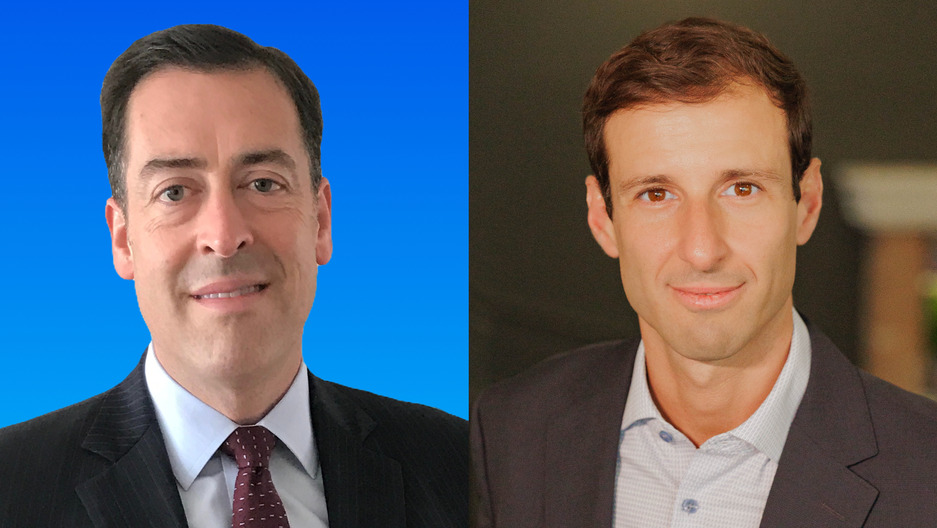
According to executives Francisco Rosemberg, Managing Director and Head of Wealth and Family Capital for Latin America at BlackRock, and A.J. Harper, Managing Partner and Co-Founder of inCadense, in an interview with Funds Society, the strategy consists of combining the global asset manager’s investment expertise with the technology company’s infrastructure.
In this partnership, inCadense brings its Unified Managed Account (UMA) structure—which enables bundling multiple investment strategies within a single account—along with its iTAMP, created to allow advisors and managers to deploy international managed accounts without needing to build the entire operational setup from scratch.
“The migration toward fee-based models, the growth of managed accounts, and the demand for more sophisticated investment solutions do not happen overnight. What we have observed is that the demand already exists, both in Latin America and in offshore markets,” says BlackRock’s Rosemberg. “What was missing was the infrastructure to connect advisors, solutions, and clients. That is exactly what this partnership seeks to do: bridge that gap and accelerate that transformation.”
The executives also highlighted the growth of fee-based models in Latin America, where penetration still hovers around 10% to 12% in domestic markets, compared to 53% in the United States and 42% in Europe (according to Cerulli data).
“The demand already exists. The challenge is eliminating complexity so that advisors can offer holistic solutions to their clients. That is precisely why we developed this infrastructure,” says Harper, from inCadense.
They also discussed the expansion of managed accounts in the United States, which currently manage $16.4 trillion in assets and continue to record strong growth, alongside the evolution of fee-based portfolios—moving beyond simple ETF allocations to incorporate mutual funds and alternative assets, such as private credit, private equity, and real estate.
For both executives, the primary barrier to this transformation was never investor demand, but rather the lack of a technological infrastructure capable of connecting advisors, custodians, and asset managers across different markets and jurisdictions.
Why did BlackRock and inCadense decide to form this partnership?
Francisco Rosemberg (BlackRock):
“We are observing wealth managers across Latin America and in offshore markets evolving toward fee-based advisory models. These models are more scalable, more transparent, and ultimately designed to deliver better outcomes for clients.
BlackRock’s role in this partnership is to provide investment capabilities, portfolio construction expertise, and support advisors in transitioning from a transactional model toward a long-term wealth consultancy model.
inCadense complements that effort by offering technological infrastructure. Its Unified Managed Account (UMA) and Separately Managed Account (SMA) capabilities simplify portfolio implementation across different jurisdictions, custodians, and currencies.
We believe this collaboration will help reduce much of the operational friction that historically hindered the adoption of fee-based models in the region. Ultimately, it is a model that offers greater cost transparency, strengthens advisor-client alignment, and transforms the role of the advisor—who stops acting as a product distributor to focus instead on financial planning, portfolio construction, wealth management, and long-term advice.”
A.J. Harper (inCadense):
“The biggest challenge was never demand. The challenge was always infrastructure. When the industry shifts away from distributing standardized products, such as mutual funds, toward delivering complete portfolio solutions, overall operational complexity increases significantly.
Investors want customization. They want a portfolio built specifically for them, not a one-size-fits-all product. Until today, many advisors simply lacked access to the technology required to deliver that experience.
It was precisely to solve that problem that we created the iTAMP (International Turnkey Asset Management Platform). Our platform connects advisors to multiple custodians, execution platforms, and operational workflows within a single infrastructure designed specifically for the international market.
Our goal is to remove day-to-day operational complexity for advisors so they can dedicate their time to client relationships rather than account reconciliations, rebalancing, trade execution, or administrative processes.”
What is a Unified Managed Account (UMA)?
A.J. Harper:
“A UMA allows the advisor to build a single, integrated portfolio using multiple investment strategies simultaneously. Within the same account, it is possible to combine ETFs, fixed income, equities, SMAs, private investments, and alternative strategies.
Each of those strategies can be managed by specialized teams, while the overall portfolio remains coordinated according to the client’s risk profile and goals. Instead of selling individual products, the advisor delivers a comprehensive investment solution.”
Why is this movement happening right now?
Francisco Rosemberg:
“We believe Latin America is reaching a pivotal inflection point. Fee-based models are already well established in mature markets. Today, approximately 53% (according to Cerulli data) of assets managed in the United States follow this model. In Europe, market share hovers around 42%. In offshore markets, we estimate penetration close to 35%, up from nearly 20% just over five years ago.
In Latin America, however, we are still at an early stage. Across the entire region, we estimate penetration at around 20%, while in domestic markets that percentage still sits around 10% to 12%. That illustrates the size of the opportunity.
The demand is already there. Virtually every conversation we have with wealth managers trends in the same direction: they want to migrate toward portfolio-centric models and long-term advisory.
What was missing was the technological infrastructure to make that transition viable. That is precisely what this partnership intends to offer.”
How does Latin America differ from the United States in this regard?
A.J. Harper:
“The United States built an exceptional infrastructure for managed accounts. But it was designed specifically for the American domestic market.
The international advisor operates in a completely different reality. They handle multiple currencies, varying jurisdictions, numerous custodians, and very distinct regulatory environments.
Our role is to bring the US managed accounts experience to Latin America, but tailored to the specific needs of international markets. That is what makes our platform a genuinely international solution.”
Who will be able to use this platform?
A.J. Harper:
“There are different user profiles. The first group consists of advisors affiliated with large wealth management institutions. These firms can integrate their existing infrastructure with the iTAMP and deploy the platform to their advisors.
We also serve independent RIAs, external asset managers, family offices, and multi-family offices. These institutions typically already work with one or more custodians.
Our platform integrates directly into the operational environments they already use. We are not asking them to change their infrastructure; we connect directly to how they already operate.”
Which countries are leading the adoption of fee-based models?
Francisco Rosemberg:
“We are seeing progress across the entire region. Brazil and Mexico are among the markets accelerating this transformation the fastest, although adoption is growing across virtually all of Latin America.
Infrastructure remains one of the main hurdles. When we look at our own ETF franchise, we see this exact trend. Between 2018 and 2021, only 3% of flows into BlackRock’s iShares franchise came from model portfolios. Over the last two and a half years, that share has increased to approximately 15%.
When we expand that analysis to include model portfolios managed by wealth managers overall—not just BlackRock models—we estimate that roughly 30% of ETF utilization is now tied to model portfolios. That demonstrates how adoption accelerates once the proper infrastructure becomes available.”
How do you view the evolution of fee-based advisory in the region?
Francisco Rosemberg:
“Initially, much of the market focused on ETF-only models. But we believe that is only the first stage. Portfolios will evolve to incorporate a much broader range of solutions, including ETFs, mutual funds, SMAs, active ETFs, and alternative investments.
Today, nearly 70% of model portfolio providers already offer—or plan to offer—exposure to private markets, primarily private credit, private equity, and private real estate, typically through interval funds.
We believe Latin America will follow a similar trajectory as its infrastructure matures.”
Can the US market serve as a benchmark for this movement?
Francisco Rosemberg:
“Without a doubt. Today, the US managed accounts industry oversees approximately $16.4 trillion in assets. In 2025 alone, that market grew 19.1%, outperforming even the S&P 500 during that period, and attracted $1.08 trillion in net inflows
In the first quarter of 2026, even as the S&P 500 declined by 4.3%, managed accounts continued to attract capital, gathering approximately $388 billion in net inflows. Projections indicate this market could reach around $21.8 trillion by 2028, growing at an annual rate close to 12%.
This shows that the transformation is driven not merely by market performance, but primarily by a structural shift in how advisors serve their clients.”
A.J. Harper:
“For many years, it was relatively easy for advisors to distribute financial products. Deploying customized portfolios, however, required an extremely complex operational setup.
Our goal is to make portfolio implementation as simple as selling a mutual fund used to be. Technology should sit in the background. Advisors should spend their time with clients; we take care of the infrastructure.”