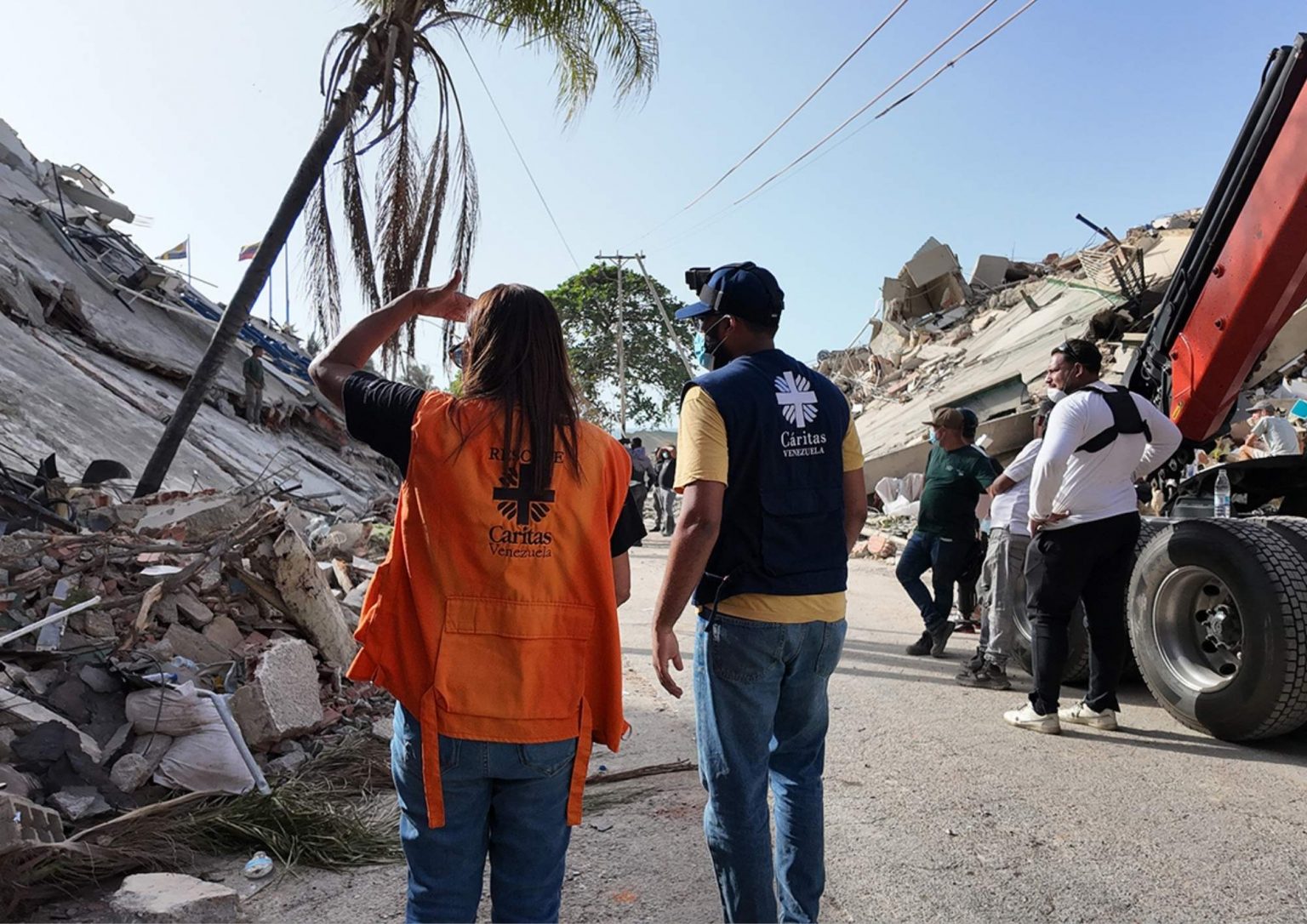
It has already been a week since the devastating earthquakes recorded in Venezuela that have broken everyone’s hearts. Faced with this humanitarian emergency, many are wondering how to help. From Fundación Lealtad, a Spanish entity belonging to the International Committee on Fundraising Organizations (ICFO), they remind us that, in this context, “channeling solidarity through organizations with experience and operational capacity on the ground is fundamental for aid to reach those who need it most quickly and effectively.”
From Fundación Lealtad, they share this guide of best practices to make donations more efficient:
What You Should Always Do
Inform yourself before donating. Learn about which needs have to be covered, what is required, who is taking action, and how. Depending on the type of emergency and its evolution, different actions will be necessary, and needs may vary.
In-kind donations. Before organizing a collection for any material, ask if the organization accepts that type of donation. Collecting, sorting, and shipping materials is a complex process, and sending unneeded materials complicates management during times of crisis. In many cases, specialized NGOs or foundations already have pre-packaged humanitarian aid materials ready.
Secure donations. Donations in emergency cases must have the same security guarantees regarding electronic transactions, privacy, and data protection as at any other time. Demand them.
Experience/Presence. Make sure that the NGO or foundation you are donating to has experience in the field it works in. In addition to being able to act diligently and quickly, experience contributes to the efficient use of funds. It is also important to ensure that the organization is present in the area to be assisted.
Decide which activities you want to support. In emergencies, resources of different types and at different times are needed: food, healthcare, technology, blankets, medicines, etc.
What You Should Never Do
Donate to an individual. Never make a transfer or an online donation in the name of an individual; always do it in the name of an NGO or foundation.
Failing to verify. Perform a minimal review of who is behind the social project through their website, social media, etc.
What Is Convenient for You to Do
Designated funds. You should know that contributions raised for a specific emergency are referred to as “designated funds.” The NGO or foundation undertakes the commitment to allocate them to the purpose for which they are requested. Thus, if an organization raises more designated funds than it can allocate to the emergency, it must communicate this to its donors. It might allocate them to an emergency fund to cover other disasters, or to the reconstruction of the affected area.
After donating. Review the information that the NGO or foundation provides through its website, newsletters, social media, etc. Take an interest in the amount raised, the results obtained, new needs, and the evolution of the humanitarian emergency.
Recovery. Bear in mind that help will be needed beyond the first few days of the emergency. Your collaboration will also be necessary in the long term.
The Industry Mobilizes
Like many other economic sectors, global investment firms have also mobilized to help Venezuela, after estimating total losses between 10 billion and 100 billion dollars, in addition to the human losses. For example, in Spain, Mutuactivos, the fund management arm of the Mutua Madrileña Group, reacted quickly by activating the solidarity class (Class B) of its Mutuafondo Compromiso Solidario fund. The assets and returns raised through this class will be donated entirely to Cáritas to finance humanitarian emergency and reconstruction efforts in the hardest-hit areas of Venezuela, such as La Guaira and Caracas.
From Grupo Mutualidad, through Fundación Mutualidad, they have activated their collaboration with the Red Cross to provide a quick and effective response through its Emergency Fund. “To this end, we have launched a donation campaign so that anyone who wishes to collaborate can join this solidarity effort. Mutualidad will match the amount raised up to a maximum of 50,000 euros,” they explain.
In the US, Activist Wealth Management, which brings together advisory firms such as Miami’s Registered Investment Advisors (RIAs), has mobilized personnel both on the ground in Venezuela and in Florida. Their initiatives are focusing on coordinating the shipment of immediate relief supplies, offering logistical assistance, and activating emergency liquidity plans for families and clients with wealth affected by the destruction.
In addition, BBVA has announced a donation of 5 million euros to respond to this humanitarian emergency. “This contribution will be used to support the various initiatives launched by the Red Cross, UNICEF, UNHCR, and other local organizations, both to address the most urgent needs and to contribute to subsequent reconstruction efforts,” the international entity explained. Furthermore, the BBVA Group has activated fundraising campaigns among clients and employees to expand the aid destined for the emergency and has launched other initiatives to support the population during this initial phase of the emergency.
Another organization moving with the greatest speed in Miami is the Global Empowerment Mission (GEM), which has activated a large-scale emergency response, becoming one of the main logistical channels from South Florida (US) to send direct assistance to the affected areas. An example of the work it is developing is that it has coordinated humanitarian flights to transport cargo from Miami to Caracas. Specifically, in collaboration with Amazon Air, a massive shipment was scheduled to transport nearly 500,000 supplies, including electrical generators, waterproof tarps, sleeping bags, and water filters.