2016 Will Have Attractive Valuations Across The Global Bond And Currency Markets

  |   Por  |  0 Comentarios

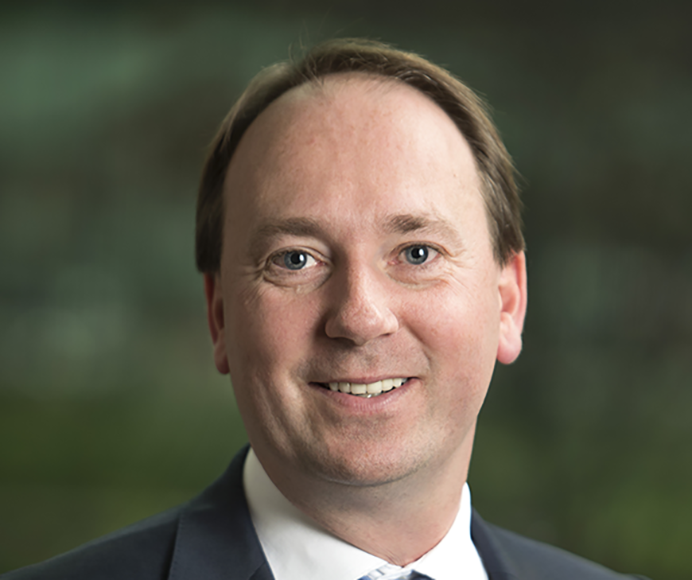
According to Michael Hasenstab, Chief Investment Officer at Templeton Global Macro, “at the start of 2016, we are encouraged by the vast set of fundamentally attractive valuations across the global bond and currency markets. We expect continued depreciation of the euro and yen, rising US Treasury yields, and currency appreciation in select emerging markets.”

During the next year, the investment professional expects a dichotomy of Monetary Policies, with rising interest rates from the US Federal Reserve and Quantitative Easing from the BOJ and ECB. Hasenstab also mentions that “fears of global deflation are unwarranted” and that him and his team  “do not anticipate a global recession.”  Their growth projections for 2016 are 2%–3% for the United States, above 1% for the eurozone, around 1% for Japan and between 6% and 7% for China. In regards to the Asian giant, Hasenstab believes that newer sectors such as the service one, will fuel wage growth and help support consumption.

Looking at Emerging markets, the Franklin Templeton expert believes that Solvency will not be a mayor issue in the area. “Emerging markets were often regarded as being in near-crisis condition during the second half of 2015. We believe concerns of a systemic crisis have been exaggerated” says Hasenstab, adding that commodity exporters, and emerging markets with poor macro fundamentals, remain vulnerable. Therefore, “investors should not view the emerging-markets asset class as a whole but should instead selectively distinguish between individual economies.” Hasenstab highlights Mexico and Malaysia as countries with strong fundamentals and solid domestic sources of financing, which will allow them to raise interest rates either in conjunction with US interest-rate hikes or shortly thereafter, while countries like Turkey or South Africa will most likely be negatively impacted by US interest-rate hikes.

Still, he believes that “an unconstrained global strategy is the most effective way to position for a rising-rate environment because it provides access to the full global opportunity set.”
For 2016 he remains optimist, “we are encouraged by the vast set of fundamentally attractive valuations across the global bond and currency markets.” And favors currencies “in countries where inflation is picking up and growth remains healthy, yet the local currency remains fundamentally undervalued. Looking ahead, we expect continued depreciation of the euro and yen, rising US Treasury yields, and currency appreciation in select emerging markets,” he concludes.
 

European Private Equity Market Hits 8-Year High

  |   Por  |  0 Comentarios

The value of European private equity deals through 2015 has hit its highest level since 2007, according to data published by the Centre for Management Buyout Research.

So far the total value of all deals stands at €80.9bn, the highest yearly total since 2007, when the value hit €172.9bn. This is also the fourth highest year recorded by CMBOR, behind 2007, 2006 and 2005 respectively.

Currently, the total exit value in Europe is estimated at €153.2bn, which is a new record according to the methodology; IPOs and trade sales set records at €48.7bn and €63.8bn respectively.

CMBOR’s latest annual report suggests there were many bigger deals helping to drive the private equity market on this past year. Some 19 deals worth more than €1bn were recorded, against 13 the previous year. These bigger deals account for about half the total value of the European buyout market. Such deals were also geographically spread “with Switzerland (1), Denmark (1), France (3), Germany (4), Sweden (1), Austria (1), Spain (1) and the UK (7) all seeing deals of €1bn and over during the course of the year.”

“The spread of large deals across Europe, suggests a resurgence in the private equity market across the continent. For instance, Belgium has had a particularly strong year with total value of deals at €3.2bn, just below the 2007 record value, while Denmark has had its strongest year since 2006 (€4.8bn). Switzerland and Austria also had impressive years with the total value of deals in 2015 standing at €3.7bn and €2.6bn respectively, which in both cases are record values,” CMBR said.

And while the UK retains its position as the strongest European deal market, with value totalling €26.8bn, France has seen a rebound putting it on par with Germany.

Other findings in the data point to strong deal flows in manufacturing and retail, but less so in technology, media and telecommunication. The value of deals in the support services sector remained fairly constant, at around €9bn compared to €9.3bn in 2014.

Christian Marriott, Investor Relations partner at Equistone Partners Europe Limited, which sponsored CMBOR’s research, said: “2015 has been a very strong year for European private equity deal activity, with the UK still leading the way. However, all the core European markets have performed well, which reflects the trend of a consistent increase in total European buyout value of about €10bn since 2013. Boosted by the Verallia buyout, France has been strong in 2015 and made up previously lost ground on Germany, which in recent years has firmly established itself as Europe’s second biggest deal market behind the UK.”

“The European private equity exit market also had an outstanding 2015, achieving a record total value. While volatility in European markets stifled the IPO activity in the previous two quarters, a flurry of big IPOs at the end year, including Worldpay and Scout24, helped the boost the value to a record number. However, it has not all been about IPOs, as there have been more exits via trade sales than flotations amongst the year’s top 10 largest deals.”

“2015 clearly shows that big deals are back, as shown by the highest average deal value and number of billion plus deals since 2007. With the final quarter proving strong for both deals and exits, the European private equity market will start 2016 with positive momentum.”   

La inversión responsable: ¿zona de conflicto para los fondos de pensiones?

  |   Por  |  0 Comentarios

ESG is a Conflict Zone for Pension Funds
Foto: Pablo Fernández. La inversión responsable: ¿zona de conflicto para los fondos de pensiones?

El escándalo de las emisiones de Volkswagen parece que va a impulsar la inversión ambiental, social y de buen gobierno (IRS, por sus siglas en español o ESG, por sus siglas en inglés), pero los fondos de pensiones que adopten este enfoque se enfrentan a posibles conflictos de intereses, advierte el último número de The Cerulli Edge – Global Edition.

«Las posibles implicaciones legales de mirar más allá de los rendimientos puros a la hora de tomar decisiones de inversión deben ser analizadas,» dice Barbara Wall, directora de investigación en Europa de Cerulli Associates. La Comisión de Derecho del Reino Unido, por ejemplo, dice que los gestores no deben proceder con una decisión motivada por factores no financieros si se corre el riesgo de causar un perjuicio financiero significativo al fondo. Sin embargo, como señala Cerulli, esto puede reducirse a una cuestión de grado: en un caso, un tribunal dictaminó que «se había actuado dentro de la ley al decidir que la exclusión de 13% del mercado sería aceptable, mientras que excluir el 37% no lo sería».

Al afectar a millones de vehículos a nivel mundial, la acción fraudulenta de Volkswagen puede incluso poner en peligro la existencia de la automotriz alemana. Cerulli dice que los fondos de pensiones con exposición a Volkswagen tienen derecho a sentirse ofendidos; no sólo por la pérdida causada en las valoraciones de sus carteras, sino también por el daño a la salud y al medio ambiente causados ​​a la sociedad en general.

«¿Un enfoque en la ESG habría evitado invertir en Volkswagen? Probablemente no, porque ningún gestor de fondos podría haber previsto el fraude en una empresa como la automovilística», dice Wall. «Pero al sondear las estructuras de gobierno de las empresas y tener una comprensión completa de sus incentivos de gestión, los inversores deberían estar en mejores condiciones de identificar a los más vulnerables a eventos sorpresa», dice.

En los últimos 10 años la iniciativa de las Naciones Unidas sobre Principios para la Inversión Responsable (UNPRI) ha pasado de alrededor de 100 signatarios con 4 billones de dólares (3,7 billones de euros) en activos bajo gestión a 1.260 firmantes con 45 billones en AUM. Cerulli cree que esta tendencia de crecimiento continuará.

Durante mucho tiempo, diversos inversores han tenido exclusiones específicas dentro de sus directrices de inversión; entidades basadas en la fe, por ejemplo, o no invertir en armas y tabaco. Sin embargo, la inversión sostenible se ha movido mucho más allá, desde la exclusión pasiva hacia un enfoque activista que abarca cuestiones fundamentales, entre las que, el día de hoy se incluyen las relacionados con emisiones de dióxido de carbono y sus efectos en el cambio climático. El fondo de pensiones holandés ABP anunció en octubre que pedirá a todas las empresas en su cartera de inversiones que detallen cómo operan responsablemente y qué tan sostenibles son.

«Esperamos que más fondos de pensiones empiecen a considerar las inversiones sostenibles, pero los antecedentes culturales y el nivel de sofisticación de los inversores van a ser factores determinantes de cualquier compromiso. Por ejemplo, los fondos de pensiones en los Países Bajos y Dinamarca serán mucho más propensos a hacerlo que, por ejemplo los de Alemania», dice Justina Deveikyte, analista internacional en Cerulli.

High Yield Liquidity: 5 Ways To Help Deal With It

  |   Por  |  0 Comentarios

Following the closure of the Third Avenue fund earlier this month, liquidity issues are once again at the forefront of investor’s minds when it comes to the high yield market. Ultimately, conditions will only improve with structural changes to the market but in the meantime we think there are several steps that can be taken to help improve the underlying liquidity profile of a high yield portfolio.

Buy and Hold – by keeping portfolio churn low and buying securities with a view to a long term holding period and accepting that there will be some price volatility, the liquidity needs of a portfolio are automatically curtailed. This also means corporate fundamentals and the underlying credit worthiness of an issuer over the long term are bought more sharply into focus at the point any purchase is made. The question “Would I be happy to hold this bond through periods of market distress” is a good one to ask. If the answer is “yes”, then the chances of finding a buyer during such periods are greatly enhanced.

Stick to larger bond issues – The bigger the bond issue, the greater the investor base and the greater chance of being able to match a buyer and a seller (we illustrate this below by comparing the recorded activity trade activity for a $4.28bn bond, and a $200m bond issued by the same company). However, this can be a double-edged sword. The larger a bond issue, the more likely it is to be a constituent of an ETF portfolio which can be disadvantageous during periods of large redemptions.

December 17th 2015 Trade History for Sprint 7.875% 2023, $4.28bn outstanding:

 
December 17th 2015 Trade History for Sprint 9.25% 2022, $200m outstanding:

Diversify by market – Trading environments can and often do differ in different markets. A portfolio that can invest across the range of ABS, financials, corporate, sovereigns, emerging markets, fixed rate or floating rate, Europe or the US can often exploit better liquidity conditions in one market when another is facing difficulty.

Use liquid proxies – The daily volume that trades in the synthetic CDS index market is an order of magnitude greater than the physical cash market. Keeping part of a portfolio in such instruments provides access to a deeper pool of liquidity and can provide a useful buffer in periods when the physical market conditions worsen. However, there is an opportunity cost in terms of stock selection that needs to be considered.

 
Keep cash balances higher
– The most effective way to boost liquidity in a portfolio is the simplest: hold more cash. 5% is the new 2%. Again, there are opportunity costs in terms of market exposure and stock selection, but the benefits in terms of liquidity are immediate and tangible.

It’s important to stress that none of these measures are a silver bullet, but they are mitigants. They can buy time and help investors tap liquidity. In today’s high yield markets, the question of how a portfolio’s liquidity is managed has become just as important (if not more so) than its investment position

Opinion column by James Tomlins from M&G Investments


The Global ETP Industry Reached a New Record 2.9 Trillion US Dollars at the end of November

  |   Por  |  0 Comentarios

According to Deutsche Bank Markets Research’s latest report, the global ETP industry continued to grow during November. After net inflows totaling US$ 34 billion in October, the November figure was a further US$ 25.7 billion. As such, the industry now manages US$ 2.9 trillion. As in the previous month, the American ETP sector was the driver of this growth. It contributed US$ 26 billion to global growth. Since the start of the year US ETPs have secured virtually US$ 200 billion. In keeping with the previous month, inflows from Equity ETFs dominated with US$ 25 billion.

The trend for Bond ETFs turned negative in November. In contrast to worldwide inflows of US$ 14.5 billion for this segment in October, during the month just past investors withdrew US$ 47 million. Inflows also declined for Commodities ETCs. After a plus of US$ 789 million in October, the past month saw a minus of US$ 153 million. In parallel with the American ETP sector, the European ETF sector continued to grow during November. Following net inflows of US$ 6.9 billion for October, the sector secured US$ 3.4 billion in November. Equity ETF inflows also dominated in this case. Conversely, Asian ETPs saw a continuation of the negative trend of the previous month. Investors withdrew US$ 3.7 billion. Equity ETFs were particularly affected with outflows running to US$ 3 billion. In fact, Bond ETFs also recorded a decline.   

European ETF Market In and Outflows

Equities:

The positive trend for European ETFs continued during November. In total, the sector recorded net inflows of EUR 3.1 billion, compared with October’s EUR 5.9 billion. This was primarily due to Bond ETFs with net inflows of EUR 515 million which was significantly lower than the previous month (+ EUR 3.5 billion). At the same time, net inflows for Equity ETFs at EUR 2.5 billion were slightly higher than in October (+ EUR 2.4 billion). 

ETFs on US Equities were particularly in demand with European investors. With net inflows of EUR 637 million, US Equities accounted for one quarter of positive Equity ETF cash flows, followed by Global Indices (+ EUR 436 million) and Japanese Equities (+ EUR 387 million). This marked a trend change for US Equities after investors withdrew capital totaling EUR 227 million from this segment in October.

Net inflows recorded by ETFs on European Equities fell to EUR 54 million after EUR 1.1 billion the previous month. Since the start of the year, cumulative net inflows recorded by ETFs on broadly-based European Equity Indices total EUR 20.3 billion, although during November the trend showed a slight change with investors withdrawing EUR 279 million from this segment.

The positive shift in ETFs on Emerging Markets continued in November. This segment recorded a further EUR 6 million following EUR 824 million in October. Since the start of the year however, Emerging Markets ETFs have registered total outflows of EUR 1.9 billion. Having said that, during November inflows for ETFs on large Emerging Markets declined, in particular India ETFs where investors withdrew EUR 225 million. Positive inflows were recorded by ETFs on international Emerging Markets Indices. Strategy ETFs achieved a turnaround in November again registering inflows of EUR 178 million, after October’s outflows of EUR 481 million.

Bonds

The positive trend for Bond ETFs also progressed in November, although net inflows of EUR 0.5 billion were significantly lower than the October figure (+ EUR 3.5 billion). In this arena, ETFs on Corporate Bonds accounted for the highest inflows with EUR 1.7 billion. This exceeded the October inflows figure. From an annual viewpoint, Corporate Bonds have registered net inflows amounting to EUR 13.1 billion. The positive trend over recent months for Sovereign Bonds has come to an end for the time being. Investors withdrew EUR 1.3 billion from this segment.

Commodities

European Commodities ETPs registered EUR 166 million in November after EUR 340 million during October. While ETFs on Industrial Metals did once again generate slightly positive cash flows, ETFs on Precious Metals shed EUR 167 million contrasted with October when this segment had made a positive contribution to inflows.

Most Popular Indices

  • In November, investors showed interest in Real Estate and Dividend ETFs. As such, ETFs on Real Estate Equity Indices in particular came high up the lists.
  • The most popular Equity Indices in November were the S&P 500, the Euro STOXX 50 as well as the Stoxx 600.
  • In the Bond arena, ETFs on Corporate Bond Indices in particular proved to be some of the most popular indices.

La renta variable lidera las entradas durante noviembre en fondos y ETFs estadounidenses

  |   Por  |  0 Comentarios

International Equity and Sector Equity Lead Inflows in USA Funds and ETFs in November
CC-BY-SA-2.0, FlickrFoto: Benontherun, Flickr, Creative Commons. La renta variable lidera las entradas durante noviembre en fondos y ETFs estadounidenses

El proveedor de datos Morningstar presentó recientemente las estimaciones de flujos en fondos de inversión y fondos cotizados (ETFs) durante noviembre de 2015, cifras a las que llega al calcular la variación de los activos en fondos que no se explica por el desempeño del mercado, así como en el caso de los ETFs, calculando el cambio en las acciones en circulación.

De acuerdo con sus datos, continuará la tendencia de las asignaciones hacia la renta variable internacional, así como las posiciones pasivas en los fondos de renta variable de Estados Unidos y fondos de bonos. Los bonos estadounidenses a medio plazo se mantuvieron como una de las categorías más populares en noviembre, mientras que los fondos de renta variable estadounidenses con gestión activa vieron su sexto peor mes de noviembre desde 1993, cuando Morningstar comenzó a rastrear los datos de flujo de activos.

Las salidas de los fondos activos continuaron en noviembre para un número de compañías, incluyendo a PIMCO, Franklin Templeton, Fidelity, y JP Morgan. En el lado pasivo, Vanguard e iShares recaudaron 14.200 y 13.000 millones de dólares respectivamente. Desde el comienzo de la crisis de diciembre de 2007, Vanguard ha recaudado un billón de dólares y desde entonces sólo ha visto salidas netas en dos meses, octubre de 2010 y junio de 2013.

La categoría de bonos high yield ha tenido unos meses muy volátiles en los últimos meses y aterrizó entre las cinco categorías con mayores salidas en noviembre, turbulencia que continuó hasta principios de diciembre, tras el anuncio de que Third Avenue Management planea liquidar su fondo de high yield, Third Avenue Focused Credit, sin permitir a los inversores el redimir sus posiciones de inmediato.

Del lado de las entradas, los cinco fondos activos con los mayores flujos mensuales fueron de renta fija, liderados por PIMCO, y sus 1.200 millones de dólares. T. Rowe Price se estrenó en el ranking con entradas durante noviembre de 741 millones.

Luxembourg Welcomes ELTIF

  |   Por  |  0 Comentarios

As the regulation of European Long-Term Investment Funds (ELTIFs), established by the European Commission to give new impetus to economic recovery in Europe, entered into force on 9 December 2015, the Association of the Luxembourg Fund Industry (ALFI) announced that Luxembourg is prepared and believes it has a key role to play in ensuring the success of ELTIFs.

“The objective of the EU in setting up ELTIFs was to boost smart, sustainable and inclusive growth,” said Denise Voss, Chairman of ALFI. “Take-up of the new funds may be a gradual process, but we believe that Luxembourg has the in-depth experience and expertise required to support fund promoters wishing to launch ELTIFs, and we are ready to assist them.”

Ms Voss continued: “To articulate the essential role of investment funds for the global economy is an important part of the ALFI 2020 Ambition. Luxembourg has practical solutions for ELTIFs, the Luxembourg legal framework offering a wide range of solutions to fulfil the needs of ELTIFs, their managers and investors.”

ELTIFs are an initiative of the European Commission under its Capital Markets Union plan. They are a pan-European regime for Alternative Investment Funds (AIF) which channel the capital they raise into European long-term investments in the real economy in order to achieve growth and create jobs.

The ELTIF represents a milestone in the development of the cross-border European long-term funds business. Their long-term focus distinguishes them from most existing investment vehicles and they are therefore particularly suitable for institutions such as pension schemes and insurance companies with long investment horizons, as well as complementing and diversifying individuals’ savings portfolios.

Like the funds subject to the Alternative Investment Fund Manager Directive (AIFMD) legislation, they must have an authorised alternative investment fund manager, but like UCITS, their pan-European marketing ‘passport’ allows them (under certain conditions) to be sold to individual investors who may not necessarily be classified as professional or sophisticated.

“The leading position of Luxembourg as a true cross-border and fund distribution hub will greatly serve the development of ELTIFs”, Ms Voss concludes.

ALFI has prepared brochure on ELTIFs which gives details on what ELTIFs could look like and what the regulatory requirements are such as the fact that an ELTIF shall not undertake any of the following activities:

  • Short selling of assets;
  • Taking direct or indirect exposure to commodities;
  • Entering into securities lending, securities borrowing, repurchase transactions or any other agreement which has an equivalent economic effect and poses similar risks, if thereby more than 10% of the assets of the  ELTIF are affected; and
  • Using derivatives (except for hedging purposes)

The document is available on the ALFI website.

ALFI’s Hong Kong Office Celebrates Five Successful Years

  |   Por  |  0 Comentarios

The Association of the Luxembourg Fund Industry (ALFI) celebrated the fifth anniversary of the opening of its Asia Office in Hong Kong at its annual roadshow. Asia has become the main non-European market for UCITS funds, totaling approximately 62% of total UCITS registrations outside of Europe

Luxembourg’s position as the international fund center of reference continues to grow in Asia, with over 700 people attending ALFI’s financial seminars in Tokyo, Tapei and Hong Kong this week.

“Through our ongoing activities in Asia, we have developed strong relationships with stakeholders from the various Asian fund jurisdictions and we continue to work with them on key issues that impact the industry,” said Camille Thommes, general director of ALFI.

“Since the opening of our office in Hong Kong five years ago, the Chinese economy and financial markets have undergone a remarkable transformation and seen significant growth. More specifically, the Chinese equity market has grown to the second largest equity market in the world after the US,” said Thommes.

“ALFI has helped to make significant in-roads into the opening up of China’s capital markets. Luxembourg was the first country to authorize an RQFII UCITS in 2013 as well as the first country to authorize a UCITS to invest through the Shanghai – Hong Kong Stock Connect program,” added Thommes. “Luxembourg is also Europe’s leading financial center in terms of RMB denominated investment funds.”

Launched in November 2014, the Shanghai-Hong Kong Stock Connect program represented one of the biggest developments for foreign investors wishing to access this market and enabled foreign investors to trade Shanghai-listed shares via the Hong Kong stock exchange, and mainland investors to invest in Hong Kong shares via the Shanghai stock exchange.

Over the past year, 69 Luxembourg UCITS funds as well as 12 alternative funds have received approval from the Luxembourg Supervisory Authority, the CSSF, to access Stock Connect. The RQFII scheme was launched in Hong Kong in 2011 and has been expanded to other jurisdictions since 2013, allowing an increased volume of offshore RMB to be reinvested into China’s securities markets. In April this year, the People’s Bank of China granted a RMB 50 billion Qualified Foreign Institutional Investor (RQFII) quota to Luxembourg. ICBC (Europe) and Bank of China Luxembourg both recently received regulatory approval as the first Luxembourg-based RQFII holders.

Bond Funds Lost Market Share Amongst European ETFs

  |   Por  |  0 Comentarios

According to Detlef Glow, Head of EMEA research at Lipper, assets under management in the European exchange-traded fund (ETF) industry increased from €444.3 billion to €457.4 billion during November.

This €13.1 billion increase in November was driven mainly by the performance of the underlying markets, which accounted for €10.0 billion, while net sales contributed €3.1 billion to the overall growth of assets under management in the ETF segment.

In terms of asset classes, Equity funds with €2.2 billion enjoyed the highest net inflows for the month, followed by alternative UCITS products with €2.8 billion and mixed-asset funds with €2 billion. Meanwhile, bond funds, which in October had the highest net inflows, suffered during November from the highest net outflows, loosing €7.8 billion.

The best selling Lipper global classifications for November where:

  • Bond EUR Corporates with €0.6 billion
  • Equity Global with €0.6 billion
  • Bond EUR High Yield with €0.6 billion

Amongst ETF promoters, Blackrock’s iShares with €1.4 billion, Source with €0.5 billion and db x-trackers with €0.4 billion, were the best selling ones.

The best selling ETF for November was the iShares Euro High Yield Corporate Bond UCITS ETF, which accounted for net inflows of €572 million

For further details you can follow this link.

Wealth-X Presents: What Do You Buy the Person Who Has It All?

  |   Por  |  0 Comentarios

Wealth-X, the global ultra-high net worth prospecting, intelligence and wealth due diligence firm, has curated a selection of thoughtful gifts that suit the global lifestyle of the ultra-wealthy, regardless of the season, from an US$ 10,000 custom luxury sneakers to a US$ 60 million Superyacht. The list includes ten exclusive gifts ideas:

1.      Polar Star Superyacht

The 63.4 m (208’) Polar Star by Lürssen combines the capabilities of an explorer vessel with the sleek lines, interior volume and amenities of a modern luxury superyacht. For total comfort and a relaxed Hamptons beach-house feel, the expansive interior features a wide selection of living areas and facilities, including gym and movie theater. The abundant outdoor spaces, spanning five decks, host sun lounging and “al fresco” dining areas, a large Jacuzzi, bar, barbecue and open-air cinema. Polar Star sleeps up to 12 guests in six large staterooms, and the panoramic master suite with private study on the upper deck enjoys unobstructed views. The Polar Star’s comprehensive list of toys and tenders includes a 29’ Naiad jet tender and a 25’ Malibu Wake setter tender, so water-sport “aficionados” can enjoy extreme thrills surfing waves of up to 2m tall. The superyacht can be purchased for EUR 55,000,000 and is also available to charter from EUR 380,000 per week.

2.      Tiffany & Co. out of retirement jewelry collection

The luxury jewelry house Tiffany & Co. has embarked on its first collaboration with another retailer — Dover Street Market, the cutting-edge multi-brand emporium established by Comme des Garçons’ Rei Kawakubo. The capsule “Out of Retirement” collection consists of 18 limited-edition pieces — eight jewelry designs and 10 gift items — inspired by styles from the Tiffany & Co. archives. The offerings include witty sterling silver gifts such as a fish flask riffing on the old “drink like a fish” adage (price upon request), a pillbox shaped like a miniature Chinese take-out box (US$ 545) and party hat (US$ 780) with matching party horn (US$ 1,550). Other vintage pieces are a trio of postage money clips in 18 karat gold (US$ 5,450) and a wood interlock bracelet in 18 karat gold with interlocking rose gold bangle (US$ 10,600).

The exclusive gift items and jewelry will be showcased in installation spaces in Dover Street Markets New York, Ginza and London stores, with site-specific displays inspired by Gene Moore, who designed Tiffany’s iconic windows from 1955 to 1994. To honor the partnership, the classic Tiffany Blue Box will give a nod to Dover Street Market by replacing its signature white ribbon with black on all packaging for the collection.

The limited-edition items will be available at Dover Street Market until January 2016.

3.      Myswear custom luxury sneakers

E-commerce fashion retailer Farfetch has partnered with London-based footwear brand Swear to launch a customization program named Myswear. The service will combine 3D modeling technology with expert artisanal Portuguese craftsmanship; the platform allows customers to design their own sneakers, choosing among 16 unisex silhouettes and over 80 combinations of colors and materials, including ethically sourced python, ostrich and crocodile skins. The footwear designs can run from US$ 385 to US$ 10,000, with four to six weeks lead time from design submission to delivery. Each finished design will be handmade in Portugal, and buyers can opt to have their initials subtly foiled or embossed on the tongue of the sneaker.

4.      Chivas 12 made for gentlemen by Globe-Trotter steamer trunk

Made on request, this modern interpretation of a timeless steamer trunk is a collaboration by Chivas Regal and Globe-Trotter. Featuring bespoke burgundy fibreboard, American white oak from oak casks and a hand engraved copper plaque made from a retired Scotch whisky still, the steamer trunk also comes with specially created compartments for shoes, a drawer to hold up to eight watches, leather covered hangers for pristine suits and a beautifully crafted mini bar with mirrored back. The retail price is GBP 12,000 (US$ 18,000).

5.      The Citation Longitude private jet

The Citation Longitude is a super-midsize business jet with a range of 3,400 nautical miles, a payload of 1,500 pounds and a cruise speed of 550 mph. The spacious cabin has seating for up to 12 with ample legroom, and the jet provides the quietest interior in its class. Natural light is in plentiful supply, with 15 large windows positioned for optimal viewing. While enjoying the view, passengers can stay connected and productive utilizing the standard Internet and cabin management system. The forward wet galley, finished in fine hardwoods, has plenty of room for food preparation. Cabin service is enhanced by hot and cold water, generous cold storage, large supply cabinets and can accommodate an espresso maker and a microwave oven.

6.      Richebourg Grand Cru wine

A rare vintage from Burgundy, the Richebourg Grand Cru garnered media attention as the world’s most expensive wine this summer, just after the famous French wine-making region was named a U.N. world heritage site. UNESCO recognized the uniqueness of the vineyards of the Cote de Nuits and the Cote de Beaune south of Dijon, which produce some of the finest red wines in the world made from pinot noir and chardonnay grapes. The Richebourg Grand Cru currently sells at an average US$ 14,478 per bottle across all vintages and all merchants stocking it, according to Wine-Searcher. In particular, the 1985 regularly commands up to US$ 20,000 a bottle.

The Richebourg Grand Cru was a Cote de Nuits created by visionary winemaker Henri Jayer, who died in 2006 at the age of 84. Jayer was against using chemicals in the winemaking process and only produced about 3,500 bottles per year. As a result of the low supply and high demand, this wine has been one of the priciest in the world since May 2011.

7.      Zhoujie Zhang Evolution of a chair artwork

This stainless steel, mirror finish piece is a unique 2011 artwork by furniture designer Zhoujie Zhang, known for integrating automated digital design and elements of spontaneity and chance. To produce his pieces, Zhang inputs basic mathematical instructions into a computer program, which then generates the object forms. The pieces are then cut, assembled and polished by hand at Zhang’s in-house workshop. The price of “Evolution of a Chair” is US$ 20,000.

8.      Four Seasons’ around the world tour

Since 2012, Four Seasons has offered extravagant world tours via private jet with TCS World Travel. However, this spring, the luxury resort company started running tours on its own fully branded private jet (a Boeing 757-200ER), with more opportunities to provide its famous levels of service at 35,000 feet in the air. For US$ 132,000 per person starting in January, up to 52 passengers can enjoy a 24-day voyage of discovery, spanning the Taj Mahal, Sydney Opera House, Bora Bora and jungles of Chiang Mai. The inclusive, exquisitely curated tour removes the ordinary hassles related to travel; Four Seasons handles all accommodation, meals, drinks, ground transportation and custom excursions.

There are at least 21 hotel-trained crew and staff on board each Four Seasons flight, including three pilots, two engineers, a travel coordinator, concierge and executive chef. During trips that involve adventurous activities — such as game watching in the Serengeti — a physician and a photographer also are available. Each guest receives an iPad Air 2 in advance of the trip for pre-loading entertainment; upon boarding, passengers each get a cashmere blanket, Bose noise-cancelling headphones and custom leather travel journal by Moleskin — all theirs to keep.

9.       BAC Mono Marine Edition supercar

BAC has created the “Marine Edition” of its Mono supercara single-seat sports car specifically designed to be stored on a superyacht. Weighing only 580 kg, the ultra-lightweight model is powered by a new 305hp normally aspirated engine delivered through a Hewland FTR gearbox, as found on current F3 race cars, and it can reach 0-60mph in 2.8 seconds. Launched in collaboration with yachting company Camper & Nicholsons, the Marine Edition will feature anti-corrosive ultra-high specification components for performance and durability, proprietary lifting system for safe and easy hoisting, an Environmental Control Container System for on board storage in climate-controlled environment and complete customizable designs to complement the colour scheme of the yacht. It is built to order at GBP 500,000 (US$ 750,000).

10. 1201 Laurel Way, Beverly Hills

The six-bedroom, 10-bathroom, 11,000-square-foot estate sits on a promontory in the hills on nearly an acre north of Sunset Boulevard. Surrounded by a dramatic “moat,” the home features floor-to-ceiling windows with sweeping, unobstructed views of Downtown Los Angeles, Catalina and the coastline of California. 1201 Laurel Way has a 2,200-square-foot private deck with a six-person Jacuzzi hot tub, a home theater with seating for 11 people, a 1,000-bottle wine room, all-glass six-car garage and a master suite fitted with a wet bar and a fireplace set in a white glass wall. The main outdoor entertainment area comes with an infinity pool and another Jacuzzi. There is also a guesthouse on the property with built-in kitchenette and gym. The asking price is US$ 42 million.