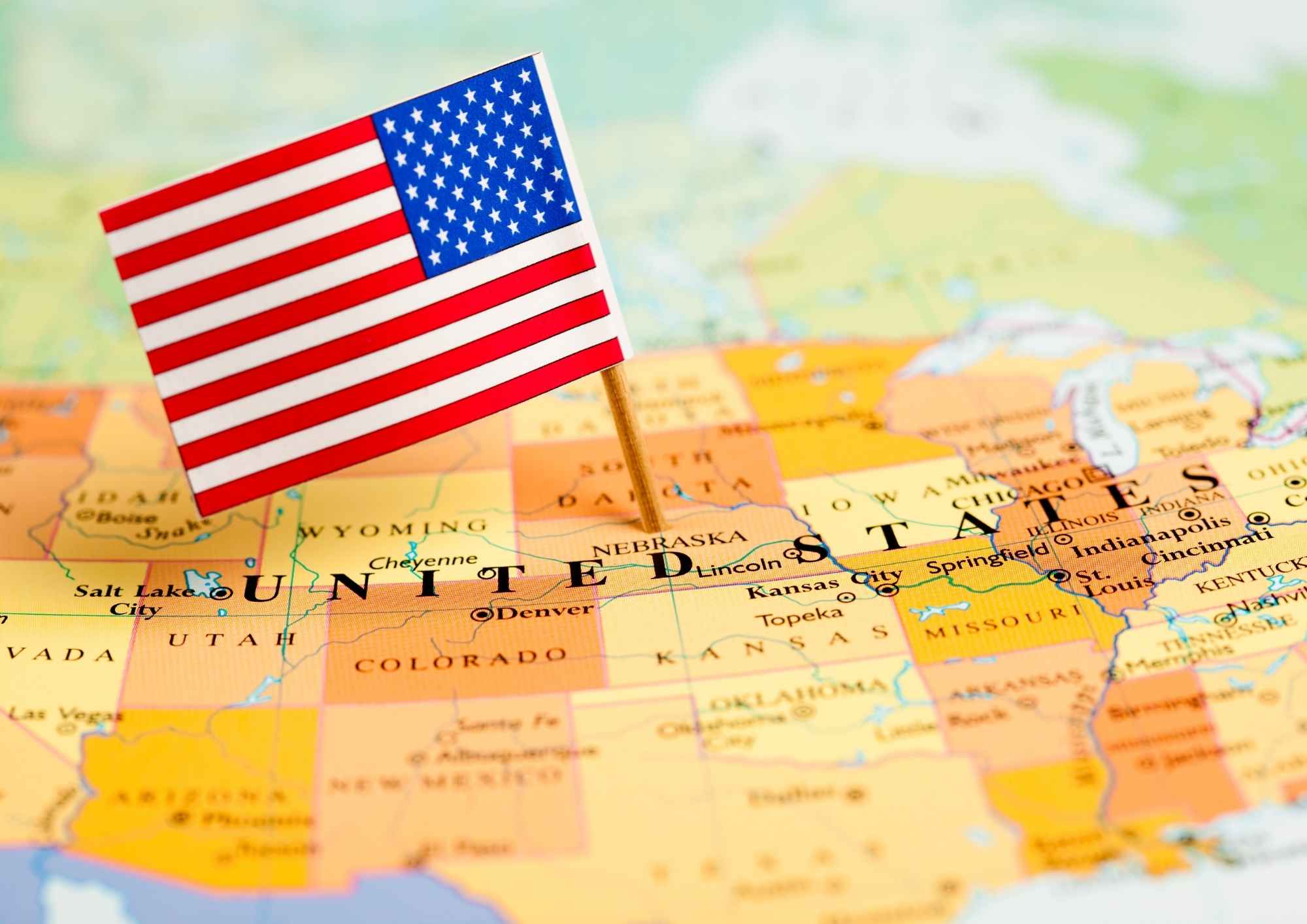
On July 4th, the United States will celebrate the 250th anniversary of its Declaration of Independence. Two and a half centuries later, the country has not only consolidated its position as the world’s largest economy, but also as the primary destination for global savings and the benchmark market for institutional investors from practically every region of the globe.
Pension funds in Latin America, European insurers, sovereign wealth funds in the Middle East, American universities, and wealth managers in Asia all share a common characteristic today: a significant portion of their portfolios depends on the performance of Wall Street, the dollar, and the U.S. Treasury bond market.
The magnitude of this financial dominance is difficult to match. The ETF industry in the United States currently manages around 15.7 trillion dollars—a historic record—while during the first five months of 2026 alone, it captured more than 837 billion dollars in new inflows.
Globally, assets under management through ETFs reached a peak of 23.08 trillion dollars at the close of May, reflecting the structural growth of indexed investing and passive management—two segments where U.S. markets continue to hold a dominant position.
“Financial integration with the United States is no longer solely a geographical or commercial decision, but a natural consequence of the depth, liquidity, and sophistication of its markets,” explains Juan Carlos Eguiarte of BAI Capital.
The relevance of the United States transcends even its borders. Decisions made by the Federal Reserve continue to determine the global cost of money, the movements of the dollar, and flows toward emerging markets, while U.S. Treasury bonds continue to function as the primary risk-free asset used to value virtually any financial asset in the world.
Not even recent concerns over the rising U.S. fiscal deficit, the growth of public debt, or geopolitical tensions have substantially altered this dynamic. Investors continue to allocate capital to U.S. equities, debt, and exchange-traded vehicles, reaffirming the central role of that market within global investment strategies.
Moreover, American influence is not limited to its stock exchanges. The dollar remains the principal currency of the international financial system and continues to serve as the ultimate safe haven during episodes of global uncertainty. According to data from the International Monetary Fund, 56.8% of global central bank foreign exchange reserves remain denominated in dollars—a proportion higher than the sum of the next most significant reserve currencies combined, led by the euro and the Japanese yen.
The American currency also maintains a dominant position in the international banking and payments system. Close to 55% of international bank loans and assets are denominated in dollars, while around 60% of cross-border deposits and liabilities use the U.S. currency as a benchmark, consolidating its role as the financial language of global trade and investment.
Added to this is the role of U.S. Treasury bonds, considered by investors and regulators as the planet’s primary risk-free asset and used as a benchmark to value everything from corporate debt to infrastructure projects and emerging markets. The Treasury market currently exceeds 30 trillion dollars and constitutes the deepest and most liquid debt market in the world.
And perhaps no institution symbolizes the global influence of the United States better than the Federal Reserve. Decisions regarding interest rates, liquidity, and monetary communication adopted by the Fed have immediate effects on financing costs, the behavior of the dollar, and capital flows toward both developed and emerging economies.
In international markets, there is even an old unwritten rule: when the Fed speaks, the world listens. Statements by its chair can move the prices of bonds, equities, commodities, and currencies across virtually every continent in a matter of minutes, or even seconds.
However, U.S. financial hegemony faces growing challenges. The dollar’s share of international reserves is currently at its lowest level in several decades, and some central banks have begun to gradually diversify into other currencies and gold. Nevertheless, so far no competitor has managed to simultaneously offer the market depth, liquidity, legal certainty, and financial infrastructure provided by the United States.
For fund managers and wealth administrators, the 250th anniversary of American independence offers a rare takeaway for a historical milestone: the main U.S. export is no longer just goods, technology, or energy, but financial confidence.
Two and a half centuries after 1776, the world continues to use the United States not only as an economic reference, but as the axis around which global portfolios are built.