For decades, sports sponsorship was viewed primarily as a marketing tool. That has long ceased to be the case when it comes to the FIFA World Cup. Today, the tournament has become a platform for corporate geopolitics, where energy, technology, financial, aviation and consumer companies compete for something far more valuable than visibility: global influence.
The reason is simple. No other sporting event combines such a vast audience, geographic diversity and cultural reach. FIFA’s figures are compelling: the 2022 Qatar World Cup generated engagement with approximately 5 billion people across television, digital platforms and social media, while the final between Argentina and France attracted an estimated 1.42 billion viewers worldwide—the largest audience in the tournament’s history.
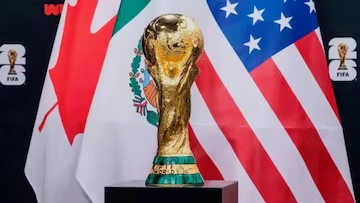
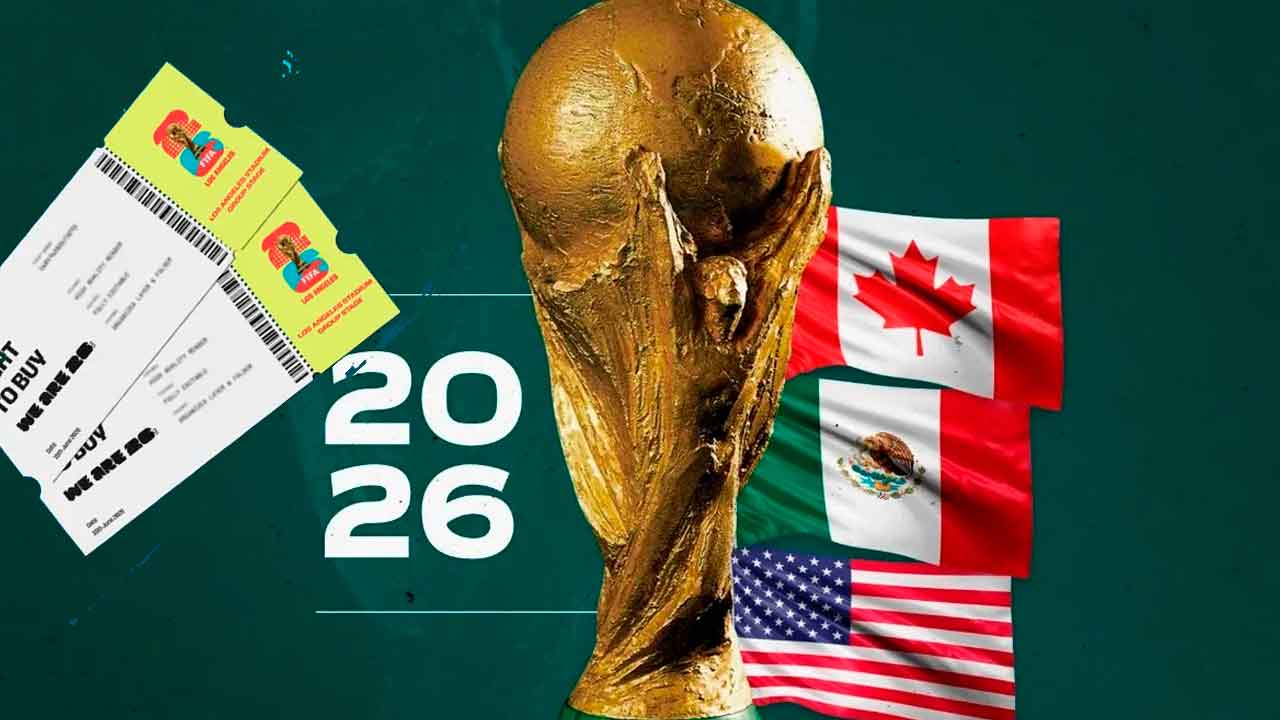
With the 2026 FIFA World Cup, hosted by Mexico, the United States and Canada, the phenomenon will become even larger. The tournament has expanded from 32 to 48 teams, increased from 64 to 104 matches, and will be played in North America—the world’s most lucrative advertising market.
The World Cup has become a $13 billion business, and the tournament’s expansion is reshaping FIFA’s own finances. The organization projects $11 billion in revenue for the 2023–2026 cycle, a 70% increase over the previous cycle, driven primarily by the commercialization of the North American World Cup.
The expected revenue breakdown illustrates the scale of the event: $4.264 billion from broadcasting rights, $3.097 billion from hospitality and ticket sales, $2.693 billion from marketing and sponsorship rights, $669 million from licensing, and $277 million from other revenue streams, according to FIFA. However, several estimates place the tournament’s total economic impact at $13 billion, making it the most profitable sporting event in history.
Energy: From oil to corporate diplomacy
The presence of energy companies in football is no longer coincidental. Oil and gas producers increasingly seek to associate their brands with innovation, sustainability and global connectivity, particularly as the energy transition reshapes the industry. Sports sponsorship has become a form of corporate and national soft power.
The clearest example was Qatar’s strategy during the 2022 World Cup, where international exposure helped reinforce both the country’s geopolitical position and that of its energy companies in Western markets. For hydrocarbon producers and state-owned energy firms, football offers something traditional advertising cannot buy: global legitimacy and emotional connections with consumers and investors.
Technology: Competing for the digital ecosystem
For technology companies, the World Cup represents the ultimate showcase for their data ecosystems, artificial intelligence capabilities and digital services.
The opportunities extend far beyond stadium advertising, encompassing AI-enhanced broadcasting, cloud infrastructure for data processing, real-time analytics, programmatic advertising, cybersecurity, immersive experiences, augmented reality and e-commerce linked to sports broadcasts, among many other applications.
According to FIFA’s post-tournament report, the Qatar World Cup generated 2.7 billion digital and streaming interactions, along with 2.2 billion social media engagements—figures that surpassed those recorded during Russia 2018 and were validated by many of the world’s leading technology companies.
For major technology firms, the tournament is arguably the only event capable of simultaneously delivering global scale and highly sophisticated digital audience segmentation.
Payments: The World Cup as a financial laboratory
The payments industry is arguably the sector that derives the greatest strategic value from these partnerships.
Every fan represents a potential cardholder, digital wallet user, cross-border consumer and future retail investor.
Sponsorship allows companies to transform a sporting event into a platform for accelerating the adoption of digital payments and financial services. It is no coincidence that global payments giants invest hundreds of millions of dollars in sponsorship agreements before committing even larger sums to activation campaigns across dozens of countries.
Some estimates suggest that top-tier global sponsors may spend more than $100 million solely for association rights with the tournament, excluding additional expenditures on marketing campaigns and brand activations.
Aviation: Capturing the growth of global tourism
Airlines use football for far more than selling tickets.
Air connectivity has become strategic infrastructure for international trade and tourism. For airlines, the World Cup represents opportunities to expand route networks, strengthen international hub positioning, enhance loyalty programs, increase premium passenger traffic and attract corporate travelers.
The 2026 edition will span 16 host cities across three countries, generating tens of millions of passenger journeys during just over one month of competition.
Consumer goods: The final frontier of mass marketing
Few industries understand the value of the World Cup better than consumer goods companies.
The tournament remains the only event capable of simultaneously driving impulse purchases, family consumption, higher spending on food and beverages, official merchandise sales and e-commerce growth.
The Qatar World Cup generated more than 15 billion social media impressions and over 3.6 billion video views, extraordinary levels of engagement for consumer-facing brands.
What does this mean for investors?
From the perspective of financial markets and investment funds, the World Cup acts as a catalyst for multiple sectors.
Historically, major sporting events generate temporary spikes in revenue and brand visibility. However, the real value for investors lies in companies’ ability to convert that exposure into long-term customer growth and geographic expansion.
The World Cup has evolved from a competition among national teams into a contest among economic models, global brands and national strategies of influence.
Companies no longer sponsor football simply to sell more soft drinks, airline tickets or credit cards.
They do so because, for one month, the World Cup commands the attention of a large share of the world’s population and offers something extraordinarily scarce in today’s digital economy: a truly global, simultaneous and emotionally engaged audience.
From a geopolitical and financial perspective, few investments provide such significant potential returns in terms of global visibility and strategic positioning.