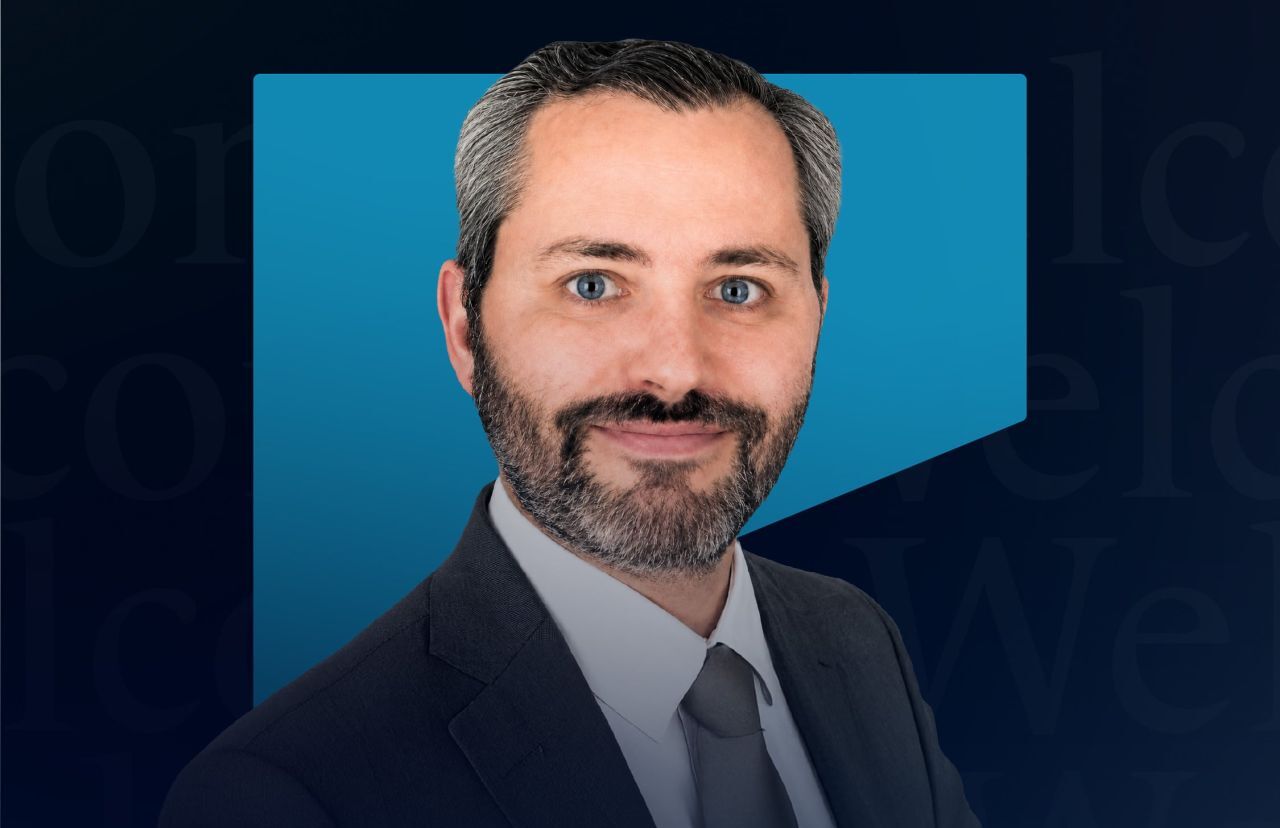
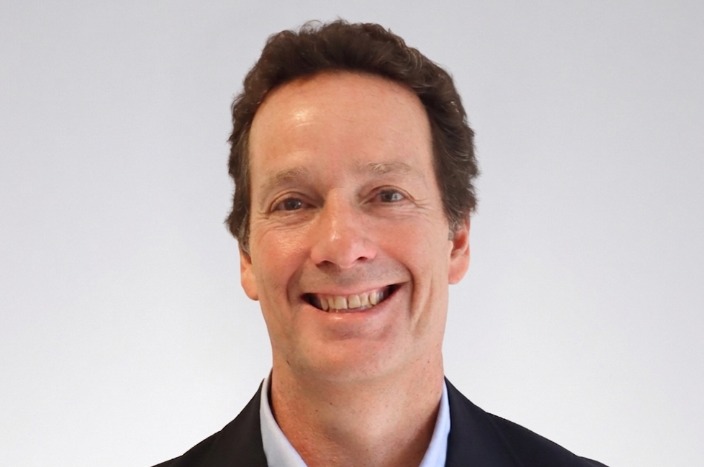
Juan Francisco Clemenza, Director of Advisory Services at Insigneo
Insigneo has appointed Juan Francisco Clemenza as Director of Advisory Services, joining the executive team with immediate effect and reporting directly to Chairman and CEO Raúl Henríquez.
In his new role, Clemenza will lead the strategy and scale of Insigneo’s advisory business, focusing on evolving its investment frameworks, strengthening portfolio capabilities, and driving scalable wealth solutions across global markets.
“I am thrilled to welcome Juan Francisco to our executive leadership team,” said Raúl Henríquez. “His deep industry knowledge and proven leadership will significantly enhance our wealth management capabilities, particularly within advisory services, ultimately strengthening Insigneo’s overall value proposition.”
Clemenza brings nearly two decades of experience in portfolio management, investment solutions, and advisory platform development. He joins Insigneo following 15 years at Citi, where he most recently served as Managing Director and Head of the Citi Wealth Investment Lab for Latin America, overseeing an investment team serving approximately 1,800 ultra-high-net-worth clients across asset allocation, risk management, private markets, and alternative investment integration. He began his career at Bloomberg as a data analytics specialist, holds a Master’s degree in Electrical Engineering from Columbia University, and graduated cum laude in Electrical Engineering from Universidad Simón Bolívar.
“I am excited to join Insigneo at such a pivotal stage of its growth,” stated Clemenza. “Insigneo has built a distinctive wealth management platform, and I see immense opportunity to build upon that foundation by strengthening our investment frameworks, portfolio capabilities, and tools to deliver sophisticated, scalable solutions to our clients.”
According to the firm, the appointment highlights Insigneo’s ongoing commitment to investing in its core advisory capabilities across the Latin American and U.S. offshore wealth management space.
As U.S. public debt surpassed the $40 trillion mark for the first time in history, long-term U.S. yields have reignited alarms over the cost of financing debt, in a potentially explosive cocktail that has raised red flags across financial markets, given that interest expenses have already become one of the fastest-growing budget items for the federal government. Markets remain on edge, awaiting the press conference by U.S. Treasury Secretary Scott Bessent, scheduled for today at 14:00 ET.
“Forty trillion dollars of debt does not in itself represent a macroeconomic tipping point,” says Christian Scherrmann, Chief U.S. Economist at DWS. “However, this figure clearly illustrates the extent to which U.S. fiscal policy has strayed from its historical path. In the long run, what will matter is not only the absolute level of debt, but also what proportion of economic output must be allocated to servicing it,” the expert warns.
In this context, the Federal Reserve maintains a restrictive stance, and the Treasury intervened last week to curb the rise in yields. According to analysts, the signal to markets is clear: money will no longer be as cheap or abundant as it was over the past decade. Put another way, the U.S. financial market is sending a signal that stock markets still seem unwilling to hear: the long-term cost of capital is taking on a life of its own.
An increasingly uncomfortable combination
While major equity indices continue to show resilience, the U.S. Treasury bond market—considered the benchmark for pricing virtually every financial asset in the world—is facing an increasingly uncomfortable mix of high inflation, massive government financing needs, strong capital demand for artificial intelligence and infrastructure, and doubts surrounding the future path of interest rates.
Tensions reached a notable milestone on August 19, when the Department of the Treasury announced that, starting in September, it will double the maximum size of its long-term bond buyback operations, raising them from $2 billion to at least $4 billion per operation for securities with maturities between 10 and 30 years.
The market reaction was immediate. The 30-year Treasury yield, which had topped 5.3% last week, fell about 10 basis points following the announcement, while equities and gold advanced. The move was significant because it came after long-term rates reached levels not seen since before the 2008 financial crisis. DWS notes, however, that “markets continue to offer few signs that investors are fundamentally questioning U.S. solvency,” given that demand at Treasury auctions remains solid, U.S. CDS spreads recently fell to 38 basis points, and even repeated sales by foreign investors—for example, during interventions on the Japanese yen—have failed so far to disrupt market balance. “Markets are signaling higher financing costs, but not a crisis of confidence,” the firm asserts.
However, money market specialists consulted by Funds Society point out that the most important message does not lie in the temporary drop in yields. It lies in why Washington felt the need to act.
It was not the Fed, but it was an intervention
The operation announced on August 19 was not a bond purchase by the Federal Reserve, nor was it a new quantitative easing (QE) program. It was a Treasury decision within its debt buyback program, originally designed to improve market liquidity.
The Treasury buys specific off-the-run bonds trading in the secondary market and, in doing so, helps free up balance sheet capacity for primary dealers and improve liquidity in specific segments of the curve.
Wednesday’s decision significantly increased the size of those operations for long maturities. The distinction is crucial: while the Fed controls monetary policy and financial system liquidity conditions, the Treasury manages the government’s financing needs. Nevertheless, both end up influencing the same variable: the price of money. And that is where one of the major market stories for the second half of 2026 emerges.
The Fed is not cutting rates
At its July 28–29 meeting, the U.S. Federal Reserve maintained the federal funds rate target range at 3.5% to 3.75%, a decision approved by a 9 to 3 vote.
The three dissenters—Beth Hammack, Neel Kashkari, and Lorie Logan—wanted to hike the rate by 25 basis points. In other words, a section of the Committee felt that the inflation problem justified additional tightening.
However, there is another particularly important element to understanding the bond market. The Fed continues to operate under an ample reserves regime. Its guidelines permit open market operations and, when necessary, purchases of Treasury bills and potentially other Treasuries with maturities of up to three years to maintain an ample level of bank reserves.
This means that the Federal Reserve is not engaging in QE in the traditional sense, as experts explain to Funds Society, but nor is it allowing bank liquidity to contract in a disorderly manner—a distinction that is highly relevant. Last week’s intervention should be understood more as market “plumbing” than a radical shift in monetary policy. But even that “plumbing” is acquiring enormous importance.
In this sense, the current strategy can be understood as a balance between two objectives. On one hand, the Fed wants to prevent bank reserves from falling too low and causing friction in the money market.
On the other hand, it does not want to return to the massive balance sheet expansion used during the pandemic and other crisis episodes. The Fed has indicated that it can use purchases of Treasury bills and, if necessary, other short-term securities to ensure that the system maintains sufficient reserves.
Furthermore, it maintains standing repo and reverse repo operations. Repo operations allow liquidity to be provided against high-quality collateral, while reverse repos temporarily absorb liquidity. The New York Fed explains that these operations form part of the mechanisms used to keep the federal funds rate within the range established by the FOMC.
Therefore, it would be incorrect to interpret any Fed liquidity operation as an automatic return to monetary expansion. In reality, the Fed is trying to manage liquidity without necessarily expanding its balance sheet aggressively again.
The problem is at the long end of the curve
According to analysts, this is the section that should concern investors the most. The Fed directly controls short-term rates, but it does not set the 10-, 20-, or 30-year Treasury yield.
Those rates depend on expectations for inflation, growth, fiscal deficit, bond supply, international demand, and the term premium. And that is precisely where pressures are emerging.
The 30-year Treasury reached over 5.3% last week, as the market faces a massive supply of U.S. public debt. At the same time, U.S. inflation remains above the Fed’s 2% target. The July minutes note that inflation remains elevated and that energy-related price increases are complicating the outlook.
The result is a difficult equation: more debt + higher issuance + above-target inflation + strong capital demand for AI and infrastructure = upward pressure on long-term rates.
The market is starting to demand a premium
For much of the past decade, investors grew accustomed to a world of ultra-low rates and abundant liquidity. That environment allowed equity, real estate, and private asset valuations to expand significantly.
Now the landscape is changing. An investor purchasing a 10- or 30-year Treasury is not only evaluating whether the Fed will cut or raise rates at its next meeting. They are also asking how much risk is involved in lending money to the U.S. government over decades.
That question increases the so-called term premium—that is, the additional yield investors demand to hold long-term debt given uncertainty surrounding inflation, growth, deficits, and economic policy.
And if that premium continues to rise, the Fed could lower short-term rates and still find that the rates that truly matter for much of the economy remain high. That is why the Treasury’s move is so important.
The Treasury’s announcement has a relatively small immediate effect compared to the overall size of the Treasury market, which stands at around $31 trillion. But its importance does not lie solely in the $4 billion per operation; in fact, that figure is also modest—what is truly important is the signal.
In practice, the powerful U.S. Treasury is telling the market that it is not indifferent to excessive turbulence at the long end of the curve.
“Policy makers do not have to be passive observers. When pressure emerged at the long end of the curve, the Treasury showed it has tools and is willing to use them,” commented Brian Levitt, Chief Global Market Strategist and Head of Strategy & Insights at Invesco. According to Levitt, the Treasury’s announcement reinforces something he has long believed: “The U.S. government is unlikely to sit idly by and allow a disorderly debt crisis to unfold if it has mechanisms to help address it.”
Paradoxically, the U.S. administration needs to keep the cost of financing its massive debt under control, while at the same time the Fed needs to maintain a sufficiently restrictive stance to combat inflation. There are signs that the problem may grow: according to a note published by DWS on Friday, August 21, if current borrowing trends persist, total U.S. Treasury debt could reach $50 trillion by 2029.
The Treasury wants to prevent long-term rates from spiking, whereas the Fed does not want to give the impression that it is bailing out the bond market. These are objectives that may align at times, but they are not exactly the same.
The real risk
The real risk is that equities could continue rising while the bond market deteriorates for a period of time.
However, that divergence cannot widen indefinitely because a higher long-term Treasury rate means, among other things: higher financing costs for corporations; higher mortgage rates; higher borrowing costs for governments; lower valuations for growth equities; higher cost of capital for infrastructure projects; pressure on private equity; higher return hurdles for private credit; and a higher discount rate for virtually all financial assets.
That is why the behavior of the Treasury is particularly relevant for investment funds, asset managers, wealth management, and family offices. It is not simply a matter of deciding whether to buy or sell bonds. It is a matter of determining what price every financial asset should carry in a world where long-term Treasuries are once again demanding significantly higher yields.
There is also a variable that sets this cycle apart. The U.S. economy is entering a phase of massive investments in data centers, semiconductors, energy, power grids, and technology tied to artificial intelligence, meaning the government is not the only major seeker of capital.
This competition can help keep financing costs elevated even if the Fed eventually begins cutting short-term rates; the problem, therefore, may not be purely monetary—it may be structural.
What does it mean for investors?
For portfolio managers, the scenario forces a review of a premise that dominated much of the past decade: that a drop in Fed rates would necessarily trigger a broad-based bond rally.
Today, that premise might not hold true. If short rates fall but long rates remain elevated due to deficits, inflation, debt supply, and capital demand, the yield curve could behave very differently than expected.
The Fed is keeping its benchmark rate at 3.50%–3.75%, retains tools to guarantee an ample supply of reserves, and has not reactivated a policy of massive asset purchases. At the same time, the Treasury has just increased its long bond purchases to improve market conditions. The combination leaves an open question for the coming months:
Can the United States keep inflation under control, finance a debt exceeding $40 trillion, and simultaneously fund the gigantic investment cycle in artificial intelligence without causing the long-term cost of capital to remain elevated?
The answer will be decisive not only for Wall Street, but will also define the returns investors worldwide will demand in the coming years, experts warn.
The competition for Latin American money is acquiring a new dimension, shifting toward a much scarcer asset: talent capable of understanding the region’s new investor and accompanying them in a market changing at an unprecedented speed. It is no longer just a matter of who has the best funds, who charges the lowest fees, or who offers access to international markets.
In recent months, international asset managers, private banks, independent wealth management platforms, and firms specialized in services for family offices have accelerated the hiring and mobility of executives with regional experience, knowledge of private markets, institutional distribution, global investments, and ultra-high-net-worth management.
The phenomenon is no coincidence. The Latin American investor is changing at the same time as the industry’s architecture.
Large family fortunes have increasingly greater international exposure. Pension funds seek to expand their investment universe toward private assets and global markets; traditional managers compete with independent platforms; ETFs modify product distribution; artificial intelligence begins to transform analysis and client relationships, and the boundaries between asset management, wealth management, private banking, and family offices are becoming less and less clear.
The result will likely be a new investment ecosystem in Latin America. And the institutions trying to build it are already fighting for the people who will have to lead it. Talent moves to where the growth is
One of the most recent examples occurred in January, when Capital Group named Patricia Hidalgo as Managing Director and Head of Latin America. Hidalgo arrived from J.P. Morgan Asset Management, where she spent more than a decade and held, among other roles, the position of Head of Alternatives for Latin America. Before that, she had worked at CitiBanamex in Mexico.
Her new responsibility has special relevance because Capital Group is not only seeking to expand its distribution among institutional investors and intermediaries. The firm expressly pointed out that its strategy includes deepening relationships with pension fund administrators in Mexico, Chile, and Colombia, as well as central banks and sovereign wealth funds.
The move shows where the industry is looking: alternatives, institutional investors, distribution, and regional knowledge are converging into the same executive position. It also shows another element of the new competition: major asset managers are not necessarily looking for talent exclusively within their own organizations. They are fishing in the open market.
Hidalgo is precisely an example of that mobility, an executive moving from one of the largest global asset management platforms to another with an explicit mission to accelerate its Latin American presence.
From global banks to independent platforms
Another move that occurred this summer is even more revealing for the wealth management segment. In July, Insigneo added Juan C. Londoño and Felipe Quintero as Senior Vice Presidents. Both arrived from Merrill Lynch, where they built a joint career over 15 years advising business families and investors from Colombia, Mexico, Central America, and the United States. The deal has a significance that goes beyond the two appointments.
The firm itself highlighted that the executives bring experience in global investment strategy, private banking, and global wealth management. In other words, they carry not only technical knowledge but also relationships, deep understanding of families, and accumulated experience in various jurisdictions. That asset is increasingly valuable.
For decades, a significant portion of Latin American wealth was served by major international banking institutions. Now, independent platforms are trying to challenge that business by offering open architecture, access to multiple managers, and greater flexibility to construct portfolios.
That explains why hiring entire teams has become a strategic tool; it is not simply a matter of hiring a good private banker. It is a matter of acquiring market knowledge, relationships, and distribution capacity.
Miami consolidates as one of the great battlegrounds
The transformation is also reinforcing Miami’s role as a financial platform for Latin American wealth. In July, M&G Investments added Vince León as Senior Sales Manager for its US Offshore and Latin America business. León, with more than 20 years of experience in investment distribution across the Americas, arrived from Voya Investment Management, where he was Senior Vice President and Senior Regional Director for US Offshore. He reports to Ander López, Sales Director for LatAm.
His work consists of engaging with financial advisors, private banks, large advisory platforms, and independent firms serving the US Offshore market. The strategic takeaway is clear: distribution is becoming a specialized competence.
The asset manager no longer needs solely a good portfolio manager. Now it needs people capable of translating a global offering of public and private assets to the specific needs of Latin American advisors, family offices, private banks, and institutional funds, and that ability cannot be improvised.
The phenomenon is even more important when viewed from the perspective of family offices. Large Latin American families are stopping thinking in exclusively national terms. Their portfolios increasingly incorporate assets denominated in different currencies and jurisdictions, from the United States and Europe to Asia, as well as private equity, private credit, infrastructure, and other alternative asset strategies.
Specialized analyses indicate that family offices are reacting to an environment of greater geopolitical and economic uncertainty through increased geographic and currency diversification, while boosting their interest in topics such as artificial intelligence, infrastructure, and energy. Daniel Bassan, then head of UBS in Brazil and Latin America, specifically highlighted the importance of these changes in strategic allocation.
The above alters the skills an advisor needs; the new wealth management professional will have to understand traditional investments, but also international structures, taxation, private markets, estate planning, succession, family governance, and, increasingly, technology.
The border between private banker, investment advisor, and family office specialist is starting to disappear; top executives are also moving because talent mobility is not limited to commercial positions.
In August, Daniel Bassan, who until then was CEO of UBS for Brazil and regional head for Latin America, was announced as the new Vice President of Santander Corporate & Investment Banking in Brazil, a position he will assume at the beginning of 2027. At UBS, his position as country chief for Brazil will be taken by Daniel Barros, who will also maintain his position as CEO of UBS BB.
The move is significant because it shows how major institutions are competing for executives capable of moving between different market segments: investment banking, institutional clients, corporate clients, and large wealth holdings.
In other words, Latin American financial talent is also becoming cross-functional; the most valuable executive is no longer necessarily the specialist who knows a single asset class perfectly. It is the one who understands how different financial businesses interact and can connect institutional capital, private markets, investment banking, and private wealth.
Pension funds fully enter the transformation
The transformation also reaches pension funds. In Mexico, for example, Afores find themselves in a scenario where greater capacity to invest in alternative assets requires professionals capable of analyzing private equity, infrastructure, private debt, and other instruments that traditionally had a much smaller share within portfolios.
The talent map already shows that specialization. Aurora Fadile Herrera, for example, serves as PM Director of Alternative Investments at Principal Afore México, where she participates in private asset strategy, including private equity, infrastructure, and private debt.
The relevance of these types of profiles will increase as Latin American pension funds seek to sophisticate their portfolios, because the challenge does not consist solely of having more resources to invest; in reality, it consists of having the internal capacity to select managers, negotiate structures, evaluate risks, manage liquidity, and monitor investments that can remain in the portfolio for many years.
That is why the competition for private market specialists will not be limited to international asset managers. It will also reach pension institutions themselves.
The new financial professional
All these movements point toward one conclusion: the profile of the professional required by the industry is changing. A decade ago, a good specialist could build their career around a specific asset class, region, or function. The new ecosystem demands a much broader combination.
Institutions will need people who understand a variety of specialized topics such as: private markets and alternative assets; ETFs, indexing, and passive management; international investment and multi-currency portfolios; artificial intelligence and data analysis; digital assets and tokenization; estate planning and succession; taxation and cross-border structures; family offices and family governance; institutional distribution and US Offshore; relationship management with high-net-worth and ultra-high-net-worth clients.
But there is something more important: they will need professionals capable of connecting all those disciplines. The technological revolution does not mean human talent loses value either. In wealth management, exactly the opposite can happen.
Technology can automate much of the analysis, generate information, and improve portfolio construction. But when it comes to managing a family fortune, structuring a succession, or deciding how to distribute assets across several jurisdictions, trust remains an asset that is difficult to replace.
Latin America, a magnet for talent
The movement of executives also reflects a broader reality: international institutions are seeing opportunities in Latin America. Raimundo Diaz, Executive Vice President, Americas at Vistra, recently explained that the firm created Vistra Latam to serve the region, integrating its global platform with the local experience of Biz Latin Hub, acquired at the end of 2025. The organization has around 550 people working in the region.
The firm identifies opportunities related to Latin American companies establishing operations in the United States, international companies arriving in the region, and families requiring structures to manage global wealth and operations.
The message is important because it demonstrates that growth is not occurring solely in asset management. An ecosystem around wealth is appearing: managers, private banks, family offices, fiduciary administrators, tax advisors, lawyers, technology platforms, and alternative investment specialists.
All compete for the same resource: professionals capable of connecting those pieces; talent will be a competitive advantage.
The Latin American financial industry is thus entering a stage where capital will remain indispensable, but not sufficient. An asset manager can have a competitive private credit strategy; a private bank can offer access to virtually any market in the world; a family office can have a sophisticated platform, and a pension fund can have growing resources to invest.
But they all need people who know how to use those tools; the hiring of Patricia Hidalgo by Capital Group, the arrival of Londoño and Quintero at Insigneo, the move of Vince León to M&G, and the leadership change starring Daniel Bassan and Daniel Barros at UBS and Santander are pieces of the same story.
In this sense, the battle for Latin American financial talent is just beginning; over the next few years, we will likely see more moves between asset managers, private banks, pension funds, family offices, and independent platforms. Hiring of specialists coming from technology, consulting, investment banking, and private markets will also increase.
The reason is simple: the business no longer consists solely of managing money, but of understanding where the money will be, how it will move, what products it will need, in which jurisdictions it will be located, and, above all, who will have the trust of its owners. That will be one of the main factors defining the winners of the new Latin American financial ecosystem.
Asset manager Franklin Templeton has announced the successful closing of Franklin Templeton Structured Solutions 2026, L.P., its first Collateralized Fund Obligation (CFO), raising $1.5 billion from investors worldwide.
CFOs are a structured form of financing for diversified private equity portfolios, establishing multiple debt tranches with priority over equity holders. According to the firm, the product is designed to provide investors with diversified, capital-efficient exposure to Franklin Templeton’s primary private markets strategies. This includes private equity secondaries and continuation vehicles managed by Lexington Partners, as well as U.S. middle-market direct lending managed by Benefit Street Partners (BSP)—Franklin Templeton’s alternative credit specialist—across multiple vintages and a broad array of underlying portfolio companies.
Growing Demand for Private Market Diversification
“We are seeing growing client demand for access to differentiated private market strategies through efficient, scalable structures,” said George Stephan, Global Chief Operating Officer, Wealth Management Private Markets at Franklin Templeton. “This first CFO responds directly to that demand by combining the specialized expertise of our private market managers into an offering that reflects the full scope of capabilities Franklin Templeton can deliver.”
“This transaction demonstrates how structured solutions can bring together distinct private market capabilities to meet the evolving needs of institutional portfolios,” noted Jake Williams, Co-Head, Private Markets Product at Franklin Templeton. “The transaction leverages the breadth of Franklin Templeton’s private markets platform and our ongoing commitment to developing innovative solutions that help clients achieve their objectives.”
The successful closing marks a significant milestone for Franklin Templeton, establishing a new capital-raising channel for its private markets platform and positioning the firm to capitalize on rising demand for structured private market solutions as adoption spreads across a broader range of investors, including registered investment advisors (RIAs), family offices, insurance companies, and wealth distributors.
Franklin Templeton currently manages $295 billion in alternative assets under management (as of July 31, 2026) and offers a diversified private markets platform that includes Lexington Partners (secondaries and co-investments), Clarion Partners (private real estate), Benefit Street Partners (private credit), and Franklin Ventures (hedge strategies and digital asset capabilities).
International portfolio diversification for Brazilian investors has gained a new ally. Itaú Asset Management and Vanguard have announced a strategic partnership aimed at expanding the range of products linked to international markets while simultaneously boosting the development of the Brazilian ETF market.
The first concrete outcome of the agreement is the restructuring of SPXI11—Itaú Asset’s S&P 500-tracking ETF launched in 2015. The fund will transition its underlying asset to the Vanguard S&P 500 UCITS ETF, a UCITS-domiciled vehicle designed to track the primary U.S. equity benchmark.
The move represents more than swapping one asset for another: it places two major asset management platforms—one with a deep footprint in Brazil and the other with global scale—within a single investment vehicle tailored for the domestic Brazilian market.
The updated structure also enables automatic dividend reinvestment, a feature that supports long-term compounding by keeping distributed dividends fully invested within the fund.
A Market Looking Beyond Brazilian Borders
The partnership comes at a time when international diversification is becoming increasingly vital for local investors. Itaú Asset already operates a platform of significant scale, managing over 1.2 trillion reais (approx. $231.1 billion) with 2.6 million clients and over 380 professionals.
The bank reports that its clients hold more than 250 billion reais (approx. $48.1 billion) in overseas investments—underscoring the magnitude of demand for international assets among its client base.
In this environment, ETFs provide an efficient avenue for accessing foreign markets. SPXI11 offers direct exposure to the S&P 500 through local Brazilian market infrastructure, holding approximately $67.8 million in net assets. Partnering with Vanguard allows Itaú to enhance this offering using one of the global industry’s most recognized index vehicles.
Vanguard’s Global Scale
Vanguard manages approximately $12 trillion in assets worldwide, serving tens of millions of investors. Founded in 1975, the firm is globally renowned for index-tracking strategies and low-cost structure. Its involvement in Brazil signifies a deeper commitment to one of Latin America’s largest investment markets, where exchange-traded products have steadily gained ground across equities, fixed income, and international assets.
Both institutions noted that the agreement encompasses broader areas of collaboration, including investor education, best-practice sharing, and future product development.
This multi-faceted alignment could prove particularly strategic. Itaú Asset currently operates a multi-desk setup managing 165 billion reais ($31.8 billion) across 23 distinct investment desks. Combining this local distribution and active desk network with Vanguard’s global indexing expertise positions both firms to address growing domestic demand for international exposure.
Ultimately, the alliance reflects a broader trend across the Latin American asset management industry: major domestic managers partnering with global platforms to expand international product offerings directly within local market clearing and execution systems.
As regulatory frameworks across the U.S., Europe, Asia, and the Gulf mature and converge in their treatment of digital assets, crypto investors are rethinking not only asset allocation but also their legal domicile. The core question has shifted from which assets to hold to which jurisdiction enables compliant holding, banking, and reporting under increasingly stringent oversight standards. This is the central finding of “Crypto Secure Jurisdictions: Where Crypto Actually Works,” a global report produced by Global Citizen Solutions (GCS), an international firm specializing in residence and citizenship planning.
The report evaluates how 22 jurisdictions integrate digital assets into tax systems, licensing regimes, and banking frameworks as cryptocurrencies transition into regulated financial infrastructure.
“Residency or citizenship determines how digital assets are taxed, reported, and maintained within the banking system,” stated Artur Saraiva, COO of GCS. “As crypto oversight expands, mobility serves as a structural hedge.”
Distinct Market Profiles
The study identifies three core traits common to resilient crypto jurisdictions: regulatory clarity (defined legal status and formal oversight), institutional infrastructure (regulated exchanges, custodians, and banking access), and predictable tax and compliance treatment.
Rather than naming a single “best” destination, the report categorizes countries by function:
Institutional Benchmark Jurisdictions: Switzerland, Singapore, Germany, the UK, and Canada prioritize legal certainty and integration into broader capital markets.
Structuring & Mobility Hubs: Portugal, Malta, Estonia, and the UAE balance regulatory alignment with attractive residency and tax-planning frameworks.
Deep Capital Markets: The U.S. remains the deepest market for digital capital, albeit under a multi-agency regulatory perimeter.
The report asserts that investment-driven migration now acts as a form of jurisdictional optionality, allowing cross-border investors to diversify regulatory exposure and structure operations under stable legal frameworks.
Regional and Emerging Paradigms
In Latin America, Brazil leads adoption while formalizing its framework under the Banco Central do Brasil to strengthen virtual asset service provider (VASP) compliance. El Salvador continues its state-level adoption model anchored by its Digital Assets Law, offering a high-conviction ecosystem distinct from traditional financial centers. Elsewhere, Caribbean nations with Citizenship by Investment programs are embedding digital assets into existing AML/CFT structures to safeguard credibility while accommodating financial innovation.
Wikimedia Commons"The South Sea Bubble, a Scene in 'Change Alley in 1720" by Edward Matthew Ward
The AI craze and the rallies it has generated in stock markets—especially in the United States—have put the debate over valuations back on the table. While some contend that this is a technology so revolutionary that it can handle all investor dreams, others see a promise too overblown to meet the market’s heavy expectations. Although the question of whether there is a bubble in AI-related stocks remains unanswered for now, the history of financial markets contains some relevant examples.
One of these is the so-called South Sea Bubble, which starred a British company that found successive new heights based on the excitement generated by its royal backing and the slave trade. In a matter of months, the stock inflated to unsustainable levels, and when the bubble burst, the scandal reached the doors of the English Parliament.
Founded in 1711 as a public-private partnership aimed at consolidating, controlling, and reducing the national debt and helping the United Kingdom participate in the lucrative slave trade, The South Sea Company sparked the interest of investors of the era.
In 1713, they secured the monopoly for the trade of enslaved Africans in the South Pacific Ocean, among the Spanish colonies in the Americas. The document known as the “asiento de negros,” a monopoly contract signed between the Spanish Crown and merchants from other countries, served as the framework for the business. This was because the Spanish monarchy preferred not to participate directly in the practice, instead subcontracting services from other European powers.
The Fever Begins
Considering how profitable the slave trade had been over the previous two centuries, the expectation was that the operation would be highly lucrative. The enthusiasm was boosted by the idea that foreign trade would normalize following the end of the War of the Spanish Succession in 1713.
This prospect, along with the confidence generated by the royal backing of the company, attracted a variety of English investors. There are even reports that the physicist and mathematician Sir Isaac Newton participated in this financial fad, investing the modern equivalent of millions of pounds sterling.
Initially, the firm offered a 6% interest rate to those who bought the stock, but the excitement around the shares drove them to a peak in 1720. And the stock maintained its strength, even though no slave trade boom materialized after the signing of the Treaty of Utrecht, which ended the war.
The Spanish gave the British a limited portion of the business and even kept part of the profits, placed taxes on the importation of slaves, and put strict restrictions on the fleets of ships they could send. This undermined the profit prospects of the business.
However, the stock price continued to scale, supported by royal backing. In 1718, King George I of Great Britain assumed the governorship of The South Sea Company, which generated further confidence among the investing public, driving prices higher and coming to generate a 100% interest in the shares.
The Beginning of the End
As happens with many bubbles, prices detached from business fundamentals. Considering that the trade of enslaved Africans was not generating the necessary revenue to justify the stock boom, the rally began to falter.
Furthermore, the company was trading more and more of its own shares and was beginning to participate in questionable practices. There are records of people within the company pressuring—or bribing—their friends and acquaintances to buy shares, keeping valuations high, and there were even bribes and other acts of corruption involving British ministers and officials.
In 1720, the year the house of cards fell, the British Parliament allowed The South Sea Company to buy the national debt. The company paid out 7.5 million pounds to acquire a debt of 32 million pounds. The plan was to use the profits from share sales to pay the interest on the debt.
It was at this moment that the stock price reached its peak. The company’s shares went from about 100 pounds sterling in 1719 to 128.5 pounds in January 1720. From that point, widespread market enthusiasm took it over 1,000 pounds in August of that year.
Shortly after, the price collapsed to little more than its IPO price.
The dilemma of the model created by The South Sea Company is that it was a kind of financial carousel, where the expected added value from the slave trade did not materialize. Instead, the company was inflating its stock price with its own market operations against the public debt it acquired.
The Bursting
The turning point was in September 1720, when the shares began to fall. Once doubt set in, investors began to lose faith and sell the stock, causing prices to plummet. The British company’s stock ended up falling back to 124 pounds in a matter of days, accumulating a drop of more than 80% from its highest point.
The end of the bubble brought heavy losses with it and, along with them, outrage among the investing public. Because the collapse happened in the dawn of the English stock market—the creation of The Royal Exchange dates back to 1571, driven by Queen Elizabeth I—there were no explanations available for the level of speculation the bubble generated in the first place.
A significant number of people lost a lot of money, to the point that the suicide rate increased, according to reports of the era, and those affected reached the political sphere demanding explanations. Thus, Parliament launched an investigation that uncovered the company’s bad practices, turning into a financial and political scandal.
In response, lawmakers passed the Bubble Act of 1720, prohibiting the creation of joint-stock companies like The South Sea Company without special permission by royal charter.
Mind you, although the effect was highly publicized, it did not have a major impact on the general economy and did not generate a recession, unlike other famous bubbles in history.
The company, for its part, continued to trade until 1853, undergoing a restructuring in the interim.
Franklin Templeton, a global investment firm, has announced the successful closing of Franklin Templeton Structured Solutions 2026, L.P., its first Collateralized Fund Obligation (CFO), which raised $1.5 billion from investors around the world.
According to the company, the CFO is designed to provide investors with diversified and efficient exposure to Franklin Templeton’s flagship private markets strategies, spanning private equity secondaries and continuation vehicles managed by Lexington Partners, a pioneer in private equity secondaries and co-investments, as well as U.S. middle-market direct lending managed by Benefit Street Partners (BSP), Franklin Templeton’s alternative credit specialist, across multiple investment vintages and a broad range of underlying portfolio companies.
Growing appetite for diversification in private markets
“We are seeing growing demand from clients for access to differentiated private markets strategies through efficient and scalable structures,” said George Stephan, Global Chief Operating Officer, Wealth Management Private Markets at Franklin Templeton. “This inaugural CFO is a direct response to that demand, combining the specialized expertise of our private markets managers into an offering that reflects the full breadth of what Franklin Templeton can deliver.”
“This transaction demonstrates how structured solutions can bring together different private markets capabilities to address the evolving needs of institutional portfolios,” said Jake Williams, Co-Head, Private Markets Product at Franklin Templeton. “It draws on the breadth of Franklin Templeton’s private markets platform and our continued focus on developing innovative solutions that help clients achieve their outcomes.”
The successful close marks an important milestone for Franklin Templeton, establishing a new capital formation channel for its private markets platform and positioning the firm to capture growing demand for structured private markets solutions as adoption expands across a broader range of investors, including registered investment advisers (RIAs), family offices, insurance companies and wealth distributors.
Franklin Templeton has $295 billion in alternative assets under management as of July 31, 2026, and offers a diversified private markets platform that includes Lexington Partners, focused on private equity secondaries and co-investments; Clarion Partners, specializing in private real estate; Benefit Street Partners, a leader in private credit; and Franklin Ventures, hedged strategies and digital asset capabilities, providing investors with broad access across alternative asset classes.
Over the past decade, Europe appeared condemned to lower growth, less innovation, and more modest returns. However, this consensus is beginning to reverse. An improving economic cycle, increased spending on infrastructure and defense, a push toward reindustrialization, and the development of new technologies are putting Europe back on investors’ radars. Lazard, Edmond de Rothschild, MFS, Aberdeen, and Neuberger agree that the continent is reaching an inflection point, opening up investment opportunities in both equities and fixed income—though they warn that the potential lies not so much in overall indexes, but in the sectors and companies capable of benefiting from this new cycle.
This shift in perception is not driven solely by better economic performance. Underlying fundamental economic improvements are beginning to back the investment thesis. Benoit Anne, strategist at MFS Investment Management, highlights that Eurozone growth has positively surprised in recent weeks, with leading indicators pointing to a stronger-than-expected recovery. Specifically, he underscores that the Eurozone Citi Economic Surprise Index reached its highest level since early 2023—a sign that the European economy’s resilience is proving greater than anticipated by the market. In his view, this environment reinforces the appeal of both European equities and credit.
This macroeconomic improvement coincides with a structural shift that several asset managers view as a primary investment driver for the coming years. Edmond de Rothschild Asset Management contends that Europe is undergoing a “silent revolution” propelled by increased investment in infrastructure, defense, electrification, and artificial intelligence. Unlike other cycles, they explain, the potential is not limited to a handful of large-cap companies, but spans the entire industrial value chain, with small- and mid-cap companies playing a particularly prominent role.
Reindustrialization Shifts From Narrative to Opportunity
In this regard, Craig Wright, Head of European and Asia-Pacific Real Estate Investment Research at Aberdeen, points to the new global European policy, “Made in Europe.” Designed to raise manufacturing industry output to 20% of GDP by 2035, this initiative is driving a structural transformation that Wright believes will require massive investments in factories, logistics, pharmaceuticals, energy, and semiconductors.
According to the Aberdeen manager, certain figures are striking: reaching the target of industry representing 20% of European GDP by 2035 will require building roughly 20 million square meters of industrial and logistics space every year for a decade. Furthermore, defense spending alone could generate demand for an additional 37 million square meters, over and above e-commerce growth.
Capital Looks Toward European Fixed Income
Benoit Anne of MFS considers Euro high yield to currently be the most attractive asset class in global fixed income from a risk-adjusted carry perspective. Meanwhile, Paul Grainger, Managing Director and Senior Portfolio Manager for Fixed Income at Neuberger, offers a counterpoint: Europe remains more interest-rate sensitive, and growth still displays vulnerabilities. Yet, precisely for these reasons, he believes European fixed income is once again offering compelling opportunities.
“European real yields have also risen as the ECB raised rates and continued to guide or allow the market to price in further hikes; currently, the market is pricing in two additional hikes over the coming year, which would put official rates at 2.75%. The impact of AI spending appears smaller in Europe, but we must still account for positive correlations and links between major developed bond markets,” Grainger explained.
The Major Catalyst: Increased Public Spending
Rising expenditure on infrastructure and defense could become one of the primary drivers of European growth over the coming years, provided the geopolitical landscape does not significantly impair the economy. On this point, Ronald Temple, Chief Market Strategist at Lazard, explained that the war with Iran penalized Eurozone growth forecasts more than those of any other major developed economy this year.
“Even so, I maintain an optimistic outlook and believe the region’s GDP will accelerate heading into 2027, driven by higher infrastructure and defense spending. As long as the war continues, Eurozone inflation will remain exposed to energy price volatility. However, there are few signs of spillover from energy into the broader economy, giving me confidence that inflation will ease by 2027,” Temple emphasized.
Without a doubt, expert consensus presents Europe as a major investment opportunity ahead of the next economic cycle. While international geopolitical ambiguity means conditions could evolve rapidly, experts remain notably optimistic regarding the continent’s outlook.
Ricardo Sucre returns to Amerant, marking a new chapter in his career while reinforcing the firm’s international growth strategy. After 12 years at Mercantil Commercebank, nine at Morgan Stanley, and two at Bolton Global Capital, Sucre has stepped into the role of Head of International Wealth Management Sales at Amerant, aiming to drive business development, recruit financial advisors, and support the growth of international books of business.
In a dialogue with Funds Society, the executive outlines the advantages of a platform combining wealth management, banking, brokerage, advisory, and lending, while detailing Amerant’s growth objectives for the coming years. Venezuela once again holds a prominent position within the strategy, while Argentina, Colombia, and Central America stand out as priority markets. Amid growing demand for dollar-denominated assets and access to U.S. markets, Sucre highlights Amerant’s capacity to deliver a comprehensive service relationship to Latin American clients.
You return to Amerant following your initial time at Mercantil Commercebank and your tenure at Morgan Stanley and Bolton Global Capital. What prompted your decision to return?
I worked at Mercantil Commercebank for 12 years between 2002 and 2014, serving in Treasury, Private Banking, and Investments. It was an extraordinary training ground that gave me a solid foundation, enabling me to later explore opportunities at institutions like Morgan Stanley, where I spent nine years, and Bolton Global Capital over the past two years.
Both experiences contributed immensely to my professional development, but I felt a key element was missing: a corporate culture aligned with my principles and an organization close to my roots. Amerant represents precisely that combination. Furthermore, the ability to offer an integrated wealth management and banking platform serves as a unique differentiator in our industry, particularly for the international segment.
How has the institution evolved since your first tenure, both in terms of brand and strategy?
The institution has grown, matured, and significantly diversified its business lines and presence across various international markets. In the specific case of Amerant Investments, we have strengthened a strategic relationship with Pershing spanning over 20 years, allowing us to offer a robust and highly competitive platform. The range of products, services, and solutions available today competes with and even exceeds that of many participants within this market segment.
What does your role as Head of International Wealth Management Sales entail?
My role encompasses three main responsibilities: leading business development efforts and recruiting financial advisors for Amerant Investments’ international platform, highlighting the strengths of an integrated offering of investments and banking services; supporting our existing group of international advisors—seasoned professionals with established books—by helping them optimize their business growth through technology, solutions, and investment products; and managing my own client portfolio, built on long-term relationships over many years. My role retains an important production component that I look forward to continuing to build.
What are your concrete goals for the next 12 to 24 months?
Our goal is to achieve double-digit annual growth in assets under management. To accomplish this, onboarding top-tier advisors with transferable books of business and experience in the international segment will be essential.
Amerant emphasizes an integrated offering. How does that translate in practice for an international client?
In practice, it means a client can hold an investment account—whether brokerage or advisory—custodied at Pershing, alongside a bank account at Amerant Bank. The integration of both platforms provides access to a much broader suite of products and services. A clear example is the ability to secure a portfolio-backed line of credit issued directly by the Bank, combining investment and financing capabilities within a single relationship.
What financial advisor profile are you looking to recruit, and what does Amerant offer compared to independent models like Bolton?
We are seeking advisors with expertise in international business and transferable portfolios who value the benefits of an integrated banking and investment platform. Compared to other models, Amerant offers a unique mix of banking capabilities, investment solutions, specialized financing, and over four decades of experience serving international clients, creating additional opportunities for both advisors and their clients.
Venezuela and the U.S. have been normalizing relations, following the lifting of sanctions on Venezuelan public banking in April of this year. How does this process impact Amerant’s business, given its Venezuelan roots?
Venezuela is part of Amerant’s roots; it is a market we have never walked away from. On the contrary, activity has increased in recent years. Without a doubt, developments following January 3rd have generated renewed interest and expanded growth opportunities.
Do you expect a rebound in capital flows from Venezuela or the diaspora into the U.S.?
Amerant has managed the Venezuelan market for many years—I would venture to say since its founding over 40 years ago. In fact, Venezuela is a market that never stopped growing at Amerant, even during its most challenging periods. Today, since my return to the institution, I can state that Amerant possesses a platform, infrastructure, and team better prepared than ever to capitalize on emerging opportunities.
Beyond Venezuela, which other Latin American markets are priorities?
Argentina, Colombia, and several Central American countries represent priority markets for our international growth strategy. The geographic diversification we have driven over recent years has yielded excellent results, particularly on the Bank’s side.
How do you view international wealth management clients’ demand for dollar assets and U.S. banking in today’s geopolitical environment?
Year after year, we have observed growing demand from international clients to keep their savings, investments, and capital market access based in the United States. Beyond the stability of the dollar and the depth of U.S. financial markets, clients seek institutions that make them feel welcome, understand their specific needs, and deliver solutions tailored to their reality and cultural context.