
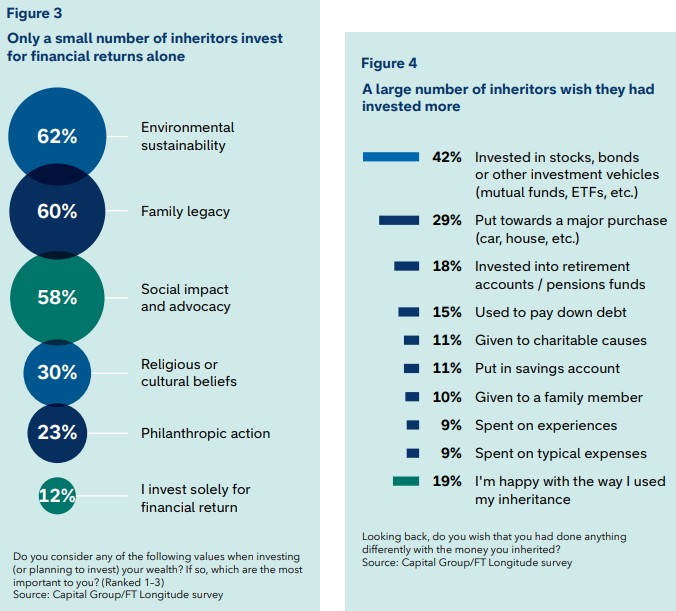
A survey conducted among 1,200 high-net-worth and ultra-high-net-worth individuals reveals a deep conviction gap in the midst of the Great Wealth Transfer. According to the findings, 91% of heirs felt pressured into making their first significant financial decision within the first 3 months of receiving their inheritance, even though only 18% reported feeling highly comfortable operating within that initial timeframe. This operational haste, driven by immediate legal and administrative mandates, results in only 19% of beneficiaries reporting full satisfaction with the management of their inherited legacy, highlighting a critical need for the wealth management industry to shift from basic portfolio structuring toward comprehensive strategic guidance.
Receiving an inheritance frequently entails immediate financial, tax, and administrative decisions before beneficiaries have clearly established their long-term objectives. Findings show that this compressed timeline can result in missed allocations, leaving many wishing they had deployed a greater share of their capital into productive market assets. Trusted advisory relationships play a central role in mitigating this complexity, providing the framework needed to make deliberate decisions and establish structured, long-term investment strategies across generations.
The two-speed trap
The findings reveal a structural mismatch defining the wealth transfer process: a two-speed operational dynamic. On one hand, an accelerated clock is activated by tax obligations, probate mandates, and urgent liquidity reorganizations. On the other, a much slower clock operates—one required for the beneficiary to assess capital allocation, define core objectives, and align portfolios with personal and family values.
Counterintuitively, managing a larger balance does not yield additional time for deliberation. Nearly 90% of individuals inheriting between $25M and $100M were required to execute critical financial decisions within a few weeks, compared to under 10% of those receiving between $100,000 and $500,000. The operational complexity of ultra-high-net-worth estates—comprising private operating business equity, real estate holdings, private market vehicles, and illiquid holdings—compresses decision timelines due to governance requirements, asset valuations, and estate tax liabilities.
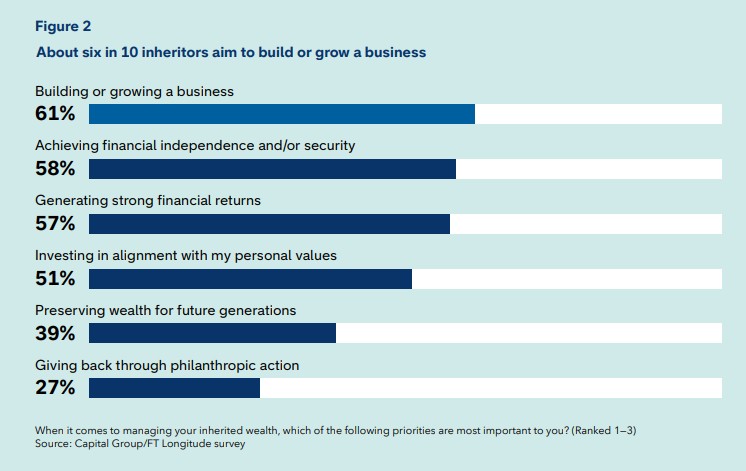
This initial urgency creates long-term frictions. Up to 60% of respondents acknowledge they wish they had allocated a higher percentage of their inherited capital into capital markets (equities, fixed income, mutual funds, or ETFs) and retirement vehicles—a sentiment rising to 67% among women. Furthermore, while 61% cite founding or expanding a business as their primary wealth ambition, only 1 in 5 heirs reports successfully realizing their long-term financial and personal goals.
Analysis paralysis and the execution gap in financial advice
The execution deficit observed among heirs does not stem from an absence of advice, but rather from information overload. Nearly half of respondents (49%) identify an excess of options and conflicting recommendations as their primary hurdle, triggering analysis paralysis.
As a direct result, only 48% of investors fully implement the recommendations delivered by their financial advisors. This stands in contrast to the 79% implementation rate documented among clients who successfully met their long-term milestones. The differentiating variable lies in relationship equity: 78% of respondents highlight that a pre-existing, established relationship with the advisor was the decisive factor during the transfer phase, with 88% placing high value on advisors who provide structural and emotional reassurance alongside technical analysis.
Female investors: cross-validation and expanded trust ecosystems
Female beneficiaries are leading a structural shift in wealth decision-making. Women surveyed demonstrate a significantly higher propensity to require that portfolios reflect their personal values (56% versus 47% of men) and maintain more conservative, diversified allocations, prioritizing mutual funds, indexed instruments, and ETFs over speculative assets.
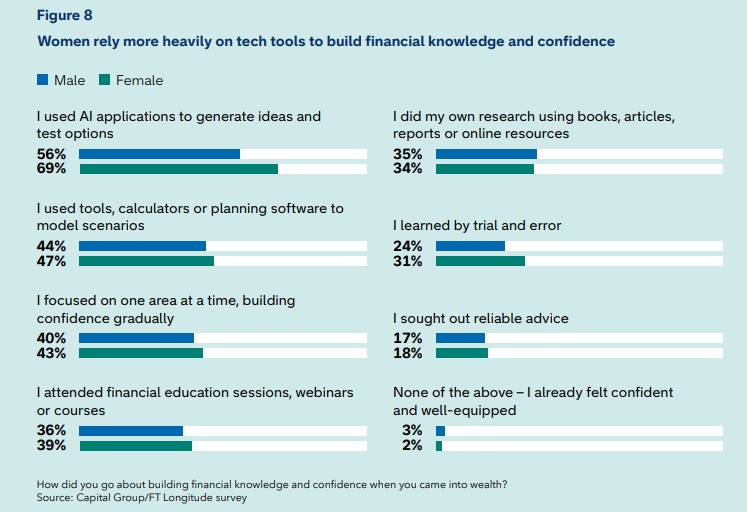
Rather than relying on an isolated source of advice, female heirs establish multi-layered validation models. They supplement professional wealth advisory inputs by leveraging personal networks (78% consult friends or family, compared to 68% of men) and digital tools (73% versus 62%). Technological integration is particularly pronounced: 69% of women deploy artificial intelligence applications to model scenarios and backtest investment alternatives (versus 56% of men), a figure that climbs to 87% among those with inheritances below $500,000.
Generation Z: financial pragmatism and shifting advisory loyalties
The participation of Generation Z is disrupting traditional retention patterns within private wealth management. Fully 54% of younger heirs chose to replace their family’s historical financial advisor after receiving their inheritance, seeking professionals offering greater generational affinity, aligned values, and direct digital interaction channels. In fact, 96% of this cohort demands advanced technology platforms and real-time portfolio monitoring from wealth management firms.
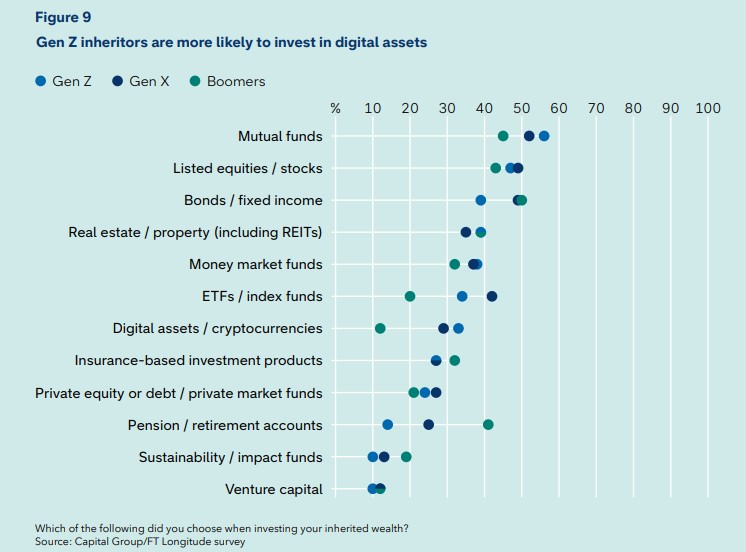
Generation Z’s portfolio allocation reflects distinct commercial pragmatism: 24% invest purely based on nominal financial returns, nearly 5 times the 5% rate observed among Baby Boomers. Simultaneously, they lead in allocating to alternative digital assets: 33% have directed a portion of their inheritance toward cryptocurrencies and digital assets, compared to 12% among older demographics.


 By Amaya Uriarte