
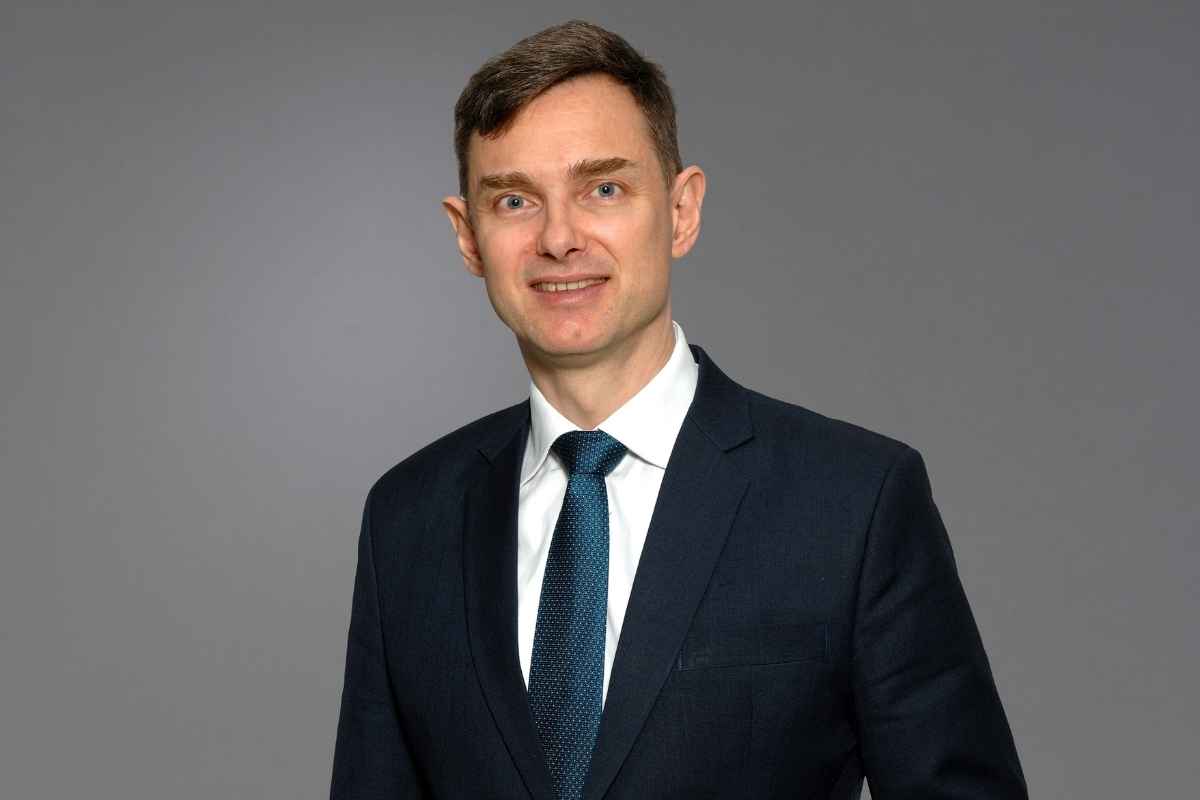
It has been three years since our last meeting with Max Martin, Global Head of Philanthropy at Lombard Odier. On that occasion, Martin explained how philanthropy, social entrepreneurship, and impact investing were three paths that intersected within the financial planning of individuals, but also foundations. Today, he acknowledges that philanthropy has directly assumed its own role within the global capital structure.
According to his experience, over this period, both the way philanthropy is approached by foundations and by philanthropists’ portfolios — mainly among high- and ultra-high-net-worth individuals — has become more sophisticated, shifting its focus toward strengthening the fabric of the third sector and society itself. We took the opportunity during this interview with Martin to explore how philanthropy has evolved and how it aligns with financial planning in today’s environment.
How are foundations approaching their philanthropic activities?
If we start from the traditional foundation model — that is, those that invest their assets and then distribute them, for example through donations or direct grants to NGOs — we see a clear trend toward aligning their investment strategy with their foundational mission. In this regard, a substantial change has been that foundations are becoming increasingly ambitious and have moved from designing and implementing sustainable investment strategies to creating impact investment satellites directly connected to their mission. Some have gone even further and are analyzing how they can leverage their relationships with beneficiaries to innovate, for example, through financing tools. This trend is quite innovative in Europe, whereas in countries such as the United States it has existed since the late 1960s.
What role are foundations taking on?
These kinds of trends generate highly attractive impact, and foundations are seeking that impact. This translates into foundations becoming increasingly proactive and strategic regarding the issues they address. Above all, this trend shows that foundations are taking on a relevant innovation role within their fields, making available capital that otherwise would be very difficult and complex to direct or raise. Within this innovation, technology and AI are becoming key elements in the work and solutions foundations are launching. Beyond serving as engines of innovation, and given the current context, many foundations are focusing on building capabilities and strengthening the third sector itself. In other words, developing tools and providing support so that NGOs themselves can respond to emerging needs. We also see philanthropists increasingly being called upon by organizations to improve the quality and resilience of nonprofit institutions.
How are new generations affecting these foundations?
Generally speaking, the first conclusion when studying these new generations is that they also want to leave their mark, although in different ways depending on the region being analyzed. For example, in Switzerland, when they begin playing a role in their parents’ or family foundations, many maintain the same focus, but in terms of impact orientation, they develop new ways of collaborating and structuring themselves. In the United States, there is an effort to articulate the same family and parental values but within the mindset of the current generation. Another example is the United Kingdom, where an innovation-focused approach prevails, and alignment of interests is often not as much of a priority, or Singapore, where the focus is on using technology both to generate impact and to evaluate projects. The overall message is that we do see greater involvement from these generations, who want to be closer to the action, but there are significant generational and geographic differences in how issues are approached.
For me, the good news is that philanthropic commitment has not changed; on the contrary, more people are committed, and the causes being addressed are evolving alongside society and the broader environment. However, I do not believe we are witnessing a revolution in philanthropy. We are seeing an evolution of methods, integrating new possibilities for identifying beneficiaries and measuring the impact of projects and programs.
And how do these new philanthropic generations appear from the perspective of private banking?
The level of involvement, as we mentioned, is the same. The change is that the client’s approach now follows a process similar to a “decision tree.” There is a prior stage of analysis regarding what I want to do, how and to what extent I want to be involved, and what the right tool is. And for this last question, the answers are much more sophisticated and varied; that is why we see everything from philanthropists creating foundations to structures such as donor-advised funds. In my view, the determining factor is understanding that if someone wants to create an independent structure, they will need a certain level of capital and be willing to play a role in the foundation’s governing body. These aspects have not changed, but where we do see changes is in the themes being prioritized. Generally, these are issues that affect the client in a personal way; this also leads funders, in general, to become interested in specific institutions.
There is a considerable difference in how philanthropy is approached in Europe and the United States. What aspects would you highlight?
Without a doubt, they are very different. We begin from the premise that in the United States the presence of the State is smaller, meaning the role of the community and philanthropists is greater compared to Europe. As a result, the concept of the community foundation is deeply rooted in the U.S. The economy has also generated extraordinary fortunes and major entrepreneurs who have channeled their social contributions through foundations. Europe also has outstanding entrepreneurs, but the State has a larger presence, leading to a different philosophy regarding the “division of responsibilities.” Foundations tend to maintain a lower profile and are more discreet when it comes to setting agendas.
Another major difference between both regions is that in the United States we are seeing how polarization is affecting foundations, whereas in Europe there is more consensus and neutrality. Without question, each region has its own characteristics. For example, in Latin America, foundations are more focused on developing programs because civil society there comes from a different reality and has different needs.

 By Funds Society, Madrid