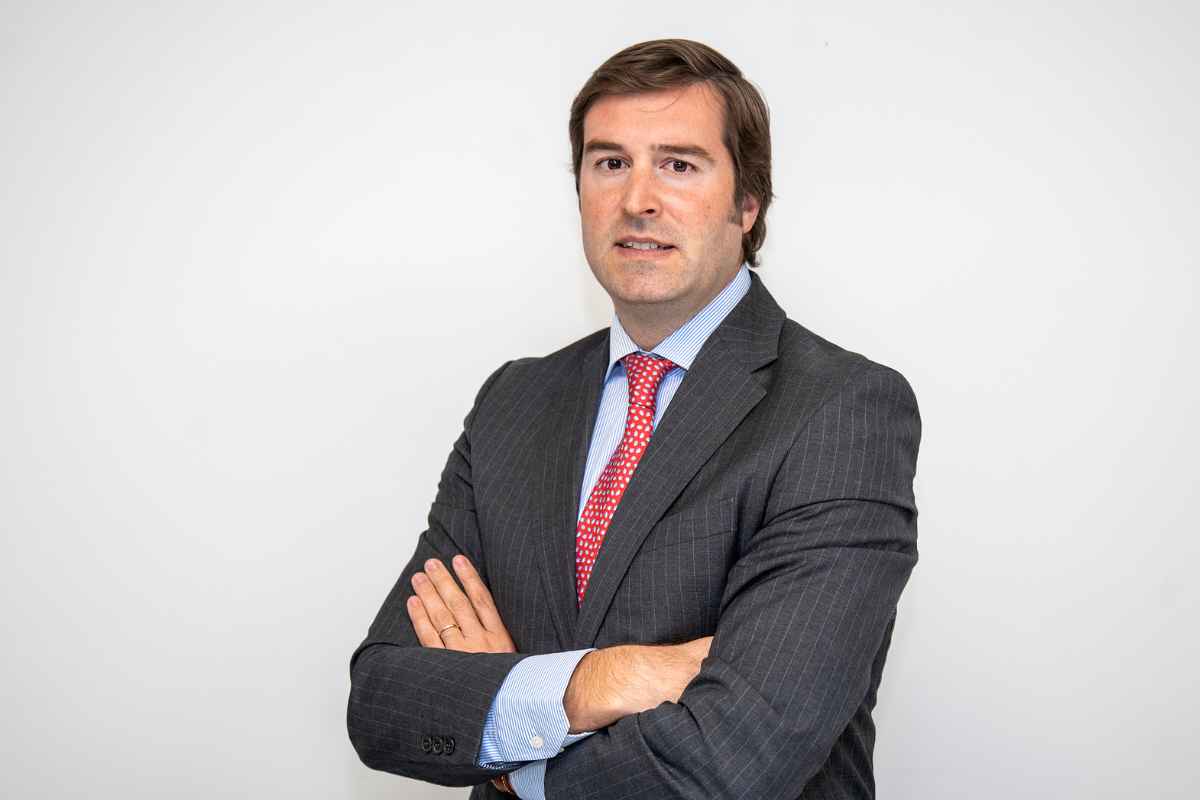
Andersen Iberia recently launched operations in Miami through the creation of the Miami Hub, a strategic center from which the firm coordinates tax and wealth advisory services for high-net-worth families with interests in Latin America, the United States, Spain, and Europe. Leading this initiative is Jorge Martínez Alemán, Counsel at Andersen, specializing in family tax and wealth advisory, international taxation, real estate advisory in Spain, and advisory services for Latin American HNW families with economic interests in Spain.
In his view, the evolution of the profile of high-net-worth Latin American families makes it essential to have an advisor who is present and connected to the three key pillars around which their wealth is structured: Latin America, Miami, and Spain, their primary destination in Europe. “Families should have a U.S. advisor to advise them and manage their structures in the United States, while at the same time having an advisor in Spain to support their investments there and provide tax advice from a global perspective, working alongside their international advisors. This allows for much more efficient financial and tax planning,” he emphasizes. We spoke with him about the priorities of these investors and how they have evolved.
From your experience, how do these three jurisdictions interact in the current structuring of family offices, and how do they complement rather than compete with one another?
Traditionally, these investors focused on Miami because of its security, political and economic stability, and as a way to diversify their holdings. However, beginning in 2014, in response to the political situation in Venezuela, many families, primarily Venezuelan, began investing in Spain, particularly in Madrid. This flow of Venezuelan investment, concentrated mainly in real estate, was followed by Mexican and Colombian investors, and later by investors from the rest of Latin America. It can be said that a shift has taken place, and we have gone from a Latin American investor who only looked to Miami to one now focused on Spain as well.
What explains that connection with Spain?
On the one hand, there is a cultural and linguistic connection, but also an emotional one, because many Latin American clients have roots in Spain. The choice of Madrid, in most cases, is driven by the fact that they feel comfortable with the lifestyle, the language, the security, and the investment opportunities. Interestingly, many of these families also have children or relatives studying in the capital. These ties mean that Madrid’s importance as an investment destination for Latin American wealth goes beyond opportunism. One piece of evidence supporting this trend is that investment flows into Spanish real estate—particularly in Madrid—have not slowed despite rising property prices. This is a reality that we are also seeing in Miami.
Do you think that if the political situation improves in the home countries of these high-net-worth Latin American families, they could divest from Spain?
In cases such as Venezuela, which we follow closely, I believe that a normalization of the political situation would lead part of the human capital to return. However, another part would not, because they have already established roots in Spain or Miami. They also place significant value on the social benefits, quality of life, and investor security offered by these countries. I think an improvement in the political situation would be reflected more in a better capital outflow environment; the flow toward other jurisdictions would no longer be as extreme as it has been, for example, in Mexico and Colombia over the past decade. At Andersen, we have observed many families structuring their businesses and family wealth through Spain because of the country’s low political risk. My experience tells me that politics is a factor that pushes wealth either out of or into a country, but I would not directly link it to the investment appetite for Spain, especially for real estate. It may initially have been driven by political considerations, but today that investment appetite no longer depends on them; it has become a trend in both investing and lifestyle.
Beyond real estate, what other investment vehicles are these investors demanding?
We have a very clear top three: real estate investments, the creation of ETVE structures (Foreign Securities Holding Entities), and the Special Expatriate Tax Regime (Beckham Law). As we mentioned, interest in real estate goes beyond the investment opportunity and includes a cultural and family attachment component that also explains its strong demand. The ETVE regime is particularly attractive because it allows them to structure the family or business group through a holding company in Spain. This structure enables them to achieve significant tax efficiency—for example, when distributing dividends—and also to protect themselves from political risk by locating assets in jurisdictions with strong investor protections. In other words, it addresses two of their priorities: tax efficiency and legal protection of their investments. The third option is the so-called Beckham Law, Spain’s special tax regime for expatriates, which allows foreign workers, executives, digital nomads, and entrepreneurs to be taxed as non-residents under highly favorable conditions.
How do you manage the balance between investment opportunity and tax efficiency?
What we try to do, depending on each client’s specific circumstances and investment preferences, is advise them so that their investment is as tax-efficient as possible. Returning to the real estate example, depending on how a property purchased in Spain will be used, we may recommend setting up a structure or purchasing it directly as an individual. Ultimately, the investments are the ones the client wants to make; our role is to help them execute those investments in the most tax-efficient manner possible.
What happens when a client wants to use jurisdictions that may be considered controversial?
In these cases, the important thing is to analyze each situation individually, considering the purpose of the structure, the investor’s profile, and the legal and tax implications across all jurisdictions involved. Our job is to ensure that any proposed arrangement is structured in accordance with applicable regulations, following principles of transparency and sound wealth planning. In many cases, these decisions respond to legitimate objectives related to asset protection and the organization of international investments.
What other jurisdictions compete with Miami and Madrid?
The United States—specifically Miami and the state of Florida in general—has always been the most important destination, but I believe Spain is taking away some of that leadership. That does not mean Miami will cease to be relevant. Traditionally, Latin American investors have held their financial and real estate assets, as well as their investment portfolios, in Miami or the United States more broadly. That said, other jurisdictions have gained prominence, such as the Dominican Republic, where we are seeing strong interest in real estate investment. Within Latin America and the United States, there is now significant anticipation about what will happen in Venezuela. Many funds are being assembled to invest in energy and oil, and there is also considerable interest in the country’s real estate market. If the political situation in Venezuela normalizes, we could see substantial capital flows directed toward the country by funds interested in the Venezuelan market. Finally, I would highlight Dubai, which has lost some momentum due to the geopolitical environment and, more recently, the war involving Iran.
Taking everything we have discussed into account, how are the younger generations of these families changing wealth management?
Yes, we are noticing it more clearly every day. It is evident in their preference for artificial intelligence, both as an investment theme and as a tool for managing wealth and interacting with service providers. For example, we are seeing real estate transactions conducted using cryptocurrencies and the use of fully digital applications to manage wealth and access financial services. However, when it comes to the fundamentals, the structures and jurisdictions they use, as well as the importance they place on taxation, there have been no major changes. What has changed is where the younger generations live. It has become normal for them to reside in the United States or Spain, rather than in the country where the family business is based. As a result, family structures are becoming more complex, creating a need for more global and specialized tax advisory services.