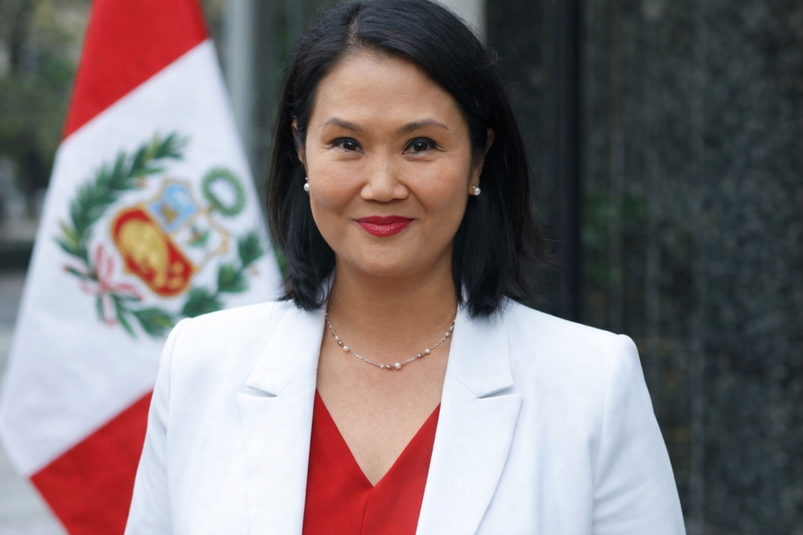
A new political cycle is brewing in Peru, with the various economic players taking a front-row seat to see how the incoming administration of Keiko Fujimori settles in. With a lead of just under 50,000 votes over candidate Roberto Sánchez—political heir to Pedro Castillo—the candidate considered pro-market prevailed in a razor-thin second round. Now, among the challenges for the president-elect are consolidating the improvement in expectations, establishing some degree of governability, and—after a decade of a revolving door at the Casa de Pizarro—completing her five-year term.
“The electoral result has significantly reduced the political uncertainty premium and reinforced an expectation of continuity for the economic model,” Roberto Montero, manager of Banbif’s Wealth Management Division, tells Funds Society. This, he explains, has been reflected in the exchange rate, risk premium, sovereign bonds, and the local stock market—markets that have absorbed the improved expectations.
“The market expects a gradual improvement in the economic environment due to the reduction of political risk rather than changes in macroeconomic fundamentals. The pro-market bias should favor business confidence, unlock investments, and reduce the country risk premium,” notes Blas Changana, Head of Research and Investment Strategy at Zest.
One of the variables where improvements are expected is in the reactivation of investment projects. Ten years of political instability have left their mark, slowing down investment decisions. “Now, with a government perceived as more favorable to private investment, a good portion of these decisions can be resumed, especially in sectors such as mining, infrastructure, construction, and agro-industry,” Montero adds.
The challenge of confidence
For now, the enthusiasm is already lifting spirits among the various actors of the local economy. In June, according to Scotia Wealth Management, all business expectation indicators rose, “driven by better expectations for the economy, investment, and employment following the presidential elections.” As the firm highlighted in a recent report, various metrics related to optimism about the economy, hiring plans in companies, and demand and sales outlooks improved.
“This improvement in the sentiment of the Peruvian business sector comes with an eye toward a more favorable scenario, especially for private investment, following the dissipation of political uncertainty,” they indicated.
Now, the key is to consolidate this good mood. To crystallize positive expectations, Montero indicates, the government must focus on executing and showing concrete actions. “The first few months will be decisive in demonstrating a capacity for dialogue, consistency between economic discourse and public policy decisions, as well as a clear agenda to recover productivity and attract private investment,” he comments.
Investors, he notes, will be paying close attention to the quality of the economic cabinet, fiscal discipline, the relationship with Congress, and the ability to unlock investments. “Those variables will determine whether the recovery of confidence manages to translate into a more sustainable growth cycle,” he points out.
The Velarde effect
For now, there are already signs that the market has liked. “The most relevant milestone for institutional investors occurred on Monday, July 6,” says Armando Herrera, general manager of Fynsa Peru. That was the day when, during a meeting at the headquarters of the Central Reserve Bank of Peru (BCRP), Fujimori formally requested economist Julio Velarde to remain at the helm of the institution. The professional accepted, staying at the rudder of the issuing entity for five more years.
Velarde is one of the most recognized faces in the technical sphere of the Andean country. In addition to his experience advising major international organizations—such as the IDB, the World Bank, and the ILO—the economist has established himself as the historical captain of the BCRP. He has served as president of the entity since September 2006.
In those two decades of monetary career, Velarde has won the approval of a variety of governments. Originally appointed by Alan García, the professional was reappointed to his position by Ollanta Humala in 2011, Pedro Pablo Kuczynski in 2016, and Pedro Castillo in 2021.
“The decision has been interpreted by global investment banks as the most significant sign of continuity in the transition, ensuring the Central Bank’s autonomy, maintaining a rigorous inflation-targeting policy, and safeguarding the solid management of Net International Reserves,” Herrera explained in a market note.
The governability dilemma
Going forward, one of the key challenges will be governability. Especially considering that Fujimori convinced only 50.1% of Peruvian voters. Indeed, the last ten years have seen nine people take the presidential bench, with several governing for less than a year.
“Governability will be the main determinant of the performance of Peruvian assets over the next few years. The market will closely follow the relationship between the Executive and Congress (and its new structure), the ability to implement reforms, and the stability of the rules of the game,” Changana highlights.
According to the executive, breaking the streak of incomplete mandates could strengthen the confidence of both local and foreign investors. “More than political orientation, markets value predictability to make long-term investment decisions, and we will see this as flows toward Peruvian assets are favored,” he indicates.
Added to this is a framework that favors the Andean country’s institutional structure. In the legislative arena, for example, this political cycle reintroduced bicameralism, which is expected to act as a counterweight. “The economic framework will maintain its predictability thanks to the existing counterweights in Congress, limiting the risk of abrupt changes to the current economic regime,” Herrera explains.
In addition, the executive highlights the speed with which the transition has been managed, together with the technical team of the BCRP, reaffirming the strength of Peru’s institutional structure. “For international portfolios, the country solidifies its position as a market that prioritizes monetary discipline and the stability of the rules of the game, indispensable elements to attract capital in the medium and long term,” the CEO of Fynsa indicates.
The ghost of instability
Although the economy has managed to navigate the swift waters of political instability with relative success, private banks warn that this decade of short-lived governments has left its mark on economic dynamics.
“Political instability reduced potential growth by affecting confidence and delaying private investment. Although Peru maintained solid macroeconomic fundamentals (growth with monetary stability and the lowest public debt in Latin America), political uncertainty postponed investment projects, limited growth, and maintained a higher perception of risk,” says Changana, from Zest.
Along those lines, Montero, from Banbif, asserts that although the country maintained key anchors for market confidence during the period—such as a credible BCRP, solid international reserves, low public debt, and a solvent financial system—it “lost continuity in public policies, quality of execution, and confidence to invest in the long term.” And the greatest impact was seen at the investment level.
Now, if this government stabilizes the situation more consistently, this could bring some flows back to domestic markets. Although local players already have international portfolios that have become structural parts of their holdings, new capital flows could once again look at Peruvian assets with interest.