Although the prospects of an agreement between Iran and the U.S. have pushed Brent crude down to $92 per barrel, its lowest level since August, the October inflation reading has negatively impacted the 2-10 curve, which has flattened to 20 basis points, and added pressure on equity valuations. The effect was heightened by comments from Waller, and the market has consequently raised the probability of a 50 basis point hike at the Federal Reserve’s final meeting of the year.
The release of the U.S. October CPI once again placed inflation at the center of investors’ attention. Core CPI rose 0.3% month-over-month, versus 0.2% expected, thus stringing together 3 consecutive months at that pace. In annualized terms, 3-month core inflation accelerated to 3.75%, its highest level since April 2024. The headline figure was even stronger, with a monthly increase of 0.35% and a 3-month annualized pace of 5.72%. Furthermore, as highlighted by the Cleveland Fed’s trimmed-mean inflation indicator—which excludes the 8% of components with the largest increases and the 8% with the smallest, averaging the remaining items—the rebound was fairly widespread across the different components of the basket, making it difficult to interpret as a one-off episode or one concentrated in a few categories, and pointing to supply-side pressures beginning to filter through, particularly via higher transportation costs.
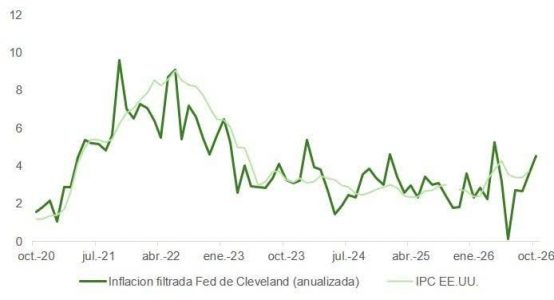
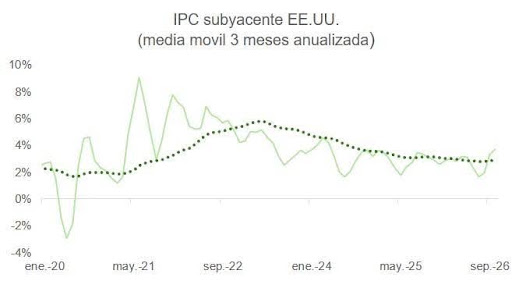
The market’s reaction was amplified by earlier remarks from Federal Reserve Governor Christopher Waller. Prior to the data release, he had indicated that if core CPI came in around 0.3% or higher once again, the Fed should consider a 50 basis point hike in December. He also warned that limiting the move to 25 basis points under that scenario could jeopardize the central bank’s credibility. When that exact 0.3% reading was confirmed, his remarks came to be perceived as a concrete possibility rather than a mere hypothesis.
As a result, the market went from pricing in 21 basis points of rate hikes for December on Monday to 28.5 basis points on Wednesday. This implies that a 25 basis point hike became fully priced in, while futures began assigning roughly a 14.9% probability to a more aggressive 50 basis point move. This shift in outlook also affected 12-month projections: on Monday the curve was pricing in 2 hikes through December 2027, and it is now approaching 3.
Why we do not expect a 50 basis point hike
What we are seeing is the volatility that traditionally accompanies a maturing economic cycle. While it is true that core inflation has posted 3 consecutive 0.3% readings (though unrounded, the latest stands at 0.296%) and annualizes at 3.7%, the year-over-year rate remains below 3% and the 6-month annualized pace sits at 2.7%. In addition, the real interest rate is already positive (~+0.8%) and, with the Treasury yield back at 5% and the dollar strengthening once again, financial conditions will tighten further. It should also be remembered that the cycle is advancing and the global backdrop is one of monetary policy tightening, which will weigh on industrial activity and moderate growth in the coming months.
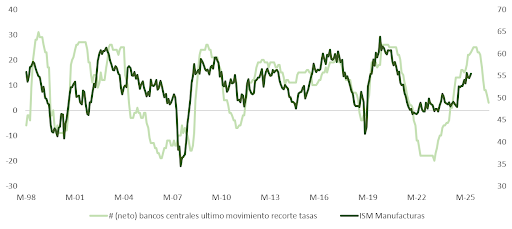
Historically, 50 basis point hikes have occurred when the market had already priced them in. Since 1994, when the 2-year Treasury yield stood at least 1 percentage point above the policy rate, 43% of rate hikes were 50 basis points or larger; when it stood below that threshold, only 6% were. Today, the spread hovers around 0.7 percentage points.
With a spread below 1 percentage point, the conditional probability of a 50 basis point hike in December is just 6.5%, well below the share of hikes of that magnitude or greater since 1994 (21%, and only 12% when excluding the post-pandemic cycle of 2022).
Equities: adjusted multiples and favorable seasonality
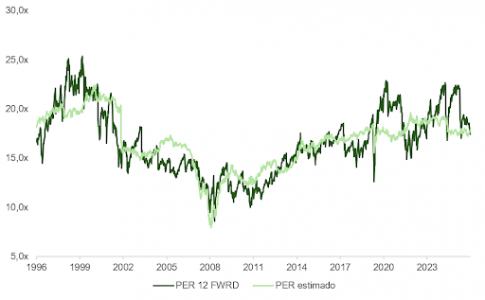
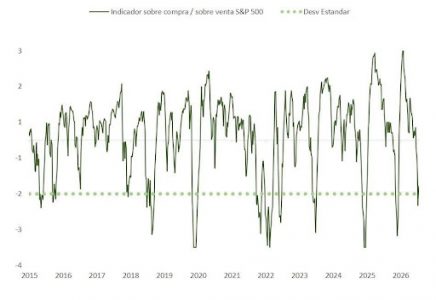
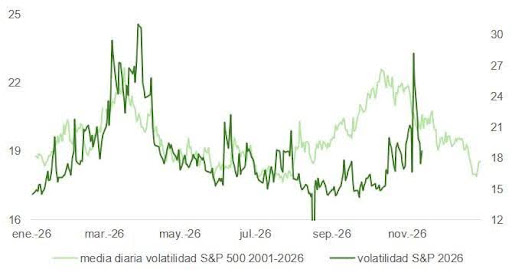
The yield on the 10-year Treasury note has returned to 5.12%, pressuring equity multiples, which—nevertheless—have already adjusted to this effect and, unlike in the 1st quarter, show a slight undervaluation amid a backdrop of technical oversold conditions and investor pessimism. All of this coincides with highly favorable seasonality for shareholders and a moderation in volatility readings.
Dollar: short-term strength, medium-term structural weakness
The recalibration in rate-hike expectations has also impacted the dollar’s exchange rate. The DXY index rose 0.7% following the CPI release and maintains a clear upward trend. The growth and resilience of the U.S. economy compared to other developed economies, coupled with doubts over inflation, keep pressure on the short end of the curve and favor the greenback.
EURUSD attempted unsuccessfully to reclaim the 1.13 level, making clear that the dollar is the strong currency in the short term. Even if it were to break above that threshold, it would face significant technical resistance near 1.14.
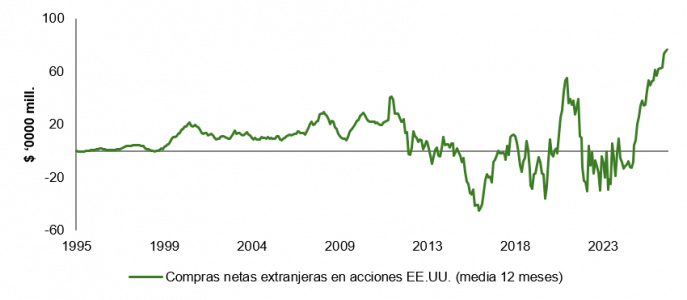
Nevertheless, the euro appears 10% undervalued against the dollar on a purchasing power parity basis, and its medium-term trajectory is closely tied to that of artificial intelligence, given its weight in the performance of major equity indexes: net foreign purchases of U.S. equities have substantially underpinned the dollar over the past 10 months.