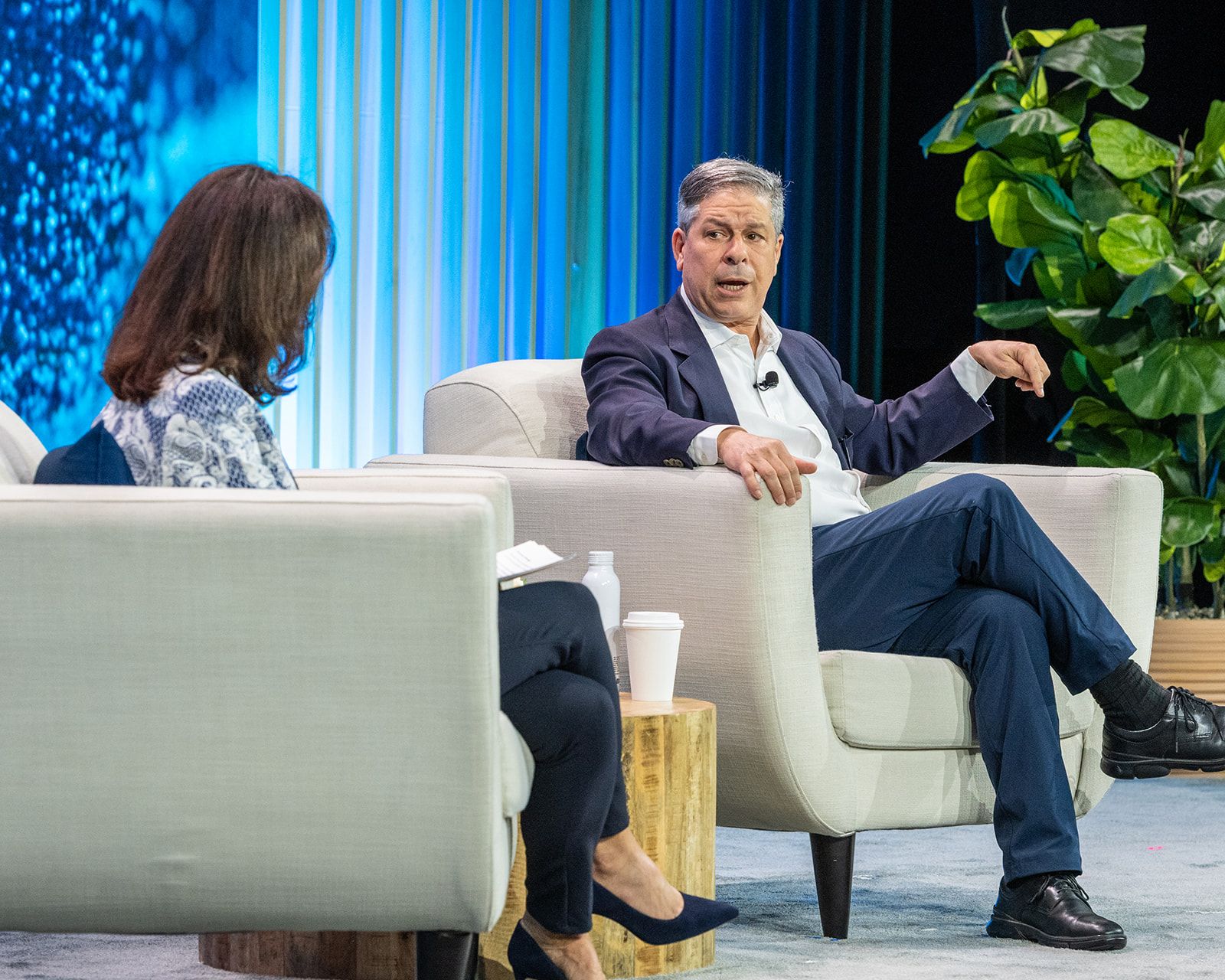
In 1988, Jonathan Steinberg, CEO of WisdomTree, acquired The Penny Stock Journal, a broadsheet newspaper dedicated to the lowest-quality stocks. “Everything they covered was destined to go bankrupt—it was basically a marketing scam. I thought I could do something better,” he recalled during INSITE26, BNY’s annual conference in Denver. He transformed it into Individual Investor, hired analysts, and began producing independent research for retail investors. In 1997, he published his first article about ETFs when the vehicle held just $40 billion in assets and only three products existed. “I was struck by the leap forward that the ETF represented as a structure,” he said.
What surprised him most, however, was the industry’s slow pace of adoption. The first ETFs had launched in 1993, yet by 1997 no additional products had come to market. It took another seven years before the next wave arrived. “Asset managers and distribution platforms were extraordinarily slow to evolve,” he said. That inertia created an opportunity: exactly twenty years ago, WisdomTree launched its first 20 ETFs. Today the firm manages $170 billion in assets but competes with firms overseeing between $1 trillion and $14 trillion. “As CEO of a smaller asset manager, I try to make the right decisions with the least amount of information possible, always trying to stay one step ahead,” he explained.
His assessment of today’s investment landscape was unequivocal: “This is a golden age for investing. Fees have fallen, investment vehicles have become more sophisticated. Today, even the smallest investor can have a better experience than the wealthiest person in the world could have had 20 years ago.”
The question he asked himself seven years ago
Seven years ago, before tokenization had become an industry-wide discussion, Steinberg posed a question internally that would shape WisdomTree’s long-term strategy: “What could do to ETFs what ETFs did to mutual funds?” The answer led him to act long before a consensus had formed.
“I knew that if I started when this conversation became mainstream, it would already be too late for a small boutique manager like WisdomTree,” he said.
The decision required an uncomfortable leap. “I had to do something that made me extremely uncomfortable: make a strategic investment in a startup that had built a tokenization platform and a regulatory framework for its tokens—in other words, a programmable wrapper.”
That platform was eventually acquired by the Depository Trust & Clearing Corporation (DTCC), but WisdomTree retained its own version and continued developing it. Today, the firm has $1 billion in tokenized assets and the world’s largest portfolio of tokenized real-world assets. Its latest milestone is a money market fund that operates and settles 24/7 on blockchain.
“It is the first real-world asset that behaves on-chain like a native crypto asset,” Steinberg said.
Two weeks ago, the firm filed with regulators to launch tokenized ETFs under the same framework.
For the financial intermediaries attending the conference, however, his message was one of tactical patience.
“For now, this is irrelevant to you—seriously. Your opportunity lies in the regulated exchange-traded markets, and that opportunity is enormous.”
Tokenization, he argued, belongs to the next generation of clients.
“It’s like the internet. We don’t really know how it works—it simply exists, integrated into everything we do. What will happen is that BNY, other financial institutions, and WisdomTree will bring financial services onto blockchain.”
Farmland instead of BlackRock or Blackstone
While many competitors rushed into private credit, WisdomTree chose a different path: farmland.
“We went into farmland, where there isn’t a BlackRock or a Blackstone,” Steinberg said.
Today, WisdomTree is the third-largest owner of farmland in the United States, managing 180,000 acres through an evergreen “one-and-twenty” structure.
“Our competitors are the Mormon Church, Bill Gates, and family farmers—not BlackRock or Blackstone. It’s a much better business.”
More broadly, Steinberg challenged the prevailing narrative around private markets.
“Most investors give up liquidity and transparency far too easily. And high fees can corrupt investment advice.”
He openly questioned recommendations that investors allocate as much as 30% of their portfolios to private assets.
“That sounds like a lot.”
He was equally skeptical of proposals to incorporate private assets into 401(k) retirement plans.
“I think that’s aggressive. I don’t agree with that approach.”
The ETF as the future wrapper for private assets
WisdomTree’s alternative approach is to bring private assets into the ETF structure itself.
“While my competitors are putting private credit into interval funds, we’re going to put private assets into ETFs.”
Whereas interval funds may hold up to 90% of their assets in illiquid investments, WisdomTree’s proposed structure would cap private exposure at 15%, while eliminating K-1 tax forms, paperwork, lock-up periods, and investment minimums or maximums.
Before the end of the first quarter next year, the firm expects to launch ETFs providing exposure to both farmland and venture capital.
For Steinberg, the rationale is straightforward.
“I don’t want to be the last person buying SpaceX. A tremendous amount of value creation happens before companies ever reach the public markets.”
He also sees clear historical parallels.
“I often ask why the mutual fund industry was so slow to adopt ETFs. Part of it was transparency—portfolio managers didn’t want to disclose their holdings—but fees also played a major role. They were earning high fees, and that made them resistant to adopting what would ultimately have been a better experience for clients.”
Over the past 24 months, roughly 120 mutual fund companies launched their first ETF in 2025 or 2026.
“I’m amazed they literally waited until 2026,” he said.
His guiding principle—and the one he encouraged advisors in the audience to embrace—is simple:
“How do I genuinely help my client achieve the life they ultimately want? That means truly putting yourself in their shoes, rather than placing yourself above them.”