
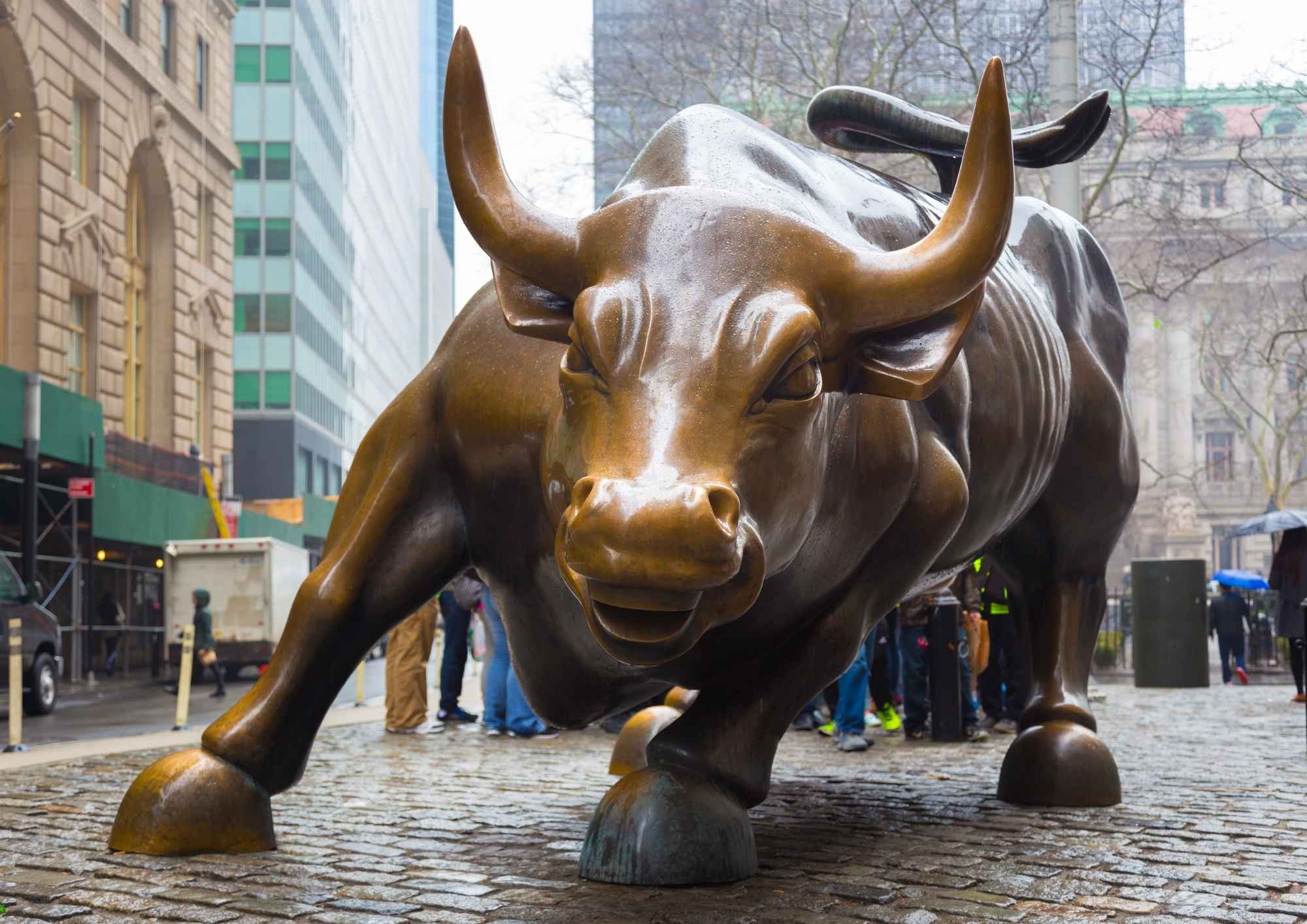
The legendary Warren Buffett has stepped away from the day-to-day operations of Berkshire and, in a way, the markets have been left without a touchstone that accompanied them for years; however, the financial industry has many other figures who transformed the understanding of risk, value, markets, and wealth creation.
Now that Berkshire Hathaway has formally entered a new phase—Buffett was named Chairman Emeritus on September 18 and Greg Abel remains CEO—an inevitable question arises: who are the other figures who have built schools of investing capable of transcending their own results? The answer lies not in searching for another Buffett.
In fact, perhaps that is the primary lesson: the investment world does not have a single formula, it has different schools of thought: value investing, macro investing, credit, quantitative analysis, growth, corporate activism, and global stock selection.
Some of these figures managed funds for decades; others built institutions; some retired years ago, while others continue to actively participate in the markets. But all of them left behind something more than a profit-and-loss statement: a way of thinking that continues to be studied by professional investors. These are some of those other legends.
Peter Lynch: Finding Opportunities Where Others Are Not Looking
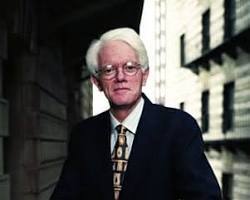
If Buffett turned value investing into an almost universal philosophy, Peter Lynch did something different: he enabled millions of everyday investors to understand that daily observation could also become an analytical tool. Lynch directed Fidelity’s Magellan Fund between 1977 and 1990. During those 13 years, the fund achieved an average annual return of 29.2%, compared to 15.8% for the S&P 500, according to Wharton. His philosophy was condensed into a phrase that became part of market vocabulary: “invest in what you know.”
However, reducing Lynch to that phrase would oversimplify his method. Behind the idea was a discipline of research: observing companies, understanding their businesses, identifying growth opportunities, and subsequently analyzing their financials. Lynch retired from Magellan in 1990 at just 46 years old. Since then, he has become one of the great advocates for equity investing. His legacy is perhaps particularly relevant in an era dominated by algorithms, artificial intelligence, and large quantitative models: before buying a stock, one must understand what the company does.
Howard Marks: The Investor Who Placed Risk Center Stage
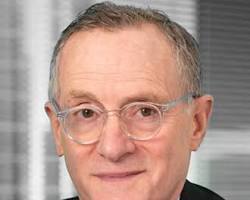
There are investors known for their returns. Howard Marks belongs to a different category: he is also known for how he thinks and writes about risk. Marks co-founded Oaktree Capital Management in 1995, after developing years of expertise in high-yield bonds, distressed debt, and convertibles.
He currently continues as Co-Chairman of Oaktree, but his influence extends beyond asset management. His memos to investors became reference texts within the professional community, and books like The Most Important Thing popularized an idea that sounds simple, yet proves extraordinarily difficult to execute: investing is not solely about seeking returns, it is about understanding what risks are being assumed to achieve them. Oaktree’s own philosophy summarizes much of his legacy: an opportunistic, value-oriented approach with risk control, particularly developed in credit markets. Marks represents, in a sense, the other side of Buffett: while Buffett built much of his reputation around buying extraordinary businesses and holding them for a long time, Marks made moments of financial stress and misperceptions of risk a realm of opportunity.
Seth Klarman: Waiting Is Also an Investment Decision
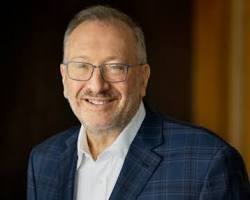
Seth Klarman is another direct heir to the tradition of Benjamin Graham, but he expanded the concept of margin of safety into broader territories. He is the CEO and Portfolio Manager of The Baupost Group, a firm he founded in 1982 and whose investments he has supervised ever since. Baupost applies a value discipline with a tilt toward special situations, including public and private equities, distressed debt, bankruptcies, and real estate.
His book Margin of Safety, originally published in 1991, became one of the most sought-after texts by those who study value investing. Klarman’s teaching has a characteristic that is particularly uncomfortable for today’s markets: not investing can also be an investment decision. When prices do not offer a sufficient margin of safety, capital can remain in cash until an opportunity appears. In an industry accustomed to measuring success by the amount of assets deployed and manager activity, that patience is almost a provocation.
Stanley Druckenmiller: When Conviction Outweighs the Label
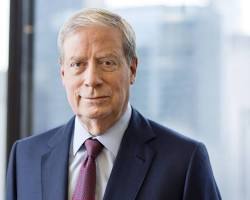
Druckenmiller belongs to an entirely different school. He did not build his reputation buying undervalued companies to hold them for decades. His domain was macro investing: interest rates, currencies, economic cycles, monetary policy, and major market moves.
At the helm of Duquesne Capital Management, he generated approximately 30% annualized returns between 1981 and 2010 and did not record a single losing year, according to Morgan Stanley. But perhaps the most interesting aspect of Druckenmiller is not the figure, but his mindset.
In a recent conversation with Morgan Stanley, he explained that he does not consider being a contrarian a virtue in itself. The market can be right many times; what matters, in his experience, is recognizing those moments when there is strong enough conviction to step away from the crowd.
After closing Duquesne Capital in 2010, he continued managing his wealth through his family office. Druckenmiller represents a lesson different from Buffett’s: not all great investments require decades to mature; some require correctly identifying a regime change and having the conviction to act.
Ray Dalio: Turning a Philosophy into a System
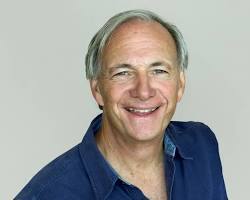
Ray Dalio achieved something few investors accomplish: he transformed a personal philosophy into an institution. He founded Bridgewater Associates in 1975 out of a two-bedroom apartment in New York and turned it, over the decades, into one of the largest alternative investment firms in the world. Dalio stepped down as CEO in 2017, as CIO in 2020, and as Chairman in 2021; he currently focuses primarily on passing down the principles developed throughout his career. His most famous contribution to the investment world is the All Weather concept and the development of risk parity strategies, alongside an investment architecture based on diversification across stocks, bonds, currencies, and commodities.
Yet his major conceptual contribution perhaps lies elsewhere: the obsession with turning investment decisions into repeatable processes. Bridgewater developed systems that combine historical research, algorithms, backtesting, and human judgment. The idea is simple: if economic cycles repeat with specific characteristics, studying the past allows one to build rules to navigate future scenarios. Dalio thus turned manager experience into something akin to decision engineering.
Cliff Asness: Where Wall Street Meets Academia
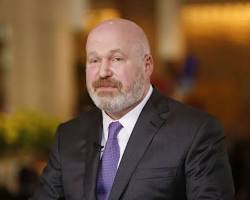
If Buffett represents business-based investing and Marks the reading of risk, Cliff Asness represents another revolution: quantitative investing based on statistical evidence. Asness founded AQR Capital Management alongside David Kabiller, Robert Krail, and John Liew in 1998. He had previously served as Director of Quantitative Research at Goldman Sachs. His career is deeply tied to academic research on factors such as value, momentum, quality, and other sources of return.
AQR was born precisely at that intersection of economics, behavioral finance, data, and technology. Asness has also defended an idea that is especially important in the era of artificial intelligence: a good backtest is not enough. In an interview published by the Journal of Portfolio Management, he explained that the challenge consists of finding strategies supported by both statistical evidence and a coherent economic rationale. Otherwise, the model may end up capturing simple historical noise. His legacy is, in essence, a question: what happens when a manager’s intuition can be converted into data, rules, and testable processes?
Bill Ackman: The Shareholder Who Does Not Sit Still
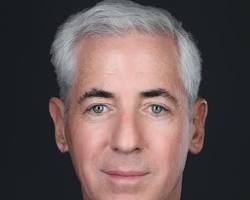
William Ackman belongs to another tradition: shareholder activism. He founded Pershing Square Capital Management in 2004 and built a strategy concentrated on a relatively small number of companies. Pershing Square notes that it typically holds between eight and 12 core positions, fundamentally in large North American public companies.
The philosophy differs from conventional diversification: select a few high-quality businesses, study them deeply, and, when necessary, use the equity stake to drive operational, financial, or corporate governance changes. Pershing Square’s track record is also part of the conversation. Its corporate documentation reports that from 2004 through December 2025, the Pershing Square, L.P. fund achieved a cumulative compound annual return that materially outperformed the S&P 500 over that period, net of fees.
Ackman represents an evolution of the investor’s role: not just allocating capital, but attempting to alter the path of the company in which one invests. It is a philosophy that can produce massive successes and also significant controversy, precisely because the manager ceases to be a passive shareholder and becomes an active participant in corporate strategy.
John Templeton: Buying When the World Wants to Sell
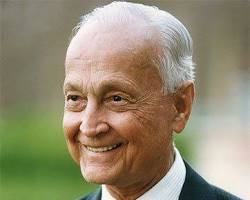
If one had to select one of the great pioneers of global investing, it would be difficult not to mention Sir John Templeton. Templeton began his Wall Street career in 1938 and created the Templeton Growth Fund in 1954, one of the first major global investment vehicles. His philosophy consisted of searching for opportunities where pessimism had driven prices to extreme levels.
His first major trade is almost a parable of value investing: when World War II began, he borrowed money to buy 100 shares in 104 companies trading at one dollar or less. Of those 104 companies, 34 were in bankruptcy; only four turned out to be complete losses. The result of that philosophy became legend. According to the John Templeton Foundation, a $10,000 investment in the Templeton Growth Fund at inception, with dividends reinvested, would have reached approximately $2 million by 1992, when Templeton sold the fund family to Franklin Group.
His legacy is especially interesting today, when investors tend to concentrate on specific countries, sectors, and companies. Templeton taught that the best opportunities are not always where enthusiasm lies, but where price reflects a pessimism that may be exaggerated.
Schools Outlast Their Masters
Taken together, this gallery explains something important about Buffett’s departure from leading Berkshire: There is no single intellectual successor. Lynch taught how to look at companies through everyday life. Marks put risk at the center of the conversation. Klarman took the margin of safety to its ultimate conclusions. Druckenmiller demonstrated the power of macro investing and conviction. Dalio turned diversification and risk management into a system. Asness shifted investing toward data and quantitative research. Ackman transformed the shareholder into an agent of corporate change. Templeton made global pessimism a source of opportunity.
These are different and even, in some cases, contradictory philosophies, but that is precisely why they remain relevant. In truth, everything indicates that the investment industry is not entering a post-Buffett era, but rather a stage where Buffett’s influence coexists with many other ways to understand how capital is created and protected. Perhaps that is the true legacy of investment legends: not leaving behind a formula to copy, but demonstrating that behind extraordinary returns, there is usually a distinct—and disciplined—way of thinking.
Buffett will continue to be part of that story from Berkshire, now as Chairman Emeritus and Director. But while his seat changes occupants, the various schools that helped build modern investing remain active. And the markets, as always, will continue to put each of them to the test.

 By Funds Society