

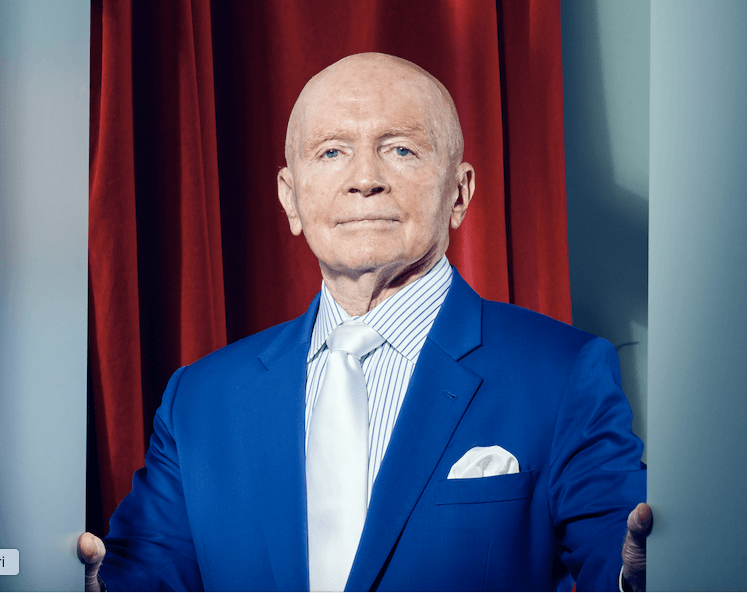
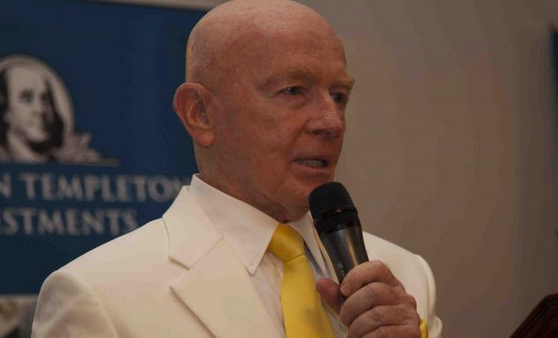
With a brief message on his social media profile, the circle of Mark Mobius announced his passing at the age of 89. The renowned emerging markets investor always stood out for grounding the conviction of his investment ideas in miles traveled and hours of meetings, as well as for his elegant and impeccable light-colored suit.
Throughout his career, we had the opportunity to listen to him and interview him on various occasions, enjoying anecdotes from his travels, discovering new companies in emerging markets, and catching his enthusiasm. Our first encounter with him was at the end of the 1990s. Markets were dominated by the formation of the dot-com bubble, globalization, market turbulence, and the birth of the euro. However, his message was compelling, and his defense of emerging markets showed no cracks.
According to Alicia Jiménez, managing partner, director, and co-founder of Funds Society, and with more than 30 years of experience in the sector, Mobius was above all a brilliant mind. “Over the following two decades, I had the pleasure of listening to him in countless presentations, both in Europe and in the United States, but it was during Javier Villegas’s tenure as director of the Miami office of Franklin Templeton when, at some point between 2015 and 2017, I had the pleasure of speaking with him for an hour about his career. On that occasion, Mobius was already nearing eighty, possibly already there, and his extraordinary memory stood out: he spoke about those exotic markets as if he had lived in them for years, knew their economies, companies, and politics inside out, and explained everything with astonishing naturalness,” she recalls.
In these meetings, he made it clear that his favorites were frontier markets and insisted on the importance of private markets for the coming decade. “Now, in retrospect, I understand much better the scope of his vision. I remember leaving that terrace in Miami Beach where we shared a soft drink under the shade of palm trees, thinking that I had just been with a prodigy of nature. Rest in peace,” she adds.
Emerging markets with conviction
Repeatedly, our senior team and, consequently, our readers had the opportunity to learn about his view on emerging markets. In this regard, Mobius always argued that they were undervalued and key to future growth, especially by focusing on sectors such as consumer, technology, and financial services. As he maintained, emerging markets are where the real growth of the world lies, as they bring together such important trends as favorable demographics, an accelerating urbanization process, significant expansion of the middle class, and a rapid advancement of digitalization and technology. However, he always insisted that the greatest market risks were not economic—since he saw clear potential in these countries after years of reforms—but rather those linked to unexpected regulatory changes, corruption, and the lack of protection for minority shareholders.
In our last interview with him, published in November 2023, Mobius reminded us that the key to his success lay in holding meetings, meetings, and more meetings with the management teams of the companies he considered interesting, as well as getting to know their facilities and work philosophy. As the so-called “Indiana Jones of emerging markets investing” told us, walking the streets and sharing in everyday life is the best way to discover investment opportunities in these markets. An approach he always combined with financial scrutiny and the study of the fundamentals of each of the companies in which he invested or that caught his attention.
One of the main messages he conveyed in his interviews was that emerging markets had undergone significant evolution that seemed to go unnoticed by investors. “In the 2000s, everything revolved around commodities and telecommunications, with companies featuring very simple business models taking the lead. At that time, technology represented less than 5% of the emerging markets universe, and now technology-oriented companies account for more than 30%. There is much more innovation and unique brands coming from emerging markets, so companies need to be analyzed differently,” he stated passionately.
His legacy: AUM and philosophy
Mobius began to become an industry reference starting in 1987, when he held the position of Executive Chairman of Templeton Emerging Markets Group. From then on, his career was a true phenomenon, culminating in 2024 when he founded his own firm: Mobius Investments.
“Mobius was widely regarded as one of the first emerging markets investors, known for traveling extensively and developing first-hand knowledge in markets often overlooked by global investors. John Ninia, partner at Mobius Investments, and Eric Nguyen, partner at Mobius Investments, will assume leadership responsibilities. The firm will continue operating without changes to its investment approach or daily operations,” they stated at Mobius Investments when announcing his passing.
It is difficult to estimate the amount of assets Mobius managed throughout his career. It is known that he oversaw funds exceeding $50 billion in assets under management. For example, during his key period at Franklin Templeton, the emerging markets group he led grew from approximately $100 million to more than $40 billion. Some sources even suggest that he managed over $50 billion in emerging market portfolios.
Although he leaves emerging market investors without one of their leading figures, his legacy includes key messages such as: “You have to go where the growth is” and “Patience is key in emerging markets.” But above all, he leaves fund managers with his main life lesson: “Walk the path, go there, and meet with company executives before investing.”
 By Fórmate a Fondo