The discussion surrounding a possible new tax on second homes in New York City has once again fueled a trend that for several years has been reshaping the wealth map in the United States: competition among states to attract private capital, family offices, and international fortunes, particularly from Latin America.
Although the initiative is still going through approval processes and political debate, the mere announcement is already being interpreted by wealth managers and investors as another sign of growing tax pressure on high-net-worth individuals in New York. At the same time, it strengthens the positioning of jurisdictions such as Florida and Texas as preferred destinations for the relocation of Latin American wealth.
According to the proposal being discussed in New York, the new levy would target owners of high-value second homes, amid increasing political pressure to finance affordable housing programs and close urban fiscal gaps. The debate also comes at a time when global wealth migration is gaining speed and sophistication.
“Today, wealth migration is no longer only international; it is also happening within the United States,” Juan Carlos Eguiarte, country manager of BAIA Capital in Mexico, explained in an interview with Funds Society.
For the executive, the phenomenon cannot be analyzed in isolation or solely from a tax perspective. In reality, it reflects structural competition among U.S. jurisdictions to capture highly mobile private capital.
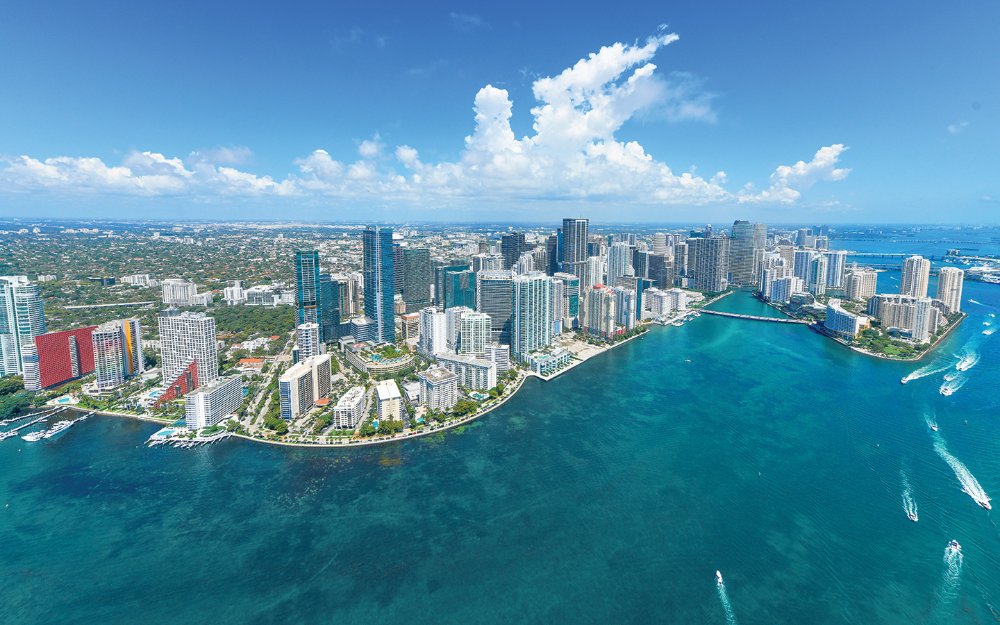
“Florida has spent years consolidating itself as one of the main recipients of private capital and high-net-worth individuals’ wealth. It is no longer just a retirement or purely residential city; today Miami has become a platform for attracting private capital,” he noted.
Miami’s transformation has been particularly visible since the pandemic. Investment funds, hedge funds, private equity firms, and family offices moved operations from New York and California, attracted by a more favorable tax environment, lower state taxes, more flexible regulation, and an increasingly deep financial ecosystem.
Data from Henley & Partners estimates that the United States continues to be the world’s leading destination for migrating millionaires, while Florida ranks among the states with the highest growth in ultra-high-net-worth residents. Miami-Dade alone has recorded a sharp increase in premium real estate prices in recent years, partly driven by Latin American buyers.
The appeal for investors from the region is not limited to the tax component. Factors such as legal certainty, regulatory stability, quality of life, and international connectivity are carrying increasing weight in wealth-related decisions.
“The southern states of the United States are even more favorable in climate-related matters, and Florida has also become a Latin American capital,” Eguiarte pointed out.
The mobility of capital, he added, has now reached unprecedented levels. “When tax and regulatory differences begin to become material, capital optimizes jurisdiction, whether internationally or within the United States itself.”
In that context, New York maintains its position as the continent’s main financial center but faces growing challenges in retaining part of the international private capital that historically gravitated toward Manhattan and other premium markets.
The discussion also comes at a particularly relevant moment for Latin America. Regional economic slowdown, political uncertainty, and the limited capacity to absorb capital in some economies are pushing business families and large fortunes to diversify structures and jurisdictions.
Eguiarte believes the phenomenon should not be interpreted solely as capital flight.
“I do not see it so much as capital flight, but rather a lack of absorption capacity in Mexico and Latin America because economies are not growing at the same pace as fortunes,” he stated.
According to his analysis, the problem lies in the scarcity of productive projects and infrastructure capable of channeling large private capital surpluses with sufficiently attractive returns and long-term stability.
“This triggers the need to seek jurisdictions and locations capable of absorbing that productive capital,” he explained.
Paradoxically, Latin America offers considerably higher nominal interest rates than the United States. However, high-net-worth investors are increasingly weighing variables such as sovereign risk, legal certainty, and institutional stability.
“It is no coincidence that interest rates in Latin America are much higher; they respond to risk factors and the need to provide an additional premium to investors,” the executive indicated.
The broader context of the discussion, wealth sector specialists agree, is that global capital no longer competes only among countries, but among cities and states capable of building attractive ecosystems for international wealth.
“The jurisdictions that manage to combine stability, efficiency, and market depth will be the ones that capture the next generation of wealth,” Eguiarte concluded.