The influx of private banks, family offices, asset managers, and international capital in recent years has elevated the real estate appeal of prime U.S. financial enclaves tied to wealth management, such as Miami and Texas.
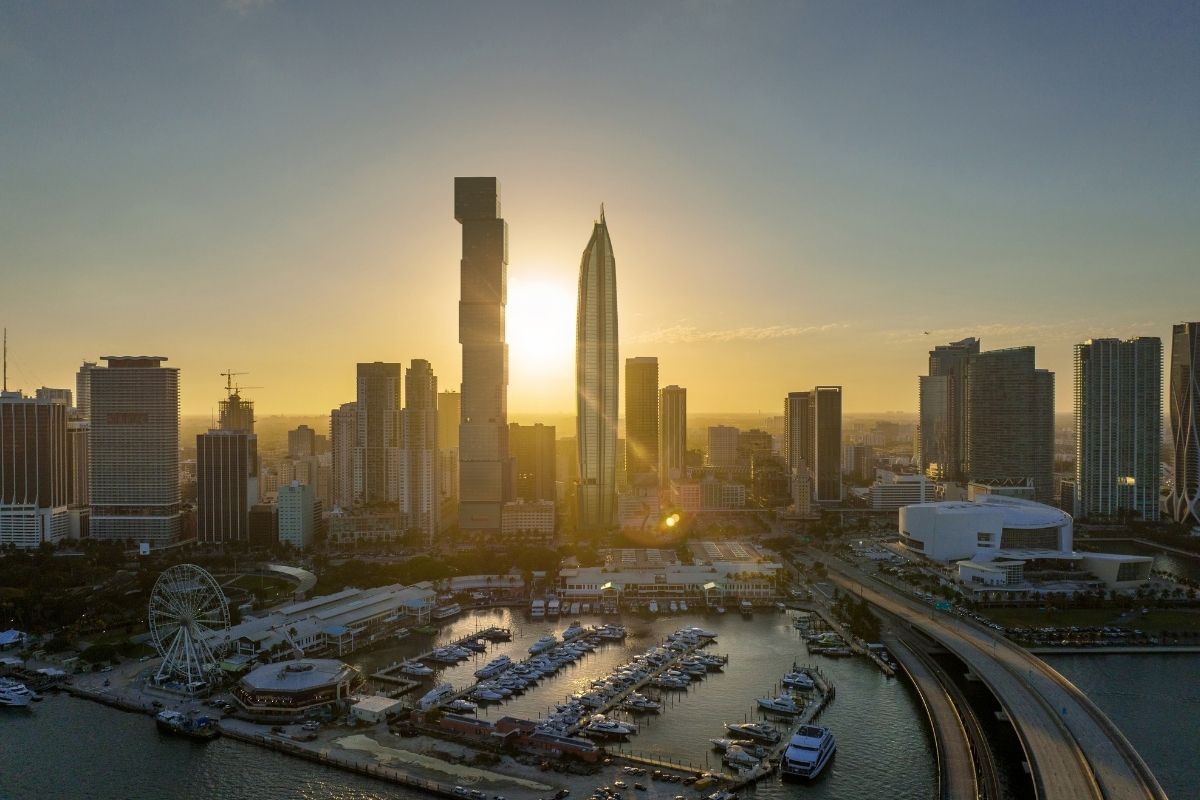
In Miami, office rents across the Brickell financial corridor now exceed those of a large portion of Manhattan, while the luxury residential tier commands multi-million-dollar price points.
Texas provides investment and residential alternatives; while its real estate preserves a different pricing structure, real estate price appreciation over recent years remains substantial.
The concentration of wealth carries costs extending beyond portfolio management, tax structuring, international diversification, or retaining specialized advisors. It is directly reflected in the cost of physical real estate required by substantial fortunes to operate, invest, reside, and preserve capital.
Miami and Texas have become 2 prominent destinations for international capital, particularly from Latin America.
The former has solidified its standing as a financial platform serving global wealth, while the latter has gained traction as a corporate, residential, and commercial real estate investment hub.
However, growth across these markets carries an increasingly visible consequence: securing space across their most sought-after locations demands capital outlays out of reach for many firms, retail allocators, and high-net-worth families.
In Brickell, Miami’s financial epicenter, prime Class A office rents now rival those in Manhattan. In South Florida’s residential sector, entering the top 5% of single-family home transactions requires deploying over $3M, while the top 1% tier exceeds $10M.
Texas presents a distinct dynamic. While its property markets generally maintain more accessible entry points than South Florida’s prime enclaves, international demand expansion, multi-million-dollar transactions, and metropolitan growth are cultivating an expanding luxury segment.
The paradox is clear: locations providing high-net-worth capital with vehicles to diversify and safeguard wealth are concurrently transforming their underlying real estate into increasingly costly asset classes.
Brickell: commercial real estate trading as a luxury asset class
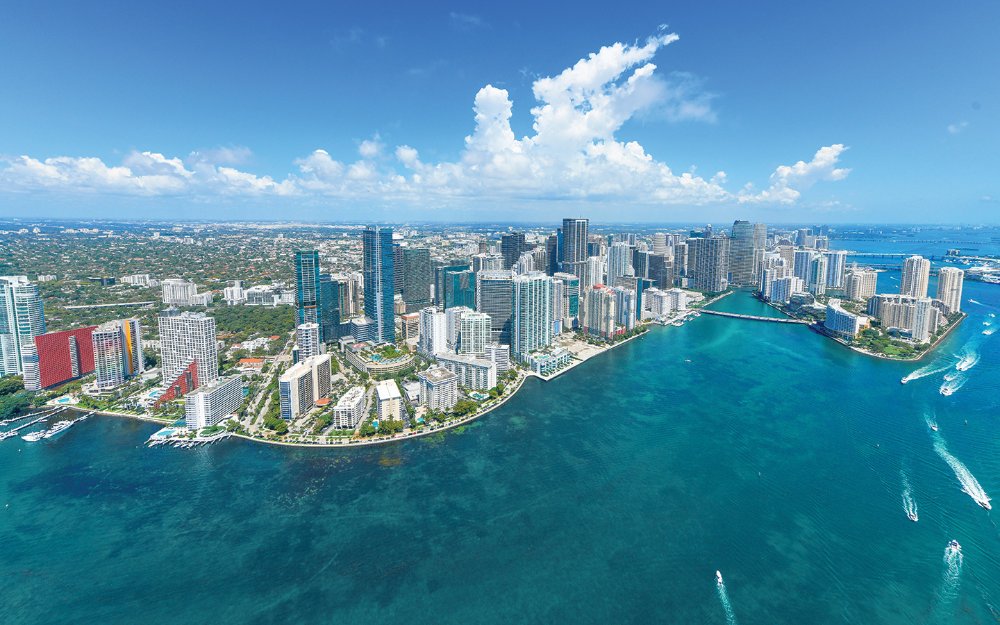
Few submarkets illustrate Miami’s multi-year structural transition better than Brickell.
The district has evolved from a conventional cluster of commercial bank branches into an international financial services ecosystem encompassing private banking, wealth management, private equity, independent registered investment advisors, legal practices, and single- and multi-family offices.
Demand stems not only from domestic corporate relocations from legacy financial centers, but also from the operational requirement among wealth managers to maintain physical proximity to their underlying cross-border client base.
The pricing data confirms this transition. Average asking rents in Brickell reached $79.70 per square foot in July 2026, surpassing the $72.00 recorded for Manhattan as a whole.
Within Miami’s broader central business district, asking rents averaged $78.40.
This premium is pronounced relative to the greater metropolitan Miami average of $60.30 per square foot, reflecting the substantial spread demanded for prime location and top-tier asset quality.
To contextualize the capital outlay, a 2,000-square-foot office footprint in Brickell at headline asking rates commands roughly $159,400 annually, prior to tenant improvement allocations, escalations, operating expenses, and contract-specific variables.
That momentum persisted through the third quarter of 2026, with overall Miami Class A office asking rents reaching $74.77 per square foot, marking a 6.1% annual increase.
Concurrently, direct vacancy compressed to 13.9%, a 6-year low, alongside approximately 1.8M square feet of active development pipeline—confirming continued institutional demand for prime square footage.
Capital asset valuations reflect similar appreciation. In October, 801 Brickell—a commercial office tower comprising roughly 437,000 square feet—explored marketing the asset for a transaction value exceeding $400M. That prospective benchmark represents approximately $900 per square foot, setting a potential pricing record for the submarket.
While an exploratory valuation rather than a closed transaction, the pricing guidance illustrates investor appetite for prime, well-located commercial assets within the core financial corridor.
Corporate absorption reinforces this demand profile: Brickell accounted for 25.2% of total Miami office leasing volume during Q3 2026.
Corporate footprint expansions have also accelerated, including major technology platforms scaling local square footage from 10,000 to 45,000 square feet, while non-bank financial institutions continue establishing local outposts.
Securing a physical footprint in Brickell is no longer merely a strategic branding choice. For mid-sized independent wealth advisory practices, asset managers, or family offices, occupancy costs in the district must be weighed against total assets under management (AUM) run-rates and recurring fee income.
Physical location has consequently become a baseline competitive requirement as well as a capital barrier to entry.
Residential luxury appreciation
The transformation extends across the residential sector, illustrating wealth concentration and competition for top-tier residential parcels.
Data covering the luxury segment for the first half of 2026 indicates that entering the top 5% of single-family home transactions in South Florida required a minimum expenditure of $3.3M, up from $2.7M in 2025.
In the ultra-luxury tier—defined as the top 1% of transactions—the cutoff escalated to $10.7M from $7.8M the prior year. Miami-Dade County posted steeper appreciation: the 5% threshold reached $4.3M, while the top 1% threshold reached $15M.
In the condominium sector, the entry point for luxury stood at $2.3M across South Florida, while the ultra-luxury threshold hit $6M, reaching $10M within Miami-Dade.
These metrics reflect entry cutoffs for prime market tranches rather than median residential values across the broader metropolitan area, capturing the upward repricing occurring at the top of the market.
Multiple macro catalysts drive this trend: ongoing net domestic migration of high-earning households from high-tax states, local expansion of high-compensation corporate roles, and growing international wealth flows.
Foreign demand remains an active component, spanning primary residence acquisitions, secondary vacation homes, and wealth preservation vehicles.
International buyers acquired $9B in residential properties across Florida between August 2025 and July 2026, marking a 13% decline from $10.4B in the previous period.
Transaction volume contracted 18%, indicating that higher asset valuations, mortgage rates, and broader macro conditions have moderated cross-border transaction velocity.
Latin America and the Caribbean remained the leading source of cross-border residential demand, representing 39% of total foreign purchases.
Mexico accounted for a significant share: total residential acquisition volume by Mexican nationals in Florida reached $981M, up from $489M in the prior reporting period. Buyers from Brazil deployed $678M, while Colombian buyers accounted for $473M.
Notably, 61% of international acquisitions were executed as all-cash transactions, compared to 48% across all cross-border purchases nationwide. This emphasizes the liquidity profile of cross-border allocators using direct real estate for capital preservation.
It also highlights a widening dispersion: while high-net-worth family capital can absorb multi-million-dollar transactions, carrying costs and capital requirements create barriers for broader international retail capital.
Texas: physical scale, distinct pricing structures, and emerging luxury tiers
While Miami serves as an international private banking hub, Texas offers an alternative macro profile: an expansive state economy, a favorable corporate tax environment, diversified regional real estate submarkets, and major metros acting as corporate hubs.
Dallas-Fort Worth, Houston, and Austin anchor this dynamic, each presenting different sector exposures and commercial real estate profiles.
Dallas-Fort Worth features an established corporate headquarters and private wealth ecosystem; Houston pairs its base in global energy with industrial and business services; Austin concentrates investments tied to enterprise technology and venture capital.
For Latin American capital, Texas provides geographic and asset-class diversification beyond traditional primary markets through luxury residential parcels, undeveloped land, and commercial assets.
However, its positioning as a lower-cost alternative is shifting within its most exclusive submarkets.
Sales of residential properties priced at $1M or higher set an all-time volume record during 2025 across Texas.
The median closing price for properties in this tier reached $1.37M statewide. Dallas-Fort Worth posted the highest median value among the major metropolitan areas at $1.42M, followed by Houston at $1.385M and Austin at $1.325M.
The broader real estate market retains a structural pricing spread relative to South Florida’s core enclaves.
The entry threshold for the top 5% of residential listings was roughly $750,000 in San Antonio, $794,000 in Houston, and $952,000 in Dallas-Fort Worth.
These thresholds contrast with the $3.3M entry barrier required for the top 5% of single-family transactions in South Florida over the first half of 2026.
Texas retains a different ratio of square footage, lot size, and inventory elasticity, particularly outside its most exclusive gated communities and suburban enclaves. Yet international capital deployment continues to expand.
Foreign buyers purchased approximately 7,780 homes across Texas between April 2025 and March 2026, up from 7,500 in the prior 12-month period.
Total transactional volume reached $4B. While down from $4.8B in the previous period, Texas retained its position as the third-largest U.S. destination for international residential buyers, accounting for 12% of total cross-border acquisitions.
Demographic nuances warrant distinction: 62% of these foreign buyers already resided in the U.S. under specialized visas or recent permanent residency status, and 57% acquired properties for primary residential use. The volume is not exclusively speculative offshore capital.
Texas also possesses a structural supply advantage over Miami: greater land availability and fewer geographic constraints across its metropolitan peripheries.
This enables continuous master-planned community development, helping absorb demand and mitigate severe price inflation across intermediate tiers.
However, total cost of ownership remains an essential financial consideration. Higher effective property tax rates, insurance costs, and ongoing operating expenditures represent substantial ongoing commitments on expansive acreage and high-value square footage.
The institutional framework surrounding private wealth
The expansion of wealth infrastructure is driven by structural changes in capital management. Latin American family offices are increasingly adopting multi-asset, institutional operational models, with mandates spanning private markets, cross-border tax planning, family governance, and multi-generational wealth transfer.
Family offices across the region are transitioning from traditional capital preservation toward structured cross-border wealth management strategies.
Miami experiences distinct physical concentration: the intersection of corporate demand, domestic high-net-worth relocations, international capital, and geographic barriers to supply has driven steep pricing appreciation across its primary financial and residential corridors.
Texas maintains greater inventory depth, though its primary metros are establishing substantial luxury segments alongside expanding international demand.
At the national level, foreign buyers acquired 67,100 existing U.S. homes between April 2025 and March 2026, representing $45.3B in aggregate volume.
Mexico represented the second-largest country of origin by transaction volume, accounting for 9,400 properties totaling $5B. Florida captured 20% of all international transaction volume nationwide, while Texas accounted for 12%.
Geographic allocation varies by operational model: while Brickell serves as a concentrated core for firms serving offshore Latin American wealth, Texas-bound capital distributes across Dallas, Houston, and Austin based on corporate ties and target client bases.
As U.S. offshore centers expand, a broader operational challenge emerges: institutional market access and global custody solutions are no longer sufficient differentiators on their own.
Firms must also absorb the capital outlays required to maintain a presence within the premier financial corridors where private wealth aggregates.
In an environment where global wealth prioritizes preservation, structural diversification, and multi-generational continuity, the commercial real estate housing that advisory ecosystem has transitioned from a routine corporate expense into a strategic capital asset and a structural barrier to entry. It is trading at a premium.