
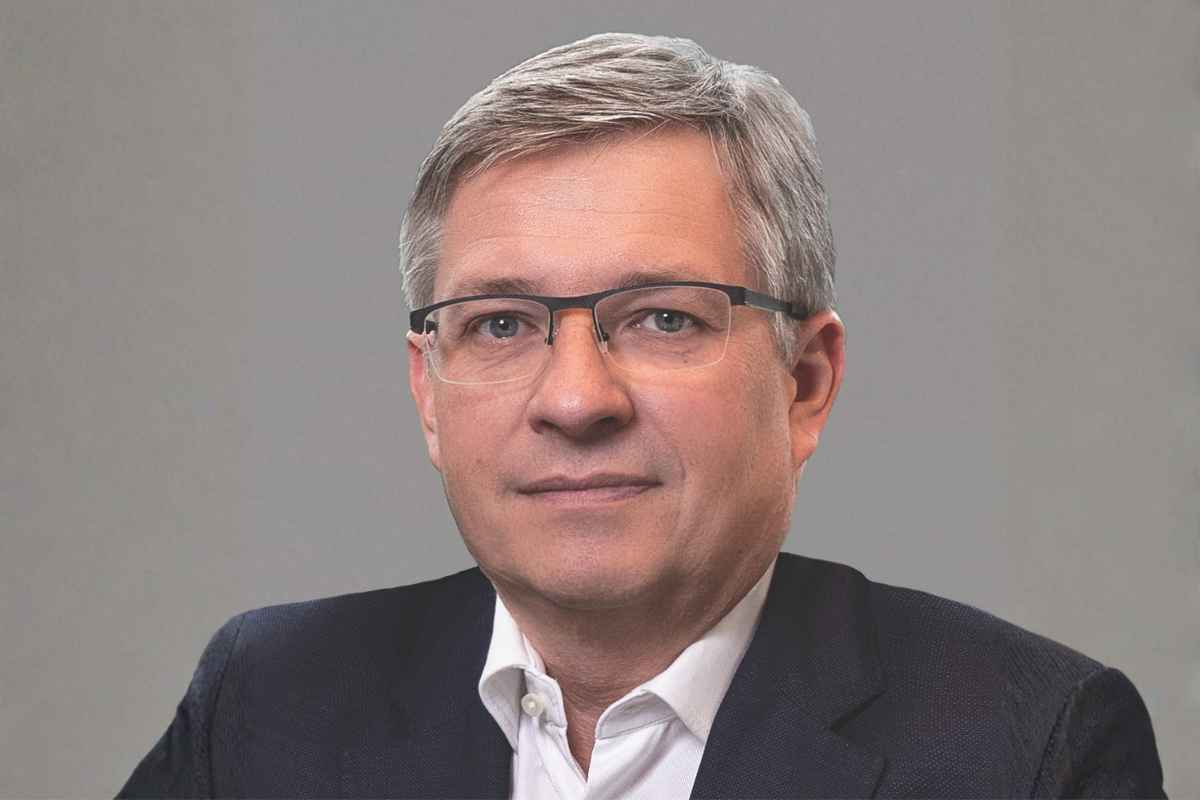
In the view of Christophe Girondel, Global Head of Institutional and Wholesale Distribution at Nordea AM, the asset management business is moving faster than it may appear at first glance. “I like to recall Mark Carney’s famous quote at the World Economic Forum, where he said, ‘If you don’t have a seat at the table, you’re on the menu.’ So what we want is to have a seat at the table; that is our primary objective, and to achieve it we are developing our range of solutions,” he says.
We spoke with Girondel during his visit to Nordea AM’s Madrid office about how to maintain that “seat at the table” and how the fund distribution business has evolved in its two key markets—Europe and Latin America.
How do you see the relationship between asset managers and institutional distributors? What has changed over the course of your career, and what is the priority today?
Twenty years ago, your clients, distributors or intermediaries, were looking for the best possible product and were interested in finding the latest innovation. The question was: what is the next product that is going to work? The industry was searching for innovation; now we are in a phase of consolidation.
Distributors and intermediaries have become much more efficient players. They now build their own strategies, model portfolios, and discretionary portfolios, so their central question is how to construct their own portfolios. Another important factor is that many have realized that having the best product is not as important because products move in cycles. The priority is having a strong partner to work with—one that will still be there over the next ten years, regardless of market cycles, while providing solid services.
How does AI fit into this part of the business?
Artificial intelligence can essentially help analyze clients, identify trends, and manage information, but I do not believe it will ever connect with clients in the same way people do.
What matters to clients is having someone alongside them from the beginning of their analysis process on how to build portfolios, and in my opinion, that requires a very close relationship.
The firm operates in both Europe and Latin America. What are the differences between these two businesses and their distribution models?
They are very different. In Spain and the broader Iberian region, for example, everything is more structured around large institutions, whereas Latin America has a much larger presence of what we would call independent financial advisors and wealth managers.
Banks certainly play a role there, but it is less dominant than in Europe. As a result, the business model is somewhat different. In Latin America, you want to stay close to advisors and wealth managers spread across the region, and naturally also in Miami. There are a few key platforms where you want to be present, but then you also need to reach individual advisors and wealth managers directly.
In Europe, banks are at the center of the system, so product distribution happens through large banking institutions. In Latin America and Miami, distribution is driven by advisors and partnerships with local distributors.
In terms of products, what differences do you see between these regions when it comes to promoting one strategy versus another?
The product we are currently focusing on is our quantitative BetaPlus solution. The reason is simple: it works everywhere.
Markets have become highly concentrated, so clients do not want to take on excessive risk, which is why we are witnessing a resurgence of quantitative strategies. Honestly, four years ago nobody was interested in them, even though it is a product we have always offered and where we manage around 80 billion. Now, quantitative strategies have become a focus for everyone.
Speaking of differences, in Europe we do see greater interest in fixed-income strategies because clients do not want to take on too much risk. We are trying to help clients understand that they need uncorrelated strategies, including within fixed income.
From a thematic perspective, we are also seeing strong interest in a strategy focused on Europe’s empowerment, where we already have 900 million euros invested. The strategy invests in companies that benefit from energy resilience and, naturally, includes exposure to defense.
Another theme we see beginning to revive is climate-related investing. The reason is that for a long time climate was viewed as a way to improve quality of life; now it is increasingly seen as an element of independence.
These strategies tend to be more diversified and long term. Do you think the long-term investing narrative has lost ground amid the ETF boom?
I think it has.
The industry has reached a level of maturity where investors distinguish between holding an investment and trading it. Investors can certainly look every day at how their defense ETF is performing, for example. But if you want to invest with a longer-term horizon, it is preferable to be in more diversified products.
In that context, active management also makes more sense relative to passive management. Active management ultimately means being invested in a strategy like our Europe empowerment strategy and saying, “Now is the time to be more exposed to this theme rather than another.”
Let’s talk about alternatives and private markets. How do you see them entering client portfolios? Is this just a trend or something structural?
At Nordea AM, we have built solutions that allow clients to gain exposure to private markets.
I think this is a very complex area because there is a risk that investors do not fully understand the illiquidity of these assets. It is true that redemption windows can be created, but investors must understand that these are illiquid assets.
This is particularly important for retail investors. For institutional investors, the shift has been much smaller because they were already invested in this asset class.
For both groups, one of the lessons I have learned throughout my career is that you cannot fake an asset’s liquidity; investors need to understand that it is illiquid. In this respect, I am pleased to see that many intermediaries and wealth managers are very aware of this and are doing a good job.
For this asset class, it is important that investors do not have a negative experience, so the best advice is to take the time to understand it thoroughly before investing.
Do you think private assets should represent a specific allocation within portfolios?
I do not know what the ideal percentage is.
When valuations were very low, private assets were highly attractive because they could generate very strong returns. When valuations are higher, it becomes more difficult.
I believe their role within portfolios is maturing, and investors are becoming increasingly selective.
Considering the trends and reflections we have discussed, what are Nordea AM’s objectives in this environment?
First, I would say that we are operating in an extremely competitive industry, so the focus must remain on our objective: staying close to our clients and growing our business alongside them.
This is important because I believe we are moving toward a future where clients will work with fewer asset managers. Our objective is to ensure that we have a “seat” with them.
I like to remember Mark Carney’s comment at the World Economic Forum: “If you don’t have a seat at the table, you’re on the menu.”
So what we want is a seat at the table—that is our main objective. To achieve it, we are continuing to develop our range of investment solutions, including those related to artificial intelligence and absolute return strategies.

 By Beatriz Zúñiga
 By Fórmate a Fondo
 By Alicia Miguel Serrano