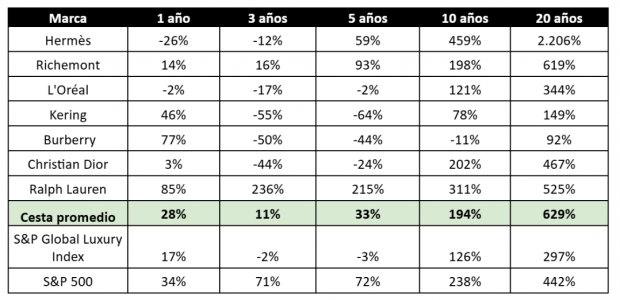
The portfolio includes Hermès, Richemont, L’Oréal, Kering, Burberry, Christian Dior, and Ralph Lauren. Hermès was the best-performing brand over 20 years, delivering a return of 2,206%. Christian Dior generated a 467% return, Ralph Lauren 525%, Richemont 619%, and L’Oréal 344%. At the other end, Burberry delivered a 92% return and Kering 149%, reinforcing the idea that selectivity remains essential.
“If Miranda had built a portfolio in 2006, she would not have chased novelty or short-term momentum. She would have prioritized heritage, scarcity, and brand power that does not depend on the moment. That instinct aligns with what has historically driven long-term outperformance in luxury stocks,” commented Lale Akoner, Global Market Strategist at eToro.
“The strongest companies in the sector operate more like compound-growth businesses than cyclical companies. They tend to share a very specific set of characteristics: protected pricing, limited supply, and the confidence not to follow market fads. Hermès has rarely applied discounts. Ralph Lauren spent years being considered outdated by the fashion industry. L’Oréal kept selling the same products through every cycle. These may not be exciting investment stories in the short term, but they have demonstrated remarkable resilience over the long term,” explained Lale Akoner.
The short-term outlook is more uncertain, highlighting the sector’s sensitivity to macroeconomic conditions. Over the last 10 years, the basket of stocks generated a return of 194%, compared with 238% for the S&P 500. Over five years, the basket rose 33%, while over three years it delivered a return of just 11%, and 28% over one year.
Lale Akoner added: “Luxury is often viewed as a homogeneous sector, but the reality is far more selective. The dispersion in performance, that is, the difference between the best- and worst-performing brands, is significant and reflects differences in brand positioning, execution, and exposure to aspirational versus ultra-high-end demand. However, in the short term, the sector behaves much more like a cyclical sector. Demand is sensitive to global liquidity, consumer confidence, and tourism flows, especially in key markets such as the United States and China. This explains the recent volatility, despite the strength of the underlying brands.”
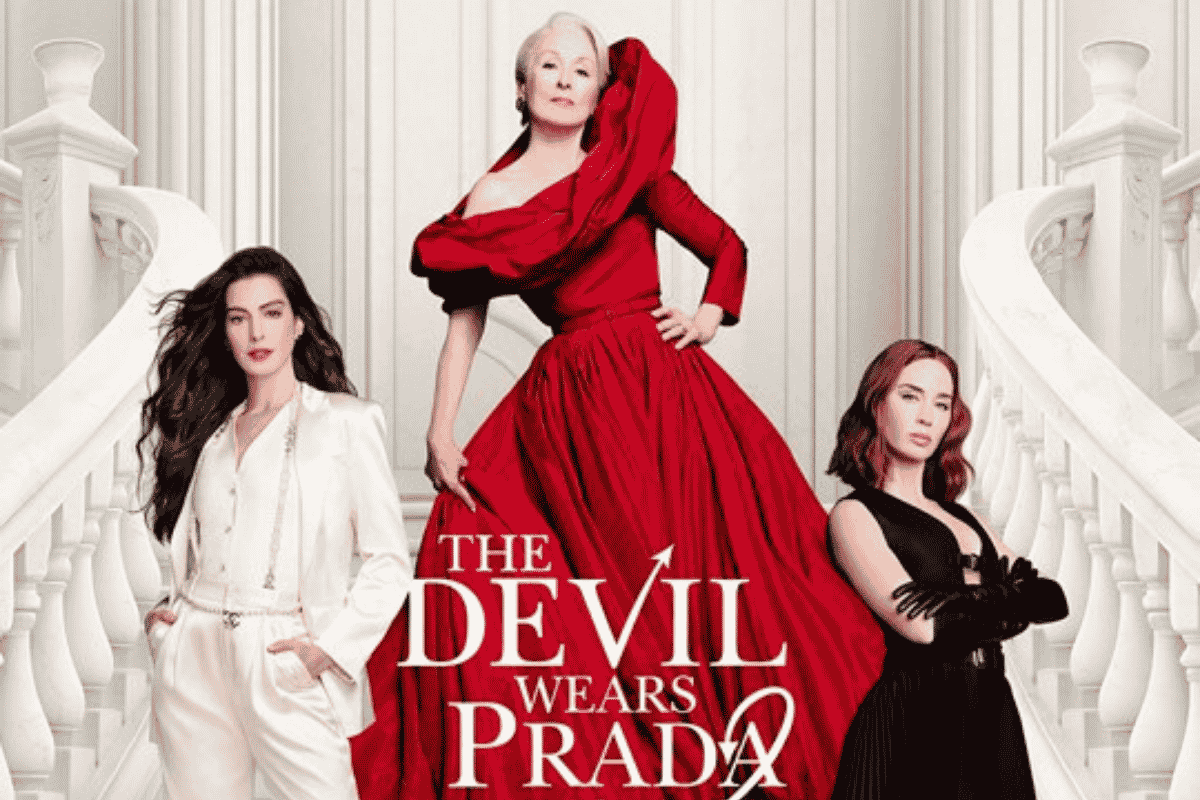
Over the long term, the most established brands have demonstrated their ability to protect pricing, preserve exclusivity, and defend margins throughout economic cycles. For consumers, these brands are associated with handbags, lipstick, trench coats, and polo shirts. For investors, they have delivered sustained compounded returns, provided stock selection has been disciplined. With the return of The Devil Wears Prada, the investment lesson is simple: glamour may capture attention, but durability is what generates returns.



 By Marcelo Soba