The Mattatuck Museum in Waterbury, CT, will host the premiere showing of The Body Imagined: Figurative Art in the Bank of America Collection from June 22 through September 28, 2025.
This curated exhibition features 97 artworks ranging from the late 1960s to the present, exploring diverse interpretations of the human figure by notable artists such as Milton Avery, Nick Cave, Andy Warhol, and Cindy Sherman.
On opening day, Sunday, June 22, the Museum will offer reduced $5 admission and celebrate with remarks at 1 PM.
Organized through Bank of America’s Art in our Communities program, the exhibition is divided into three thematic sections: Body Language, Changing Forms, and Framing the Figure.
Museum Director Bob Burns emphasized the significance of this collaboration, highlighting the shared commitment to making impactful art accessible to the public and fostering dialogue on cultural identity.
Complementing the exhibition, the Museum will offer diverse programs throughout the summer, including artist talks, film screenings, family activities, yoga sessions, and salsa nights, all curated to deepen engagement with the exhibition’s themes.
The Mattatuck Museum, recently expanded and renovated with a $9 million investment, holds over 8,000 objects representing American art and regional history. It is supported by state and federal arts agencies and is part of the Connecticut Art Trial network.
Bank of America credit and debit cardholders enjoy free general admissions the first full weekend of every month through the Museums on Us program.
For more information and a full calendar of events, visit mattmuseum.org.
For much of the past two decades, asset management was governed by a relatively simple logic: generating consistent returns attracted capital. Alpha was the primary competitive differentiator, and distribution capacity was, in many cases, a natural byproduct of performance.
That model began to change.
Today, even managers with strong track records, sophisticated investment processes, and differentiated strategies are struggling to scale their businesses. The problem is no longer exclusively financial- it is structural.
Margin pressure, the concentration of flows in large platforms, the growth of passive management, rising regulatory costs, and operational fragmentation are redefining the economics of asset management.
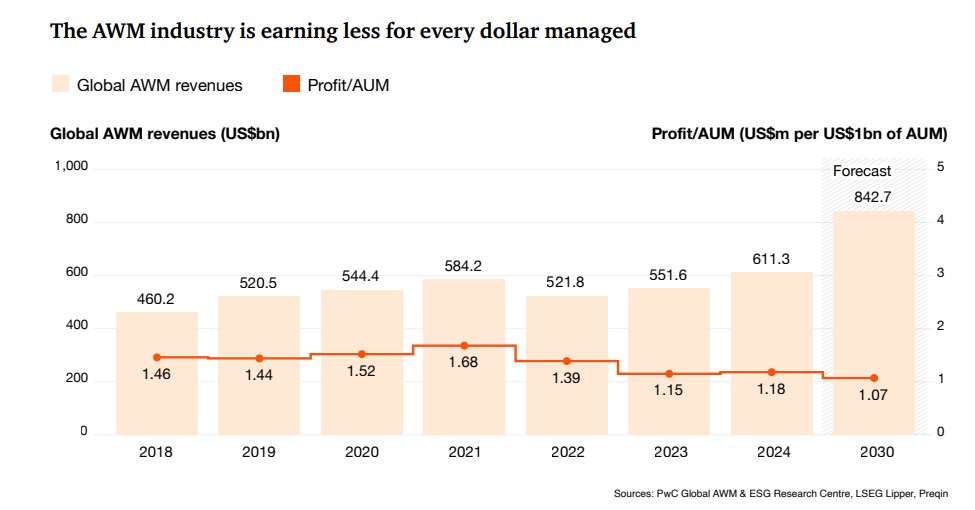
According to PwC, the industry’s profit per AUM has fallen approximately 19% since 2018, while more than two-thirds of many firms’ revenues are already consumed by operational, technology, and compliance costs.
At the same time, McKinsey & Company describes a “great convergence” among wealth management, technology, alternative assets, and global distribution, where operational scale and financial infrastructure are becoming as relevant as investment capability itself.
In other words: asset management is no longer purely a business of asset selection; it is becoming a business of infrastructure, distribution, and efficiency.
And that fundamentally changes how many managers will need to compete over the next decade.
The structural pressure on the conventional model
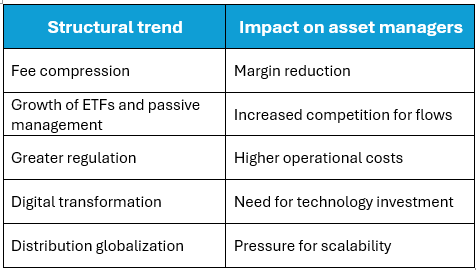
Asset management is undergoing a structural transformation. Fee compression, the growth of passive management, rising regulatory requirements, and technological pressure are forcing many firms to rethink how to scale their investment strategies.
At the same time, the globalization of distribution is favoring platforms with greater operational capacity, institutional integration, and international reach.
The new economics of asset management
Source: Own elaboration based on data from PwC, McKinsey, Deloitte, and ETFGI
In this environment, many managers are finding that the challenge is no longer solely about generating performance, but about enabling their strategies to grow, operate efficiently, and reach new global distribution channels.
The great migration toward scalable infrastructure
The transformation of asset management is also reflected in the evolution of investment vehicles used to distribute strategies globally.
The industry is rapidly migrating toward more liquid, efficient structures compatible with international institutional platforms. ETFs, ETPs, SMAs, and hybrid vehicles are no longer simply financial products; they are becoming distribution infrastructure.
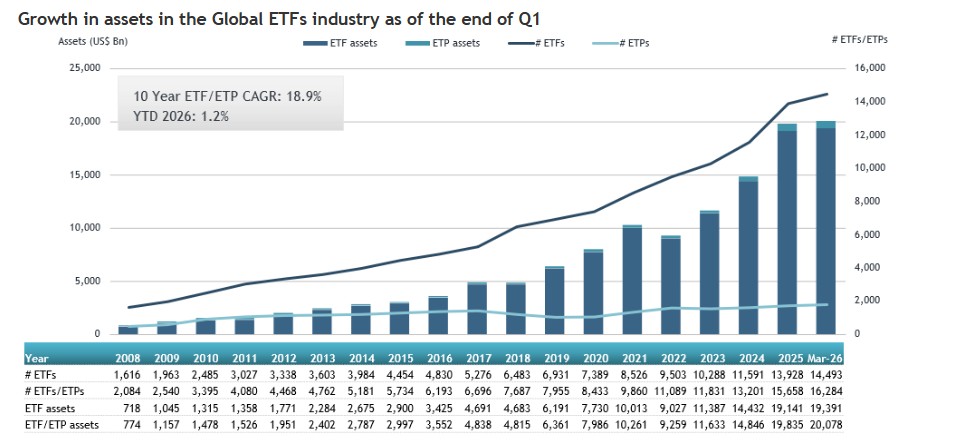
According to ETFGI, the global ETF and ETP industry recorded record flows during the first quarter of 2026, driven by growing demand for efficient, transparent, and globally distributable vehicles.
Source: ETFGI data sourced from ETF/ETP sponsors, exchanges, regulatory filings, Thomson Reuters/Lipper, Bloomberg, publicly available sources and data generated in-house. Note: “ETFs” are typically open-end index funds that provide daily portfolio transparency, are listed and traded on exchanges like stocks on a secondary basis as well as utilizing a unique creation and redemption process for primary transactions. “ETPs” refers to other products that have similarities to ETFs in the way they trade and settle but they do not use a mutual fund structure. The use of other structures including grantor trusts, partnerships, notes and depositary receipts by ETPs can create different tax and regulatory implications for investors when compared to ETFs which are funds.
The phenomenon runs far deeper than a simple shift in product preferences.
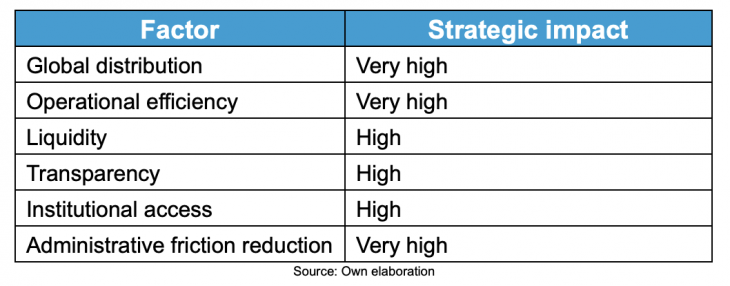
Institutional investors, offshore platforms, and private banking networks are prioritizing structures capable of combining:
Liquidity,
Operational efficiency,
Transparency,
Ease of integration,
Compatibility with global custody and distribution infrastructures.
This explains why the growth of ETPs, ETFs, and securitized structures has accelerated in recent years. The industry is evolving toward models where distribution capacity is as important as investment capability.
What drives the growth of ETFs and ETPs
The real bottleneck is no longer performance: it is distribution
Having a strong strategy no longer guarantees AUM growth. For many managers, the challenge lies in enabling that strategy to scale, operate efficiently, and reach new international distribution channels.
The ability to access banking platforms, global custodians, and vehicles compatible with international financial infrastructure is becoming an increasingly significant differentiator within the industry.
This is especially visible in LATAM and US Offshore, where independent managers, RIAs, multifamily offices, and investment boutiques seek more flexible structures to compete globally without taking on the operational complexity of building conventional vehicles from scratch.
The III Annual Report of the Asset Securitization Sector, authorized by FlexFunds and Funds Society, reflects this evolution: securitization is consolidating as a pathway for creating customized investment vehicles, enhancing global distribution, and facilitating capital raising through international banking platforms.
The next competitive advantage will be financial infrastructure
The asset management industry is entering a phase where generating strong returns remains essential but is no longer always sufficient to drive business growth.
More managers are discovering that distribution capacity, operational efficiency, and access to global financial infrastructure are beginning to play a role as important as the investment strategy itself.
And that explains the growth of more flexible and scalable models within the industry, as well as the growing interest in structures that provide more efficient access to new international distribution channels.
In that context, specialized platforms like FlexFunds are part of an evolution that is helping managers, advisors, and family offices transform investment strategies into solutions ready to compete in global markets.
Because, ultimately, the future of asset management will likely belong not only to those who generate the greatest alpha, but to those who manage to scale it.
In an environment marked by volatility, investor fragmentation, and growing pressure to diversify funding sources, asset managers face a structural challenge: how to raise capital more efficiently and scale the distribution of their strategies internationally.
In this context, special purpose vehicles (SPVs) have evolved from technical structures into a key strategic tool within the asset management ecosystem. Their adoption has not only grown in recent years but has also become more sophisticated, establishing itself as a fundamental component for structuring investments, channeling capital, and expanding access to international investors.
The manager’s new challenge: more demanding capital and more complex distribution
The conventional fund model presents limitations in the current environment. Capital raising demands greater customization, while distribution requires structures that provide access across multiple jurisdictions and investor profiles.
The rise of alternative assets, combined with growing demand for co-investments, has pushed managers to seek more flexible solutions to structure specific opportunities without incurring the costs and timelines associated with traditional vehicles.
SPVs as a capital-raising accelerator
SPVs enable capital to be channeled efficiently toward specific opportunities, structuring investments deal-by-deal and facilitating participation from investors seeking selective exposure.
In this context, co-investments have gained prominence. Simply put, these are investments in a specific opportunity alongside the manager, rather than exclusively through a fund. These transactions are typically structured through SPVs, allowing investors to be pooled in a single vehicle and isolating the risk of each transaction.
Beyond the growth in adoption, the use of these structures reflects a shift in the way capital is organized: greater flexibility, greater specialization, and a growing alignment with the needs of institutional investors.
From strategy to product: the role of SPVs in global distribution
Beyond capital raising, SPVs serve a critical function in the transformation of investment strategies into distributable vehicles.
For managers in LATAM and US Offshore structures, this is especially relevant. SPVs allow for the structuring of instruments that are compatible with global custody and distribution platforms, facilitating access to private banking networks, family offices, and international investors.
In this way, a strategy goes beyond being purely an investment thesis to become a scalable product, with the capacity to be distributed beyond the local market.
The global reach of these structures is clear. The III Annual Report of the Asset Securitization Sector shows that countries like Ireland account for more than 30.4% of securitization vehicles in the eurozone and 26.8% of related assets. This indicates that their use is expanding across institutional-level investment structures.
Today, these structures are predominantly used by international actors. In fact, 91% of SPVs in jurisdictions like Ireland are sponsored by global asset managers, confirming their role as a standard tool in international markets.
This phenomenon reflects a clear transition: SPVs have moved beyond tactical solutions to become a central vehicle in the organization of global capital, particularly in the field of asset securitization.
Flexibility and efficiency: executing with less friction
Another key driver of adoption is the ability of SPVs to reduce operational complexity. These vehicles allow for the structuring of specific investments without the need to launch a full fund, adapt to different asset types, and respond quickly to market opportunities.
From a structural standpoint, the SPV acts as an independent entity that acquires assets and issues securities backed by them, making it possible to isolate risks and optimize capital efficiency.
Unlike conventional funds, which involve long-term commitments, multiple capital calls, and diversified portfolio management, SPVs allow for the structuring of specific investments with greater agility, lower operational complexity, and timelines tailored to each opportunity. This makes them a particularly efficient tool for executing strategies with speed and focus.
In an environment where time-to-market is a key competitive factor, this flexibility translates into a tangible advantage for managers, allowing them to execute more opportunities with less operational friction.
From structure to execution: the role of FlexFunds
While SPVs represent a powerful tool, their implementation requires technical coordination, structural expertise, and access to international infrastructure. This is where specialized platforms like FlexFunds play a relevant role.
Through its securitization program, FlexFunds enables managers to transform their strategies into internationally listed and distributable investment vehicles, using SPVs as the foundation of the structure.
For the manager, this translates into concrete benefits:
Faster launch: design and issuance in less than half the time and cost of any other structuring alternative on the market.
Access to international distribution: facilitates distribution across multiple international private banking platforms.
Operational efficiency: reduction of structural and administrative burden.
Flexibility: securitization of listed or illiquid assets.
Risk optimization: asset isolation within the SPV.
In this way, managers can access institutional infrastructure without having to develop it in-house, focusing on what truly drives value: managing the strategy.
A key infrastructure for modern asset management
The evolution of SPVs reflects a structural shift in the asset management industry. Their capacity to facilitate capital raising, enable international distribution, and offer operational flexibility positions them as a strategic tool for managers looking to scale in an increasingly competitive environment.
Today, backed by their adoption in global markets and their central role in securitization, SPVs represent not only an efficient solution but an essential infrastructure for modern asset management.
To learn more about how to establish an SPV and boost the distribution of your investment strategy, please contact with FlexFunds’ experts at contact@flexfunds.com
The Raymond James Financial Board of Directors announced the appointment of President Paul Shoukry to CEO of the company, effective February 20, 2025, completing the succession plan outlined in the March 2024 leadership announcement.
At that time, Chair and CEO Paul Reilly will step down from his CEO responsibilities and become Executive Chair.
“Paul Reilly and the rest of the board fully agree the time is right to move forward with our long-term succession process,” said Jeff Edwards, Lead Independent Director. “Paul Shoukry is a gifted leader who is exceptionally qualified to partner with our strong senior leadership team. I know that he will build on the firm’s remarkable track record and legacy of world-class client service that began with Bob and Tom James and has flourished under Paul Reilly’s leadership. We are pleased that Paul Reilly will remain as a full-time Executive Chair, similar to how Tom and Bob James executed and supported their succession plans.”
On the other hand, Reilly said: “Reflecting his understanding and commitment to all of our businesses, Paul Shoukry has spent the months since our leadership change announcement traveling, meeting with and listening to hundreds of financial advisors and associates across the country. He has also been involved in virtually every critical meeting and decision I have made during this time, and this has only reinforced our appreciation for the attributes that made him an ideal CEO candidate. His wisdom, insightful perspective and acute understanding of our business combine with a commitment to a business grounded in both excellent client and advisor service. With Paul and our proven leadership team, I couldn’t be more confident in the future of the company.”
In addition, Shoukry said: “Raymond James has an extraordinary history and has been built on time-tested values that we will always embrace. I am honored to have the trust and support of Paul, Tom James and the board and am excited about our future. My confidence in our outlook lies in our people – our leadership team, the financial advisors and associates who are all aligned on our mission of helping clients achieve their financial objectives.”
As part of the firm’s succession plans, Raymond James is announcing other key leadership changes and appointments. Jeff Dowdle has announced that he will be retiring and stepping down from the COO role at the end of the fiscal year.
As part of this change, Raymond James Financial Private Client Group President Scott Curtis will become COO of Raymond James Financial, current Raymond James & Associates CEO Tash Elwyn will become president of the Private Client Group, and Global Equities & Investment Banking President Jim Bunn will become president of the Capital Markets segment.
These changes will be effective October 1, 2024, at which time Dowdle will be named vice chair and serve in an advisory role to facilitate a smooth transition.
The Aegon High Yield Global Bond Fund reached a historic milestone in the third quarter, surpassing $1 billion in assets under management. This achievement, managed by Aegon Asset Management, reflects a threefold increase in assets so far this year.
Amid consistent fund inflows, we spoke with Mark Benbow and Thomas Hanson, co-portfolio managers, to unpack the complexities of the high-yield bond market. In the interview, they discussed current investment opportunities, the health of issuing companies, market valuations, and the strategic role these bonds can play in a diversified portfolio.
How are high-yield companies holding up in the current environment? Are you seeing signs of weakness due to slower economic growth and high rates?
Mark Benbow:
There are two ways to approach this question: from the perspective of the companies and the bonds they issue, which are not always as closely correlated as one might think. Overall, bond prices are holding up, but corporate earnings are mixed. Some areas of the market are performing well, while others are beginning to show cracks.
From a bond price perspective, the market is holding up due to demand outpacing supply, with central bank rate cuts fueling risk appetite. These technical factors have tightened credit spreads and lifted bond prices, even softening volatility episodes like the one in August. However, for companies, the picture is more mixed. Many emerged from the pandemic with cleaned-up balance sheets, solid liquidity, and strong credit metrics, enabling them to navigate inflation and uncertain macroeconomic conditions effectively. Yet beneath the surface, there are highly leveraged companies that could face challenges if high interest rates persist.
In summary, while bond prices are strong and companies are starting from a position of strength, macroeconomic pressures and idiosyncratic factors are widening the gap between the strongest and weakest issuers. This, however, creates an intriguing investment environment where careful selection is essential for differentiated returns.
You mentioned August’s volatility. How did it impact the high-yield market, and what are your expectations for the rest of the year?
Thomas Hanson:
It was a brief episode—just a few days of weakness in the lower-rated segments (CCC and below)—but the market rebounded quickly. By October 31, the global high-yield index (ICE BofA Global High Yield Constrained Index) had delivered an 8.4% return year-to-date, setting the stage for a strong annual performance.
Looking ahead, we expect—and even welcome—more volatility, as it creates buying opportunities for active managers. While it’s hard to predict specific catalysts, factors like smaller-than-expected rate cuts, refinancing challenges, or geopolitical risks could stir turbulence. Additionally, as central banks step back as primary bond buyers, volatility could rise, exposing valuation divergences and uncovering opportunities to identify undervalued securities.
With tight spreads but elevated yields, is now an attractive time to invest in high-yield bonds?
Thomas Hanson:
There are two perspectives to value this market: spreads and yields. While spreads are near historic lows, yields to maturity are around 7%. Historically, this level has been a reliable indicator of five-year annualized returns. Additionally, income remains the primary driver of long-term returns for these bonds.
Although tight spreads might persist, predicting better entry points is challenging. In this environment, we prefer to stay invested and generate income rather than waiting on the sidelines.
What specific opportunities are you identifying in the portfolio?
Mark Benbow:
Our focus is on income generation and downside protection. On the yield curve, we favor short-term bonds because the inverted curve currently pays more for three-year bonds than ten-year bonds. This not only boosts the portfolio’s yield but also reduces volatility.
Regionally, we prefer Europe and the UK over the US, given the relative valuation appeal post-Brexit. Sector-wise, we remain bullish on consumer-focused areas, supported by low unemployment, and have started adding exposure to real estate, particularly in hotels and residential assets. Rating-wise, we focus on higher-quality issuers and avoid riskier credits.
What role can high-yield bonds play in investors’ portfolios today?
Thomas Hanson:
High-yield bonds can provide high income and attractive risk-adjusted returns. In an environment where investors shift between equities in bullish phases and traditional fixed income in bearish ones, high-yield bonds can act as a hybrid. They allow for de-risking capital compared to equities or increasing income within the fixed-income portion of a portfolio, with lower sensitivity to interest rates than investment-grade bonds.
Ultimately, high-yield bonds remain a key tool to diversify portfolios, enhance income, and manage duration risk, even amid macroeconomic challenges.
BMO announced the expansion of the Latino Leaders Index500, a ranking of the 500 largest Latino-owned businesses in the U.S. by revenue, as part of its exclusive partnership with Latino Leaders Magazine. Nationally recognized businesses such as MasTec, Carvana, and Goya rank high on the list.
The businesses featured throughout the Latino Leaders Index500 represent a wide range of industries, including engineering and construction, transportation, retail and more. They are headquartered in 34 different states – with particularly strong presence in California with over 100 businesses represented, as well as Texas and Florida. 180 of these businesses generated $100 million or more in revenue in 2023, showcasing their size and strength across a multitude of industries, as well as their impact on the communities in which they operate.
“BMO is extremely proud to contribute to the growth of the Latino Leaders Index500, Powered by BMO and to continue our relationship with Latino Leaders Magazine,” said Eduardo Tobon, Director, Economic Equity Advisory Group, BMO. “Expanding from 200 to 500 companies speaks volumes about how important and valuable Latino businesses are to the American economy. BMO is committed to supporting Latino businesses with access to capital, educational resources, and meaningful networking opportunities to help them make real financial progress.”
Latinos are the largest minority group in the United States, compromising 19 percent of the population, and drive over $3.2 trillion in economic output to the U.S. economy.
BMO recognizes Latino business owners continue to face barriers to inclusion, which is why the bank promotes equal access to opportunities that enable growth for its customers, colleagues, and the communities it serves.
For quite some time, our team has contended that goods inflation is indeed transitory. While a slowdown has taken longer than we originally thought, goods inflation is indeed falling. However, the Fed’s chicken-and-egg dynamic of inflation first before rate hikes has them playing catch-up quite aggressively. Other than the recent bank failures, the headline-grabbing data points over the past few months are mostly encouraging and now tell a story of retreating inflation. Although CPI slowed from 9.1% year-over-year in July to 6.4% year-over-year in January, the Fed still needs to keep its foot firmly on the brake.
Slowing inflation is just one part of the equation. While the Fed’s success may allow them to moderate the pace of interest rate hikes or eventually hold rates at a high level, Chairman Powell and the rest of the Fed must also work to restore credibility. In fact, Chairman Powell reiterated his message that inflation remains a way off from where they need to see it and there is more work to do, even as the Fed slowed its tightening pace in February.
Inflation peaked last year in July. Since then, we’ve experienced a slow and steady decline in the headline number. We’ve also seen services inflation taking an increasing share of the price pressures and goods inflation taking a decreasing share. As I have argued, this is important in terms of the Fed’s third mandate, which I believe will determine the timing of the central bank’s pivot. If services inflation remains above two percent, though lower than where we see today, and goods inflation keeps shrinking, the Fed may tolerate core inflation above 2%. Given that services inflation is heavily driven by rising wages, and today, much of this increase is focused on the lower-income population, the Fed views this as ‘good’ inflation. For some time, I have argued that the Fed’s third mandate is one of social stability, or more succinctly, compressing the wage gap.
Chair Powell and the Fed’s race to cross the 2% inflation finish line is made more difficult by the strong US economy headwinds blowing in their faces. Imagine also trying to do this while wading through a flood of government spending stemming from December’s omnibus spending bill. In other words, this battle against inflation is at odds with the easy fiscal policy crosscurrents. Unsurprisingly, I think it will be more difficult for the Fed to go from 6% to 2% inflation than it was to shed the excesses from 9% to 6%.
The silver lining to all of this is that a tightening Fed means that yield and income are back! Investing in T-bills or two-year treasuries will not provide a better economic outcome than investing in areas in which investors can earn a credit risk premium. For a while now we have suggested that the economy will be more able to perform into higher rates. However, we have also said that our belief is that there is such thing as rates too high to sustain growth. We think that about 3.75% is fair value for the 10-year treasury, and we are opportunistically adding protection with treasuries when rates rise above this level and reducing duration when we have seen rates notably below this level. We work to balance the opportunity in both credit and rates and expect that volatility will remain high throughout the year.
Away from rates, all the talk about an imminent recession has pushed spreads further above treasuries in most areas of the market. Given the ongoing strength in consumer spending, we believe the best relative value on a sector level continues to be in securitized debt. These non-agency, asset-backed securities spreads on the AA to BBB ratings spectrum are wider than investment grade corporates.
Although this is generally the case, today’s premiums are wider than usual. We favor ABS and residential mortgage-backed securitized credits, which provide additional protection in the form of fast paydown and underlying collateral to provide some ballast when—not if—we enter a recessionary environment.
We prefer prime borrowers through bonds backed by consumer loans and autos because subprime customers are much more sensitive to evaporating stimulus and heightened inflation. When we elect to take on subprime exposure, it’s because we believe the bonds are “senior” in the capital structure and these bonds tend to pay down very quickly.
Many investors also ask about emerging market debt. We are cautious and selective in these spots given their inherent high levels of global risk. But slowing U.S. growth means EM growth differentials are more favorable in 2023 and an eventual pivot from the Fed will slow the rise of the dollar.
In terms of credit quality, we favor investment-grade corporate bonds over high-yield corporates. In an environment of weak growth, we are weighted toward non-cyclical names in utilities, healthcare, select tech, and high-quality financials. We won’t close the door entirely on high yield—seven to eight percent would capture any investor’s attention¬—but as with emerging markets, we pair our robust bottom-up, fundamental process with a top-down view to be highly selective in our approach.
Looking ahead, we still see some red lights on the dashboard. Few investors have weathered an inflationary storm like this, and the inflationary environment last time was radically different. The last decade’s game of monetary and fiscal stimulus has had profound effects on the global economy, and without a playbook, it’s hard to predict how this experiment may end. Caution is the only rule, and we believe we are positioned well to capture yield and remain defensive.
Tribune by Jeff Klingelhofer, CFA, is Managing Director and Co-Head of Investments at Thornburg Investment Management.
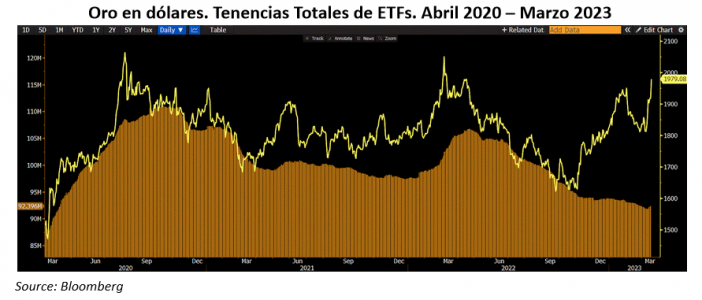
This bearish cycle is the first major test for precious metals ETFs, whose holdings skyrocketed in 2020, fell two years diagonally, rebounded in 2022, and have been falling almost unabated for 10 months. So far, the test is not satisfactory. Even with the price rally between October and January, and now in March, investors seem skeptical and tend to further reduce the investment.
Gold investments go up and down like a roller coaster
ETFs that track the trajectory of gold and silver rose to prominence in the mid-2000s and grew to absorb the majority of production. Holdings of GLD, IAU and others (histogram) reached 83 million ounces (M) −about 157,3 billion dollars (B) − in 2012 due to the tremendous rise in price to $1.895 from $377 (line); from there they fell 45% to 46M in 2015 due to the collapse of the metal, also 45%; they recovered to 69M in 2016 and continued to grow to 111,4M in 2020, in the midst of the pandemic. The enchantment began to reverse. The prolonged reduction stopped in January 2022, around 98M. From there the brilliance reappeared, intensified by the outbreak of the Russia-Ukraine war that pushed the price back to the all-time high of $2.000 (white line). And since May the global investment descends like a roller coaster due to the Fed’s monetary policy, a true factor of price variation. The slide appeared to slow at 94M in October, as gold returned to the range it had been in before the Covid era, but continued at a less pronounced pace. As of March 10, the fall sharpened to 91,8M, −166.2 B−, 17% below the highest peak and 14% below the last year high, although 7 days later they were 92,4M −around 182,3 B−.
Managers (or retail investors) did not react in November-December to the price improvement to $1.950, the threshold of the highest peak: holdings fell beyond the level they were in September-October, when the metal was trading at the lowest rank in almost four years. Instead, they did react to the dip to $1.836 in February, reducing holdings to April 2020 levels.
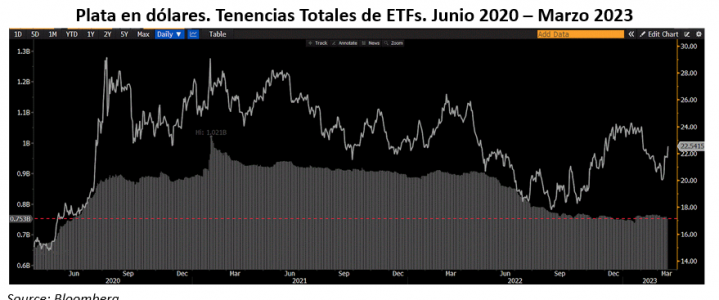
Silver holdings: two-year stability distorted by the Fed
SLV, SIVR and others (grey histogram) increased their silver positions to 504M −24,4 B− in 2011, when the price skyrocketed to $48.50. By 2015 they had reduced them by 13% in response to the decline of 72% of the metal to $13.90, to stabilize them in the following 8 years around 550M and increase them, due to the monetary frenzy, by 75%, to 896M, between 2019 and 2020, when the price went up to $29 (white line). Investments stabilized between August and December of that initial year of the pandemic to suddenly rise vertically, up to 1.02B in February 2021, due to the call on Reddit to “squeeze” the metal. Since then they have decreased. See the precipitation from May. Last January, global investment fell 28% from the peak and 19% from the 2022 high to 739M, June 2020 levels. As of March 17, it recovered to 752,8M −15,4 B−, reducing the drop to 26% and 17%, respectively.
The decline in holdings, completed just two months ago, was the result of the price falling from $26. An ounce bottomed out at $17.60, from where it began to improve, although the decline in holdings did not abate. As in the case of gold, managers or investors were indifferent to the rise to $24 between October and December and even hurried selling until holdings fell to 739M, levels at the start of the pandemic, in June 2020. But they saw something come out to buy in January raising assets to 764M even as the rally petered out. What is interesting, unlike in the case of gold, is that the selling was stopped even though the white metal fell back to $20,60.
First serious test for gold and silver ETFs
Holdings already influence the direction of prices. The only precedent for the reaction of managers and/or investors to monetary tightening and the free fall of gold and silver, is that of 2011-2015, which may not be useful to infer how they will continue to act now. The disenchantment with gold, which is widely used for hoarding and ornamentation, is relevant. Regardless of the differences in attitude towards one metal and the other, one thing is clear: Holdings are back to numbers of three years ago and may be further reduced. Although prices are higher than then, precious metals do not hedge money from the loss of purchasing powerand that the fundamental factors (production, demand, use in solar panels and vehicles, etc.), do not affect the prices. And the outlook is clearly not rosy. Continued selling suggests investors do not expect prices to return to high levels.The rallies seem to be used to sell, not to restore positions. Although the possible softening of the Fed due to fears of a new banking crisis is priced in, (gold rebound to around $1.970, silver around $22,50), pessimism is more permeable.
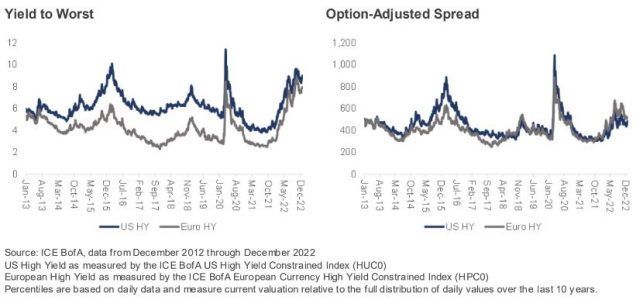
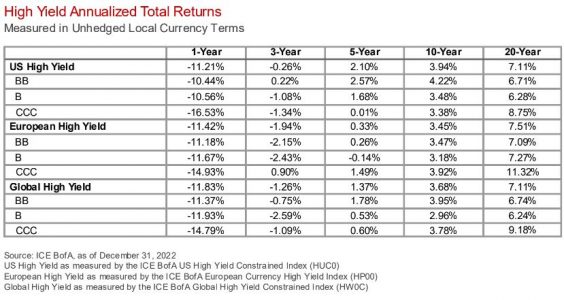
High yield slumped alongside other asset classes in 2022, with the ICE BofA US High Yield Constrained Index declining -11.21%. Yields increased a hefty 4.7% on the year, rising to 9.0%. Only 37% of the increase in yield was
driven by spread widening, as the market’s option-adjusted spread (OAS) increased a relatively modest 172 bps to a spread of 483 bps.
“Looking forward, we view valuations as very attractive on a yield basis – both US and European high yield are in the cheapest yield decile over the last 10 years. Despite the slowing economy, we are constructive on high yield, forecasting 10-12% returns for the full year 2023. Our spirited outlook is based on the asset class’ relatively healthy fundamentals, highly supportive market technicals, and the attractive yields on offer that help to compensate for the risks of investing in high yield”, reports Nomura Corporate Research and Asset Management INC (NCRAM) in the “High Yield Outlook”.
Mixed Macroeconomic Backdrop
2022 was a year to remember for both risk assets and rates investors, as neither equities nor fixed income provided any respite from the relentless bear market. The S&P 500 declined -18.1%, and the 10-year US Treasury lost -16.3%. Other developed and emerging markets witnessed similarly distressed outcomes for their domestic 60/40 portfolios. Commodities lost their effectiveness as a hedge after an early -2022 rally. WTI crude gained 4.2% on the year, falling -35.1% from its zenith in March.
The year began with the US Fed tacitly acknowledging that surging inflation would not be “transitory.” The Fed and many other global central banks spent 2022 aggressively withdrawing the liquidity they had pumped into their economies during the pandemic. One notable anecdote is the decline in US M2 money supply growth from a shock-and-awe level of 26.8% y/y during the pandemic to 0% annual growth in November 2022, the slowest pace since at least 1959. Market sentiment subsequently shifted from fretting about inflation to worrying about a pending recession. Russia’s invasion of Ukraine added to investors’ consternation in 2022, particularly in Europe, driving up commodity prices and further snarling supply chains.
As the year progressed the global economy softened, sapping demand for commodities and providing firms with breathing room to catch up on backorders and otherwise normalize supply chains, enabling inflation to retreat from peak readings.
As the calendar turns to 2023, says NCRAM, investors remain concerned that the Fed may channel the King of Pop, Michael Jackson, and his “Don’t Stop ‘til You Get Enough” refrain, driving the US economy into recession as a side effect of its efforts to contain inflation.
NCRAM is somewhat more sanguine about the economic outlook. “While we forecast a shallow recession in 2023, we also expect the Fed to pause rate hikes in 1Q23, and the economy to begin its recovery in the second half of the year in anticipation of easier monetary conditions”. According to the outlook, the Fed could begin easing before year-end if inflation and growth continue to react to the 425 bps of tightening plus early stage QT that the Fed implemented in 2022. Markets are unlikely wait for the economic recovery to take hold before rallying, creating a more favorable environment for investing in 2023.
Supportive High Yield Fundamentals
Despite the slowing economy, high yield fundamentals remain relatively sound. US high yield issuers ’ 3Q EBITDA declined -6% sequentially, but rose 17% y/y. High yield companies continue to generate cash flow and are using those resources to prepare for a weaker economy. Leverage in the US high yield market has declined from 5.2x during the pandemic to 3.1x to start 2023.
“The default rate over the last 12 months has held steady at less than 1%. We expect a small increase in defaults as the economy slips into a shallow recession, but given the low leverage carried by high yield issuers and the absence of a market sector under significant stress (e.g. energy in 2015-16 or housing during the financial crisis), we expect the default rate to remain below the 3.2% long-term average. Another reason we are confident that defaults will remain under control is the improvement in credit quality in the US high yield market in recent years. Historically, the high yield market has seen as low as 35% BB-rated bonds, and coming out of the financial crisis, nearly 25% of the market was rated CCC and below.”
Today the market is more than 50% BB, and only about 10% CCC. High quality issuers are generally better positioned to withstand a recession.
Muscular Market Technicals
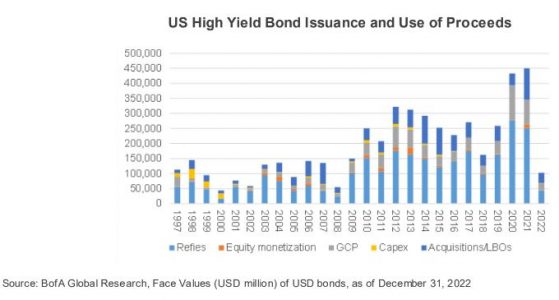
High yield technicals are very robust, according to NCRAM’s outlook. The US high yield market shrank by nearly $200 billion of market cap in 2022. Calls, tenders, and maturities totaled close to $200 billion for the year. More than $100 billion of high yield bonds were upgraded to investment grade, countered by less than $10 billion of investment grade that was downgraded to high yield. This means that close to $300 billion left the high yield market in 2022 vs. just over $100 billion of new high yield issuance. The nearly $200 billion decline in high yield
bonds outstanding (excluding secondary market buybacks by high yield issuers) is more than 10% of total US high yield market cap (market size is just shy of $1.5 trillion).
“We expect the rising star trend to continue in 2023, as large issuers such as Occidental Petroleum and
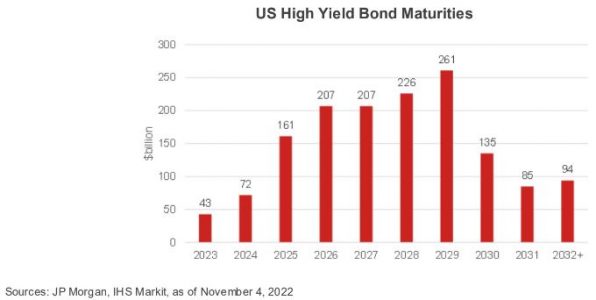
Ford could potentially ascend to investment grade. High yield issuers were able to avoid tapping the market in adverse conditions in 2022, because much of the debt stock that would have come due last year was refinanced in the heavy issuance years of 2020-21. There are few high yield bonds maturing before 2025, and approximately 80% of high yield issuers have no bond maturities in the next 2 years, another reason we are confident that defaults will avoid a spike in 2023.”
Attractive Entry Point
The yield to worst for both US and European high yield is quite generous relative to recent history, even if US high yield is not overly cheap on a spread basis. “We believe the yields on offer, along with the previously described fundamental and technical backdrop, support our forecast of 10-12% high yield returns in 2023”, says NCRAM.
JP Morgan Research calculates that over the last 37 years, when investors have put money to work in US high yield with yields of 8-9%, the median 12-month forward return was 11.4%. Given the improved credit quality profile of the market, one would expect investors to demand a lower risk premium to hold high yield.
Thus, NCRAM estimates that US spreads look more attractive relative to history on a quality-adjusted basis. Also note that average high yield bond prices in both the US and Europe are trading close to their deepest discounts in
the last decade, improving the risk-reward ratio for an asset that (if all goes well) matures at par.
NCRAM’s total return forecast assumes the US will lapse into a mild recession, but the high yield market will be able to ride out the slowdown. “Even if our growth forecast is too optimistic and the recession is more painful than expected, rapidly declining US Treasury yields would counter-balance high yield spread widening. With carry around 9%, we believe high yield will generate positive returns even if the depth of the recession surprises to the negative side”, concludes the NCRAM’s outlook.
The key trends to look out for in science, technology and sustainability over the next 12 months – and beyond:
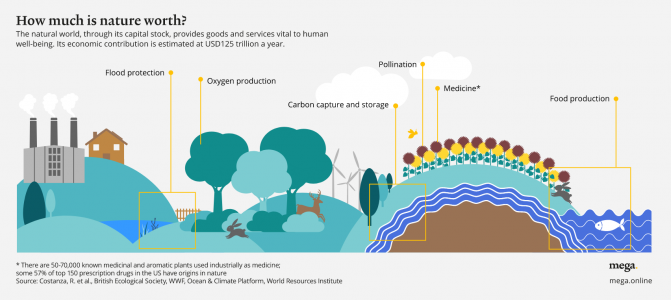
1. Protecting biodiversity
The world is waking up to the fact that protecting biodiversity is just as important for our survival on Earth as halting global warming. At the UN COP 15 summit in Montreal in December 2022, governments signed a ground-breaking deal to halt biodiversity loss by 2030. To achieve this, we will need to harness new and existing technologies to embed more sustainable practices across industries such as agriculture, forestry, IT, fishery, materials, real estate, consumer discretionary and staples, utilities and pharmaceuticals. Following COP 15, the financial sector is expected to increasingly contribute to this transition. The OECD estimates that investments aimed at protecting biodiversity stand at less than USD100 billion a year – a paltry sum, particularly when compared with what climate change attracts (USD632 billion). Expect that gap to slowly start closing in 2023.
2. High-tech cars
New technology brings disruption and opportunities to almost every industry. The auto sector is no exception. Electric vehicles are becoming ever more popular – not least thanks to the recent surge in petrol prices. 2023 will see new launches from many manufacturers, including Tesla’s iconic-looking pick-up truck. Five years from now, one in four new cars sold is expected to be fully electric.1 That, in turn, will fuel demand for batteries and semi-conductors. Automation is the other key tech shift in the car industry. While fully automous vehicles are still largely the stuff of science fiction, the latest models are offering ever more advanced automation features, backed by ever more complex software. China’s Baidu is even planning to launch a car with a detachable steering wheel. According to Goldman Sachs, the average length of software code per vehicle has doubled to 200 million lines in 2020, and is forecast to reach as high as 650 million lines by 2025, presenting a big growth opportunity for the tech sector.2
3. Computing at the edge
The rise of 5G and advances in AI have opened up a new era of data storage. Edge computing uses augmented reality and machine learning to analyse data at or near the place where it is gathered, or “on the edge”. It then takes advantage of super-fast transfers made possible by 5G to send that data to the cloud. When 6G comes, the process will be even faster. One of the key benefits of such an approach is low latency, which in turn opens the door to the development of new devices and applications which rely on minimal delays. Farms, for example, are starting to embrace edge-enabled ground and air sensors to monitor water and chemicals for optimal crop yields. Edge technology can benefit the environment, as it has lower carbon footprint compared to processing data on the cloud. It also creates new cybersecurity challenges and demand for solutions to address them.
4. Power of the circle
From metals and fossil fuels, to animals and crops, we are consuming a year’s worth of the Earth’s resources in just eight months, which is clearly not sustainable in the long run. The answer is to make the most of what we’ve got and make it last for as long as possible. The circular economy concept ideally envisages a world without waste – a loop whereby resources are used and reused for as long as possible. The emphasis is on creating products that are long-lasting and easy to take apart, repair, refurbish and re-assemble to make other products. The approach also involves making greater use of organic materials (such as wood in construction) that are part of a natural loop. Circular design can be applied both to consumer goods and to industry, and it’s a huge opportunity – the circular economy could unlock up to USD4.5 trillion of additional economic output, according to Accenture.3 Governments are increasingly on board. Circular economy is a key part of Europe’s Green Deal initiative, with targets for 2023 including legislation for substantiating green claims made by companies and measures to reduce the impact of microplastic pollution on the environment.4
5. Drug engineering
Drug development is notoriously slow and costly, with low chances of success. But that may be all about to change thanks to advanced computing. In one of the most exciting recent developments in the healthcare industry, DeepMind, Alphabet’s AI unit, succeeded in developing technology that can be used to predict the shape of any protein in the human body. The breakthrough potentially paves the way for much faster, cheaper and more efficient drug discovery – something Alphabet and others are now working on. Over the next decade, the market could be worth some USD50 billion, according to Morgan Stanley. 5
6. Battle against obesity
The prevalence of obesity in the world has tripled since 1975,6 and it is now responsible for some 3 million deaths a year. Covid increased awareness of how excess weight can make people susceptible to other diseases. There is growing momentum – from governments and individuals – to tackle the problem, which coincides with the development of new treatments. One potentially promising new weight loss drug has recently been approved for use in the US; another one is expected to get the green light in 2023. The global obesity treatment market could top USD54 billion by 2030 from just USD2.4 billion in 2022, according to Morgan Stanley. Insurers are slowly becoming more willing to cover obesity treatment, and there is also a growing appetite from the public to pay out of pocket where such coverage is not available.
7. Learning for life
Demographic and technological change have deeply impacted society. As a result, learning is no longer the mainstay of school. A growing number of countries are embracing lifelong learning as a means to cope with the challenges associated with longer-living populations. The pandemic prompted many people to reconsider their lives and their jobs. Labour shortages in some industries have created opportunities for new workers to step in. At the same time, improved work/life balances – with working from home saving commuting hours – have opened the door for people to take up new hobbies. Growing acceptance of online learning has made studying more accessible. It shouldn’t be a surprise that 2023 has been pronounced the “European Year of Skills”, with extra investment in training and a drive to get more women into science and technology.
Opinion written by Stephen Freedman, Head of Research and Sustainability for Pictet Asset Management’s Thematic Equities as well as Chair of the Thematic Advisory Boards