The AI craze and the rallies it has generated in stock markets—especially in the United States—have put the debate over valuations back on the table. While some contend that this is a technology so revolutionary that it can handle all investor dreams, others see a promise too overblown to meet the market’s heavy expectations. Although the question of whether there is a bubble in AI-related stocks remains unanswered for now, the history of financial markets contains some relevant examples.
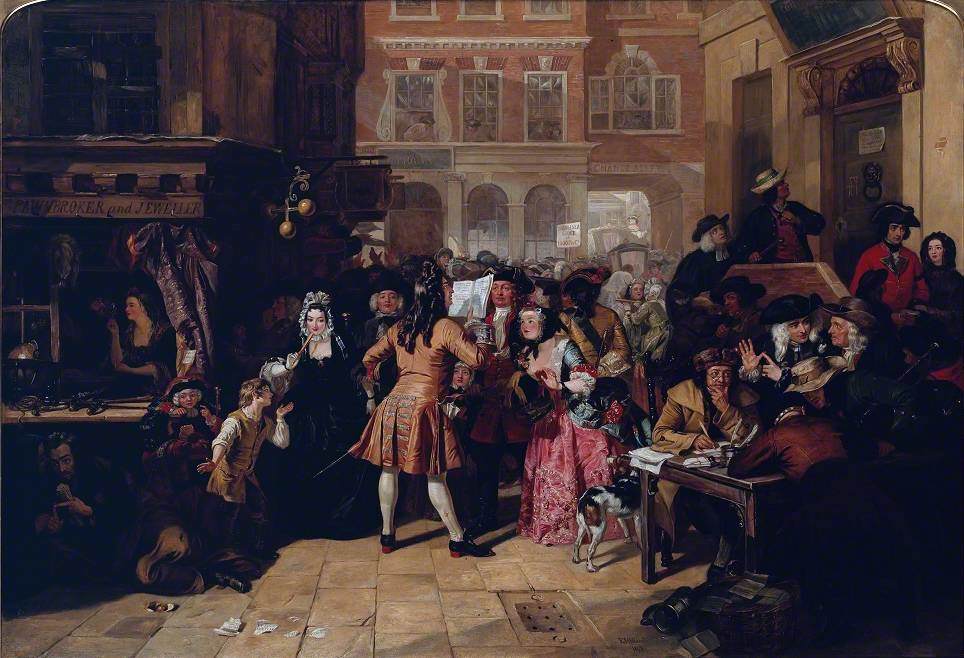
One of these is the so-called South Sea Bubble, which starred a British company that found successive new heights based on the excitement generated by its royal backing and the slave trade. In a matter of months, the stock inflated to unsustainable levels, and when the bubble burst, the scandal reached the doors of the English Parliament.
Founded in 1711 as a public-private partnership aimed at consolidating, controlling, and reducing the national debt and helping the United Kingdom participate in the lucrative slave trade, The South Sea Company sparked the interest of investors of the era.
In 1713, they secured the monopoly for the trade of enslaved Africans in the South Pacific Ocean, among the Spanish colonies in the Americas. The document known as the “asiento de negros,” a monopoly contract signed between the Spanish Crown and merchants from other countries, served as the framework for the business. This was because the Spanish monarchy preferred not to participate directly in the practice, instead subcontracting services from other European powers.
The Fever Begins
Considering how profitable the slave trade had been over the previous two centuries, the expectation was that the operation would be highly lucrative. The enthusiasm was boosted by the idea that foreign trade would normalize following the end of the War of the Spanish Succession in 1713.
This prospect, along with the confidence generated by the royal backing of the company, attracted a variety of English investors. There are even reports that the physicist and mathematician Sir Isaac Newton participated in this financial fad, investing the modern equivalent of millions of pounds sterling.
Initially, the firm offered a 6% interest rate to those who bought the stock, but the excitement around the shares drove them to a peak in 1720. And the stock maintained its strength, even though no slave trade boom materialized after the signing of the Treaty of Utrecht, which ended the war.
The Spanish gave the British a limited portion of the business and even kept part of the profits, placed taxes on the importation of slaves, and put strict restrictions on the fleets of ships they could send. This undermined the profit prospects of the business.
However, the stock price continued to scale, supported by royal backing. In 1718, King George I of Great Britain assumed the governorship of The South Sea Company, which generated further confidence among the investing public, driving prices higher and coming to generate a 100% interest in the shares.
The Beginning of the End
As happens with many bubbles, prices detached from business fundamentals. Considering that the trade of enslaved Africans was not generating the necessary revenue to justify the stock boom, the rally began to falter.
Furthermore, the company was trading more and more of its own shares and was beginning to participate in questionable practices. There are records of people within the company pressuring—or bribing—their friends and acquaintances to buy shares, keeping valuations high, and there were even bribes and other acts of corruption involving British ministers and officials.
In 1720, the year the house of cards fell, the British Parliament allowed The South Sea Company to buy the national debt. The company paid out 7.5 million pounds to acquire a debt of 32 million pounds. The plan was to use the profits from share sales to pay the interest on the debt.
It was at this moment that the stock price reached its peak. The company’s shares went from about 100 pounds sterling in 1719 to 128.5 pounds in January 1720. From that point, widespread market enthusiasm took it over 1,000 pounds in August of that year.
Shortly after, the price collapsed to little more than its IPO price.
The dilemma of the model created by The South Sea Company is that it was a kind of financial carousel, where the expected added value from the slave trade did not materialize. Instead, the company was inflating its stock price with its own market operations against the public debt it acquired.
The Bursting
The turning point was in September 1720, when the shares began to fall. Once doubt set in, investors began to lose faith and sell the stock, causing prices to plummet. The British company’s stock ended up falling back to 124 pounds in a matter of days, accumulating a drop of more than 80% from its highest point.
The end of the bubble brought heavy losses with it and, along with them, outrage among the investing public. Because the collapse happened in the dawn of the English stock market—the creation of The Royal Exchange dates back to 1571, driven by Queen Elizabeth I—there were no explanations available for the level of speculation the bubble generated in the first place.
A significant number of people lost a lot of money, to the point that the suicide rate increased, according to reports of the era, and those affected reached the political sphere demanding explanations. Thus, Parliament launched an investigation that uncovered the company’s bad practices, turning into a financial and political scandal.
In response, lawmakers passed the Bubble Act of 1720, prohibiting the creation of joint-stock companies like The South Sea Company without special permission by royal charter.
Mind you, although the effect was highly publicized, it did not have a major impact on the general economy and did not generate a recession, unlike other famous bubbles in history.
The company, for its part, continued to trade until 1853, undergoing a restructuring in the interim.