Buying a luxury residence in Miami and receiving, alongside the apartment, a deeded private office that can be used, rented, or held as an independent asset is ceasing to be a real estate anomaly and becoming a new development formula.
This proposal alters the traditional logic of the luxury condominium. It is no longer merely about acquiring a home with a business center, a boardroom, or a coworking space as part of the amenities. In this new model, the buyer acquires two properties within a single transaction, and the office comes with its own title deed.
The distinction may seem subtle, but from an investor’s perspective, it is significant: an amenity is consumed; a real estate asset can retain value, be sold, or generate income.
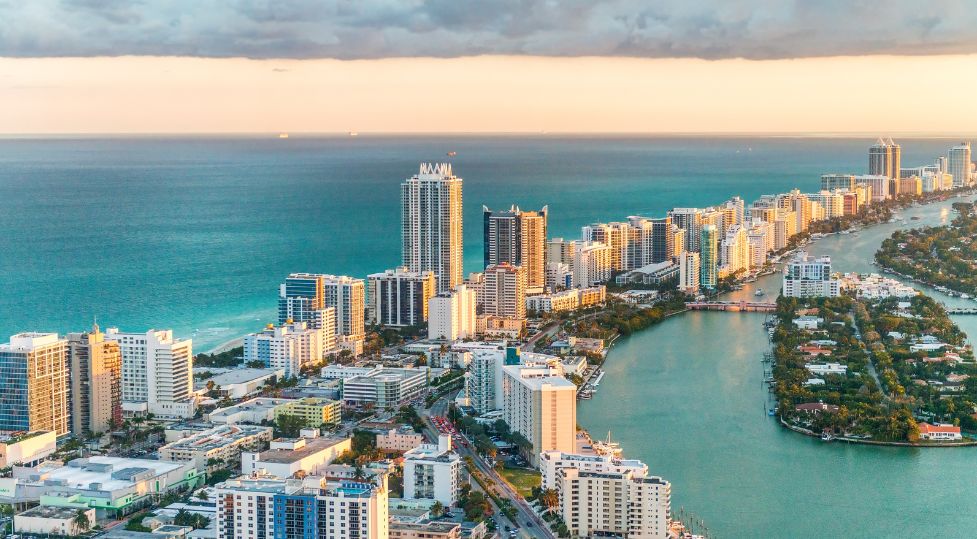
The concept began gaining traction in Brickell, Miami’s primary financial district, precisely when prime office rents recorded extraordinary increases and corporate demand concentrated increasingly in well-located, premium buildings with high-level services.
The most representative case is One Twenty Brickell Residences, developed by Property Markets Group (PMG). The project features a 40-story tower with 467 fully finished and furnished residences, each paired with its own deeded office.
The offices feature private access, boardrooms, and concierge services. Above all, they are not part of a shared business center: they are independent real estate spaces linked to the buyer.
The new equation, therefore, is not simply “living and working in the same building.” It is living in one property while simultaneously owning another property capable of producing income.
The Price of Owning an Office in Brickell
The emergence of this product coincides with a transformation in Miami’s corporate market. According to CBRE data for the fourth quarter of 2025, Class A office rents in Brickell had increased approximately 74% since 2021, reaching around $102 per square foot annually.
The surge becomes even more pronounced when examining the most exclusive segment. In top-tier buildings, rents can reach $225 per square foot, compared to approximately $60 in 2021.
Cushman & Wakefield similarly identifies a sharp rise in occupier costs. Companies that renewed contracts at $40 or $50 per square foot before the pandemic may now face renewal proposals ranging between $120 and $130 per square foot.
As a result, occupancy costs for prime offices in Miami are beginning to rival even those of Manhattan. This comparison is relevant in understanding why an office included in a residential purchase can hold a far greater economic value than that of a simple amenity.
However, the market is not growing uniformly. CBRE reported a 14.9% vacancy rate across the entire Miami office market for the second quarter of 2026, with an average asking rent of $68.60 per square foot.
Even so, during that quarter, the city recorded a positive net absorption of 344,000 square feet, accompanied by rising asking rents.
Colliers, for its part, reported an office vacancy rate of 10.8% in Miami-Dade during the second quarter of 2026 and a record asking rent of $73.37 per square foot for Class A properties.
The conclusion that emerges from all the data is that there is not necessarily a generalized shortage of offices. What exists is a growing differentiation between lower-quality spaces and those with the location, services, and features required to attract high-net-worth tenants.
Savills identifies a similar trend, highlighting the role of technology firms, family offices, and financial institutions in driving demand for prime office space. It is precisely at this intersection of luxury housing, business activity, and a relative scarcity of high-quality corporate space where this new real estate product emerges.
From Amenity to Second Asset
For years, luxury condominium developers competed by incorporating private restaurants, gyms, spas, libraries, boardrooms, and coworking spaces. While all of these enhanced a property’s appeal, none could be sold separately.
By contrast, a deeded office changes the equation: the owner can use it for their own business, convert it into an extension of their residence, lease it to a third party, or—depending on condominium rules and applicable legislation—eventually sell it independently.
This turns what would traditionally have been an amenity into a real estate asset capable of generating cash flow. One Twenty Brickell implements the formula on a particularly significant scale: 467 residences and 467 deeded private offices.
In wealth management terms, a single residential transaction incorporates a second asset. For an investor, the question shifts from how much the apartment is worth to how much the office is worth and how much income it can generate.
The New Equation: Live, Work, and Rent
The concept is evolving beyond its original premise. At Twenty Sixth & 2nd in Wynwood, developed by PMG and LNDMRK Development, the project includes 233 residences and 122 deeded offices.
This development marks a new phase in expanding the model into one of the neighborhoods that has transformed most significantly in Miami over the past decade. The underlying logic differs markedly from the traditional home office: I live here, I work here, and I own an additional asset that I can monetize.
Under certain circumstances, an owner could occupy the apartment and lease the office. Alternatively, they could use the office for their business and lease the residence when not in use, provided building rules and local regulations permit.
The possibility of generating additional income is precisely one of the primary commercial selling points of the new model. Information provided by developers indicates that an office can represent an additional value of up to $80,000 annually, over and above any return generated by the apartment.
However, that figure should be interpreted as potential gross income rather than net yield. The true return will depend on the purchase price of the office, its size, location, demand, effective rent, vacancy periods, maintenance, property taxes, insurance, management, and other operational costs.
The relevant financial question, therefore, is not how much an office can be rented for, but how much actually remains in the owner’s hands after all expenses are accounted for.
That calculation will be decisive in establishing whether the deeded office represents a genuine real estate innovation or simply functions as a new sales hook for high-end condominiums.
The Model Expands
The formula no longer appears confined to Brickell.
Wynwood is among the first markets where it is being replicated, while Downtown Miami is also incorporating high-end projects with private offices into its real estate offerings.
This geographic expansion is important because it will show whether structural demand exists for this product or if its appeal depends primarily on the extraordinary conditions of Brickell’s financial district.
It also suggests a broader possibility: that integrating housing and office space may become a distinct category within the luxury market. The concept is particularly attractive in an environment where hybrid work has not eliminated the need for corporate spaces, but has reshaped their requirements.
Companies may require fewer square feet than before, but they are willing to pay more for representative, well-located spaces with quality services. In this context, a small, private, strategically located office can find a natural target market among entrepreneurs, independent professionals, family offices, and small firms that do not need large floor plates but require a prestigious address and corporate space.
The Latin American Component
The model also finds a natural market among international buyers, particularly Latin Americans.
Data regarding the new construction market indicates that Latin American buyers represent 86% of new construction purchasers in Miami—a proportion that helps explain why developers are designing products that address not only residential needs, but wealth planning and business requirements as well.
This metric aligns with figures from MIAMI REALTORS, which illustrate the significant role of international capital in South Florida’s real estate market. During 2025, foreign buyers purchased residential properties valued at approximately $4.4 billion in South Florida, up from $3.1 billion in 2024.
In terms of volume, foreign buyers acquired roughly 5,300 properties, compared to about 4,000 the previous year. International participation is particularly prominent in new housing. A study by MIAMI REALTORS covering 9,115 units across 37 developments found that international buyers accounted for 49% of sales in new construction, pre-sales, and condominium conversions over the 18 months ending in June 2025.
While measuring different subsets, both metrics point in the same direction: international buyers are a core component of Miami’s new construction real estate market. For a Latin American entrepreneur, the proposition of purchasing a residence and simultaneously obtaining a deeded office offers utility that extends well beyond convenience.
It can serve as a U.S. residence, a meeting space for clients, a headquarters for specific corporate activities, or an asset capable of generating a secondary income stream denominated in U.S. dollars. For an investor, adding an income-producing asset to a residential purchase introduces a new variable into return calculations.
From Residence to Wealth Platform
The true innovation of the model lies not necessarily in the office itself, but in converting a portion of a residential property into a wealth management platform with two distinct assets. For decades, the added value of luxury condominiums was tied to amenities, but a different question has emerged: Can an amenity become an asset?
For instance, a swimming pool cannot be rented independently, a gym cannot be sold, and a lounge does not have its own title deed. A deeded office, by contrast, possesses these characteristics, allowing it to acquire an economic value potentially independent of the residence.
This phenomenon aligns with a broader shift in the U.S. office market. Demand recovery has been uneven: high-quality properties located in core business corridors capable of offering a premium corporate experience are performing very differently from secondary spaces.
Cushman & Wakefield reported that office leasing activity in Miami totaled approximately 830,500 square feet during the first half of 2026, though volume was 28.5% lower than that recorded during the same period the previous year.
However, second-quarter activity increased 44.4% compared to the prior quarter. This suggests that while the market continues to adjust, indicators demonstrate that demand for quality space remains a significant part of the equation.
Risks exist, however. One challenge is that innovation may eventually become the industry standard. Furthermore, the model’s appeal does not eliminate underlying risks, the first of which is liquidity.
A small, specialized office may have a much narrower secondary market than a residential unit. Its value will depend on location, dimensions, layout, condominium regulations, permitted uses, and the depth of commercial demand.
Another risk is the cost of ownership. Florida has tightened financial and maintenance requirements for condominiums following the Surfside collapse. An academic study published this year found that higher future costs related to new regulatory demands are already reflected in the state’s condominium prices.
A third risk is future competition. If more developers begin including deeded offices in their developments, the concept may lose part of its differentiation, as real estate innovations command a premium while scarce, but see that premium compress once they become a standard feature.
Consequently, the real value of a deeded office will not be determined solely by holding an independent title deed, but will depend on sustained demand for those specific spaces.
A New Category for Investors
For now, deeded offices represent a niche within Miami’s luxury condominium market. However, the concept is noteworthy because it bridges three markets that were traditionally analyzed separately: high-end residential, corporate offices, and real estate investment.
In this context, Brickell functioned as a testing ground, while Wynwood and Downtown Miami demonstrate the potential to replicate the model. Meanwhile, the substantial presence of international buyers provides a natural market for a product that offers more than a residence.
This evolution could lead to the establishment of a distinct real estate category: properties designed not only for living, but for working and generating income. For developers, the advantage lies in differentiating projects and increasing the perceived value of each transaction.
For buyers, the equation is more nuanced. An office can serve as an additional dollar-denominated income stream, but only if rental income exceeds carrying costs and sufficient occupier demand exists. For private wealth investors, particularly those using Miami as a platform to diversify international capital, the fundamental question remains: Are they purchasing a luxury amenity, or acquiring a second, cash-flow-generating real estate asset?
The answer will determine whether deeded offices are simply the latest differentiation strategy for luxury condominium developers or the beginning of a new approach to structuring real estate assets in Miami.