The relationship between Latin American high-net-worth fortunes and the U.S. financial market underwent a significant transformation during 2026. Miami and Texas reinforced their positions as 2 of the primary destinations for international wealth management, albeit with distinct characteristics and specializations. The former retains its status as a financial hub for Latin American capital; the latter is gaining ground as a center for business operations, private banking, wealth advisory, and investment structuring.
What is unfolding goes deeper than a simple reallocation of bank deposits or real estate acquisitions. Business families from Mexico, Brazil, Colombia, Argentina, and other regional economies are building permanent structures in the United States to manage their investments, organize generational succession, establish investment vehicles, and access private markets.
Capital that previously sought shelter primarily from domestic economic and political volatility is now actively targeting growth opportunities, diversification, and direct participation in global enterprises.
This transformation was identified by the LATAM Family Office Society and analyzed by Funds Society last August, describing the emergence of a Miami-Texas financial corridor. The divergence between both markets is becoming increasingly defined: Miami concentrates relationships with the Latin American allocator and the distribution of international financial products, whereas Texas delivers an operational and corporate platform to manage wealth, finance projects, and deploy capital across energy, infrastructure, technology, and industrial sectors.
The international backdrop also favored this trend. The World Wealth Report 2026 by Capgemini estimated that global wealth among high-net-worth individuals with fortunes exceeding $1M reached a record $98T, following an 8.7% expansion throughout 2025.
The United States captured a substantial share of that expansion, adding 736,000 new millionaires to reach a high-net-worth population of 8.7M individuals. In Latin America, by contrast, wealth growth was more moderate at 5.1%, though Mexico stood out with an advance of 5.4%.
This divergence helps explain why U.S. platforms are positioned to attract and manage a growing proportion of regional wealth: they offer deeper capital markets, a broader range of financial instruments, and access to private opportunities that are often unavailable in domestic jurisdictions.
Miami: the primary showcase for Latin American capital
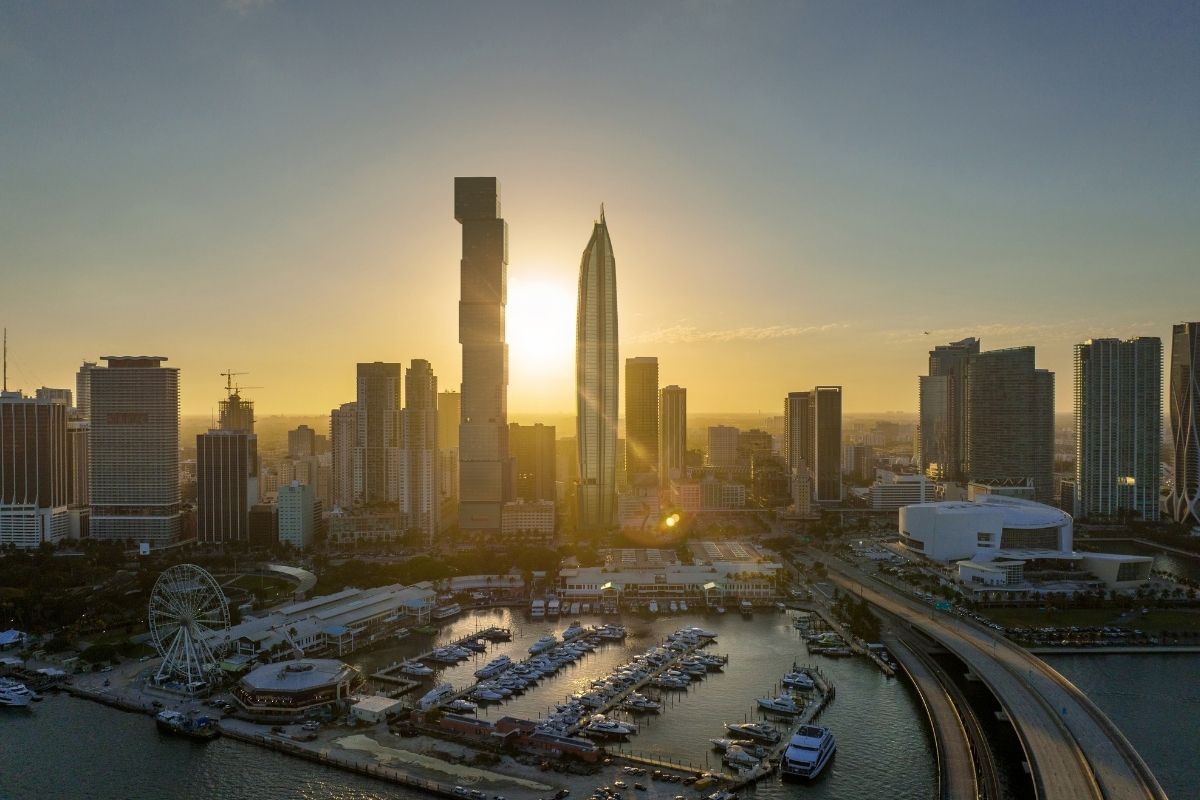
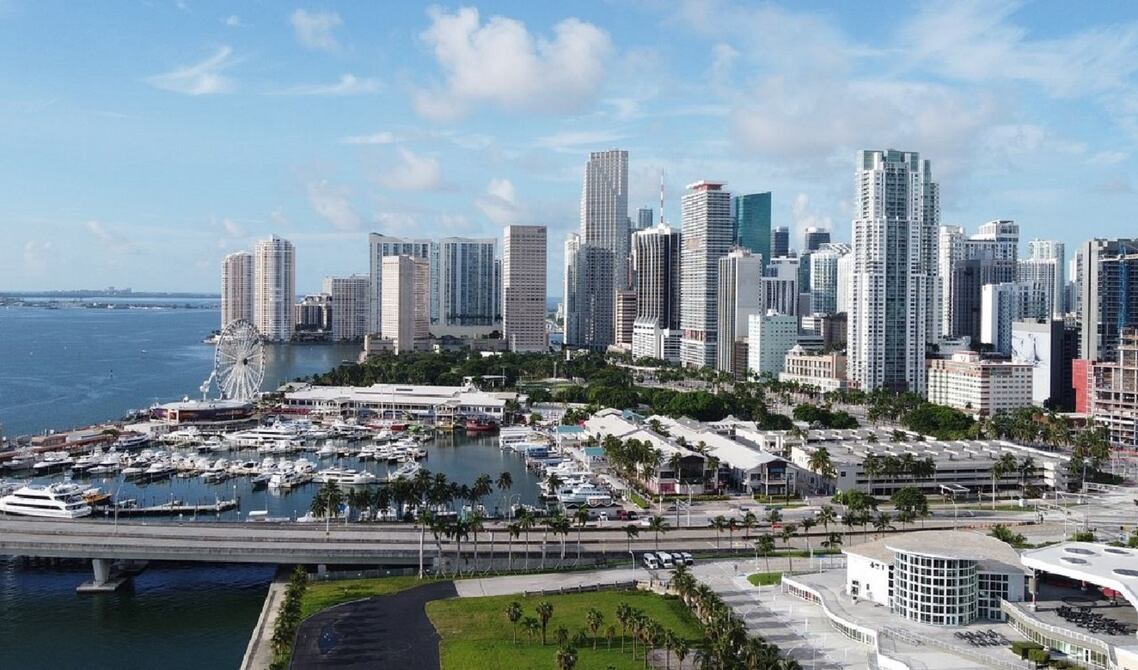
Miami proved once again throughout 2026 that its relevance to the offshore industry extends far beyond residential real estate. Brickell, in particular, has established itself as an institutional nexus of international private banks, asset managers, investment advisors, legal practices, fiduciaries, and estate planning specialists.
Among the most notable corporate milestones was the opening of KKR’s new Brickell office on March 25, 2026. The global alternative investment manager announced that it would leverage the location as a strategic base to deepen relationships with institutional allocators, family capital, and wealth management clients, with a focus on Latin America.
The decision confirms that premier alternative asset managers are not merely looking to raise capital across the region, but to build operational proximity with their investors and strategic partners. KKR disclosed that it had deployed over $15B across Latin America and supported more than 16,000 jobs through its portfolio companies.
Another indicator of Miami’s institutional consolidation was the performance of the international residential market. According to the 2025 Profile of International Home Buyers published by MIAMI REALTORS in January 2026, foreign buyers acquired $4.4B in residential properties across South Florida during 2025, up from $3.1B the previous year. The transaction volume expanded from roughly 4,000-4,400 to 5,300 properties.
Colombia led buyer volume in Miami-Dade with 18%, followed by Argentina with 13%, Brazil with 9%, and Mexico and Venezuela with 6% each. Furthermore, 51% of international transactions were completed in all-cash settlements, highlighting the substantial balance-sheet liquidity of these allocators.
However, interpreting Miami’s trajectory as an uninterrupted expansion would be misleading. The Florida Realtors 2026 report, covering residential transactions between August 2025 and July 2026, recorded an 18% decline in international residential purchases compared to the preceding 12-month period, with aggregate volume dropping from $10.4B to $9B.
Yet the data reveals a notable divergence for Mexico: Mexican buyers increased their residential acquisitions in Florida from $489M in 2025 to $981M in 2026, ranking #2 among cross-border capital sources behind Canada. Brazil and Colombia generated $678M and $473M in purchases, respectively.
This dynamic illustrates 2 concurrent market realities: the broader international real estate segment is navigating headwinds from elevated valuations, borrowing costs, and operational carrying expenses, yet demand from Latin American capital—particularly Mexican wealth—remains robust.
The next evolutionary phase for Miami centers on alternative assets. An analysis published in October by Cayman Finance, incorporating insights from specialists at KPMG and Trident Trust, highlighted the structural evolution of the Miami-Latin America-Cayman Islands axis. The metropolitan area is transitioning from a traditional wealth distribution and custody hub into an active platform for private capital formation.
Latin American family offices are scaling their exposure to private markets via aggregator vehicles and feeder funds, unlocking access to institutional private equity, private credit, and infrastructure managers. This structural shift moves capital out of passive bank deposits, liquid cash instruments, and direct real estate into sophisticated, multi-asset private strategies.
Texas: from an industrial powerhouse to an emerging wealth management hub
While Miami functions as the financial gateway to Latin America, Texas is establishing the institutional infrastructure to become a premier domestic center for private wealth management and international financial services.
Houston and Dallas represent the 2 primary anchors of this expansion, each operating with distinct market profiles. Houston maintains strong ties to energy, commodities, and corporate finance, while Dallas has expanded its footprint across commercial banking, asset management, financial services, and technology.
In Houston, Post Oak Boulevard stands out as a core financial corridor hosting private banks, wealth advisory practices, and investment managers. Morgan Stanley Wealth Management’s footprint illustrates the scale of this cluster: according to institutional figures as of October 2025, its 3 Post Oak locations housed 145 financial advisors, 75 support personnel, and 4 private bankers, overseeing $56B in client assets under management.
BBVA has also expanded its footprint, announcing a new office on Post Oak in September 2025 to scale its corporate and investment banking operations in the U.S., expand its Global Wealth Advisory platform, and cater directly to Mexican wealth clients. This convergence of private banking, corporate lending, and wealth planning shows Houston building capabilities far beyond its traditional energy focus.
The defining financial event of 2026 for Texas originated in Dallas. On September 28, Governor Greg Abbott announced that Morgan Stanley will establish a major U.S. operations hub in Dallas, committing $684M in capital expenditure and creating over 3,800 jobs.
The project centers on a new office tower in Uptown Dallas and marks one of the most substantial corporate commitments by a global financial institution to the Texas market. According to the Dallas Regional Chamber, additional commercial real estate development led by Trammell Crow Company brings the project’s aggregate value to approximately $1.2B.
The strategic weight of this move extends beyond square footage and headcount. As a premier global investment bank and wealth manager, Morgan Stanley’s commitment to Dallas signals strong institutional confidence in the Texas financial ecosystem and its ability to attract national and international talent.
This follows an expansion announced in 2025 by Scotiabank, which established a regional hub in Dallas backed by an investment exceeding $60M and targeting over 1,020 positions. Texas’s growth is driven by consecutive, long-term capital commitments from global financial institutions rather than isolated corporate relocations.
Where are family offices deploying capital?
The rise of Miami and Texas coincides with an asset allocation shift among family offices. While capital preservation remains fundamental, families are increasingly directing allocations toward private equity, infrastructure, technology, and energy assets.
The 2026 Americas Family Office Survey, conducted by BlackRock and Preqin between July and August 2026 across 206 family offices managing approximately $491B in investable assets, outlines this trend.
Among key findings, 32% of family offices plan to increase allocations to private equity over the next 12 months, up from 26% in the previous survey. Additionally, 30% expect to expand investments in infrastructure, while 52% already allocate more than 15% of their alternatives sleeve to private equity.
Interest in artificial intelligence is equally pronounced: 75% of family offices managing over $1B in assets consider AI a central or growing component of their investment strategies.
These trends clarify why Miami and Texas are scaling their financial platforms. The objective is not solely to absorb deposits or administer traditional public-market portfolios, but to provide institutional pipelines into complex private transactions requiring specialized cross-border execution.
A consolidated corridor with runway for expansion
The 2026 market backdrop confirms that Miami and Texas have formalized an integrated financial corridor for Latin American wealth. However, concluding that both markets have reached maturity or isolating a single figure for cross-border offshore inflows would be premature.
There are no unified public disclosures aggregating assets managed across Latin American family offices, private banking accounts, investment funds, and direct real estate acquisitions without double-counting capital flows. Consequently, real estate volume, corporate expansion announcements, and assets under management must be evaluated independently.
Nevertheless, the data demonstrates a structural shift. Miami retains its distinct cultural and geographical proximity to Latin America, its concentration of cross-border private banks, and its established track record in wealth administration. Texas delivers an institutional platform combining specialized financial services with a diversified industrial economy and an expanding footprint of global financial institutions.
For Mexico, this evolution carries unique strategic weight. Geographic proximity to Texas, commercial integration under trade agreements, and established business networks make these markets more than passive wealth preservation centers: they serve as operational hubs to structure enterprises, family offices, and cross-border expansion plans.
The operational priority heading into 2027 will be converting built infrastructure and institutional relocations into deployed investment volumes. Competition between Miami and Texas is no longer focused merely on gathering assets, but on providing the vehicles, regulatory structuring, and private market opportunities required to manage them.
Latin American capital is no longer simply seeking safe-haven custody in the United States. It is deploying through operational platforms to invest, compete, and scale across global markets—with Miami and Texas serving as the primary launchpads for this next phase.