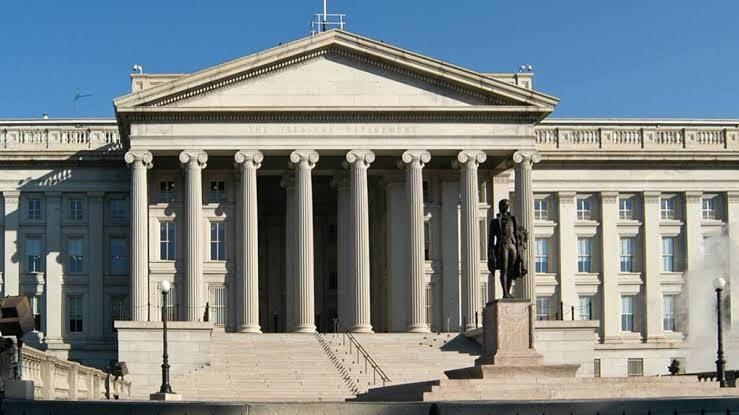
U.S. Treasury Secretary Scott Bessent disclosed in an appearance on Monday that the department could increase its bond buyback capacity by conducting market purchases that might exceed $4 billion. This measure comes after a surge in real yields pushed up long-term borrowing costs on U.S. debt, a movement suggesting markets are concerned about the fiscal and inflationary outlook.
Total U.S. federal debt recently surpassed $40 trillion. Experts explain that the high U.S. fiscal deficit will likely require an increase in Treasury bond issuances, coming at a time of fierce competition with planned long-term corporate debt offerings from major technology companies.
Libby Cantrill, Head of Public Policy at PIMCO, recalls that the Treasury has been conducting this operational process for some time. Since May 2024, it has carried out regular Treasury buybacks for various reasons, primarily “to support Treasury market functioning by buying older, less liquid bonds (‘off-the-run’) and generally re-issuing newer, more liquid ones (‘on-the-run’).” This program operated on a schedule published on the agency’s website. “It is clear that Bessent’s announcement represented a departure from that regular and predictable approach,” she notes.
However, considering that this program is “relatively small” and “is not quantitative easing (QE),” the expert emphasizes that buybacks do not fundamentally alter market conditions. Cantrill explains that long-term Treasury yields have risen for several reasons, including stronger U.S. economic growth, a heavy debt burden, a surge in corporate bond issuances tied to artificial intelligence, and persistent inflation concerns linked to energy costs. She also points out that yields are only high “when compared to recent history, and not necessarily when compared to very long-term averages.”
In summary, Cantrill concludes that while buybacks at the long end of the yield curve can technically lower yields—since higher demand leads to higher prices and lower yields—the underlying reason why Treasury yields are elevated “is not going to change in the short term.”
Focus on Reducing Financing Costs
UBS comments that this measure “highlights the importance that the U.S. government places on reducing long-term financing costs.” For investors, according to the firm, the fundamental question now is “how to respond, if at all, to rising yields.” Their baseline scenario remains that yields should fall as inflation moderates. “Over the longer term, initiatives that lead to financial repression and artificially lower yields should be favorable for equities, while gold would be another beneficiary of this scenario,” the firm notes.
Joseph Purtell, Portfolio Manager at Neuberger Berman, also focuses on falling inflation—and the resulting shift in monetary policy expectations—as the primary driver for lowering long-term yields. While he also mentions the relevance of significant fiscal consolidation, he considers it “more difficult in the short term.” Consequently, he continues to see value in the short end of the U.S. Treasury curve, particularly in 2- to 5-year maturities, which offer “both positive carry and potential price appreciation should the Fed keep rates on hold for the remainder of the year.”
To be sure, Purtell does not believe the current level of yields is inherently problematic for real economic activity or credit conditions, as corporate earnings have been strong and credit spreads remain well behaved, even if not at historical tights. However, he cautions that a steady rise in yields, especially if the adjustment happens rapidly, increases the risk of a sharp tightening in financial conditions that could weigh on real activity. Still, he does not view that as the current situation.
Meanwhile, David A. Meier, Economist at Julius Baer, points out that this move aligns with a broader policy trend favoring lower borrowing costs and “raises concerns about politically motivated initiatives aimed at capping interest rates ahead of the midterm elections.” He adds that in earlier times, “one would have expected the Federal Reserve, rather than the Treasury, to attempt to ‘manipulate’ rates downward.” Regarding investment strategies, he notes that “this development fits with our long-term bearish outlook on the U.S. dollar.”