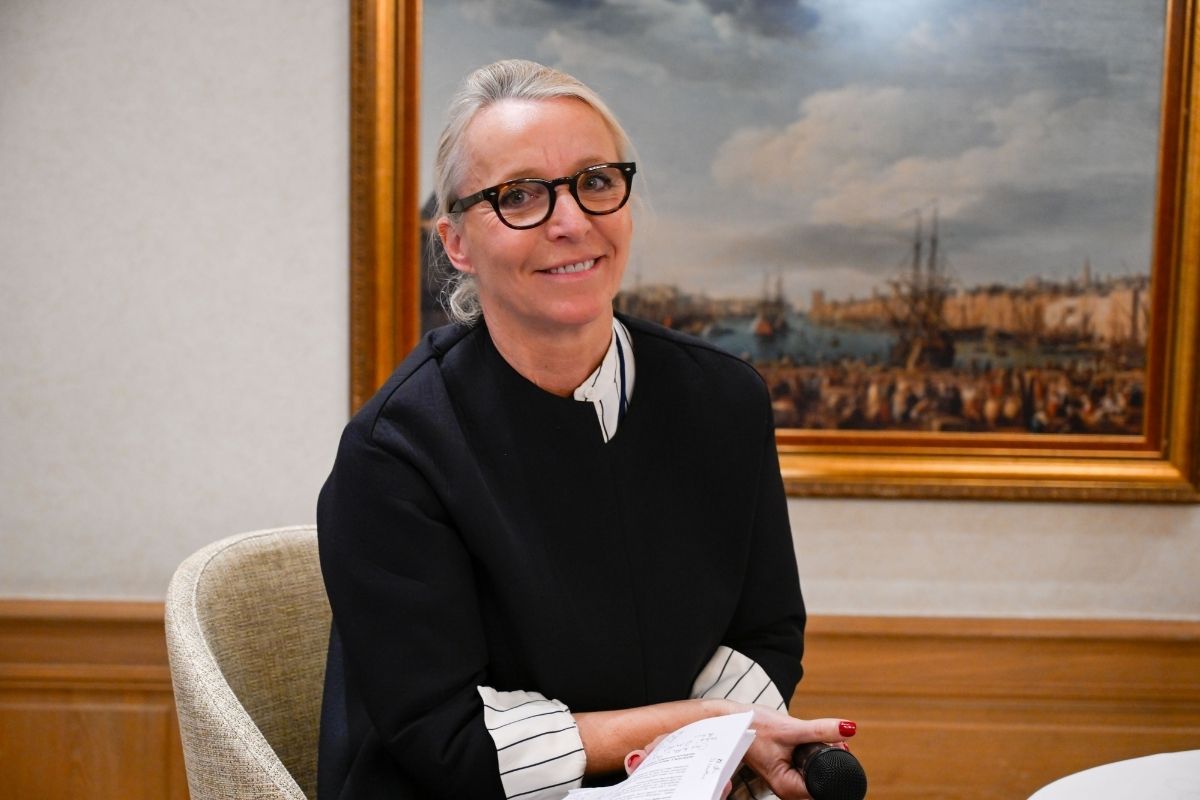
Mabrouk Chetouane, Global Head of Market Strategy at Natixis IM Solutions, believes that the cyclical decoupling observed during the first half of the year between the United States and the eurozone will likely continue for the remainder of the year. Specifically, the expert expects U.S. GDP growth to hover around its potential rate (2.4%), while eurozone growth will struggle to exceed an annual average of 0.7%.
In his view, the pressure exerted by the exogenous supply shock associated with the Middle East conflict on energy prices continues to weigh on the European economy and business activity. Without a doubt, the big question is what we can expect between now and December. We asked Chetouane about this in our latest interview at Funds Society.
What factors do you think will drive the markets during the second half of the year?
We identify three key factors that will mark the evolution of financial markets in the second half of the year. First, geopolitical factors will continue to cloud the outlook for risk assets. Although investors have largely grown accustomed to an environment characterized by the proliferation of conflicts, any escalation will translate into a new surge in market volatility.
Second, monetary factors will play a decisive role in shaping monetary and financial conditions and, consequently, the performance of equity markets. Finally, corporate earnings growth will be the determining variable in whether stock markets can continue to advance.
How will these factors influence the positioning of investment portfolios?
Logically, a resurgence of hostilities would cause renewed tension in energy markets, bond yields, and currency markets, although it would not necessarily trigger a significant correction in financial markets. Conversely, an easing of tensions in the Middle East—coupled with the absence of new conflict flashpoints globally—would present a favorable scenario for capital markets.
The monetary factor is probably the most unpredictable. Central banks have abandoned forward guidance, leaving greater room for monetary policy surprises. This new environment could increase capital market volatility and significantly raise the cost of capital.
How do you think portfolios should be adjusted for the rest of the year?
We believe that upward pressure on bond yields will persist during the second half. In this context, it is appropriate to reduce portfolio duration by increasing allocations to liquidity or high-yield corporate debt. Although equities—especially the technology sector—will continue to experience episodes of volatility and short-term rallies, we believe stock markets will remain supported by solid corporate earnings growth. Therefore, we maintain an overweight position in equities, particularly in markets driven by growth companies.
What factor do you consider the market is overlooking that, in your opinion, will be relevant?
Generally speaking, the market is aware of the main risks that could impact its functioning. However, at present, it is ignoring the domestic political factor in the United States. The approach of the midterm elections could become a major source of division within American society and ultimately disrupt the behavior of financial markets.
What can we expect from Warsh’s Fed, and what implications will it have for investors?
The arrival of the Federal Reserve’s new leadership marks a clear break from the approach adopted in recent years. By abandoning forward guidance, Kevin Warsh favors a more discretionary strategy regarding monetary policy, which may generate greater uncertainty among investors regarding the institution’s future decisions. The reduced visibility stemming from this new governance model will, de facto, translate into increased uncertainty, which is expected to trigger greater volatility in capital markets and a higher risk premium, particularly in sovereign bonds.