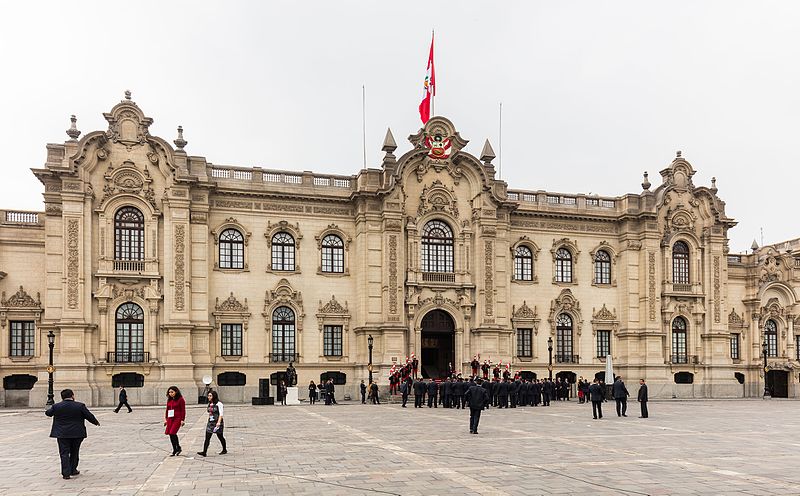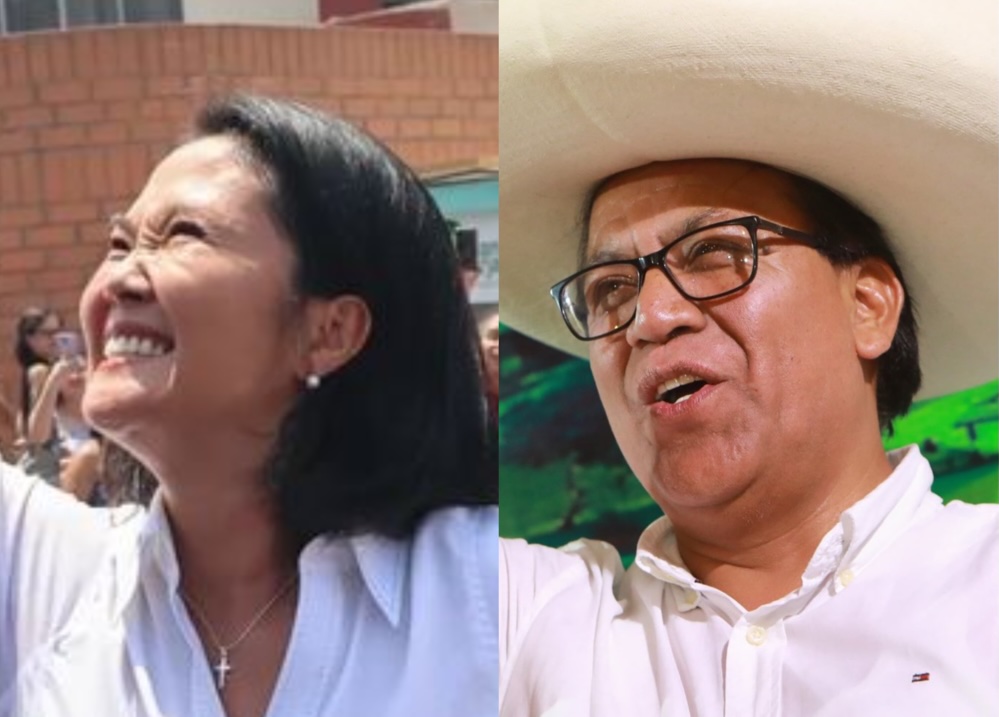
It took time, but it was achieved. Amid a fierce presidential campaign that has even included accusations of electoral fraud in the first round — due to delays in vote counting that postponed the announcement of the second-place finisher — the Peruvian market is now counting down to the runoff election that will determine the country’s next president. On June 7, voters will decide whether it will be Keiko Fujimori, the right-wing candidate, or Roberto Sánchez, the left-wing standard-bearer, who will face the challenge of ending a decade of political instability and completing a full term at the Casa de Pizarro.
“The next political cycle finds Peru in a rather unique situation: relatively stable macroeconomic fundamentals coexisting with weakened political institutions and still fragile governance,” Roberto Montero, head of the Wealth Management Division at Banbif, told Funds Society. This long-standing disconnect, he noted, “is not sustainable for much longer, as it harms the economy’s potential growth.”
While Peruvian assets have been paying attention to the global situation — with its own minefield of tensions — the effects of the runoff have already been felt. The sol, in particular, experienced some volatility linked to Sánchez’s advance to the second round. This comes in a context where, as the political heir of former president Pedro Castillo, he is viewed as a less favorable candidate for the local economy.
“The weakness of the Peruvian sol reflects a specific and well-documented phenomenon of preventive dollarization, which has historically accompanied episodes of political uncertainty in Peru, especially when the electoral outcome calls the economic model into question,” wrote analyst Emanoelle Santos of broker XTB in a recent note.
While the market views Fujimori as an option for continuity of a private investment-oriented economic model, she added, Sánchez’s candidacy raises uncertainty over possible constitutional changes, greater fiscal pressure, and less stability in the Executive Branch. “That difference in risk perception is what the sol is already pricing in weeks ahead of time,” she commented.
If Keiko Fujimori wins
Polls project a highly uncertain outcome, where dissatisfaction with the alternatives and undecided voters are expected to play a significant role. The market’s clear favorite is Fujimori, representative of the right-wing Fuerza Popular party, who is making her fourth attempt at the presidency.
“In a potential government led by Keiko Fujimori, the market would interpret the result as a positive signal for the economy. Expectations would be for a more technocratic economic cabinet, a pro-investment stance, and lower regulatory uncertainty, especially in sectors such as mining, infrastructure, and the financial system,” Montero projected. This scenario would favor the progress of projects and lower risk premiums, supporting private investment and paving the way for GDP growth above 3%.
However, the Banbif executive warned of a persistent political risk that would represent a key challenge for a Fujimori presidency: “the ability to build governance, manage fragmentation in Congress, and reduce high levels of social conflict.”
Among other local assets, the sol would also benefit under this scenario, according to analysts at Credicorp Capital, although the magnitude of the currency’s potential reaction “is highly uncertain.”
If Roberto Sánchez wins
By contrast, Sánchez is a figure who has investors on edge. Reviving memories of the capital outflows triggered by Castillo’s election in 2021, local investors see him as a risk to the business climate in the Andean country.
Among the proposals put forward by the candidate from the left-wing Juntos por el Perú party — and favorite in rural areas — are a Constituent Assembly, a more active role for the State in the economy, and a review of government contracts. “One of Sánchez’s positions that generated the most concern among market participants was his statement several weeks ago that he would not keep Julio Velarde as president of the BCRP (Central Reserve Bank of Peru),” Credicorp emphasized, although he later stated that he supported the institution’s autonomy.
For that reason, expectations are that a victory for this candidate could impact local assets, injecting volatility into markets and requiring a higher risk premium.
That said, Montero assures that it would be “without reaching the extreme seen during 2021.” If Sánchez proves more pragmatic, volatility could moderate; meanwhile, a more interventionist approach would have an impact on assets. “More than the political discourse itself, what will be decisive is the composition of the economic team and the tone of the first decisions,” the executive commented.
A new legislative framework debuts
One factor adding another layer of novelty to this presidential race is the legislative environment in which the incoming government will have to operate. The Andean country has returned to a bicameral system, once again establishing a Senate for the first time since 1992, with its seats determined by this year’s general elections.
This is expected to be an important variable for whoever wins the June 7 election. “On the legislative front, the path forward will depend on the next president’s ability to operate within a still fragmented Congress and an inaugural Senate that will wield significant power,” S&P Global Ratings stated in a recent report.
Along those lines, the rating agency emphasized that Peru’s legislative landscape “appears to be changing”: both the Lower House and the newly reinstated Senate have representatives from six parties. This represents greater concentration compared to the ten parties operating in Congress over the past five years.
Against this backdrop, the market sees little room for radical changes to the Peruvian economy, regardless of who wins. “Our base-case scenario assumes that radical reforms to the economic model will be unlikely under the next government,” analysts at Credicorp Capital indicated. Under the new framework, for example, constitutional reforms will require two-thirds majorities in each chamber over two legislative periods or an absolute majority in both chambers plus a referendum.
In addition, there is the issue of presidential impeachment, one of the driving forces behind the revolving-door politics that has produced eight presidencies over the past ten years. According to the Peruvian investment firm — the largest in the local market — such measures will now require two-thirds majorities in both chambers.
This, combined with the fact that the Senate will be responsible for approving the president of the BCRP, paints a picture of safeguards for the pillars of the economy.
Flow expectations
These elections have reminded more than a few investment professionals of past capital flight episodes. Outflows peaked between 2021 and 2022 during Castillo’s election, when there was marked dollarization of investment portfolios, internationalization of wealth, and a surge in international custody accounts. In just seven months following those elections, 14 billion dollars in capital flight was recorded.
Today, market participants say things are different. “The scenario is different because, in part, most high-net-worth individuals already have the funds they consider necessary in international custody accounts,” Montero commented, while “smaller investors realized that keeping funds abroad is not optimal due to higher costs and tax considerations.”
What does remain persistent in the wealth management sphere is a more defensive positioning among high-net-worth investors, maintaining greater international diversification to manage risks. “A large part of the diversification, dollarization, and international exposure decisions have already been made, with fluid exit channels available in the event of any contingency,” explained the head of Banbif’s private banking division.
S&P Global Ratings agrees with that assessment. “It is interesting that, based on some surveys and conversations with business leaders, there appears to be a more constructive outlook for the economy going forward, shaped by the experience gained amid the high political dysfunction observed over the past decade,” the agency stated in its report.