Franklin Templeton closed the first quarter of the year with more than $61 billion in global assets on its ETF platform. The firm proudly highlights this figure as an example of its growth and track record in the exchange-traded fund business, which began in 2013 with the launch of its first ETF and gained further momentum in 2016 with the launch of an official platform under the Franklin LibertyShares brand.
In 2025, the firm’s ETF business experienced strong growth, surpassing projected targets. This momentum was accompanied by significant expansion in the active ETF segment and an important milestone: ETF AUM surpassed $50 billion. Overall, assets grew by approximately 60% during the year, reflecting strong client demand and the continued expansion of capabilities globally. This positive trend has continued into the beginning of the new fiscal year. Currently, Franklin Templeton’s ETF platform stands at around $70 billion in global AUM, highlighting both the pace of growth and the scale achieved.
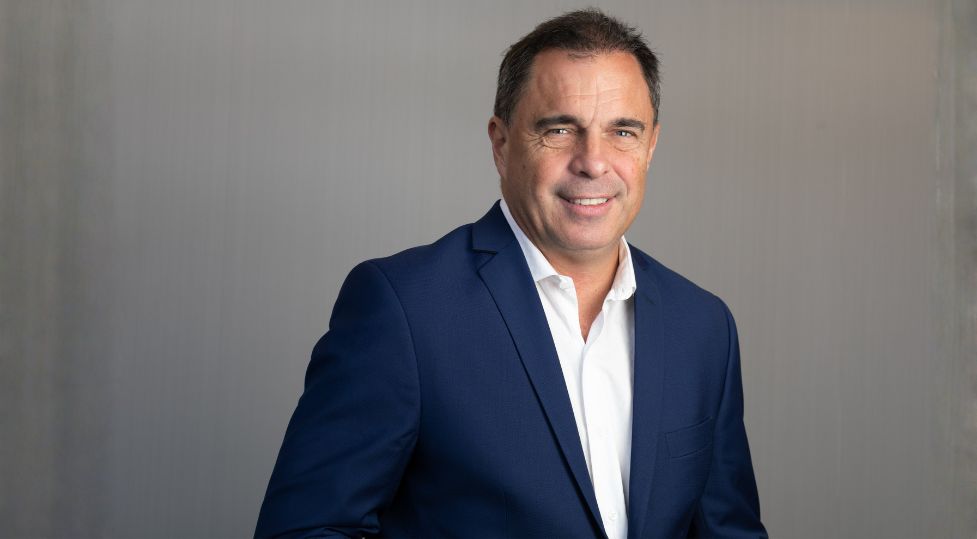
According to Laura Valdez, Vice President of the ETF Business Development Team at Franklin Templeton, the asset manager is prepared to maintain this pace of growth and, looking ahead, the firm’s ambition is to establish itself as one of the leading global ETF platforms. To achieve this, it is committed to a differentiated approach that combines active ETFs, indexed solutions, and outcome-oriented strategies, while also facilitating access to its investment capabilities across multiple global asset classes. We discussed all of this in our interview with her.
Why do you believe this growth will come from certain regions?
We are seeing growth globally across EMEA, Asia, LatAm, and the United States. The United States is our largest market, and that is obviously a reflection of the reality of the global industry. In fact, at the end of last year, there were $13.5 trillion in assets in the U.S., while UCITS ETFs represented more than $3 trillion. Consequently, the greatest growth we have observed has taken place in the United States, where the platform is larger. However, our teams are highly motivated to grow the global ETF platform with specialists based throughout Europe. Looking toward LatAm, the team has also been highly motivated because we have seen growth in the use of UCITS ETFs.
Do you see an opportunity in Europe’s recent active UCITS ETF market?
I believe Franklin Templeton entered this market at the right time. Initially, we saw many product launches, so it took some time to understand where investor flows were heading. We launched our first vehicle in 2013, and it was directly an active ETF, because we were building on the experience and track record acquired in the U.S. market. Then, formally, our ETF platform in Europe arrived in 2017 with the launch of passive and factor-based products. Since then, we have seen significant growth in assets under management, especially over the last two years. Our view is that active ETFs are the part of the business where the greatest growth can be achieved, not only in Europe, but globally.
What explains the increase in ETF flows you mention?
On the one hand, we have seen a trend toward active ETFs with global exposure, including regional and country exposures. On the other hand, and I consider this almost the most relevant factor, ETFs used to be viewed as a passive tool, but investors no longer interpret them that way. They have become a more sophisticated tool through which we can offer different investment strategies, from equities to multi-assets, including thematic and alternative investments. This shift in investors’ interpretation and use of the vehicle is significant in Europe, even though the tax ecosystem is different.
What changes have you seen in the ETF selection process among platforms, advisors, and selectors over the last 18 months?
First, I should clarify that I focus exclusively on platforms in the United States, working with banks and broker-dealers. That said, what I am seeing is that as there are more products, there is more due diligence and more competition. For example, we have seen an increase in requirements in terms of assets because analysts are concerned that a product could close. It is striking that the asset-size requirements for ETFs have continued to increase.
On the other hand, it is important to understand that the objective is not to replicate a successful product — notwithstanding structural and regulatory differences — but to recognize that these players are not looking for the same thing in every market. For example, U.S. advisors often build portfolios using U.S.-style model portfolios because they work for larger American banks and wealth managers. However, when they build portfolios, they are reflecting the U.S. investor and not what a European or Latin American investor demands. This means that launching UCITS ETFs is not about replicating what we already have or know works; it must be something specific and tailored to the investors who use UCITS.
Regarding the wealth segment, how do you think ETFs are being interpreted and used?
Globally, within the wealth segment, this shift in perception of ETFs as something merely passive is taking place. Additionally, this is a segment that appreciates the cost efficiency and transparency offered by ETFs, both in pricing and, in the case of the United States, because of tax advantages. This leads me to believe that a large part of the growth of the ETF industry will come from the wealth segment.
What does the word innovation mean in the ETF business?
I think a very interesting reflection — and one we do not make often enough — is that ETFs are being used as a real innovation tool. For example, in 2024 in the United States, we saw the launch of all the ETFs in the crypto and digital assets space. In other words, the mutual fund structure was not used to design how to invest in this new asset class. That is something significant. In addition, the SEC continues approving different digital currencies and new products, and we know this serves as a benchmark for other markets around the world. Over the past two years, we have seen new innovations, such as private fixed-income ETFs and ETF share classes for mutual funds. I believe all of this is very interesting, although I think there is still development needed in terms of market infrastructure.
Tokenized ETFs or private market ETFs: which do you believe will be the next frontier crossed by this type of vehicle?
As an employee of Franklin Templeton, I will tell you that I feel fortunate to have a CEO who has dedicated many resources to exploring blockchain technology. As a result, we have developed very interesting products such as Benji, which is a money market mutual fund that exists on the blockchain and is a tokenized product. In this sense, we already have ETFs that have been tokenized and are being distributed. On the other hand, I believe we must be very cautious when talking about private market ETFs because the foundation of the ETF is that it has a fully liquid structure.
Finally, how do you plan to compete for your place among the major ETF providers?
We are in a market with a high concentration of large players, but with market evolution and innovation, we are seeing a reduction in that concentration. For example, the growth of active ETFs has created an opportunity for Franklin Templeton to bring all its specialized portfolio management teams into the ETF space, a vehicle that offers a broad range of strategies. What is interesting is that if you analyze what is happening in the active ETF segment, that reality has begun to change. In the United States, the market share of the top 10 active ETF providers has been declining. In 2020, they held 82% of the assets, and by the end of the first quarter of 2026, that figure had fallen to 67%.