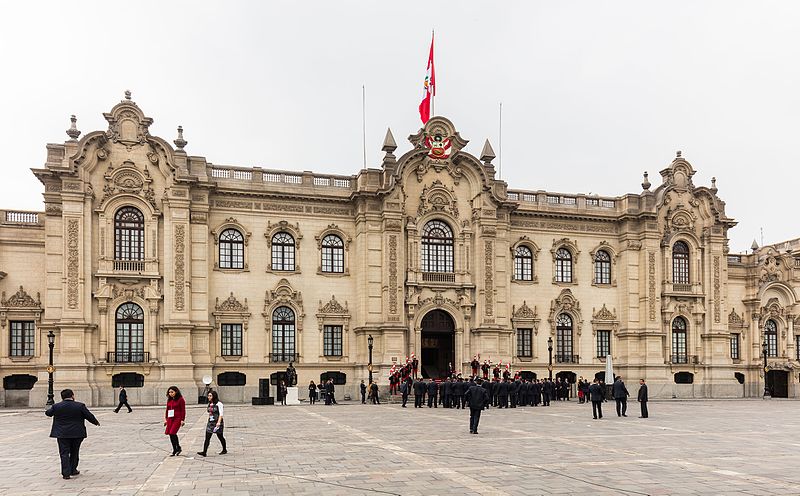
During the past decade, Peru has become a true case study, given the unusual turnover experienced at the Casa de Pizarro and the relative resilience its economy has shown amid political turmoil. Since the end of Ollanta Humala’s term, the last president to complete his mandate, in July 2016, the country has had eight presidents, some of whom did not even reach an anniversary in office. Nevertheless, the Andean country’s currency and economy have remained relatively firm.
Now, as the country enters a new political cycle, market participants are following the process with relative calm. With little expectation of anything that could affect the business climate and with changes to the political system underway, local actors are behaving with relative composure. That said, the financial industry emphasizes that political instability has carried an economic cost, and that the backdrop to all market movements today is the thorny conflict in the Middle East.
Peruvian assets have delivered strong performance over the past 12 months across various dimensions, but have come under pressure in the last month. The dollar has risen by around 3.5% against the sol, while the stock market, measured by the MSCI NUAM Peru Select Capped 15% benchmark, has lost roughly 9% of its value. Market participants say this is not linked to any idiosyncratic factor, but rather reflects a month in which risk aversion has increased. In context, during that same period, the MSCI Emerging Markets index has declined by 11%.
As for expectations strictly tied to the Peruvian economy, the financial world is awaiting the April 12 general elections with relative calm. On this occasion, the country will vote not only for a new president, but also to elect vice presidents, 60 senate seats, 130 lower house seats, and five members of the Andean Parliament.
Relative calm
“The environment is suspiciously calm, and there is no sense of concern in the business sector,” says Jorge Espada, Co-Founder & Managing Partner at Valoro Capital, in a conversation with Funds Society.
In his view, the key is that the most adverse scenario for local assets—a far-left government controlling both the executive and both chambers of the legislature—appears unlikely. “That is ruled out today,” he says, noting that most of the leading candidates are aligned with the right, with the exception of social democrat Alfonso López-Chau.
“The market today is not pricing a binary scenario, but rather one of high fragmentation,” adds Carlos Müller, Director of Strategy and Investment Advisory for Global Wealth at BBVA. While Rafael López Aliaga and Keiko Fujimori lead in the polls, both are polling at around 11% support, with a large share of undecided voters. “That makes a runoff almost inevitable and leaves the door open for late shifts, especially if a candidate emerges who connects with the demand for order and security,” he says.
There is also the congressional factor, where the exclusion of parties that fail to reach a 5% threshold encourages vote concentration. “At this point, it appears that the far left will not hold a meaningful share in either chamber,” Espada adds. “That may explain the calm seen during this electoral process.”
A new political framework
The April elections also bring a key change in institutional design: the return of Peru’s Senate after more than three decades. Following its elimination in 1992, the 2024 constitutional reform, under the government of Dina Boluarte, restored bicameralism, with senators to be elected in the upcoming vote.
“Investors are closely watching the evolution of the general elections, not only regarding the presidency but also the Senate, given the importance this institution will have in the country’s new political architecture,” explains Luis Ramos, Head of Equity Strategy at LarrainVial Research.
In this context, the most favorable scenario for local assets, according to the firm, is “the combination of a pro-market president and a thoughtful Senate capable of containing populist initiatives that create regulatory risk, weaken fiscal anchors, and hinder capital market development.”
The main domestic risk to the local economy, according to LarrainVial, is populism. While a bicameral and politically fragmented Congress can act as a counterbalance to structural reforms, “this does not necessarily prevent the approval of populist measures, which often require only simple majorities,” Ramos warns.
The myth of decoupling
Peru’s macroeconomic conditions have remained relatively stable throughout this decade of political instability, giving rise to the idea that “politics and the economy move on separate tracks.” However, local market participants reject this view, arguing that the situation has come at a cost.
“It is very generous to say that Peru has separate tracks, because it is costing us,” says Espada of Valoro Capital. In a favorable global commodities cycle, he explains, Peru would likely be growing between 5% and 6%. Instead, the economy is expanding at around 3%. This gap, he argues, is due to institutional deterioration.
For Müller of BBVA, there are nuances to the decoupling narrative. “The Peruvian economy still has the capacity to remain relatively separate from politics in this cycle,” supported by controlled inflation, high reserves, external strength, favorable terms of trade, and a credible central bank.
“That said, this decoupling is not infinite,” he stresses. “Politics may not break the macro fundamentals immediately, but it can slow investment when uncertainty persists,” he adds, noting that the resilience shown by the local economy “does not imply immunity.”
Echoes of war from abroad
Regardless of domestic developments, the key issue for the financial industry today is the global impact of escalating conflicts in the Middle East. “The main question for investors right now is the persistence of the conflict,” says Ramos of LarrainVial Research.
Given relatively favorable conditions, the market’s base case remains positive growth, but the impact of the conflict involving the United States, Israel, and Iran will be felt. “For the remainder of the year, the central view is still positive growth, but less clean than a few months ago,” says Müller. In this context, BBVA expects growth of 2.9% for the country in 2026, due to a supply shock, with a more affected first half and improvement in the second.
“This year, if the situation in the Middle East normalizes, we should end with growth above 3%,” adds Espada of Valoro Capital. Meanwhile, LarrainVial Research estimates growth at 3.4% for the Andean country this year if the conflict proves transitory; if it persists, growth would cool to 2.6%.
For Credicorp Capital, growth is expected to range between 3% and 3.5%, depending on how global risks evolve. “The final impact will depend on the magnitude and duration of the shocks,” the firm said in a recent report.