Foto: PxHere CC0. La Amafore destaca otros cinco fondos mutuos internacionales para inversiones de las afores
Más opciones para las afores, significan más oportunidades para los trabajadores. Con esto en mente, la Amafore sigue evaluando fondos para, mensualmente, incluir en la lista de fondos mutuos internacionales seleccionados como posibles vehículos para la diversificación de las afores.
En este mes, cinco nuevos fondos se suman a la lista que se creo el mes pasado, de modo que ya son 47 los fondos mutuos internacionales entre los que las afores pueden escoger.
La nueva lista incluye, por medio de dos estrategias de Franklin Templeton, fondos con exposición a China e India, dos regiones donde, a pesar del desaceleramiento económico mundial, todavía quedan historias de crecimiento estructural lo que hace que la inversión en sus activos bursátiles siga siendo muy atractiva.
Hugo Petricioli, Country Head para México y Centroamérica comentó a Funds Society: «En Franklin Templeton estamos muy optimistas de la evolución de las Afores, desde 1997 el sistema ha sido una mejora continua, cobrando cada vez menos a sus clientes, modernizándose día a día y dándole a los trabajadores mejores y más opciones para poder tener un retiro digno, es realmente un gran sistema, me gustaría mucho ver más interés de los trabajadores en esta parte de su patrimonio y que buscaran opciones para incrementar su ahorro complementario, somos inversionistas en México desde los 80´s. Creemos en México, creemos en traer productos de calidad y darle más opciones de inversión a todos los mexicanos».
La lista de gestoras autorizadas está compuesta por:
AllianceBernstein
Amundi
AXA
BlackRock
Franklin Templeton
Investec
Janus Henderson
Morgan Stanley
Natixis
Schroders
Vanguard
Gio Onate, quien lidera el negocio institucional de BlackRock en México, comentó a Funds Society que «en BlackRock valuamos la relación de largo plazo que hemos creado con las afores desde 2005, empezando con los los ETFs, pasando por los mandatos, nuestra plataforma tecnológica de riesgos, Aladdin y ahora, con los fondos mutuos internacionales. Estamos emocionados por continuar nuestra labor mientras la industria de fondos de pensiones mexicana continúa evolucionando, siempre teniendo en mente el ayudar a que más y más personas alcancen un bienestar financiero.»
Pixabay CC0 Public Domain. Los activos invertidos en ETFs y ETPs cotizados a nivel mundial alcanzaron los 8,56 billones de dólares al final del primer trimestre
En opinión de Singular Bank, nadie debería decir hoy en día que el motivo por el que no intenta sacar el máximo partido a sus ahorros es porque no encuentra opciones. Está claro que la irrupción de internet ha provocado un gran cambio en el sector, dando mayor acceso a información, entidades, herramientas, servicios y productos. Sin embargo, la entidad considera que muchos usuarios siguen buscando excusas.
“Los inversores más veteranos recordarán que las alternativas que tenían para invertir hace algunos años eran más bien limitadas. Algunos disponían del patrimonio suficiente como para contar con un gestor personal, mientras que otros se tenían que conformar con algún consejillo esporádico de algún empleado de su sucursal habitual. Más complicado lo tenían los espíritus inquietos, que se enfrentaban a la empinada montaña que suponía intentar administrar por sí mismos su patrimonio, con poca o nula información y con unas herramientas de lo más rudimentario”, sostienen desde la entidad.
Por eso, apunta que un primer paso, y “quizás el más complicado”, es que el inversor defina cuáles son sus objetivos y decida cómo ocuparse de sus finanzas. Según su experiencia, “algunos siguen pensando, erróneamente, que para acceder a un asesoramiento profesional es necesario contar con una cuenta corriente con varios ceros. Nada más lejos de la realidad. Es cierto que, en ocasiones, el volumen de nuestro patrimonio o la complejidad del mismo nos hacen necesitar un banquero privado o un asesor en el que delegar totalmente nuestra planificación patrimonial”.
Esta es, en gran medida, la visión que está aplicando Singular Bank en su modelo de negocio y por eso ha convertido su oferta de fondos perfilados en un “fórmula” para que los inversores tengan acceso a información y recomendaciones de primera calidad, desde cantidades muy pequeñas. “Un fondo perfilado se asemeja a cualquier otro fondo de inversión, con la particularidad de que viene predefinido por un determinado nivel de riesgo, para que al cliente le resulte más sencillo saber cuál es más adecuado a su perfil y a sus necesidades”, explica.
En este sentido, Singular Bank lanzó hace 6 meses Singular Multiactivos, un fondo integrado por cinco compartimentos y distintos niveles de riesgo, que buscan adaptarse a todas las tipologías de clientes. En su opinión, una de las principales ventajas de su oferta de fondos perfilados es que el banco privado plasma la visión de mercados y la estrategia de asignación de activos de los expertos de su área de inversiones.
“En este caso, no dispondremos de un banquero privado que nos atienda de forma personal, pero sí accederemos a todo el conocimiento y experiencia de un equipo profesional. Singular Multiactivos está destinado tanto a inversores experimentados como por aquellos que no cuentan con un patrimonio elevado para diversificar o que no tienen el tiempo o los conocimientos necesarios para confeccionar por ellos mismos su cartera”, añaden desde la entidad.
Cinco compartimentos
El compartimento más conservador es Singular Multiactivos 20, con una exposición máxima a renta variable de un 20% y un objetivo de que la volatilidad no supere el 5% en ningún caso. En el otro extremo de la escala de riesgo se sitúa Singular Multiactivos 100, que puede invertir en renta variable hasta el 100%. Entre medias, nos encontramos Singular Multiactivos 40, Singular Multiactivos 60 y Singular Multiactivos 80.
Además, busca la mejor diversificación entre los distintos tipos de activos, intentando combinar fuentes de generación de alfa, mediante la inversión en fondos de megatendencias, y unos costes muy ajustados, gracias al empleo de productos con bajas comisiones, como fondos indexados y ETFs.
“Uno de los pilares de la estrategia está, precisamente, en esa apuesta por las megatendencias, entendidas como temáticas con un denominador común: Ser capaces de generar cambios profundos y permanentes en la sociedad y, por tanto, con amplias probabilidades de convertirse en los nuevos motores de crecimiento económico”, explican desde la entidad.
Por último, considera que otra de las principales ventajas de su fondo es que la entidad no cuenta con producto propio, por lo que los productos que se seleccionan son siempre de terceros, lo que les permite una total transparencia e independencia.
Courtesy photo. Glovista Investments Hosts Executive Briefing on Global Macro Outlook & Themes
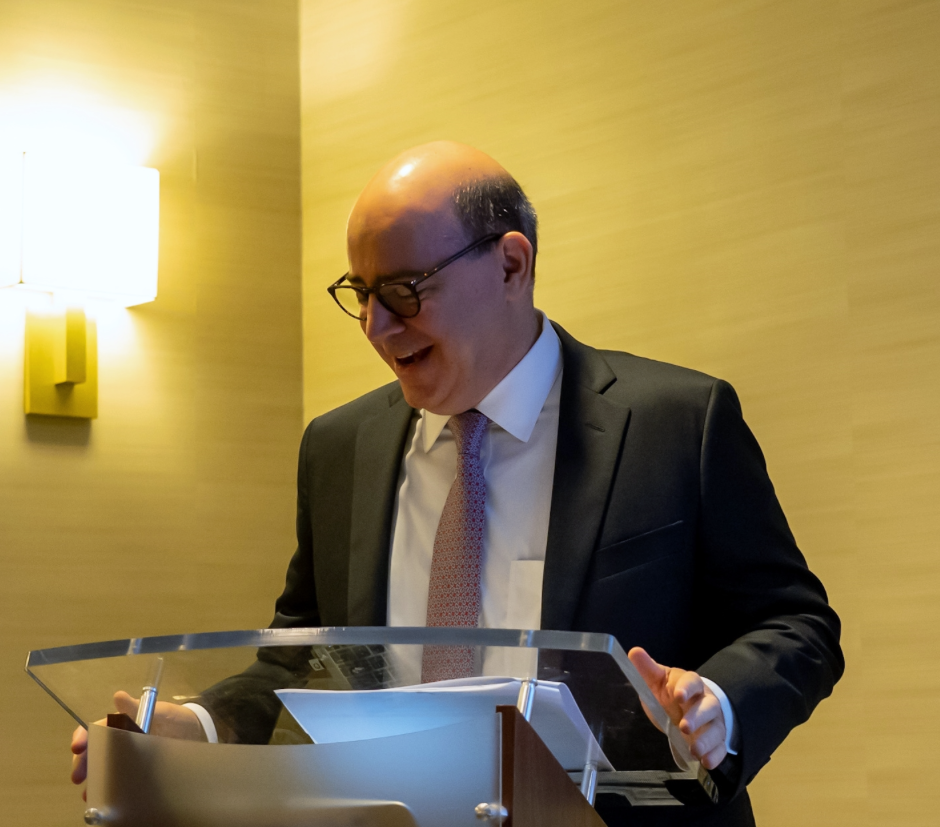
Glovista Investments presentó sus puntos de vista macro sobre el ciclo global y destacó temas y oportunidades clave para los miembros de la comunidad de wealth management en Miami.
El 8 de octubre de 2019, clientes y amigos se dieron cita en el JW Marriott Miami, donde los fundadores de Glovista, el director de Inversiones Carlos Asilis y el CIO interino Darshan Bhatt, así como Ignacio Gil, asesor estratégico, presentaron las perspectivas de la firma comentando que «hoy en día, las preocupaciones de los inversores van desde el potencial de una mayor desaceleración económica global, como resultado de un ciclo tardío de la economía de Estados Unidos con riesgos de recesión en el horizonte, pasando por la reversión continua de la dinámica de globalización del comercio, que fue muy favorable para el mercado en el período posterior a 1990, hasta la probabilidad de una mayor presión fiscal en el mundo desarrollado en los próximos años. Hoy más que nunca, creemos que se debe favorecer un enfoque táctico de inversión global para navegar por aguas de inversión tan traicioneras”.
La discusión incluyó la perspectiva de desempeño de 10 años de Glovista para las principales clases de activos y el caso de inversión para las acciones de mercados emergentes, tanto en términos absolutos como relativos, «frente a pares desarrollados a la luz de las tendencias seculares que están transformando el panorama de inversión».
La firma también habló sobre su oportunidad de impulsar un cambio positivo en las regiones donde invierte a través del uso estratégico de la filantropía corporativa.
“El mayor valor que extraje de la presentación es la simplicidad, especialmente en el área de Mercados Emergentes. El Dr. Asilis simplificó hábilmente lo que de otro modo es un tema bastante complejo. Nuestra firma hace hincapié en un enfoque minimalista para la inversión, es decir, una evaluación directa de los retornos de la inversión binaria que funcionan o no funcionan. Esta presentación me ayudó a aclarar cómo elegir los objetivos correctos y evitar las trampas que existen en estos mercados complejos”, dijo Eli Butnaru, director Ejecutivo de Boreal Capital Management.
“Aprecié la calidad de las presentaciones. El Dr. Asilis y el Sr. Bhatt compartieron opiniones detalladas del mercado sobre las clases de activos globales, incluido el universo de los mercados emergentes», comentó Ricardo de la Serna, socio de Alvarium.
Glovista Investments es una firma de asesoría de inversiones con oficinas en Nueva Jersey, Miami y San Francisco. Glovista se especializa en acciones de mercados emergentes y estrategias de inversión de activos múltiples para clientes institucionales y de alto patrimonio.
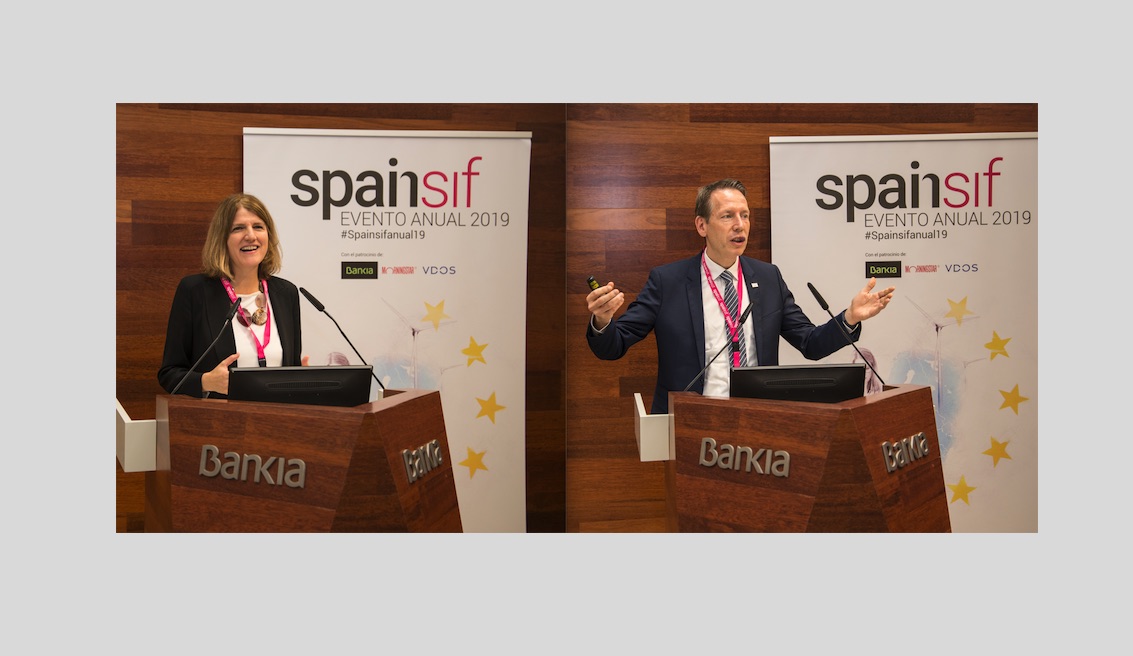
Foto cedidaDe izquierda a derecha, y ayer en Madrid, Helena Vi?. spainsif
La Comisión Europea sigue trabajando en su Plan de Acción de Finanzas Sostenibles, como elemento impulsor de la ISR tanto en España como a nivel europeo, y con los objetivos de movilizar los flujos de capital hacia inversiones sostenibles, ayudar a los inversores a gestionar mejor sus activos (reales o financieros) e impulsar la transparencia con un enfoque de largo plazo.
En ese camino, en el que también participan otros reguladores como IOSCO –que cuenta con varios grupos de trabajo-, la Comisión se ha propuesto una meta más allá de Europa: la de coordinar un marco global de finanzas sostenibles. Para ello, la Comisión Europea ha lanzado una plataforma internacional sobre sostenibilidad en la que estarán presentes otros países, con el objetivo de coordinar mejor los marcos internacionales de las finanzas sostenibles.
Esta plataforma supondrá una oportunidad para establecer estándares globales en este tema, según explicó Helena Viñes, deputy head of Sustainability, Head of Research and Policy de BNP Paribas AM, en un encuentro con periodistas previo a la celebración del X Encuentro Anual de Spainsif, que tuvo lugar ayer en Madrid.
Steffen Hörter, responsable global de ASG de Allianz Global Investors, y también miembro del Grupo de Técnicos Expertos en Finanzas Sostenibles de la Comisión Europea, argumentó la necesidad de ser ambiciosos en este aspecto: “Necesitamos ser ambiciosos, puesto que no sirve de nada que un país se esfuerce en aplicar normas si los demás no lo hacen”.
Entre los países que participarían en la plataforma estarían algunos de Latinoamérica, además de China, India, Canadá, y posiblemente Japón, entre otros.
La UE, en cabeza
Los expertos indicaron cómo la Unión Europea lleva la delantera en este asunto, dando señales que se espera contagien a otros mercados. No obstante, será la globalidad del sistema financiero, dice Viñes, la que permitirá que, cuando las entidades tengan que crear productos compatibles con las finanzas sostenibles para Europa, también los extiendan a otros mercados.
Actualmente, la Comisión trabaja en varias propuestas legislativas, entre las que se encuentra la taxonomía (que aún no ha alcanzado la forma de acuerdo político pero ya cuenta con tres textos aprobados), los índices de referencia o el disclosure (estos dos últimos ámbitos, ya con acuerdo político).
De hecho, esos acuerdos obligarán a que cualquier fondo de inversión, no solo los que se declaren ESG sino cualquier fondo, tenga que ser transparente e informar de su desempeño ESG, de forma que se minimizará el riesgo de greenwashing, comentó Hörter. Esta norma de transparencia será aplicable no solo a las gestoras, sino también a otros actores del mundo financiero, como los asesores.
MiFID II y sus implicaciones
Una pata más es la que afectará a MiFID II y a la directiva de seguros, cuyas implicaciones se aclararán en las próximas semanas. Con respecto a MiFID II, la norma se modificará para incluir la obligación de que los asesores financieros incorporen en el test de idoneidad una pregunta sobre las preferencias de los clientes en materia de ESG. Todo indica que será obligatorio preguntar al cliente sobre si prefiere invertir de este modo, pero no obligará a las entidades a ofrecer “exclusivamente” productos sostenibles en caso de respuesta afirmativa.
El otro escollo será la concreción de la pregunta, que aún está por definir, o la posibilidad de que la pregunta no sea homogénea en todos los mercados. Sin embargo, y pese a estos obstáculos, los expertos se muestran positivos, pues una encuesta reciente mostraba que el 70% de inversores en Europa respondería sí, y esa cifra sobrepasaría el 80% en el caso de España. “Aunque aún hay que esperar a ver cómo será el texto final, la iniciativa abre la puerta a la inversión sostenible”, dice Viñes, que cree que, en cuanto los clientes tengan que responder a este tema, es cuestión de tiempo que aumenten su consumo de inversiones sostenibles. “Y en la medida en que los asesores estén mejor formados en este campo, ofrecerán un mayor rango de productos de este tipo”, añade.
La taxonomía también será clave para dar mayor seguridad tanto a los emisores de productos ESG como a los inversores (incluidos los de todos los fondos distribuidos en Europa), destaca la experta, que matiza que la taxonomía es un punto de referencia, no una obligación. Sin embargo, será la base para producir etiquetas ESG, de forma que si los estados miembros quieren producir este tipo de calificaciones, deben usar la taxonomía como base. Aunque el uso de la taxonomía sea voluntario, los expertos creen que como punto de partida tiene un impacto importante para que de ahí se derive legislación en el futuro, ya de aplicación obligatoria.
Brasil, el mayor país de América Latina, está lleno de contrastes. No sólo es conocido por sus hermosas playas, su selva amazónica, la samba y su pasión por el fútbol, sino también por pobreza y desigualdad social la cual es visible al mundo a través de sus famosas favelas.
Durante mucho tiempo, la economía brasileña se ha beneficiado de una gran demanda por sus abundantes recursos naturales como lo son la soja, el petróleo y el hierro, tanto de China como a nivel mundial. El auge presenciado en las materias primas condujo a un fuerte crecimiento económico en el país. De hecho, desde el año 2000 al 2012, Brasil fue una de las economías más dinámicas en el mundo presentando un crecimiento promedio anual del 5% en su PIB. No obstante, durante el 2013 la economía comenzó a desacelerarse y para finales del 2014 el país entra en la que sería la recesión más larga y profunda de su historia, impulsada principalmente por una desaceleración económica en China la cual causó una fuerte caída en los precios de las materias primas. Esta recesión duró hasta el 2016 y durante este periodo la economía brasileña se contrajo en más de un 7%.
El proceso de recuperación ha sido desesperadamente lento, las incertidumbres políticas, los escándalos de corrupción y los shocks externos (crisis en Argentina, guerra comercial global) han sido catalizadores para la lenta recuperación. A pesar de esto, el actual presidente, Jair Bolsonaro, ha impulsado una ambiciosa agenda de reformas que debería mejorar el crecimiento estructural. Más importante aún, todavía hay mucha sobrecapacidad en la economía, lo que ha ayudado a mantener los niveles de inflación bajo control. Adicionalmente, la tasa del banco central ha bajado de 14,25% en 2016 a 5,5%, y es probable que veamos recortes adicionales en el futuro. Las tasas estructuralmente bajas y las reformas económicas deberían mejorar la competitividad del país y estimular el crecimiento económico.
Actualmente los inversionistas pueden acceder a Brasil a través de su mercado de valores, el Bovespa. Sin embargo, invertir en acciones brasileñas ha demostrado ser un viaje bastante volátil con grandes altibajos. además, podemos encontrar una alta exposición a grandes empresas con influencias políticas, como Petrobras, Itaú, Unibanco, Bradesco, AmBev y Vale.
No obstante, hay una forma mucho más conservadora de invertir, a través de fondos respaldados por cuentas por cobrar llamados Fundo de Investimento em Direitos Creditórios (FIDCs). Los FIDCs son fondos mutuos de inversión cuya actividad principal es la compra de facturas. Estas ofrecen rendimientos relativamente altos y enormes beneficios de diversificación. Brasil es un ejemplo fantástico de la deficiencia del sector bancario tradicional con una concentración de casi el 80% entre los cuatro principales bancos.
Estos bancos tienden a centrarse en hipotecas y préstamos a largo plazo para grandes empresas dejando desatendidas a las pequeñas y medianas empresas las cuales a menudo tienen dificultades para acceder a las fuentes tradicionales de financiamiento. Los diferenciales de crédito de los bancos son mucho más grandes que en cualquier otro país importante y si bien las tasas de interés han bajado, los bancos en algunos casos siguen prestando a tasas superiores al 30%.
El factoring como fuente alternativa de financiamiento, puede proporcionar el capital de trabajo necesario que las empresas necesitan. Este es un tipo de financiamiento que proviene principalmente de la venta de las cuentas por cobrar de una empresa a un banco o a una firma que se dedica al factoring. Es importante mencionar que debido a la falta de préstamos proporcionados por la banca tradicional las autoridades brasileñas han implementado una regulación bastante favorable para los inversionistas de la industria del factoring.
Los FIDCs están totalmente regulados y supervisados por la comisión de valores (CVM). El concepto se introdujo por primera vez en 2001, pero desde entonces, la transparencia y la redención de cuentas han mejorado significativamente. Hoy en día, los FIDCs deben cumplir con una serie de normas con la finalidad de garantizar una sólida gobernabilidad permitiendo controles independientes realizados a través de administradores de fondos regulados, auditores independientes, gestoras registradas, custodios, etc., los cuales proporcionan un alto nivel de transparencia y responsabilidad.
Brasil, hoy en día es probablemente el país con los estándares más altos en términos de regulación de la industria del factoring. Se podría decir que es un verdadero paraíso de factoring y definitivamente un aspecto positivo que se añadirá a la lista de contrastes.
El sólido marco regulatorio que protege el interés de los inversionistas pavimento el camino para grandes entradas de capital que ayudaron a satisfacer la fuerte demanda de las empresas. Actualmente, hay alrededor de 800 FIDCs con un tamaño total de activos de alrededor de 120.000 millones de reales brasileños (alrededor de 30.000 millones de dólares).
Los inversionistas tienen muchas ventajas si invierten en FIDCs en comparación con bonos corporativos o acciones, por ejemplo. En primer lugar, las carteras de créditos suelen contener créditos de un grupo diverso de deudores, lo que significa que hay mucha menos concentración en comparación con las carteras tradicionales de bonos corporativos o acciones.
En segundo lugar, los inversores se enfrentan principalmente al riesgo crediticio del comprador (deudor), que tiende a ser una empresa bastante grande y consolidada, típicamente multinacionales, las cuales tienen un riesgo crediticio mucho menor. Además, el riesgo crediticio de los deudores puede estar asegurado contra impagos a costos relativamente bajos.
En tercer lugar, los FIDCs también pueden obtener garantías de los proveedores, como pueden ser garantías inmobiliarias y personales de los ejecutivos principales (En el raro caso de que el comprador no pague la factura al factor). Esto da un fuerte incentivo para que los proveedores recompren los créditos. Por lo tanto, las tasas de impago esperadas están por debajo del 2% y las tasas de pérdida esperadas (después de la renegociación y recuperación) son inferiores al 1% en la industria brasileña de factoring.
Curiosamente, durante la profunda recesión de 2015-2016, la cual ha sido una excelente prueba de estrés para el sector, las tasas de pérdida se mantuvieron por debajo de 1% demostrando la gran resiliencia de la industria factoring brasileña.
Por último, pero no menos importante, el rendimiento esperado para los inversionistas internacionales es bastante atractivo. Incluso si deducimos los costos de cobertura (que han bajado mucho gracias a tasas más baja) y cualquier otro costo relacionado con la emisión, gestión y administración, los rendimientos netos para los inversionistas en dólares deben estar en el rango del 8-10%.
Columna de opinión de Pascal Rohner, CIO de Katch Investment Group
Foto cedidaFoto: Andrés Valdivieso director de distribución global de Participant Capital . Foto: Andrés Valdivieso director de distribución global de Participant Capital
Participant Capital, firma líder en inversiones inmobiliarias de capital privado con base en el sur de Florida y más de 2.500 millones de dólares en proyectos en desarrollo, ha anunciado el nombramiento de Andrés Valdivieso como directo de distribución global. Con más de 15 años de experiencia en la división de ventas de bienes raíces y de gestión de equipo de distribuidores internacionales experimentados de bienes inmuebles, Andrés se centrará en fortalecer la relación con socios estratégicos y en expandir las capacidades globales de distribución de la firma.
En la actualidad, Participant Capital gestiona más de 40 distribuidores que operan en América Latina, Asia, Europa y Oriente Medio. Su cartera de inversiones continúa expandiéndose con nuevos desarrollos en Florida y en otras regiones.
“A medida que reforzamos nuestra presencia global y aprovechamos nuevas oportunidades en mercados que no han sido todavía explotados, nuestro enforque es brindar nuevos activos inmobiliarios con una ubicación única a todos los inversores a nivel mundial, tanto a nivel individual como a nivel de instituciones más pequeñas, que históricamente no tenido acceso a las inversiones alternativas que lideran el mercado”, comentó Claudio Izquierdo, director de operaciones, “Creo que Andrés, con el apoyo de su equipo altamente especializado, nos permitirá impulsar el crecimiento en canales de distribución clave y presentar nuestros productos a través de acuerdos de ejecución de alta calidad, transparencia y precisión”.
Antes de incoporarse a Participant Capital, Andrés Valdivieso trabajó con Fortune International Group, donde fue reconocido como el principal productor de ventas en bienes inmobiliarios por tres años consecutivos. En 2012, Andrés se trasladó a Nueva York para gestionar las ventas exclusivas de un condominio hotel del sector lujo. De nuevo, fue galardonado como principal productor de ventas ejecutivo de la región por sus esfuerzos para motivar y entrenar a su equipo de ventas de bienes raíces y de corredores internacionales de bienes inmuebles para proporcionar un servicio de alta calidad al cliente.
“Estoy emocionado por ser parte de Participant Capital y por contribuir a la expansión internacional de la firma”, comentó Andrés Valdivieso. “Nuestro experimentado equipo de distribución, con décadas de experiencia en el desarrollo inmobiliario y conocimientos en el mercado local, brindan una ventaja excepcional en términos de nuevas oportunidades para diversificar una cartera de inversiones en una moneda sólida”.
Pixabay CC0 Public DomainMartin Fisch. Martin Fisch
Thematics Asset Management, gestora especializada de inversiones con sede en Paris y afiliada de Natixis IM, fue creada en el primer trimestre de este año con el propósito de ofrecer a los inversores una amplia gama de estrategias temáticas innovadoras y centradas en las principales tendencias de crecimiento secular, sin límites de inversión e incorporando factores de responsabilidad medioambiental, social y de gobierno corporativo.
Según explicó Karen Kharmandarian, presidente y director de inversiones de Thematics AM, un fondo temático no es lo mismo que un fondo sectorial, diferenciándose en el enfoque de diversificación y en la búsqueda de valor en todo lo que está relacionado con el crecimiento secular de una temática. En su opinión, las grandes tendencias que se ven ahora mismo son: la tecnología, la demografía y la globalización.
Buscando oportunidades de inversión dentro de estas megatendencias, Thematics Asset Management lanzó cuatro estrategias temáticas que ya están disponibles para los inversores dentro de la SICAV luxemburguesa Natixis International Funds (Lux) I: Thematics Safety Fund, Thematics AI & Robots Fund, Thematics Water Fund y Thematics Meta Fund. Está previsto que nuevas estrategias sean lanzadas el próximo año.
¿En qué invierten estas cuatro estrategias?
Thematics Safety Fund: En la economía actual, las actividades relacionadas con la seguridad y la protección han ganado peso. En ese sentido, esta estrategia de renta variable busca ofrecer oportunidades de inversión potencialmente atractivas y diferenciadoras tanto en el universo de la seguridad digital, donde se incluyen las acciones de empresas asociadas a la conectividad, -la ciberseguridad, los ciberseguros, la seguridad en los centros de datos y en los chips-, y acciones de empresas vinculadas al comercio en línea, -los pagos digitales, los procesadores de pagos, los puntos de ventas y las tarjetas de crédito-; como en el universo de la protección física en el mundo real, que cubre empresas en el ámbito de la alimentación,-procesamiento de alimentos y restauración, instrumentación y pruebas-, del transporte, -seguridad en automóviles particulares, camiones, trenes y metro-, de protección de la vida, -controles de acceso, controles de pestes y tránsito-, y de protección en el trabajo, -seguridad personal, seguridad industrial y residuos peligrosos. Esta estrategia está gestionada por Frédéric Dupraz y Nolan Hoffmeyer.
Thematics AI & Robots Fund: Esta estrategia de renta variable busca explotar las oportunidades de inversión que ofrece el auge de la aplicación de inteligencia artificial y robótica en un amplio espectro de industrias. En 2023, se espera que la automatización de procesos médicos, que ya representa un universo de inversión de 78.000 millones de dólares, se incremente en un 35% con la incorporación de robots en las operaciones quirúrgicas y en los procesos de rehabilitación, la automatización de la medicina a distancia y los laboratorios, la incorporación de la medicina de precisión y los diagnósticos inteligentes. Para esa misma fecha, se espera que la automatización de las oficinas, el software utilizado y la capacidad de análisis de datos se incremente en un 21% sobre los 17.000 millones de dólares que representa el universo de inversión en la actualidad. Por otro lado, en la automatización de servicios para consumidores, como los vehículos autónomos, la robótica en el hogar y los asistentes inteligentes, se espera un crecimiento del 15% sobre una base de 50.000 millones de dólares. Asimismo, el diseño de software, que cubre los procesos de producción, arquitectura y simulación, se espera que crezca un 12% sobre los 26.000 millones de dólares actuales de su universo de inversión. Por último, con 239.000 millones de dólares en universo de inversión, se espera que la automatización de los procesos de producción, con la utilización de robots industriales y la automatización de los procesos de logística, crezca en un 8%. Este fondo es gestionado por Karen Kharmandarian y Nolan Hoffmeyer.
Thematics Water Fund: Esta estrategia busca invertir en acciones de empresas que mejoren la eficiencia de la demanda del agua por parte de consumidores, distribuidores, procesos de producción industrial y en la agricultura y ganadería. En ese sentido, con 250.000 millones de dólares como universo de inversión, se espera que esta tendencia crezca entre un 6% y un 15% en 2023. Del mismo modo, la estrategia busca oportunidades en las empresas que controlan el incremento de la polución, realizando mediciones y gestionando los residuos. Estas empresas representan en la actualidad un universo de 200.000 millones de dólares y se espera que dentro de cuatro años experimenten un crecimiento de entre un 6% y un 9%. En el sector de infraestructuras del agua, con un universo de inversión de 250.000 millones de dólares en la actualidad, se espera un crecimiento del 3% al 8% para 2023 en las empresas dedicadas a la prestación de servicios regulados, concesiones y tecnologías. Esta estrategia es gestionada por Arnaud Bisschop y Simon Gottelier.
Thematics Meta Fund: Por último, esta estrategia, que no es un fondo de fondos, sino invierte directamente en el capital de las empresas seleccionadas por los equipos gestores de los otros tres fondos temáticos de Thematics AM, mantiene invertido un tercio de sus activos en cada una de las estrategias temáticas y reajusta los pesos de la cartera al comienzo de cada mes. Esta previsto que conforme la gestora lance nuevas estrategias temáticas, éstas serán incorporadas en este fondo con el objetivo de ofrecer una diversificación sustancial en los diferentes temas que ofrecen múltiples motores de crecimiento.
El equipo gestor de Thematics AM
Thematics Asset Management está dirigida por Karen Kharmandarian, presidente y director de inversiones, y Mohammed Amor, socio director y responsable de desarrollo, quienes están especializados en inversiones temáticas de ámbito mundial y aplican un enfoque de alta convicción a largo plazo haciendo hincapié en integrar las consideraciones medioambientales, sociales y de gobierno corporativo (ESG, por sus iniciales en inglés) a lo largo de todo el proceso de toma de decisiones de inversión.
Por su parte, el equipo de inversiones está formado por Arnaud Bisschop, Frédéric Dupraz y Nolan Hoffmeyer, que se incorporaron a Natixis IM en noviembre de 2018, y Simon Gottelier, que se une el equipo como gestor de fondos senior para la estrategia de agua.
“Nuestro proceso de inversión se basa en definir, seleccionar y actuar. Es decir, identificamos un universo de empresas que participan o van a participar del crecimiento secular de una temática y que sean relevantes para ello. Luego nos guiamos por un riguroso stock picking y establecemos el peso que va a tener en la cartera en función de la calidad del negocio y su gestión, los riesgos de trading y ESG a los que está expuesto y su valoración. Por último, somos bastantes responsables mientras estamos invertidos en esas compañías y procuramos una relación cercana con sus responsables”, explicó Karen Kharmandarian, presidente y director de inversiones de Thematics Asset Management.
“Los socios que forman Thematics Asset Management comparten un espíritu emprendedor combinado con un enfoque de gestión activa. Nuestra ventaja reside en la importancia que concedemos a identificar, desarrollar y gestionar temáticas de inversión que discurren a lo largo de varias décadas y que se alimentan de cuatro fuerzas primarias que están transformando nuestro mundo: los cambios demográficos, la globalización, la innovación y la escasez de recursos. Miramos al largo plazo de forma consciente a la hora de invertir y eso nos permite estar en sintonía con los intereses de nuestros clientes”, añadió.
Por último, Jean Raby, consejero delegado de Natixis Investment Managers, considera que la incorporación de Thematics Asset Management al elenco de gestoras afiliadas a Natixis IM supone una contribución sustancial a su gama de renta variable mundial y ofrece a sus inversores en todo el mundo acceso a estrategias temáticas muy diferenciadas. “Las sólidas competencias del equipo, su contrastada trayectoria y su enfoque de inversión altamente activo encajan perfectamente con el modelo multigestora de Natixis AM”, concluyó.
Pixabay CC0 Public Domain. Los analistas esperan que el acuerdo del Brexit favorezca la confianza y el alza de la renta variable británica, la libra y su economía
Aún no se conocen los detalles, pero si el acuerdo del Brexit alcanzado entre los negociadores del Reino Unido y la Unión Europea es aprobado por el Parlamento británico el sábado este laberinto habrá llegado a su fin y el mundo tendrá un nuevo equilibrio geopolítico. La pregunta que se plantean ahora las gestoras es: ¿Le favorecerá o le perjudicará a la economía del Reino Unido salir de la UE?
En opinión Keith Wade, economista jefe de Schroders, si el acuerdo logra el visto bueno el sábado deberíamos ver un crecimiento más fuerte en la economía del Reino Unido a medida que la nube de incertidumbre del Brexit se va disipando. “Es importante destacar que este es un gran paso para evitar un Brexit sin acuerdo en el que Reino Unido habría colapsado fuera de la Unión Europea (UE) causando una recesión perjudicial. Seguirá existiendo cierta incertidumbre sobre la futura relación de Reino Unido con la UE, aunque el peligro de que no se llegue a un acuerdo parece haberse evitado. A medida que este riesgo disminuye, se espera que la libra esterlina siga recuperándose y que los rendimientos de la deuda soberana británica aumenten, ya que los inversores prevén una mejora económica y una política monetaria más firme”, sostiene.
Misma opinión comparte Emmanuel Cau, responsable de las estrategias de renta variable europea de Barclays: “Si bien sigue siendo necesario que el Parlamento británico apruebe el acuerdo, la noticia de hoy debería impulsar la rotación desde los exportadores británicos a las temáticas nacionales. Un acuerdo sobre el Brexit sería sumamente favorable para la confianza en la renta variable europea y británica, a pesar de que la fortaleza de la libra esterlina podría mermar parte de este repunte en el último caso”.
Ahora bien, que si el acuerdo fracasa en el Parlamento británico el sábado, volveremos al punto de partida. Además, los analistas apuntan también que la propia Unión Europea deberá aprobar el acuerdo a lo largo de su reunión de hoy. Por ahora, “el mercado es muy cauteloso en este momento, ya que aún no está muy claro si el acuerdo se llevará a cabo el sábado. Nos aventuramos a decir que la UE quiere que se cumpla este acuerdo y respalda al primer ministro británico en su deseo de no alargar el período de negociación. Esto significa un alza no despreciable para los activos de riesgo en libras esterlinas y en el Reino Unido, pero también un impulso significativo a corto y mediano plazo para las acciones europeas de países como Francia, Alemania y Países Bajos, un efecto que se irá extendiendo al resto de países de la zona euro”, argumenta Sébastien Galy, estratega macro de Nordea Asset Management.
A una conclusión similar llegan en Unigestión. “Aprobar el acuerdo el sábado sería positivo para la economía del Reino Unido, ya que aportaría claridad sobre la futura relación comercial entre el Reino Unido y su mayor socio comercial, Europa. También apuntalaría la libra esterlina y las acciones, especialmente las orientadas al mercado interno. La tasa de interés aumentaría, lo que sería negativo para los bonos. La renta variable y la libra esterlina ya han reaccionado positivamente en los últimos días, ya que la intensificación de las discusiones entre la UE, el Reino Unido y la República de Irlanda ha elevado las expectativas de que sea probable un acuerdo de Brexit”, señala Stéphane Dutu, analista fundamental de Unigestion.
De hecho, tal y como apuntan los analistas de A&G Banca Privada, el mercado se ha ido deshinchando según se van conociendo detalles o se van manifestando los principales actores del Brexit. “Lo mismo ha ocurrido en el mercado de bonos, con los tipos a 10 años del Reino Unido repuntando desde el 0,7% hasta el 0,78% en unos pocos minutos, para haber vuelto sólo unas horas más tarde a nivel inicial del 0,7%”, apuntan desde la entidad de banca privada.
Paul O’Connor, responsable del equipo de multiactivo de Janus Henderson Investors, aporta una visión más prudente y señala que el escepticismo de los inversores mundiales sobre los activos del Reino Unido significa que el repunte de la libra esterlina, los rendimientos dorados y las acciones del Reino Unido probablemente deberían de subir. “Ahora, el Reino Unido se enfrenta a un largo período de crecimiento económico débil, incertidumbre regulatoria y disputas políticas con su mayor socio comercial”.
¿Y ahora qué?
A lo largo del día de hoy, la reacción del mercado ha sido positiva. Según analiza Harald Berres, gestor senior de Ethenea, las bolsas mostraban desde hace días una tendencias positiva y reflejan el sentimiento de que finalmente se llegaría a un acuerdo y se evitaría un Brexit duro. “La reacción de hoy de las bolsas es ligeramente positiva, pero no es en absoluto eufórica. En nuestra opinión, esta tendencia continuará hacia finales de año. El hecho de que las incertidumbres disminuyan es una señal importante y un paso clave en la dirección correcta», afirma Berres.
En opinión de Jim Leaviss, jefe de renta fija de M&G, la mayoría de previsiones sobre el resultado de la votación son sumamente inciertas para el primer ministro. “Johnson no tiene mayoría parlamentaria y su socio, el DUP, está en contra del acuerdo. Es probable que muchos diputados conservadores expulsados del partido a principios de año también voten en contra. Si no consigue que el acuerdo se apruebe este fin de semana, resulta probable que Johnson intente apostar por una salida sin acuerdo, a pesar de que el Parlamento británico ha logrado que esta posibilidad resulte compleja desde el punto de vista legal, lo que impulsaría la volatilidad y el riesgo de caída en la libra esterlina”, explica Leaviss.
Para que el acuerdo sea aprobado por el Parlamento británico, el primer ministro necesitará el apoyo de los 21 rebeldes conservadores expulsados del partido y unos 17 diputados laboristas, sobre la base de que el DUP votará en contra. Según indican los analistas, una vez aprobado, el proceso entraría en un período de transición hasta al menos finales de 2020, durante el cual el Reino Unido y la UE empezarán a negociar un acuerdo comercial que regule su relación de aquí en adelante.
En caso de no aprobarse, una de las opcione es que el Reino Unido pida una extensión de la fecha límite y se pidan tres meses más de margen, hasta el final de enero. El motivo es que el parlamento del Reino Unido legisló para bloquear un Brexit duro hasta el 31 de octubre. “Esto le daría más tiempo a Boris Johnson, primer ministro británico, para obtener una mayoría parlamentaria en torno al acuerdo que acaba de cerrar”, aclara Dutu de Unigestion.
Aunque no se saben los términos concretos del acuerdo, Ross Denton, socio especializado en Brexit y comercio de Baker McKenzie, ha hecho un primer análisis más técnico de la situación. Según explica Denton, «el acuerdo de retirada parece ser razonable para las empresas, ya que permite el comercio sin fricciones entre la UE y el Reino Unido hasta el 31 de diciembre de 2020, a menos que se amplíe, y limita la complejidad de cualquier aplicación de la salvaguarda irlandesa -revisada solo para comerciar a través de Irlanda del Norte, por lo que parece que no afectaría a las relaciones comerciales entre Gran Bretaña y la UE. Sin embargo, el tema del backstop revisado y la complejidad e incertidumbre que rodea este aspecto vital del acuerdo alimentará el debate en el Parlamento del Reino Unido, y dada la posición del DUP afirmando que no votará a favor del acuerdo, probablemente dará un resultado muy apretado en la votación de los Comunes este sábado. La Declaración Política revisada también reduce la ambición del Reino Unido de tener un acuerdo comercial integral sin tensiones con la UE-27 en el futuro, al mismo tiempo que deja claro que la opción preferida del Reino Unido es un Acuerdo de Libre Comercio».
Foto cedidaClément Labouret responsable del departamento de Servicio para Clientes de iM Global Partner.. iM Global Partner anuncia la creación de un departamento de Servicio para Clientes bajo el liderazgo de Clément Labouret
iM Global Partner ha anunciado la creación del departamento de Servicio para Clientes. Se trata de una nueva área de negocio que estará centrada en la distribución internacional de soluciones de inversión y que apoyará a las entidades miembro de esta plataforma y a sus clientes.
Según ha explicado la firma, esta nueva área estará dirigida por Clément Labouret, que se une a este proyecto desde Fidelity. Estará ubicado en las oficinas de París y desde donde realizará la coordinación con todos los socios que integran iM Global Partner. El objetivo de este nuevo puesto es que pueda dar respuesta a las necesidades que tanto clientes como socios presenten en Europa, Asia y Latinoamérica. Labouret reportará directamente a José Castellano, director general adjunto y responsable de distribución internacional de iM Global Partner.
“Estamos muy contentos de dar la bienvenida a Clément. Hasta ahora nos hemos centrado en expandir nuestra base de clientes internacionales. La creación de este nuevo departamento es un paso significativo en nuestro desarrollo, ya que nos ayudará a mantener una alta calidad de servicio al cliente”, ha señalado Castellano a raíz del anuncio.
Foto cedida. "End the stigma. Start a conversation", el nuevo portal del CISI por la salud mental
El Chartered Institute for Securities & Investment (CISI) lanza un nuevo portal de apoyo a la salud mental con motivo del del Dia Mundial de la Salud Mental. La iniciativa, acompañada del hashtag #EndtheStigmaStartAConversation, pretende alentar la conversación en los servicios financieros sobre la salud mental y poner fin al estigma entre sus miembros en todo el mundo, los profesionales de servicios financieros y su personal.
Ya en 2018 el CISI preguntó sobre la salud mental en los servicios financieros y sólo el 46% de los encuestados contestó que se sentirían cómodos hablando con su superior jerárquico si tuvieran un problema de salud mental. En 2019, el dato mejoró ligeramente, alcanzando el 55% de los encuestados, sin embargo.
El nuevo portal de salud mental CISI ofrece información, recursos y enlaces a organizaciones útiles, con el objetivo de cultivar una mente sana para ayudar a los miembros de la comunidad de servicios financieros a alcanzar su máximo potencial. Además, tiene como objetivo aportar un compendio de herramientas, artículos prácticos, actividades, recursos e historias de interés para favorecer el avance hacia la introducción del bienestar positivo.
Además, para aquellos lectores que necesiten ayuda urgente, el portal también incluye una página directa, “¿Necesitas asesoramiento urgente?”, con enlaces a los sitios web de Samaritans y MIND y contactos telefónicos de emergencia para los más de 100 países en los que el CISI tiene miembros.
Uno de cada seis trabajadores
El portal cuenta, asimismo, con información para profesionales con artículos, noticias y podcasts de la comunidad de salud mental, seleccionados por miembros de CISI que se centra en por qué es importante la salud mental. Añade estadísticas del Health and Safety Executive (HSE) que muestran, por ejemplo, que hubo 526.000 casos de estrés, depresión o ansiedad relacionados con el trabajo en 2016/17 en Gran Bretaña, que uno de cada seis trabajadores experimentarán depresión, ansiedad o problemas relacionados con el estrés en alguna ocasión (MIND) y que el coste empresarial por empleado cuyas necesidades de salud mental no están respaldadas asciende a 1.300 libras (Center for Mental Health).
El portal CISI destaca aspectos que pueden ser beneficiosos para los directivos en relación con la salud mental; por ejemplo, cómo crear un lugar de trabajo que apoye la salud mental y 10 cosas que un empleado debe saber sobre la salud mental.
La web incluye otra información adicional como la importancia del equilibrio entre la vida laboral y personal, la importancia del ejercicio o el sueño, cómo lidiar con una sobrecarga de trabajo o cómo lidiar con el estrés.
Como organización promotora de más de 80 exámenes, el nuevo portal del CISI también reconoce el estrés y las tensiones de su colectivo estudiantil; en particular, de los muchos profesionales que pueden estar estudiando y trabajando simultáneamente, con una sección sobre maneras exitosas de estudiar mientras se trabaja.
Casos de éxito, referentes útiles
La iniciativa también incluye una página de Pioneros que presenta a profesionales que han superado problemas de salud mental. El espacio incluye entrevistas en vídeo con Miles Keane, director ejecutivo de la División de Emprendedores del Coutts Bank; Jonathan Phelan, jefe de Supervisión de Préstamos Minoristas, y Piers Connolly, un profesional de banca de inversión en servicios financieros con 25 años de experiencia en las áreas de riesgo financiero y no financiero.
Pioneros presenta también una entrevista de Rebecca Aston, responsable de Professional Standards del CISI, con el consultor psiquiatra y especialista en terapia cognitiva conductual Stephen Pereira. El Dr. Pereira, que acumula una experiencia de 33 años, ha atendido a empleados de la City durante 25 años.
El Dr. Pereira y Piers Connolly también aparecen en un podcast disponible en el portal y presentado por Lora Benson, responsable de Medios del CISI, que explora temas de la encuesta de CISI de 2018.
El CEO de CISI, Simon Culhane, afirma: “Según MHFA England, la salud mental es responsable de 72 millones de días de trabajo perdidos y cuesta 34.900 millones de libras cada año, el coste total de la enfermedad mental en Inglaterra se estima entre 1.000 y 5.000 millones de libras por año, y el 75% de las enfermedades mentales, excluyendo la demencia, comienzan antes de los 18 años. Estas impactantes estadísticas hablan por sí mismas y nuestra encuesta inicial de 2018 sobre la salud mental de nuestros miembros demostró que el estrés laboral puede ser un factor desencadenante de una mala salud mental, que se puede controlar en gran medida mediante el liderazgo y la cultura empresarial.”