Capital in Flight, Wealth on the Rise: The Consolidation of Latin American Ultra-Wealth Enclaves

  |   By  |  0 Comentarios

Pixabay CC0 Public Domain

Political swings recorded especially in Latin America so far this century have deepened the phenomenon of wealth migration, the outflow of capital, wealth, and individuals seeking greater stability and certainty for their fortunes, their families, and themselves.

This wealth migration, in turn, is driving a kind of “reconquest” of places and cities where wealthy migrants settle and create hubs of wealth and ultra-wealth, particularly in several of the most important cities in the United States and even in Europe.

“The phenomenon of wealth migration is not new, but it has intensified in recent years, not only in Mexico but across Latin America; with the rise of left-wing governments in the region, a certain degree of legal and financial uncertainty has emerged, intensifying the migration of wealth in search of security,” explains Juan Carlos Eguiarte, Country Manager of BAI Capital Financial in Mexico, a boutique real estate developer based in Florida, USA.

Which are these hubs of wealth and ultra-wealth driven by wealth migration? Here is a review of some of the most notable in recent years, which are not necessarily the only ones.

Key Biscayne, the “Spain of America”

Key Biscayne, a locality located southeast of Miami, Florida, is fully consolidated as one of the most exclusive and sought-after residential enclaves, home to wealthy families, celebrities, and senior executives, with a strong presence of Latin Americans and, above all, Spaniards—so much so that some affectionately call it “Key Spain.”

Real estate managers in that region know what wealthy migrants are looking for and offer it to their clients; the proposition to make them “land” there is simple: a “country club” lifestyle, maximum security, privacy, and natural beauty, all close to the vibrant urban life of Brickell and Miami Beach.

Key Biscayne, or “Key Spain,” offers luxury beachfront condominiums and private mansions, with prices reflecting high demand and limited land availability. In addition, the majority of the population in Miami-Dade County is Hispanic (69.1%), which facilitates the cultural integration of newcomers. But beyond that, the range of figures related to this hub of wealth and ultra-wealth in the United States linked to Spain and Latin America leaves no doubt about what wealth migration has generated in this location.

Key Biscayne is one of the communities with the highest concentration of foreign-born residents; the total Hispanic population represents 70.3% of inhabitants (approximately 10,400 people), and it is estimated that 58.1% of the current population was born outside the United States, according to 2025 figures from Data USA.

This region concentrates one of the highest per capita wealth densities in Florida. The median household income stands at $181,505 (more than double the U.S. national average); likewise, the average household income is $309,291 (this figure is higher due to the concentration of ultra-wealthy families).

Regarding wealth distribution, it is estimated that 48% of households in Key Biscayne have incomes above $200,000 per year, while per capita income is estimated at $106,219 (valued for 2024). All figures are from the U.S. Census Bureau, as of the end of 2025.

But the narrative of a “safe haven for capital” is supported by the fact that these groups not only live there, but also use the island to dollarize and protect their wealth. Data from the MIAMI Association of Realtors (2025–2026 reports) indicate that international buyers (led by Latin Americans) acquired 49% of all new luxury units in South Florida up to June 2025.

In addition, 68% of Latin American investors in the area pay for their properties entirely in cash, evidence of their very high liquidity and their intention to protect savings from instability in their countries of origin. And they are not there just for fashion or short stays; 91% of buyers in this region acquire properties in Miami and its islands for investment or second-home purposes.

But not only in Key Biscayne—Florida has other attractive locations for wealthy Latin Americans migrating in search of security and certainty.

Weston, Florida (“Westonzuela,” the South American hub)

Located in Broward County, near Fort Lauderdale, Weston is considered one of the cities with the highest quality of life in the United States and has become the epicenter of wealth migration for Venezuelans, Colombians, and Argentinians—essentially South America as a whole. Surprisingly, Weston is considered one of the most Hispanic cities in the country; 56.8% of its residents are Latino. The concentration of Venezuelans is so high that it is informally known as “Westonzuela” (Venezuela).

Weston attracts highly educated professionals and business owners; it is estimated that more than 53% of its residents are foreign-born, many of whom arrived with capital to invest in franchises and real estate. This small U.S. territory represents the success of the upper-middle and upper classes of South America, who seek a perfect suburban environment (A-rated schools, total security, and parks) without losing their Latin cultural connection.

Miami, a magnet for Latin American capital

Wealth migration has turned Miami into a kind of “magnet” for Latin American capital, with several additional examples. Doral is a hub where wealth migration translates directly into commercial and logistics activity, unlike Key Biscayne, which is more residential and leisure-oriented. Nearly 80% of its population is of Hispanic origin, and it has the highest concentration of Venezuelans per capita in the United States.

The flow of wealth into private banking offices in Miami (which serves Doral) grew by 10% annually from Mexico, Argentina, Chile, and Peru, seeking security amid political instability. Doral hosts more than 150 corporate headquarters and thousands of small and medium-sized enterprises founded by wealth migrants who have replicated their successful Latin American business models on U.S. soil.

It is a key logistics hub; its proximity to Miami International Airport allows Latin capital to control a large share of import/export trade with the region. Brickell (Miami) is, in turn, the financial district that has received a massive influx of “technolatinas” (startups valued in the millions) and investment bankers from the region.

Meanwhile, Coral Gables is considered the historic refuge of Central American and Spanish industrial families, characterized by Mediterranean architecture and one of the highest concentrations of consulates and multinational companies from Latin America.

One thing is clear: the wealth of Latin American and Spanish families does not arrive in the United States in a passive form (savings), but is highly active, accounting for 49% of new luxury developments in the region by mid-2025. But in the southern United States, and across the Atlantic, there are more examples of what capital can achieve when it has certainty and security.

The Woodlands (Texas), the refuge of the Mexican elite

Located north of Houston, The Woodlands has become a residential refuge and a luxury “oasis” for thousands of high-net-worth Mexican families, entrepreneurs, and politicians seeking security, certainty, and quality of life. But The Woodlands is not just a suburb; what wealthy and ultra-wealthy Latin Americans—especially Mexicans—have built here is an entire financial and security ecosystem designed for the transfer of large amounts of capital from Mexico (mainly Mexico City, Monterrey, and Puebla).

Unlike other migration waves, in this case the migration is purely wealth- and business-driven. It is estimated that more than 10,000 high- and ultra-high-net-worth Mexicans live in The Woodlands; the boom was driven by peaks of insecurity in Mexico (2006–2012 and 2018–2024), which turned The Woodlands into a “luxury extension” of neighborhoods such as San Pedro Garza García (Monterrey; the wealthiest municipality in Latin America) or Tecamachalco (Mexico City). In fact, the presence of institutions such as The John Cooper School or The Woodlands Prep is a decisive factor. For example, tuition can exceed $30,000 per year per child.

Real estate is the main vehicle for sheltering Mexican capital in Texas. Although the average price of homes ranges from $600,000 to $800,000, in areas where wealthy and ultra-wealthy Mexicans concentrate (such as Carlton Woods), mansions range from $2.5 million to as much as $15 million.

And if all the previous figures and data were not enough, one stands out as a clear indicator of the level of wealth generated in The Woodlands thanks to Latin American wealth migration: the cost of living in The Woodlands is 12% higher than the U.S. average, driven by the luxury consumption of its residents.

Salamanca District (Madrid), wealth migration that crosses oceans

Madrid, Spain, is a magnet for Americans and Latin Americans; in this city, for the past couple of years, one has heard the quip that the Salamanca district has become the “new Miami.” This is not just a perception—data supports it. The Luxury Homes 2025 report, prepared by Colliers, states that 55% of Madrid’s high-end supply is concentrated in the Salamanca district and that Madrid attracts international investors “especially from Latin America and the United States.” According to its conclusions, Madrid has climbed the rankings to become the second most attractive European city for real estate investment, surpassed only by London.

During 2024, approximately half of the homes purchased in the Community of Madrid were located in the capital, and 7% of these corresponded to foreign investors. This phenomenon has been particularly driven by buyers from Latin America and the United States, placing Madrid among the five most profitable markets for high-end residential investment. Likewise, Madrid has positioned itself as the fourth most attractive city globally for High Net Worth Individuals (HNWIs), leading the European ranking.

Specifically, the Salamanca district has been the clearest example of this trend. According to the Madrid Insight 2025/26 report, prepared by Knight Frank, the supply of newly built prime housing in its streets has fallen by nearly 20% between 2020 and 2025, helping to explain price pressure in an area where international demand is very strong.

“The Salamanca district continues to be the epicenter of the prime market, concentrating most high-price transactions. Within the district, neighborhoods such as Castellana and Recoletos stand out, with average prices currently ranging between €13,000/m² and €15,400/m². This is where the most exclusive properties are located, along with a top-tier commercial and gastronomic offering that reinforces its position as the most prestigious area of Madrid,” the report notes. For now, no increase in new prime housing developments is expected in this district due, according to Knight Frank, to local regulations and the city’s urban style.

From Its Composition to Its Performance: The Lessons of 126 Years of Stock Markets

  |   By  |  0 Comentarios

Canva

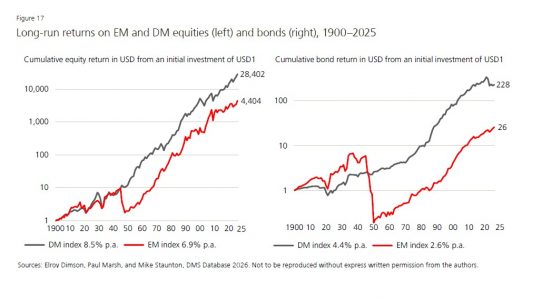
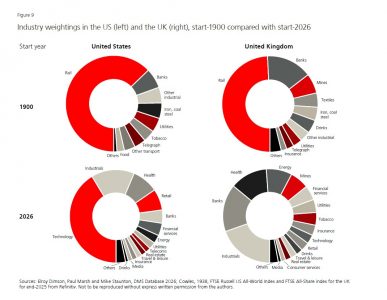
In a week of significant geopolitical turmoil and market volatility, UBS has presented its Global Investment Returns Yearbook 2026, in which it places current investment challenges and debates into a long-term perspective, following a historical analysis of markets since 1900. Taking into account the current context, the main conclusion of this year’s edition is that global markets have undergone a profound transformation.

“At the beginning of the 20th century, the global stock market showed a relatively balanced distribution; today, by contrast, the United States dominates global market capitalization, representing 62% of the total equity market value. This reflects strong long-term equity returns and sustained equity issuance, even as the United States’ share of global GDP has declined from its mid-century peak,” the report notes.

Santander Alternative Investments Hires Nicholas Stockdale as Global Head of Infrastructure Credit

  |   By  |  0 Comentarios

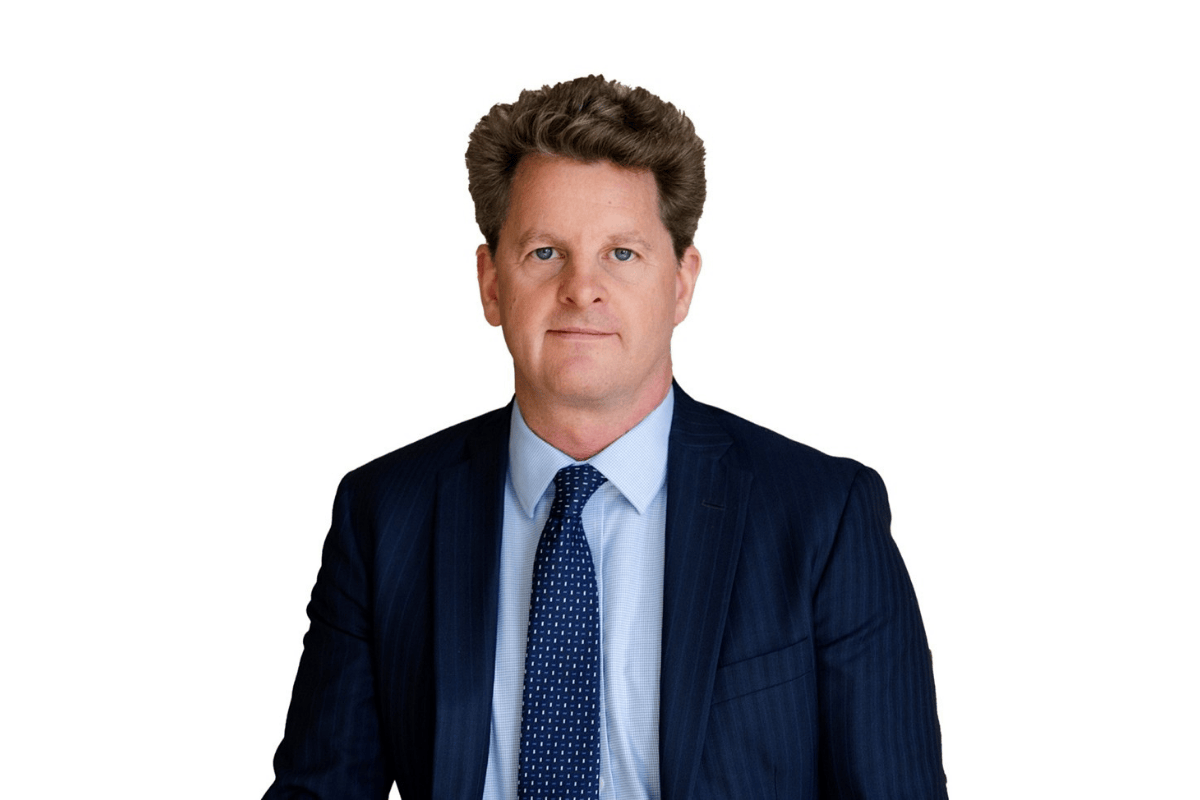
Photo courtesyNicholas Stockdale, Global Head of Infrastructure Credit of Santander Alternative Investments.

Santander Alternative Investments (SAI) has appointed Nicholas Stockdale as Global Head of Infrastructure Credit. Stockdale has more than 25 years of experience in infrastructure debt financing across different subsectors.

This appointment strengthens Santander Alternative Investments’ capabilities in infrastructure credit, one of the key areas within the group’s alternative investment platform. Currently, Banco Santander has more than €12 billion committed to alternative assets.

“The addition of Nicholas represents a further step in strengthening our infrastructure credit platform. His experience in structuring, investing, and raising capital across different geographies will be key to continuing to develop this strategy and to offer differentiated solutions to our clients,” explains Borja Díaz-Llanos, Chief Investment Officer at Santander Alternative Investments.

Before joining SAI, Stockdale developed his career for around a decade in senior asset management roles at Queensland Investment Corporation and Patrizia (formerly Whitehelm Capital). During this period, he led and closed multiple proprietary high-yield infrastructure debt investments across different geographies through two co-mingled debt funds and three separately managed accounts (SMAs). In addition, he was responsible for capital raising in Europe and Asia and has extensive experience in structuring debt fund platforms with one or multiple investors across different jurisdictions.

Previously, he worked for 16 years at Barclays Investment Bank, where he held various senior positions and participated in closing more than 20 infrastructure financing transactions under non-recourse or project finance structures, as well as numerous corporate transactions across the credit spectrum, including acquisition financings, bridge loans, term loans, and revolving credit facilities (RCFs). Before his time at Barclays, he spent two years in the project finance team at Edison Mission Energy, a power generation subsidiary of Edison International.

Stockdale also has experience as a board member, having served as chairman of QIC’s UK subsidiary and as a member of various fund entity boards and investment committees.

A British national, he began his professional career at PwC, where he qualified as a Chartered Accountant in 1997. He holds degrees in Chemistry and Law from the University of Exeter.

“We Want to Be in the Top 10 ETF Providers Across All Asset Classes”

  |   By  |  0 Comentarios

Photo courtesy

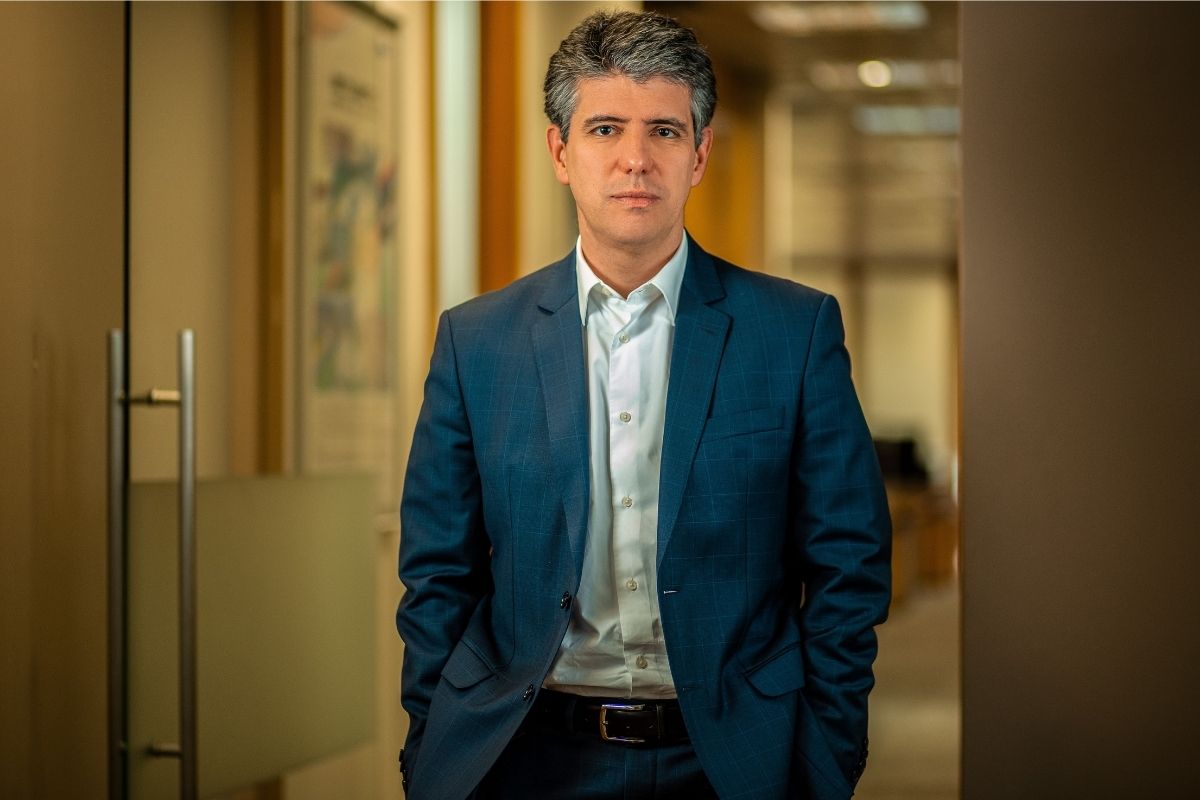
Marcus Vinicius, Head of U.S. Offshore at Franklin Templeton, marks three years leading the business in the region with a clear objective: to accelerate growth in this strategic market. The U.S. Offshore office is also in the midst of team expansion, at a time when the firm is doubling down on placing the client at the center of its strategy and elevating the level of service across all client needs.

From his office in South Florida, Vinicius leads a platform that operates as a true “microcosm” of cross-border business, serving a global client profile: from Latin American investors in Miami and Texas to Asian clients in California or European clients in New York. In this exclusive interview with Funds Society, he reviews the past three years, analyzes how offshore client needs have evolved, and outlines Franklin Templeton’s ambitious roadmap in technology and product.

What changes has Franklin Templeton made for U.S. Offshore?

The most important change comes from the client side. We are seeing a clear consolidation of business: clients want to work with fewer asset managers, but with greater capabilities.

They are looking for comprehensive solutions, efficient vehicles, and partners who understand their portfolios and strategies as a whole. That is why our evolution is moving in that same direction: offering all types of strategies through all types of vehicles, combining investments in public and private markets.

In addition, we are a firm with a strong consolidation DNA. Recent acquisitions such as Lexington Partners and Putnam Investments have been particularly transformative, providing us with differentiated capabilities in private markets—in the case of Lexington—and in risk management, product offering, and product quality, in the case of Putnam.

How are you organized from a commercial standpoint?

We have a regional structure made up of teams in Miami, New York, and the West Coast, combining external and internal wholesalers, as well as national accounts.

Beyond the structure, the key is the approach: our teams strive to understand the client holistically and, from there, connect them with the appropriate Franklin specialist teams. It is a model based on internal collaboration, where the goal is not to sell a product, but to build tailored solutions.

Do you have the capability to offer different vehicles, whether an active ETF, a traditional fund, or alternative funds?

Franklin Templeton has undergone a major transformation over the past five years to become what it is today: an integrated global platform with exposure to public and private markets; traditional funds and ETFs; and a strong commitment to digital innovation. The challenge now is not only to offer strong products, but to clearly communicate who we are: a firm with both public and private capabilities under one umbrella. In a context where clients demand fewer providers but with greater capabilities, we believe Franklin—with more than $1.74 trillion in AUM as of February 2026—is well positioned to meet this need.

You mentioned Lexington. Do you have additional interest in the alternatives segment?

Private markets are one of the main growth levers at the core of our global strategy. Today, we have significant capabilities in private credit, real estate, private equity, and infrastructure.

In addition, we are witnessing a degree of “democratization” of these markets, with evergreen vehicles that allow wealth investors access to these types of assets—something that was previously reserved for institutional investors.

Beyond the capabilities mentioned earlier, we have strengthened our offering through strategic partnerships in infrastructure with Actis, DigitalBridge, and Copenhagen Infrastructure Partners, focused on structural trends such as the energy transition and digitalization.

At the distribution level, how is Franklin Templeton organized?

Franklin Templeton has a global distribution structure that combines the capabilities of a large global asset manager with a strong local presence in key markets.

In this context, the Iberia and Latin America region plays a relevant role within the group’s global strategy, reflected in a solid local presence with eight offices across the region, more than 150 professionals, and local asset managers in Mexico and Brazil. Javier Villegas is responsible for the firm’s growth plans at the regional level. Locally, distribution strategies are led respectively by Hugo Petricioli (Mexico), Ana Álvarez (Iberia), Marc Forster (Brazil), Sergio Guerrien (South America), and myself in U.S. Offshore.

At a global level, the structure was recently strengthened with the appointment of Daniel Gamba as Chief Commercial Officer and Co-President in October 2025. Together with Terrence Murphy (Head of Public Market Investments) and Matthew Nicholls (Chief Financial and Operating Officer), they form a team of three Co-Presidents who, under the leadership of our CEO Jenny Johnson, help reinforce the execution of the firm’s strategy.

What is the process for launching a vehicle?

Our approach is global. In private markets, we typically start in the domestic market and, once the product gains traction, we scale it internationally.

In listed markets, we have significantly expanded the offering—for example, through the integration of Putnam’s products, which had a strong base in the U.S. but less international presence.

Ultimately, the goal is to create scalable solutions that can be efficiently distributed across multiple geographies, and in that regard, I believe we have a significant competitive advantage due to our global distribution capabilities.

Focusing on clients, you mentioned that they increasingly want to work with fewer firms. What other trends do you see in U.S. Offshore?

For every fund our major clients approve, they approve a much larger number of ETFs. Today, we manage between $60 billion and $70 billion, but our ambition is to grow much further. We want to be in the top 10 ETF providers across all asset classes, covering active, passive, and smart beta.

We are working on scaling our platform, always adapting to the needs of each market. Clients no longer choose between traditional funds or ETFs—they seek flexibility and efficiency.

Overall, the offshore client is increasingly global and sophisticated. They seek customized solutions, access to private markets, and a flexible vehicle architecture.

In addition, they are particularly sensitive to tax and geopolitical factors, making financial advice essential. In this context, our goal is to position ourselves as a strategic partner, not a product provider.

For a large global account, what is typically preferred: the active ETF or the traditional fund?

It is increasingly less about choosing between an ETF or a fund. Clients are looking for flexibility and to use the vehicle that best fits their architecture, whether for operational, tax, or portfolio construction reasons.

What we do observe are regional differences. While in markets such as Brazil there is still a stronger orientation toward funds, in Mexico the use of ETFs is growing significantly. However, the global trend is consistent: accessing the same strategy through different types of vehicles.

What other trends do you see in ETFs?

We see three clear trends: the growth of active ETFs as a portfolio construction tool; the convergence of this type of vehicle with private markets; and tokenization, which, although still in development, has enormous potential to transform the industry by improving efficiency, reducing costs, and enabling near real-time transactions.

What is your culture regarding AI integration?

It is one of the key pillars of our global strategy. We are investing in data analytics, artificial intelligence, and especially tokenization.

As I mentioned earlier, we firmly believe that tokenization can completely transform our industry, as it enables greater efficiency, reduces operational costs, and improves distribution processes. For example, it can facilitate near real-time transactions and significantly reduce the operational burden.

We are also seeing how financial infrastructure is evolving toward blockchain-based models, where Franklin Templeton already has a pioneering position.

Looking ahead, are there plans for further acquisitions?

It is not for me to speculate on potential acquisitions, but referring to what our CEO has said on several occasions, I can say that if an acquisition opportunity arose that made strategic sense for Franklin, we would likely be open to considering it.

The company has a strong track record of consolidation within the industry and is currently in a favorable position, as it has both best-selling products and niche offerings.

Since the acquisition of Legg Mason in 2020, we have completed around ten acquisitions, and in five years we have grown from $700 billion in assets under management to more than $1.67 trillion. Today, the focus is on establishing ourselves as a strategic partner to our clients, as we have the capabilities to achieve this. We now have a global platform, capabilities in public and private markets, diversification by strategy and product type, technological innovation, and a strong focus on delivering tailored solutions for our clients.

Radiography of Billionaires: 3,000 Individuals Who Accumulate $15.8 Trillion

  |   By  |  0 Comentarios

Canva

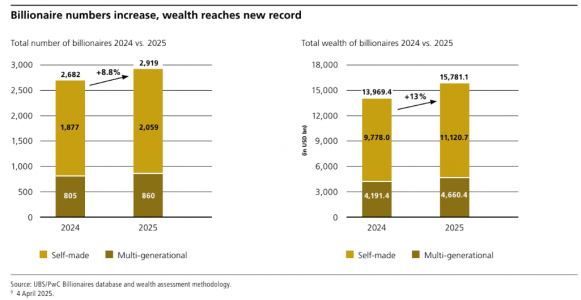
The wealth of the world’s billionaires reached an unprecedented figure in 2025: $15.8 trillion. This is highlighted in the latest report by UBS, which notes that there are now nearly 3,000 billionaires worldwide. Despite economic instability and international tensions, the value of their wealth has grown by 13% in just one year, driven mainly by strong financial markets and business innovation.

The United States has been the country that benefited the most from this growth, leading this expansion. There, billionaire wealth increased by 18%, thanks to the momentum of technology companies and the creation of new large fortunes. Asia-Pacific also experienced a positive year, while Europe grew at a more moderate pace. Overall, the global wealth map confirms that the creation of large fortunes remains highly concentrated in a few countries, as shown in the report.

Technology has once again been the main driver of growth. Fortunes linked to this sector increased by nearly 24%, driven by the rise of artificial intelligence, chips, and digital services. Companies such as Nvidia, Meta, and Oracle strengthened already established fortunes, while in China the technology sector showed signs of recovery after a period of slower momentum.

Other sectors also recorded significant gains. The industrial sector grew the fastest, with an increase of 27%, supported by the expansion of the aerospace and electric vehicle industries. Financial services grew by 17%, boosted by the stock market recovery and the rebound in digital assets, while the consumer and retail sector showed more moderate growth, affected by the slowdown in European luxury.

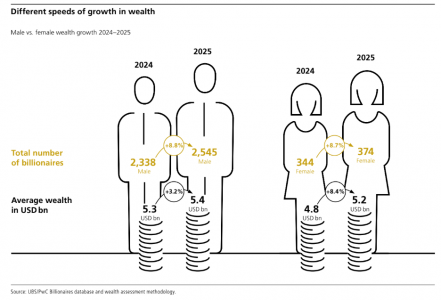
A notable finding of the report is the evolution of female wealth. Although women represent a minority (374 compared to 2,545 men), their average wealth grew by 8.4%, more than double that of male billionaires. Much of this female wealth is concentrated in sectors such as consumer and retail, where inheritance continues to play a decisive role, especially in Europe.

By region, in addition to the United States and China, Singapore and Germany stood out as particularly dynamic markets. Singapore increased the wealth of its billionaires by more than 66%, while Germany led growth in Western Europe. In contrast, France recorded a significant decline due to the drop in the value of large fortunes linked to the luxury sector, confirming a shift in the cycle of global wealth distribution.

BlackRock, Capital Group, and Vanguard, the Asset Managers with the Best Brand Image

  |   By  |  0 Comentarios

Canva

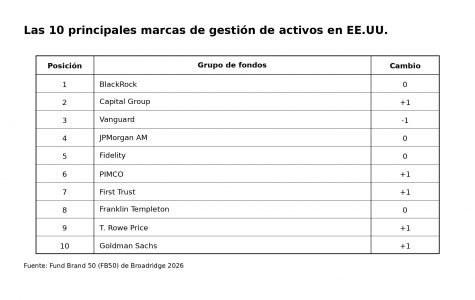
Which asset managers are the most highly regarded in the U.S.? According to the latest edition of Fund Brand 50 (FB50) by Broadridge, an annual study produced by the fintech Broadridge Financial Solutions that highlights the world’s top-performing third-party asset management brands, the ranking is led by BlackRock, Capital Group, and Vanguard.

BlackRock retains the top position for the second consecutive year. However, according to the report’s conclusions, its lead has narrowed, and this year the presence of relatively recent firms within the expanded FB50 list has continued to grow. The firm’s analysis concludes that BlackRock’s prominence is not only a reflection of its size, but also of its sophisticated alignment between product innovation and brand trust, which continues to resonate with professional fund buyers.

“While strength and client focus remain key priorities, our analysis of brand perception revealed that fund gatekeepers, such as wealth management home office teams and investment committees, also place great importance on the stability of the management team. In their view, this serves as a benchmark for the ability to repeat results and mitigate transition risk,” explains Jeff Tjornehoj, Senior Director of Fund Insights for the United States at Broadridge.

Movements in the ranking

Although BlackRock continues to hold the top spot, Capital Group made a notable climb in the ranking to finish in second position. Notably, Capital Group is predominantly perceived as the gold standard of institutional stability, supported by its distinctive “Capital System” of multi-manager oversight. “By abandoning the star manager model in favor of a collaborative investment process, the firm projects a repeatable, high-conviction approach to active management that endures beyond individual mandates,” they highlight about the firm.

Analyzing the rest of the ranking positions, Vanguard fell to third place, while JPMorgan and Fidelity completed the top five. Professional buyers tend to view Capital Group as a “safe haven,” associating the brand with long-term reliability and a client-focused relationship model.

Among other notable changes, the firm highlights that PIMCO moved ahead to swap positions with First Trust, ranking sixth and seventh, respectively. “Franklin held steady in eighth place for the fourth consecutive year, while T. Rowe Price advanced steadily from tenth to ninth place, and Goldman Sachs showed that its exit from the top 10 last year was temporary by returning this year to the tenth position,” they add.

Looking back at the report from a year ago, it is worth noting that stable performance and lower volatility had predisposed fund selectors to explore new institutional commitments. According to the report, this trend intensified in 2025, as reflected in the modest changes observed among the top ten brands.

Most valued attributes

Regarding what fund selectors valued most in brands, “strength,” “client focus,” and “attractive investment strategy” once again occupied the top three positions in the ranking this year. “U.S. selectors favor large global brands, with a broad and diverse product offering, as well as the security provided by a well-established name,” they indicate.

The report finds that an “attractive investment strategy” continues to act as a “magnet” for new capital. Its conclusion is that investors prioritize managers who demonstrate a repeatable process for generating risk-adjusted returns, and once again, BlackRock continues to set the pace.

“The top four brand attributes did not change in 2025, while ‘stability of the investment management team’ rose from seventh position last year to complete the top five in fifth place in 2025, displacing ‘understanding of the markets in which they operate’ from the top five to seventh place. In addition, ‘social responsibility/sustainability’ once again ranked tenth,” they note.

Brand and product

According to Broadridge’s view, in a “sea of similarity” where many firms offer similar investment strategies, a strong brand acts as the main differentiating factor. “A truly effective brand transcends logos and slogans: it is the embodiment of an identity that builds trust, drives loyalty, and provides the strategic foundation for future expansion,” they argue.

From the perspective of investment offerings, the report maintains that, for product managers, 2025 was a decisive year in the evolution of investment vehicles. “The industry witnessed explosive growth in the development of active ETFs, with nearly 1,000 new funds entering the market. This shift reflects a structural migration of capital; during the same period, only 95 new traditional mutual funds were launched, representing a 52% decline compared to 2024 and the lowest level since 1983, in a context where the industry recorded 262 more closures than launches,” they conclude.

Rescue Frenzy in Private Debt: The Canary in the Coal Mine or Just an Episode?

  |   By  |  0 Comentarios

CANARIO WIKIPEDIA
Wikimedia Commons

At the beginning of the last century, canaries helped miners detect toxic gases that could put them in danger. This metaphor seems especially relevant today, according to those who see a warning sign in the wave of redemptions experienced by private debt funds globally. Some see risk in this industry, one of the alternative asset classes that has generated the most interest in recent years—while others view it as a temporary episode of anxiety against the backdrop of solid market fundamentals. Time will tell which side is right, but industry professionals are watching all available signals closely.

These emerging doubts around the asset class come after years of strong growth, which have left their mark on the industry’s size. Figures from the Alternative Investment Management Association (AIMA) show that the category ended last year with global AUM of more than 2.5 trillion dollars. Moreover, according to data compiled by S&P Global Ratings, 2025 saw industry fundraising reach 224.25 billion dollars worldwide.

Against this backdrop, the year so far has brought a series of major redemption announcements from large international funds such as Blackstone, Blue Owl, BlackRock, and Apollo. Does this mean the asset class is heading into a downturn? Industry participants downplay the situation, asserting that this is not a looming financial crisis, as some more alarmist voices have suggested. That said, this does not mean they see no areas of risk, especially given the dispersion and heterogeneity of the sector.

Illiquidity: nothing new under the sun

For Blue Owl, what is happening is simply a natural phenomenon tied to one of the core characteristics of alternative investments: illiquidity.

“These vehicles are designed to balance access to long-term assets with periodic liquidity windows. This trade-off—accepting limited liquidity in exchange for higher returns—is intentional and, when properly managed, allows strategies to function exactly as designed. Limited liquidity is not a flaw of the model; it is a structural feature of it,” says Felipe Manzo, Managing Director and Head of Private Wealth for Latin America at the firm, in comments to Funds Society.

In that sense, he says they do not see a systemic problem, but rather “specific situations.”

According to Manzo, the current situation stems from a gap between market sentiment and the fundamentals of the vehicles themselves. “Private credit continues to offer an attractive premium relative to public credit markets, with solid opportunities in high-quality borrowers,” he says, adding that more disciplined strategies tend to prevail in periods of volatility. “At Blue Owl, we believe we are particularly well positioned to navigate this environment, thanks to a rigorous credit analysis process and a diversified portfolio that has demonstrated resilience and solid returns across the business, not only in credit,” he notes.

At CIO Invest, a boutique specialized in alternatives, they call for a precise diagnosis of the phenomenon. This is not an industry-wide liquidity crisis, according to the firm’s team, but rather a specific tension in certain vehicles, where market sentiment is leading investors to request redemptions above established contractual limits. “That distinction is crucial,” they stress.

The role of semi-liquid vehicles

One factor that has accelerated redemption dynamics is the creation of semi-liquid funds—alternative structures designed to offer somewhat greater liquidity. Given this feature, it is not surprising that these products are seen as the spearhead that has opened the door to alternative strategies for a more retail-oriented investor base over the years.

However, despite offering more flexibility for withdrawals than traditional alternative funds, these episodes have served as a reminder that illiquid assets remain illiquid assets.

“Semi-liquid vehicles were designed with redemption limits precisely to manage this reality, but when sentiment deteriorates, investors seek to exit in volumes that far exceed those thresholds. That works as long as inflows exceed outflows, but when sentiment reverses, the system fractures,” explain sources at CIO Invest.

As such, this appears to be a localized issue, since traditional closed-ended vehicles, pure private credit platforms, and structures such as CLOs are not currently facing this dilemma.

At Blue Owl, they also highlight the role of wealth management channels in current dynamics. “The growth of private banking and wealth management channels has significantly expanded access to private markets. At the same time, this dynamic has raised the level of demand and responsibility for managers,” says Manzo.

Short-term flows

Regardless of the long-term impact, it appears that some damage has already been done. Considering that individual investors tend to be more sensitive to so-called “headline risk” than other segments—such as institutional investors—the expectation is that redemptions currently being deferred due to withdrawal limits will continue to drive outflows in the short term.

A report from Goldman Sachs Research indicates that the trend of declining sales and rising redemptions began in the last quarter of last year, driven by the prospect of lower future returns—given lower base rates, tighter spreads, and a credit event rate that has risen slightly from previously negligible levels—as well as increased media focus.

Looking ahead, the investment bank estimates that outflows will range between 45 billion and 70 billion dollars over the next two years. Even so, the firm does not expect this to trigger a wave of asset sales across the industry.

“Considering certain levels of liquidity buffers within funds (around 19% of the industry’s NAV and about 11% of total gross fund assets), the maturity profile of loans (typically between 5 and 7 years), managers’ ability to provide liquidity, the capacity to maintain quarterly redemption limits of 5%, and the ability to use leverage, we believe the need to liquidate private loans at an industry level will be limited,” Goldman Sachs noted.

Even so, from the perspective of asset managers, this phenomenon opens up a behavioral risk that was not previously on their radar. “The real risk is not that loans will default en masse, but that sustained redemptions will force asset sales at discounts, depressing NAVs and triggering further redemptions in a vicious cycle. That is the scenario that needs to be closely monitored,” conclude sources at CIO Invest.

Peru Heads Toward a New Political Cycle After a Decade of Presidential Turnover

  |   By  |  0 Comentarios

Wikimedia Commons

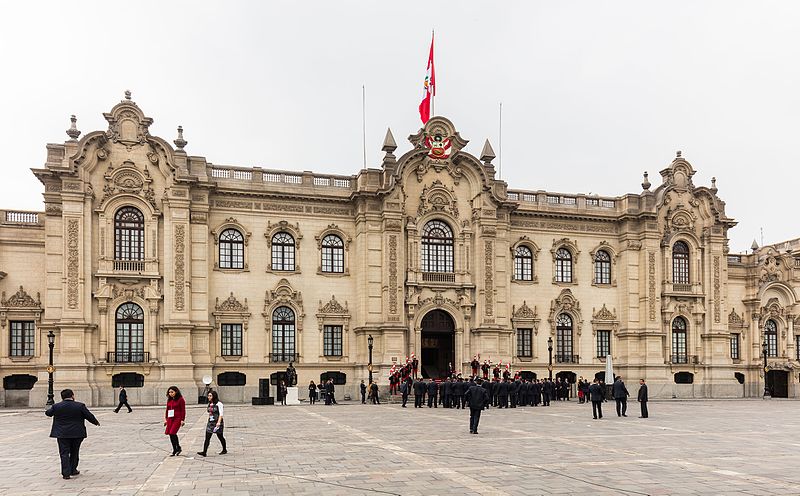
During the past decade, Peru has become a true case study, given the unusual turnover experienced at the Casa de Pizarro and the relative resilience its economy has shown amid political turmoil. Since the end of Ollanta Humala’s term, the last president to complete his mandate, in July 2016, the country has had eight presidents, some of whom did not even reach an anniversary in office. Nevertheless, the Andean country’s currency and economy have remained relatively firm.

Now, as the country enters a new political cycle, market participants are following the process with relative calm. With little expectation of anything that could affect the business climate and with changes to the political system underway, local actors are behaving with relative composure. That said, the financial industry emphasizes that political instability has carried an economic cost, and that the backdrop to all market movements today is the thorny conflict in the Middle East.

Peruvian assets have delivered strong performance over the past 12 months across various dimensions, but have come under pressure in the last month. The dollar has risen by around 3.5% against the sol, while the stock market, measured by the MSCI NUAM Peru Select Capped 15% benchmark, has lost roughly 9% of its value. Market participants say this is not linked to any idiosyncratic factor, but rather reflects a month in which risk aversion has increased. In context, during that same period, the MSCI Emerging Markets index has declined by 11%.

As for expectations strictly tied to the Peruvian economy, the financial world is awaiting the April 12 general elections with relative calm. On this occasion, the country will vote not only for a new president, but also to elect vice presidents, 60 senate seats, 130 lower house seats, and five members of the Andean Parliament.

Relative calm

“The environment is suspiciously calm, and there is no sense of concern in the business sector,” says Jorge Espada, Co-Founder & Managing Partner at Valoro Capital, in a conversation with Funds Society.

In his view, the key is that the most adverse scenario for local assets—a far-left government controlling both the executive and both chambers of the legislature—appears unlikely. “That is ruled out today,” he says, noting that most of the leading candidates are aligned with the right, with the exception of social democrat Alfonso López-Chau.

“The market today is not pricing a binary scenario, but rather one of high fragmentation,” adds Carlos Müller, Director of Strategy and Investment Advisory for Global Wealth at BBVA. While Rafael López Aliaga and Keiko Fujimori lead in the polls, both are polling at around 11% support, with a large share of undecided voters. “That makes a runoff almost inevitable and leaves the door open for late shifts, especially if a candidate emerges who connects with the demand for order and security,” he says.

There is also the congressional factor, where the exclusion of parties that fail to reach a 5% threshold encourages vote concentration. “At this point, it appears that the far left will not hold a meaningful share in either chamber,” Espada adds. “That may explain the calm seen during this electoral process.”

A new political framework

The April elections also bring a key change in institutional design: the return of Peru’s Senate after more than three decades. Following its elimination in 1992, the 2024 constitutional reform, under the government of Dina Boluarte, restored bicameralism, with senators to be elected in the upcoming vote.

“Investors are closely watching the evolution of the general elections, not only regarding the presidency but also the Senate, given the importance this institution will have in the country’s new political architecture,” explains Luis Ramos, Head of Equity Strategy at LarrainVial Research.

In this context, the most favorable scenario for local assets, according to the firm, is “the combination of a pro-market president and a thoughtful Senate capable of containing populist initiatives that create regulatory risk, weaken fiscal anchors, and hinder capital market development.”

The main domestic risk to the local economy, according to LarrainVial, is populism. While a bicameral and politically fragmented Congress can act as a counterbalance to structural reforms, “this does not necessarily prevent the approval of populist measures, which often require only simple majorities,” Ramos warns.

The myth of decoupling

Peru’s macroeconomic conditions have remained relatively stable throughout this decade of political instability, giving rise to the idea that “politics and the economy move on separate tracks.” However, local market participants reject this view, arguing that the situation has come at a cost.

“It is very generous to say that Peru has separate tracks, because it is costing us,” says Espada of Valoro Capital. In a favorable global commodities cycle, he explains, Peru would likely be growing between 5% and 6%. Instead, the economy is expanding at around 3%. This gap, he argues, is due to institutional deterioration.

For Müller of BBVA, there are nuances to the decoupling narrative. “The Peruvian economy still has the capacity to remain relatively separate from politics in this cycle,” supported by controlled inflation, high reserves, external strength, favorable terms of trade, and a credible central bank.

“That said, this decoupling is not infinite,” he stresses. “Politics may not break the macro fundamentals immediately, but it can slow investment when uncertainty persists,” he adds, noting that the resilience shown by the local economy “does not imply immunity.”

Echoes of war from abroad

Regardless of domestic developments, the key issue for the financial industry today is the global impact of escalating conflicts in the Middle East. “The main question for investors right now is the persistence of the conflict,” says Ramos of LarrainVial Research.

Given relatively favorable conditions, the market’s base case remains positive growth, but the impact of the conflict involving the United States, Israel, and Iran will be felt. “For the remainder of the year, the central view is still positive growth, but less clean than a few months ago,” says Müller. In this context, BBVA expects growth of 2.9% for the country in 2026, due to a supply shock, with a more affected first half and improvement in the second.

“This year, if the situation in the Middle East normalizes, we should end with growth above 3%,” adds Espada of Valoro Capital. Meanwhile, LarrainVial Research estimates growth at 3.4% for the Andean country this year if the conflict proves transitory; if it persists, growth would cool to 2.6%.

For Credicorp Capital, growth is expected to range between 3% and 3.5%, depending on how global risks evolve. “The final impact will depend on the magnitude and duration of the shocks,” the firm said in a recent report.

David López Takes Charge of Thoma Bravo’s Business in LatAm

  |   By  |  0 Comentarios

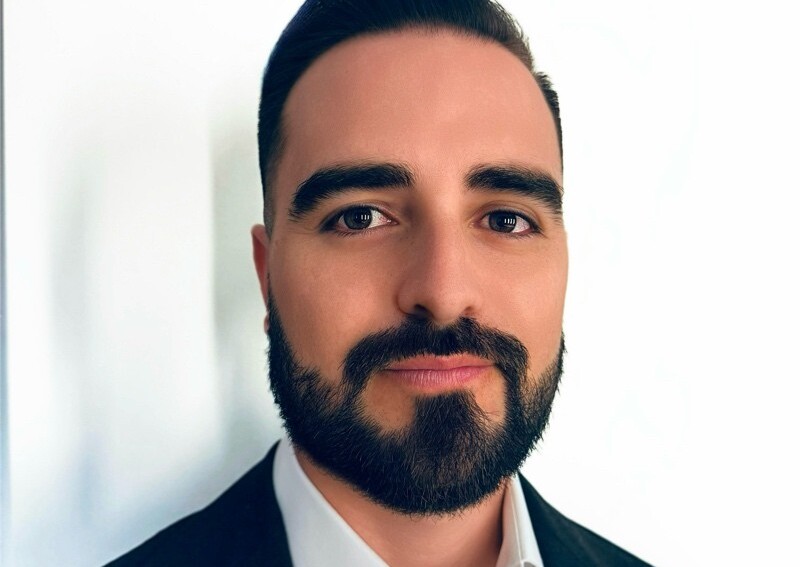
LinkedIn David López, Head of LatAm at Thoma Bravo

The specialized investment firm Thoma Bravo, dedicated to investing in software companies, recruited David López to lead its business in Latin America. According to what the executive shared on his professional LinkedIn network, he recently assumed the role of Head of LatAm for the firm.

With this, López brings a track record of more than ten years in the financial industry, holding positions across different Latin American financial capitals and extensive experience dealing with private markets.

Previously, the professional spent more than four years at BlackRock, where he worked until this month as Co-Head of Alternatives for Latin America and the US Offshore market. He also worked as Vice President of Alternatives for Colombia, Peru, Chile, and Central America. During this period, the professional relocated from Bogotá to Miami, according to his profile.

Before that, López served as Alternatives Senior Manager at SURA México and as Alternative Investment Manager at SURA Asset Management, as well as a fund analyst in the Colombian branch of BTG Pactual.

Now, the executive joins one of the largest software-focused investment firms in the world, with assets exceeding 181 billion dollars. The firm has private equity and credit strategies and has invested in around 555 technology companies.

This Is the New Investment Moment for Latin America

  |   By  |  0 Comentarios

ALMA Miami real estate project
Canva

Global investors, policymakers, and business leaders gathered in Miami during the sessions organized by the FII Institute to analyze how capital is shifting across regions, sectors, and technologies in a period marked by geopolitical and economic changes and shocks.

One of the main conclusions was the key role that Latin America is playing in the reconfiguration of global capital flows. At the center of the debate on its role are nearshoring, infrastructure, energy, and human capital as key drivers of long-term growth.

In this context, participants highlighted Latin America’s transformation into a safe haven and a growth engine, with abundant natural resources, expanding capital markets, and increasing geopolitical relevance. “This is the moment to move from fragmentation to alignment, from hesitation to action. The new Latin American order will not be defined by speeches, but by decisions, alliances, and investment,” said Richard Attias, Chairman of the Executive Committee and Acting CEO of the FII Institute.

Capital in motion

Among the most notable themes during the event were strong capital inflows into key markets such as Brazil, Latin America’s role in global food and energy security, and the need to invest in infrastructure and education to unlock long-term returns.

“We are moving away from viewing social investment as a cost and recognizing it as the foundation of economic growth, because addressing early childhood, health, education, and sanitation is what truly shapes a country’s future,” said María José Pinto González Artigas, Vice President of Ecuador.

Throughout the sessions, three messages were consistently emphasized: capital is shifting toward new geographies, including Latin America; it is increasingly focused on long-term resilience and real-economy impact; and it is moving rapidly, driven by geopolitics, technology, and energy transitions.

They also agreed that in a world where disruption is the “new normal,” capital is being repositioned. “As global leaders continue their conversations in the coming days, the focus remains the same: how to align capital with opportunity and how to turn that movement into measurable impact,” noted the FII Institute.

Energy, infrastructure, and the next investment cycle

When it comes to turning challenges into opportunities, Venezuela and the new opportunities in its technology sector took center stage. Speaking remotely, Delcy Rodríguez Gómez, Acting President of the Bolivarian Republic of Venezuela, highlighted that the country is welcoming more than 120 energy companies from the United States, the Middle East, Asia, Africa, and Europe amid legal reforms. According to her, Venezuela’s hydrocarbons law and broader legal reforms have been designed to provide the legal certainty investors need.

Another clear area of opportunity is infrastructure. According to experts participating in a panel on the topic, discussions in this sector are focused on the challenges that energy and electricity supply constraints pose for nearshoring, as well as the rapid expansion of industrial infrastructure and data centers. Participants also highlighted the role of tourism, logistics, and cultural infrastructure in generating long-term returns.

In this regard, Manfredi Lefebvre d’Ovidio, Chairman of the World Travel & Tourism Council, emphasized the importance of Miami and investment partnerships for Latin America’s success: “Global public-private collaboration is essential for Latin America’s success, and Miami is proof of that. Most flights from Europeans traveling to Latin America pass through Miami.”