Oppenheimer & Co. Inc., a unit of Oppenheimer Holdings, is pleased to announce the continued expansion of its Global Emerging Markets (EM)Fixed Income business. The Firm has hired three new Managing Directors on its New York Sales Desk, including Michael Bellero, Alex Gutierrez and Ken Lockyer. They will report to Peter Albano, Managing Director – Taxable Fixed Income Sales, and Greg Fisher, Managing Director – Institutional Emerging Markets Sales. “As other companies exit the Emerging Markets business or reduce their commitment to it, we are expanding our franchise,” said Greg Fisher.
“As other companies exit the Emerging Markets business or reduce their commitment to it, we are expanding our franchise”
Cliff Huang joined the Firm in Hong Kong as Managing Director – Head of Fixed Income Sales and Trading in Asia. In addition, the firm hired John Coates in London as Head of Emerging Markets Trading for EMEA Sovereign and Corporate Bonds. Cliff Huang was most recently at Knight Capital Asia Limited, where he was responsible for establishing the Hong Kong office in 2004 and overseeing their fixed income business. Prior to that, Cliff worked for Citicorp, HSBC and Bankers Trust, always in the High Yield and Emerging Markets Fixed Income business.
Michael Bellero has focused exclusively on Emerging Markets sales for over 25 years. At Jefferies he expanded distribution with some of Jefferies’ largest EM Fixed Income institutional customers. He served as a senior institutional salesperson at Bear Stearns for six years and was a founding member of ABN AMRO’s EM Fixed Income group.
Alex Gutierrez has 25 years of Global High Yield and Emerging Markets experience. Before joining Oppenheimer, he headed Institutional Fixed Income at Atlas One, and most recently held a senior sales role at Knight. Alex has focused on Latin American and U.S. institutional sales for the majority of his career, and was responsible for Latin American distribution at Bear Stearns, where he worked for 14 years.
Ken Lockyer joins Oppenheimer from Jefferies where he was a Managing Director in its Emerging Markets sales team. With over 28 years of global fixed income markets experience, Ken has particular expertise in Global High Yield and Emerging Markets credit products. Ken worked at Bear Stearns for 17 years and was a founding member of its EM Fixed Income Desk.
John Coates has over 20 years of global fixed income trading experience, with all forms of corporate and sovereign debt instruments. Before joining Oppenheimer, John was Director of European Corporate Debt Trading at Mizuho, and held senior trading positions at Landsbanki and Mitsubishi.
Oppenheimer & Co. Inc. (Oppenheimer), a principal subsidiary of Oppenheimer Holdings Inc. (OPY on the New York Stock Exchange), and its affiliates provide a full range of wealth management, securities brokerage and investment banking services to high-net-worth individuals, families, corporate executives, local governments, businesses and institutions.
Foto: Taxiarchos228. Los dividendos constituyen un componente significativo de retorno a largo plazo
In performance return analysis for a single year, a stock (or the market) dividend return is easily swamped by capital value changes resulting from either a change in earnings, or change in valuation (earnings multiple). However, over the long-term changes in valuation in the most part revert to the mean, while earnings growth (for the market) approximates nominal GDP growth. That leaves dividends, which reinvested deliver a significant and growing contribution to total return over the long term.
This a simple and compelling way of understanding investment in equities, as explained by Jonathan Crown, Global Equity Portfolio Manager atThreadneedle in a whitepaper which examines the contribution of dividends over the longer term in different markets and also highlights their importance to total return, even in markets such as the US and Japan, where traditionally dividend payments have not been commonplace.
The results show that the UK and Australian markets, where dividend culture is well established, have been the best performing markets since 1970.
Mr. Crown highlights an interesting development in the US, which is changing corporate attitudes to dividends. With margins at highs and pay-out ratios at lows, corporate balance sheets are swollen with cash. Companies such as Apple are embarking on vast share buy-back programs but also initiating and in many cases increasing dividend pay- outs. Investor demand for dividends has grown strongly and companies that are meeting these demands are being rewarded. As a result, managements are increasingly likely to prioritize dividends over other forms of capital returns and Threadneedle continues to expect dividend yields on US stocks to rise over the next few years.
Wikimedia CommonsFoto: Poco a poco. Amundi compra una gestora especializada en renta fija en Estados Unidos
Amundi today announced the signing of an agreement to acquire Smith Breeden Associates. Paris, France-based Amundi is a leading European asset management firm with close to EUR 750 billion ($1 trillion) in assets. Durham, NC-based Smith Breeden Associates, with an AUM of $6.4 billion, is an institutional asset management firm specializing in the major U.S. fixed income sectors.
The final agreement between Amundi and Smith Breeden is subject to customary conditions, including informing regulatory authorities and gaining the approval of certain clients and shareholders. The closing of the transaction should take place by the end of September 2013.
For Amundi, the acquisition of Smith Breeden has three key objectives:
Offering an asset management expertise in U.S. dollar products to its institutional and corporate clients in Europe, Asia and the Middle East.
Strengthening the U.S. component of its Global Fixed Income expertise.
Enhancing the development of Amundi’s expertise in the U.S.
For Smith Breeden, the rationale for this transaction is equally compelling, as it gives Smith Breeden the opportunity to:
Strengthen its relationships with U.S. clients.
Reach out to Amundi’s worldwide institutional client base.
Benefit from Amundi’s global investment, research, client servicing and operating resources.
Upon the closing of this transaction, Smith Breeden will be renamed Amundi Smith Breeden, and be a fully-owned and controlled subsidiary within the Amundi group. Patrick Pagni, currently Amundi’s Senior Regional Officer for North America, will serve as Executive Chairman of Amundi Smith Breeden, and Mike Giarla will continue to manage the company as Chief Executive Officer. All key people within Smith Breeden expressed their support of the transaction. The company will be part of Amundi’s Fixed Income organization; there will be no change in Smith Breeden’s investment process or personnel. The acquisition of Smith Breeden is a significant contribution toward Amundi’s goal of creating a global fixed income platform with established regional expertise.
Stan Beckers. Stan Beckers, nuevo CEO de ING IM International
ING announced today the appointment of Stan Beckers as CEO of ING Investment Management International, succeeding Gilbert Van Hassel who has decided to leave ING. The appointment of Beckers has been approved by the Dutch Central Bank and will become effective 1 July 2013.
Van Hassel joined ING in 2007 as CEO of ING Investment Management Europe. He assumed the position as CEO of ING’s global Investment Management businesses November 2009 and is a member of the Management Board Insurance EurAsia. Consistent with the governance for Insurance/Investment Management Europe as announced on 13 March 2013, Beckers will report to Lard Friese, member of the Management Board Insurance EurAsia (MBE) who will also assume the responsibility for Investment Management within the MBE.
Beckers (1952, Belgian) has more than 30 years of professional and leadership experience in global finance and asset management. Beckers started his career in 1979 as a professor of Finance at KU Leuven, Belgium, after completing a PhD in Business Administration at the University of California, Berkeley. In 1982, Beckers was one of the original partners in Barra where he established and managed the international operations. Barra, a leading provider of investment decision support tools, was successfully listed on the Nasdaq through an IPO in 1991 and eventually acquired by MSCI Inc.
From 2000, Beckers was CIO at WestLB Asset Management and at Kedge Capital. In 2004, Beckers joined Barclays Global Investors (BGI) which was later acquired by BlackRock. He served as CEO and CIO of BGI’s Alpha Management Group, he was also CIO of BGI´s European Active Equity Group and lastly was Managing Director and co-Head of BlackRock Solutions EMEA. Over the past 15 years, Beckers also has been a member of the Investment Committee at several pension funds and of the supervisory board at KAS Bank and Robeco.
Jan Hommen, CEO of ING Group, said, “As we accelerate preparations for the base case of an IPO of our European Insurance and Investment Management company, I am pleased to welcome Stan Beckers to ING. He brings with him a wealth of experience to lead ING Investment Management for future global success. I also want to take this opportunity to thank Gilbert Van Hassel for his leadership and dedication in leading ING Investment Management through a period of economic challenges and organizational change. We wish him well in his future endeavours.”
Wikimedia CommonsPhoto: Carol Bean. Banyan Partners and Silver Bridge Join Forces to Create a National Wealth Management Firm
Banyan Partners, headquartered in Palm Beach Gardens, Florida, and Silver Bridge Advisors, an 80 year old boutique wealth management firm based in Boston, today announced the signing of a definitive agreement in which Banyan will acquire Silver Bridge. The combined organization will be known as Banyan Partners and become a national, independent wealth management firm in the U.S. with significant internal investment strategies, a deep open architecture platform and approximately $3.4 billion in assets under management. Financial terms of the deal were not disclosed.
At the close of the transaction, Banyan will have 8 offices located around the U.S. -including its first in the West coast- and 70 employees. Key members of the Silver Bridge management team will become principals and assume senior roles at Banyan including R. Thomas Manning, Jr. who will assume the role of Chief Investment Officer for the combined organization. Michael Blackmon , Banyan’s current Chief Investment Officer, will become Executive Director of Portfolio Management and lead a team of 22 portfolio managers.
“Banyan is the optimal partner,” said Tom Manning , CEO and CIO of Silver Bridge. “Our shared passion for providing custom investment solutions to our clients makes this combination powerful. It allows us to leverage the deep investment expertise of both organizations and deliver a cutting edge wealth management capability. I could not be more proud to lead the combined investment team into the future and oversee total assets in excess of $4 billion.”
The transaction is subject to customary closing conditions and is expected to close in August 2013.
View of Mexico City. Experts will Discuss the Best Investment Opportunities in Mexico
“Mexico Investors Forum”, organized by Latin Markets, will be an international meeting bringing together investment funds with institutional investors, both regionally and internationally, in order to promote investment opportunities in the Latin American market.
The event, to be held on the 14th and 15th of November at the Hotel St. Regis in Mexico City, will be attended by more than 300 industry leaders, including: sovereign wealth funds, pension funds, foundations, consultants, fund-of-funds, family offices, government regulators, investment managers, leaders, portfolio managers, fund managers, bankers, and distributors of the largest companies and institutions active in the industry.
Participants will meet over a period of two days to discuss the best investment opportunities available in the region and in the rest of the world, touching on topics such as:
Asset allocation for investors
How do political changes in Mexico affect the market of the country?
Opportunities in Mexico for global institutional investors
Global trends in the field of raw materials
The future of private markets in Mexico
Regulatory changes and their impact on investors
Value in emerging markets equities
Among the speakers will be Finance Minister, Luis Videgaray Caso; Carlos Ramirez, president of the Consar (National Commission Savings System for Retirement); Oscar Franco, president of AMAFORE (The Mexican Association of Administrators of Retirement Funds), Arturo Hanono, CIO for Invercap Afore; Enrique Solorzano, CIO for Afore SURA; and Francisco Tonatiuh CEO Afore XXI Banorte.
For further information and registration, follow this link.
Wikimedia CommonsPhoto: Mattbuck. Colombian Pension Funds See US Equity Indexes as a Higher-Risk Asset
The positions in mutual funds, ETFs, private equity and international structured products for Conservative, Moderate and High Risk pension funds portfolios in Colombia begin to see the US equity indexes as a higher-risk asset, while continuing to favor emerging markets as a conservative strategy and reducing its exposure to commodities, as reported by the Financial Regulator of Colombia -Superintendencia Financiera- with data from March 31, 2013 published on June 1st.
The highest positions in each portfolio are:
In the Moderate Risk fund, which manages assets worth $59.5 billion of which 15.63% are foreign assets, the top ten positions in mutual funds, ETFs, private equity and international structured products, equivalent to 81% of all international investments are:
iShares MSCI EM Index Fund has maintained its top position for the second consecutive month with $711 million.
SPDR Trust series 1 gains 7.9% with $418.5 million.
Vanguard Group Institutional Index Fund has gained 3% and moved up a position with $308.3 million.
iShares SP500 loses 27.5% closing at $245 million.
Fondo Bursátil iShares Colcap loses a 1.67% closing with $194.5 million.
Vontobel Fund Emerging Markets Equity in dollars with $190.1 dollars and has maintained pretty stable.
Goldman Sachs Co, raises to 1.65% and finishes March with $188.4 million.
Goldman Sachs Group Inc goes up 0.4% with $163.3 million.
Vanguard Emerging Markets comes back to the list with $145 million.
JP Morgan Chase Co’s structured product closes the top 10 with $142.4 million.
As for the Conservative Risk fund, which manages $4.2 billion, with 8.11% in international products, of which 79.5% is invested in funds, the favorite funds are:
SPDR Trust series 1, gains 15.41% with $53.8 million.
Fondo Bursátil iShares Colcap goes up 1.33% with $34.97 million.
iShares MSCI Emerging Market goes up an outstanding 56.2% with $28.97 million.
iShares SP500 loses 25% with $12.3 million.
Money Market BBH Institutional goes up another spot growing 30.55% with $9.6 million.
Vanguard Group Institutional Index Fund gains 3% and closes with $7.8 million.
DFA US small Cap Value goes up 4.59% closing the month with $7.1 million.
DFA Emerging Markets Val loses 1.34% with $6.8 million.
Vanguard Emerging Markets ETF goes up one spot even though they lose 1.7% in March with $5.8 million under assets.
ProShares Ultra 500 closes the top 10 with $5.6 millon.
While in the High Risk portfolio 28.02% of the $644 million under management is invested in foreign issuers, of which 83.5% are in mutual funds and structured products. The leaders are:
iShares SP500 gains 8.7% with $29.6 million.
Templeton Asian Growth Fund, loses an 1.6% ending up with $13.79 million.
iShares MSCI EM Index Fund gains a 1.58% with $9.96 million.
SPDR Trust series 1, gains 80.65% with $9.6 million.
iShares MSCI Asia ex Japan, goes down 20% ending up with $6.18 milion.
DFA Emerging Market Small Cap Portfolio loses 1.17% with $5.3 million.
DFA Emerging Markets Value Fund A loses an 1.84% with $4.3 million.
FCP Morgan Stanley Infrastructure Partners gains 0.47% with $3.7 milion.
Fondo de Capital Privado Vintage V returns on the list with $3.3 million.
Investec GD Asian Equity Fund I closes with $3.1 million.
The cost of living in luxury for Asia’s High Net Worth Individuals (HNWIs) continues to outpace standard measures of inflation, albeit at a slightly slower pace than was seen in 2012, according to the Julius Baer Lifestyle Index which is compiled as part of the annual Julius Baer Wealth Report.
Stefan Hofer, Emerging Market Economist and lead author of the report said, “Evidence continues to mount that Asia’s growth and wealth creation engine has decoupled from mature economies, and there are clear indications that China in particular is moving up the value chain. We anticipate that the number of HNWIs in Asia will grow from the estimated level of 2.17 million in 2013 to at least 2.82 million HNWIs in Asia (excluding Japan) by 2015.”
Key findings of this year’s Julius Baer Wealth Report focusing on Asia include:
The overall Julius Baer Lifestyle Index rose 8% in 2013.
In both US dollar (11%) and local currency (16.7%) terms, Mumbai saw the highest increase in cost of luxury goods and services over the past year.
While most of the twenty index constituents for Shanghai rose year-on-year, the moderation in luxury property prices constrained the overall increase. Excluding property and equally weighting the other items, Shanghai luxury living costs rose by 10% in renminbi terms (11% in USD terms).
In keeping with the 2012 outcome, the cost of university education has shown the highest increase for this year, up more than 30% for all markets. This raises important issues for parents and applicants, beyond simply rising costs.
The second highest average increase was seen in high-end wine, which increased more than 16% on average across all markets. Commentary by leading wine experts indicates that Asia’s wine tastes are rapidly evolving, suggesting that prestigious wine labels may rise at a slower rate in the future.
Now in its third year, the Julius Baer Wealth Report continues to focus on Asia. Historically the Index covered Hong Kong, Singapore, Shanghai and Mumbai. This year new cities have been added including a comparison of luxury goods and services costs across Manila, Jakarta, Seoul, Taipei, Kuala Lumpur, Bangkok and Tokyo for the first time.
As Stefan Hofer noted, “Japan’s economy is at a crossroads. In recognition of the profound changes that have taken place since September 2012, Tokyo has been included in this year’s report for the first time. We estimate that Japan is currently home to 2.1 million HNWIs, measured in US dollar terms. In contrast to other economies in Asia, where the report’s forecasts have included currency appreciation assumptions, Japan’s economic renaissance is, over the shorter term, created by yen weakness. Nevertheless, we are increasingly confident that Japan can cast off the yoke of deflation and drive further wealth creation into the medium term.”
He continued, “Interestingly, Tokyo does not stand out for being especially expensive, in particular on the goods front. Only ‘men’s tailoring’ and ‘women’s shoes’ are more expensive than the regional average.”
The Julius Baer Wealth Report 2013 makes note of the rapid change taking place in the luxury consumption area. Purchases of lower ticket items in the index, such as wine, cigars and watches are becoming more frequent and not seen as ‘one-off’ luxuries. Branding and prestige purchases are making way for buying value and quality, which suggests that, particularly in China, the luxury landscape is going to move away from some established market leaders.
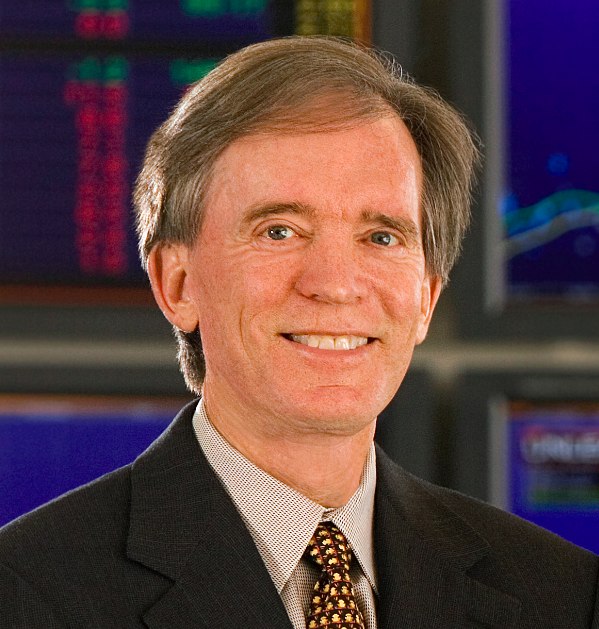
William H. Gross, fundador, director general y co-CIO de PIMCO. El “corazón herido” de Bill Gross
Joseph Schumpeter, the originator of the phrase “creative destruction,” authored a less well-known corollary at some point in the 1930s. “Profit,” he wrote, “is temporary by nature: It will vanish in the subsequent process of competition and adaptation.” This quote opens William H. Gross’ monthly investment comment referring to the micro level of capitalism: a given firm, such as Kodak, may see its business cycle go wrong and its profit may be temporary, and “vanish”, as Shumpeter notes. Nevertheless, if “capitalism as we know it is to survive”, this is something that must not happen to profits as a whole, in their contribution to GDP. The founder, MD and co-CIO of PIMCO remarks that “capitalism without profits is like a beating heart without blood”.
Bill Gross also talks about another sacred pillar of capitalism: return or “carry”, defined as a credit or an equity risk “premium” involving some potential amount of gain or loss to an investor’s principal. This “carry” is present in corporate and high yield bonds, stocks, private equity and emerging market investments, or by extending duration and holding longer maturities on a bonds portfolio. Gross names this “carry” the “beating heart of our financial markets and ultimately of our real economy”.
And once the similes have been set, Gross exposes the dilemma: “there comes a point when no matter how much blood is being pumped through the system as it is now, with zero-based policy rates and global quantitative easing programs, that the blood itself may become anemic, oxygen-starved, or even leukemic, with white blood cells destroying more productive red cell counterparts.” As a consequence “Never have investors reached so high in price for so low a return. Never have investors stooped so low for so much risk,” notes Gross.
The Central Banks theory that “higher and higher asset prices produced necessarily by more and more QE check writing will inevitably stimulate real economic growth via the spillover wealth effect into consumption and real investment” should be challenged “if only because it doesn’t seem to be working very well.”
Bill Gross’ thesis summed by himself up would be this: “Low yields, low carry, future low expected returns have increasingly negative effects on the real economy.”
Andmoreover, he addresses to the Chairman of the Federal Reserve on these terms:“Well it’s been five years Mr. Chairman and the real economy has not once over a 12-month period of time grown faster than 2.5%. Perhaps, in addition to a fiscally confused Washington, it’s your policies that may be now part of the problem rather than the solution. Perhaps the beating heart is pumping anemic, even destructively leukemic blood through the system. Perhaps zero-bound interest rates and quantitative easing programs are becoming as much of the problem as the solution. Perhaps when yields, carry and expected returns on financial and real assets become so low, then risk-taking investors turn inward and more conservative as opposed to outward and more risk seeking. Perhaps financial markets and real economic growth are more at risk than your calm demeanor would convey.”
The conclusion: “Wounded heart you cannot save … you from yourself. More and more debt cannot cure a debt crisis unless it generates real growth. Your beating heart is now arrhythmic and pumping deoxygenated blood. Investors should look for a pacemaker to follow a less risky, lower returning, but more life sustaining path.”
The Wounded Heart Speed Read
Financial markets require “carry” to pump oxygen to the real economy.
Carry is compressed – yields, spreads and volatility are near or at historical lows.
The Fed’s QE plan assumes higher asset prices will revigorate growth.
Foto: Jakub Hałun. Julius Baer y la gestora Kairos IM unen fuerzas en Italia
Julius Baer and Milan-based Kairos Investment Management, an independent Italian wealth manager with approximately Euro 4.5 billion of assets under management, have reached a major milestone with the completion of its strategic partnership. The combined business in Italy operates under the name ‘Kairos Julius Baer SIM SpA’ as of 1 June 2013.
After receipt of the approval from the Bank of Italy and the finalization of all necessary technical steps, the completion of the transaction took place on 31 May 2013. On that day Julius Baer acquired a stake of 19.9% in Kairos to which it contributed its Italian asset management company Julius Baer SIM in line with the announcement on November 12, 2012. During the integration phase the combined business operating under the joint brand ‘Kairos Julius Baer SIM’ will apply for a banking license to the Bank of Italy in order to set up a new private bank in Italy.
Boris F.J. Collardi, CEO of Julius Baer, commented: “Since November both partners have closely and successfully collaborated to reach this important milestone. Now we look forward to jointly developing a truly dedicated wealth management business which will significantly strengthen our long-term position in Italy.”
Management structure unchanged as announced on 12 November 2012
Paolo Basilico, President and CEO of Kairos, and his partners are running the business of ‘Kairos Julius Baer SIM’ with the established Kairos team and the Julius Baer SIM staff, pursuing the same client-centric strategy as in the past. Julius Baer is represented on the Board of Directors of Kairos Julius Baer SIM with two members, Fabrizio Rindi, Chairman of the new entity, and Loris Vallone, Head Business Development Region Switzerland. Giovanni M.S. Flury, Head Region Switzerland, and Marco Mazzucchelli, Head of Private Client Services, are representing Julius Baer on the Board of Kairos Investment Management SpA, the holding company.
Both parties together will decide on a future increase of Julius Baer’s strategic participation after a few years. The terms of the transaction have not been disclosed.