Wikimedia Commons. Zero Duration to Protect Against Rising Yields
Yields on US and European government bonds rose after reports that the Fed could begin tapering back its bond purchases later this year if the US economy keeps improving. Figure 1 shows the 5-year German Government Bonds and US Treasury yields (in %).
Currently, the Fed is buying USD 85 billion each month in treasury paper and mortgage-backed securities to stimulate economic and jobs growth. Bond investors expect this to be the starting point of a Fed policy that is less accommodating to the bond market. They fear that the Fed might raise short-term interest rates after 2015 in order to fight inflation.
In the euro zone, the situation is different: the ECB has pledged that interest rates will remain at record lows far into the future. The euro-zone economy is still weak.
Figure 1: 5-year German Government Bonds and US Treasury yields (in %)
Robeco offers a Zero-duration variant that protects regular bond strategies against a rise in the long-term interest rates, while investors can still try to take advantage of higher credit spreads.
The Zero-duration strategy invests in the existing portfolio and includes an interest-rate hedge. This hedge lowers interest-rate sensitivity by swapping the 5-year interest rate for the money-market rate (Libor 3 months). This means that Robeco pays the fixed interest rate while receiving the floating interest rate. The result is a lower sensitivity to interest rates. The investor can still benefit from potential credit-spread tightening. The expected returns on high-yield bonds are twofold: the credit spread and the interest rate. The swap makes the interest-rate component variable. When government bond yields rise, the Zero-duration strategy is expected to outperform the regular bond strategy.
Implementing this hedge lowers the yield of the portfolio. This difference currently amounts to about 1.5%. As the current duration of the Robeco High Yield fund is around 4.4 years, the interest rates only have to rise by about 35bps in order to break-even between both share classes (duration x rate increase) and to compensate for this yield give-up. In a scenario of stronger rate increases, the Zero-duration strategy is expected to deliver higher total returns than the regular share class.
Robeco offers Zero-duration variants for High Yield Bonds, Investment Grade Corporate Bonds and Financial Institutions Bonds
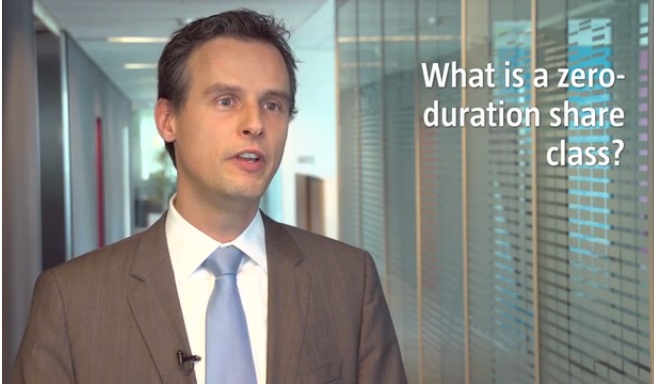
Alan Van der Kamp, client portfolio manager at Robeco, goes into further detail about the zero duration strategy in this 3 minute video.
You may also access the complete whitepaper by Robeco about Zero Duration strategies through this link.
Wikimedia CommonsFoto: Jawed . Stanford arrebata a Princeton el primer puesto como mejor universidad de EE.UU
Stanford Universitytops Forbes’ 2013 rankings of America’s Top Colleges.The 6thannual rankings, calculated exclusively for Forbes by the Center for College Affordability & Productivity (CCAP), are featured in the August 12, 2013 issue of Forbes magazine, and online.
Stanford edged Princeton out of first place into the No. 3 spot on this year’s rankings, which focus on Student Satisfaction (22.5%), Post-Graduate Success (37.5%), Student Debt (17.5%), Graduation Rate (11.25%) and Nationally Competitive Awards (11.25%). Pomona College moved up to No. 2 from ninth place last year, followed byPrinceton University (No. 3), Yale University (No. 4) and Columbia University at No. 5.
“Picking a college is one of the most important decisions you will make in your lifetime,” says Forbes Executive Editor Michael Noer. “Our college rankings were created to inform consumers about the quality of the educational experience and our brand new financial health grades give insight into which schools will be around for the long-haul.”
Jennifer Lippin Rexinis, Director of Investment Products at MFS Investment Management, will share her view on the markets on a breakfast with investors on August 14th at the World Trade Center in Montevideo. Jennifer will also discuss MFS’ Prudent Wealth strategy.
Jennifer joined MFS in 2006. Prior to serving in her current position, she was with Financial Research Corporation, where she served as director of the subadvisory services research group. During her career she has been responsible for communicating portfolio positioning and strategy to both institutional and retail clients and prospects, researching market trends in the industry and performing equity analysis. She began her financial services career in 1995.
Jennifer earned a bachelor’s degree from Brown University and a Master of Business Administration degree from Northeastern University. She holds Series 6 and 63 licenses from the Financial Industry Regulatory Authority (FINRA).
Where:, World Trade Center, Avda. Luis Alberto de Herrera 1248, Montevideo
By Munerabig. Andrés Bernal, CFO of Grupo Sura, Named Latin Trade CFO of the Year
The Latin Trade Group has selected Andres Bernal of Sura Asset Management as CFO of the Year Colombia. With this award, Andres Bernal joins the ranks of some of the most distinguished financial executives in Latin America.
In 2011 Andres Bernal, 41, led the largest M&A deal in Colombian history with the $3.7 billion acquisition of ING pension fund assets. This turned Sura into the largest pension savings manager in Latin America with 25 million clients, and assets under management of over $100 billion. To finance the operation, he led a $2 billion stock issuance, the largest to-date in Colombia. He also managed the issuance of international bonds, and found five co-investors to enter the deal.
In 2012, the pension fund operation was moved from Grupo Sura to Sura Asset Management (SAM), with Bernal at the head. Andres Bernal convinced SAM’s shareholders to keep the company’s debt on their own books, which left it with very low debt. This allowed SAM to launch a second wave of acquisitions.
Last year Bernal led the acquisition of the remaining 20 percent in the pension fund Integra, which rendered SAM the sole owner of the Peruvian fund. He also designed the sale of a 7.51 percent share of AFP Proteccion to Canadian Alberta Investment Management Corporation. He also headed the acquisition of a brokerage house in Chile, of an insurance company in Mexico, the creation of a private pension fund in Uruguay, and an insurance broker in El Salvador. But his most important move was the acquisition of a 50 percent stake in Horizonte, BBVA’s pension fund in Peru. The deal involved a highly innovative agreement with Scotiabank, a traditional competitor, which bought the remaining 50 percent of the company.
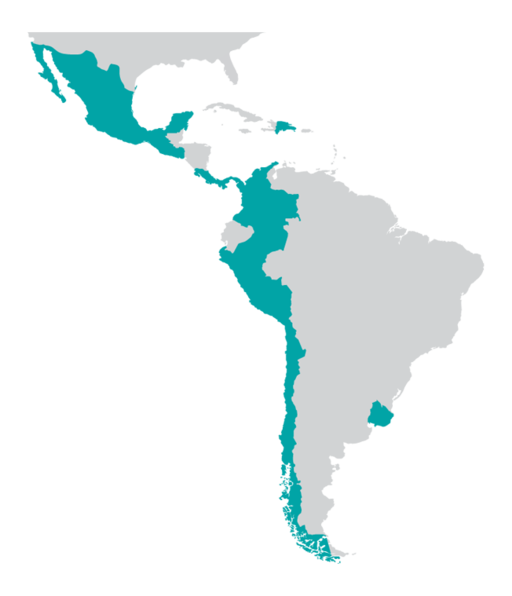
SAM’s assets under management grew 15.4 percent in 2012 to $107 billion, and obtained a 21.9 percent average market share in Mexico, Peru, Chile, Uruguay, and Colombia. SAM posted $1.1 billion revenues and a $409.9 million EBITDA in 2012.
Andres Bernal was appointed CFO of Sura Asset Management in January 2012. Prior to that, he served as CFO of Grupo de Inversiones Sura, the holding company of the largest business conglomerate in Colombia. Andres Bernal graduated from Eafit and Babson College and is director at public utility company EPM.
Foto cedidaSimon Brazier, Equity Manager United Kingdom at Threadneedle
. UK Equity, Increasingly in Portfolio Managers’ Radars
A process based on valuation, and long-term perspective, are the two principles that have earned Simon Brazier success at the helm of the UK equities strategy at Threadneedle. After nearly a decade as a specialist in British shares in the team at Schroders, he joined Threadneedle in 2010.
“All decisions are made based on the valuation of the companies, and whether the business model makes sense within the next three to five years. Our vision is long term. We use market volatility in the short term to take advantage of the opportunity of the valuation in the long term,” said the expert in an exclusive interview with Funds Society.
All decisions are made based on the valuation of the companies
A team of 14 people, including managers and analysts, closely follow the British market; visiting and understanding the business of each of the companies they invest in. “Last year we performed more than 1,000 company visits. Many times we have between 3 and 4 meetings a day.”
The analysis of each company is based on three fundamental levels going through the business model, the economic model and the management team. “We are focused on business models with sustainable cash flows and strong dividend yield,” he says. “On the other hand, we analyze that the management team is making the right decisions to allocate capital properly. In general, we focus on companies with a strategy that works for a period of the next 3-5 years.”
Another one of the strengths of strategy is the diversification of the portfolio, which they use as a tool to limit the downside risk. “We have about 70 securities in the portfolio. We diversify by security and by themes, i.e., sometimes we have several names for a particular idea. This allows us to limit the downside risk, both at company and at a sectoral level.”
The UK equity strategy already has almost 1.4 billion pounds (approx. 2.2 billion dollars) in assets under management, and it seems that this asset class is increasingly present in the radar of portfolio managers globally. “We have customers in Israel, Portugal, Kuwait or Chile. The world is increasingly looking at the UK.”
The world is increasingly looking at the UK
According to the expert, the interest in the UK market makes sense despite economic uncertainties; he himself acknowledges that in the longer term, he is more confident in the UK market than in the country’s underlying economy. “British companies are unique in that 75% of profits are not generated within the country. Examples are Diageo or Astra Zeneca. Besides, the equity market in the UK is not only very liquid, it is the third largest in the world after the U.S. and Japan, as big as Germany and France together,” he says.
Wikimedia CommonsSome of the members of the Special Committee of the Senate, last Monday. Chile Approves a Proposal to Create an Alternative Pension System
Amongst the agreements reached by the Special Committee formed by the Chilean Senate to study reforms to the Pension Funds system are: to generate a system in parallel to the existing system administered by the AFPs, to ensure tripartite contribution and to consider how to allocate the regional factor in the calculation.
In the last meeting, which was held on Monday, Senators Eugenio Tuma, Alejandro Navarro, Pedro Muñoz Aburto, Jose GarciaRuminot and Carlos Kuschel analyzed the first five points of the document prepared by this body, which was released in early July. This text will be presented to the Executive in order for them to consign the Commission’s proposals, when reforming the current system, the Chilean Senate reported.
Within the issues approved at the meeting, Senator Tuma, president of this parliamentary group, highlighted the fact that the changes make it compulsory for the employer, whether public or private, to contribute for the total remuneration. “No more non-taxable allowances. This irregular situation has been partly responsible for the current damage to social security contributions,” he explained.
According to the parliamentarian, another issue which will be highly important in a future reform is related to the regulation of fees charged. He commented on the urgency of establishing transparency for these costs, ensuring that while the AFP claim to be applying 2% for this concept, in practice the figure rises to approximately 20%.
In turn, Senator Navarro elaborated on the voting of the points that were addressed. He said there is a marked difference between the government and opposition senators, since the former are committed to improve the existing system, while the second are committed to its elimination altogether.
The congressman said that the next government should consider these proposals, calling on all current presidential candidates from different sectors to pronounce themselves on this issue. In his opinion, the candidate Michelle Bachelet will be responsible for eliminating profiteering in the area of pensions.
Text Adopted:
To provide Chile with a public and supportive universal pension system, which enshrines the right of workers to withdraw from the current fund managers, choose the management system they wish to use for their pension funds, end the compulsory contribution to AFP and establish a system of nonprofit pension fund managers with the creation of a supporting fund differnet than individual contribution pension savings.
Restore the principle of Social Security as a right according to international standards of the ILO in Chile.
Incorporate the employers’ share to the social security contribution and gradually increase the contribution dues, achieving a tripartite contribution to the pension system with the participation of workers, employers and the State.
Encourage collective pension savings plans established during the legislation. For these plans, create incentives, such as the possibility of withdrawal of these funds in times of illness, education and purchase of the first home.
Fees should be in line with the results. To adjust the fee amount, the taxable income should be taken into account.
Other items approved by the Commission, the drafting of which remained pending were:
Design a pension system which takes regional factors into consideration.
Ensure that all types of payments made by all types of employers are taxable.
Consider working conditions, positively discriminating when taking heavy work into consideration.
The committee will continue reviewing twenty points in a forthcoming meeting. The debate will begin by resolving the role of workers in managing their pension funds and damaged pension records.
On July 8th, the 22 points that the Senators of this parliamentary body agreed on after nine months of work, were announced. During that time, the body received the various players related with this matter, and even held a seminar on the same issues.
Wikimedia CommonsBy Pete Souza . Dos tercios de los líderes mundiales emplean Twitter como herramienta diplomática
Burson-Marsteller released “Twiplomacy” an annual global study of world leaders on Twitter. The study shows that more than three-quarters (77.7%) of world leaders have a Twitter account and two-thirds (68%) have made mutual connections with their peers.
“Twiplomacy” is the leading research of its kind, aimed at identifying to what extent world leaders use Twitter. In early July 2013 Burson-Marsteller analyzed 505 government accounts in 153 countries.
The findings indicate that US President @BarackObama is still the most followed world leader on Twitter with more than 33 million followers. However, while almost a third (148) of all world leaders and governments are following Barack Obama he is not the best connected leader. @BarackObama only mutually follows two other world leaders – Norway’s Jens Stoltenberg and Russia’s Dmitry Medvedev.
The Pope (@Pontifex) has become the second most followed world leader with more than 7 million followers on his nine different accounts. Although Pope Francis does not engage with other Twitter users, especially his Spanish tweets are retweeted on average more than 11,000 times, making him the most influential world leader on Twitter. In comparison @BarackObama’s tweets are only retweeted on average 2,309 times despite his massive following.
Swedish Foreign Minister @CarlBildt is the best connected world leader mutually following 44 peers.
“This study illustrates how Twitter and social media in general have become part and parcel of any integrated government communications”, said Jeremy Galbraith, CEO of Burson-Marsteller Europe, Middle East and Africa. “While Twitter is certainly not the only channel of communication and will not replace face-to-face meetings, it allows for direct peer-to-peer interaction. I expect we will see an increasing number of corporations and CEOs also embracing the new tools that are connecting our world leaders”, he said.
On the other hand Ugandan Prime Minister @AmamaMbabazi is the most conversational world leader with 96% of his tweets being @replies to other Twitter users.
The study found that Twitter has become a formidable broadcasting tool for world leaders. Although not being conversational, the @Pontifex account has seen phenomenal Twitter growth over the past six months as have the accounts of Indonesian President Susilo Bambang Yudhoyono @SBYudhoyono and Venezuela’s President @NicolasMaduro who both signed up to Twitter in March 2013 and now rank among the top 20 most followed world leaders.
There are 227 personal accounts and 76 world leaders tweet personally albeit many only occasionally. Seven of the G8 leaders have a personal Twitter account and all but one of the G20 governments have an official Twitter presence.
By Brocken Inaglory. How to Catch an Investment ‘Wave’? Get in the Water!
At the beginning of the summer, I always start singing (or humming) some Beach Boys song as my own personal soundtrack to this glorious and seemingly carefree season. The song “Catch a Wave” has particular significance – not because I’m a surfer, but because one of my investing mentors once used surfing as analogy for me.
As he liked to explain, surfing requires a good measure of patience, perseverance, skill and luck. It also requires action – you can’t decide which wave to catch while you’re standing on the beach, holding your board. By the time you make your choice and race into the water, that wave will have either crashed down upon you or passed on to shore. In order to catch a wave, you have to pursue it. You must already be in the water, paddling, watching for opportunities. You might miss a couple before you catch the perfect wave to find yourself “sitting on top of the world,” as the Beach Boys ditty goes.
Investing also Requires Action
Like surfing, investing is a dynamic activity. If you try to time your entry from the sidelines, you run the risk of either missing the wave, chasing it endlessly or perhaps worse – being crushed by it.
Allow Me Some Latitude with this Analogy . . .
Your board is your ballast, the investment ‘core’ or foundation that you hold onto while you await a good wave. It should contain a diversified mix of instruments that are in line with your risk parameters to help generate, grow and sustain income over time.* A professional financial advisor can help you make those choices.
Your buoyancy is assisted by the mild paddling you do to float atop the water. This represents the monies you either add or reinvest as part of your ongoing investing activity.
The waves are the outside forces that drive the valuations of these instruments – and your ‘core’ – higher and lower, depending on the moods of the economy and the markets.
Oceans, like investing markets, have changing moods and tides. As the saying goes, ‘a rising tide lifts all boats.’ The same has been said about good financial markets. But if you are in the water long enough with the proper ‘board’ (diversified ballast), you have the opportunity to catch a wave!
So, remember to take action. Take yourself – your “Little Deuce Coupe” – to the beach and try to “Catch a Wave!”
The BMW Group debuted the series version of its innovative electric vehicle, the BMW i3, simultaneously in New York, London and Beijing on Monday. “Innovation drives change. The i3 is more than just a car. It’s a revolutionary step towards sustainable mobility. It is purpose-built around an electric power train to serve the needs of our megacity customers,” said Chairman of the Board of Management of BMW AG, Norbert Reithofer, at the world premiere in New York on Monday.
The BMW i3 – the BMW Group’s first pure electric series-produced model – has the same sporting genes as every BMW and is characterised by sheer driving pleasure. Sustainability is a priority throughout the entire BMW i3 value chain: “The BMW i3 sets a new benchmark for sustainable mobility in all stages of development and production, as well as aftersales,” said Friedrich Eichiner, Member of the Board of Management of BMW AG, Finance, at the unveiling of the BMW i3 in Beijing.
Range of 130 to 160 kilometres generally quite sufficient
Low running costs and strong global interest
BMW i3 sets a new benchmark in lightweight construction
Sustainability throughout the value chain
Global market for electric vehicles likely to exceed 150,000 vehicles in 2013
The BMW Group is the manufacturer of automobiles and motorcycles in the world with its BMW, MINI and Rolls-Royce brands. As a global company, the BMW Group operates 28 production and assembly facilities in 13 countries and has a global sales network in more than 140 countries.
By Laitche. Most Institutions are Abreast of Changes and Ready to Comply with FATCA
The wealth management industry has experienced many changes in recent years, especially in new rules and regulations, something which Steven L. Cantor, Managing Partner of Cantor & Webb, knows quite well, as he has been legally representing and advising high net worth families for 35 years; he has guided and directed those families in the process of complying with multiple tax and regulatory obligations, as well as providing advice on wealth planning.
For Cantor, changes in regulatory matters that are occurring now are causing the business to become increasingly transparent, in clear reference to the FATCA law, a rule orchestrated by the U.S. government which seeks to combat international tax evasion, which is estimated at USD 40,000 million annually.
Therefore, Cantor stresses that private bankers, in their advisory roles, are more aware than ever that clients must be current and meet their respective jurisdictions.
Most institutions are ready
Regarding FATCA, Cantor believes that most of the institutions are ready, as long they know what lies ahead and how to act in order to stay abreast of changes. He says that in the current context what will change is the transparency. “The world changes, just as the rules and regulations that apply change, and in the case of this particular sector is a major breakthrough because it will provide great transparency.”
Steven’s advice to wealth advisors is to keep abreast of regulatory changes and new regulations, but above all, to provide the client with the possibility of putting themselves in the hands of a professional who specializes in the area of tax planning and who may legally advise the client, which eventually avoids many problems.
Regarding the type of client company, Cantor says the typical customer is Latin, “the matriarch or patriarch of a family, with one foot in America and another in Latin America and who is looking to plan their wealth from both a legal and a taxation point of view; structuring their assets to comply in all respects with the tax offices of both the USA as well as that of their respective country.”
Another very common situation is the client who comes from Latin America to reside in the United States, and who was born in the United States but has never before lived in the United States and either did not feel the need, or did not know, that as an American citizen they had the obligation to comply with the U.S. treasury. “When they come here and settle is when the problem begins. They are dual nationality citizens, and they require complex advice”.
FIBA Private Banking Conference in Miami in September
Steven L. Cantor, Managing Partner at Cantor & Webb, who is also a partner of FIBA, talks about the upcoming private banking appointment that FIBA will hold in Miami on the 16 th and 17 th of September, a meeting which will have a large audience, and which will be represented by over 75 financial institutions and professionals from Latin America, Europe …
“As a member of FIBA, I am very pleased to see how FIBA assumes a very active role in understanding, educating, and providing ideas and opportunities for the industry in a very interesting format of working panels which allow to make the most of these conferences.”
In September, Cantor will act as moderator in the panel: “How has asset management and wealth planning evolved in an era of greater fiscal transparency?” The speakers will be Arturo Giacosa, head of Fiduciary and Hispanic Market Wealth Planning, Itau International Private Banking, Stephen Liss, director of Wealth and Investment Management at Barclays Americas and Klemens Zeller, wealth advisor at JP. Morgan.