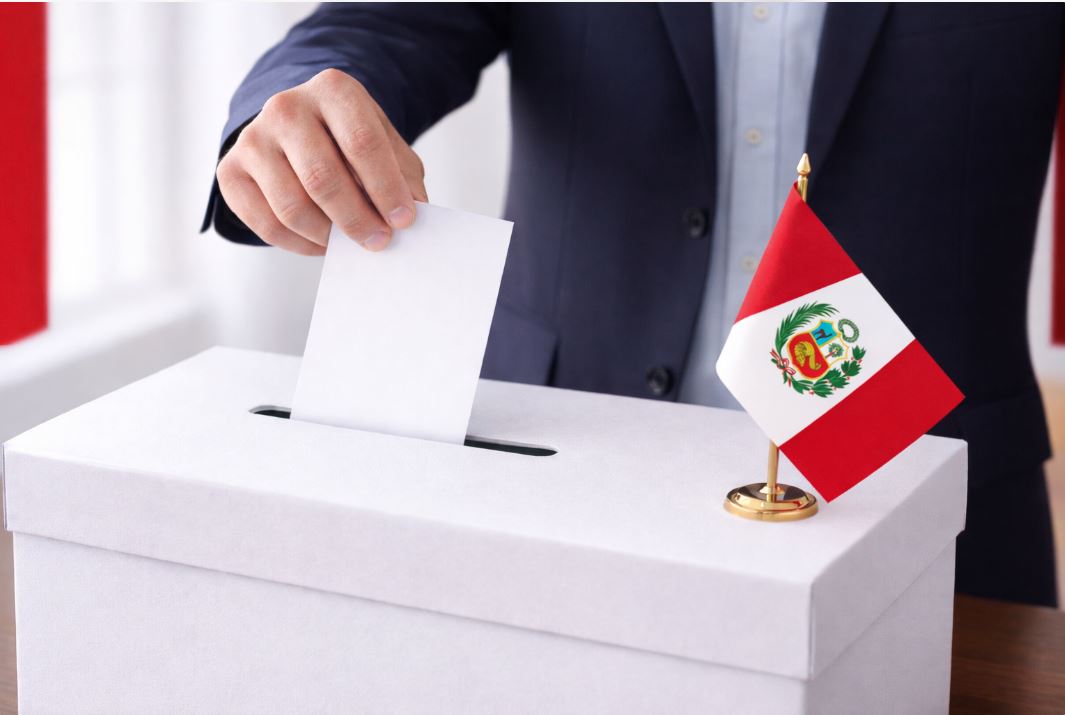
No Peruvian president has completed a full term since 2016. The last to do so was Ollanta Humala, who was later sentenced to 15 years in prison for aggravated money laundering. What followed was a decade marked by seven failed presidencies, characterized by ineffective leadership, corruption, bribery, impeachments, resignations, and an attempted coup.
A Total of 34 Presidential Candidates
That same instability now dominates the electoral landscape. Peru’s upcoming general elections, scheduled for April 12, 2026, feature a record number of presidential candidates, with 34 officially registered, up from 18 in the 2021 elections.
The candidates span the entire political spectrum, from the far left, left, center, right, and far right, including populists and traditionalists, as well as establishment figures and high-profile outsiders such as a comedian and a former footballer who also served as a mayor.
On the left, candidates include figures linked to Perú Libre and Marxist platforms. Vladimir Cerrón remains a prominent far-left figure, though his legal troubles limit his candidacy, while Ronald Atencio is emerging as a notable alternative.
Centrist candidates range from moderate reformers to established political figures. Mario Vizcarra, brother of former president Martín Vizcarra, positions himself as a moderate reformist. Figures like Yonhy Lescano and César Acuña also hold centrist positions, as does former mayor and ex-footballer George Forsyth.
On the right, the field is broad but lacks a dominant candidate. Rafael López Aliaga, a conservative former mayor of Lima, has gained significant support through his tough stance on crime and pro-business rhetoric. Keiko Fujimori, widely known from her three previous presidential bids, remains a key figure but remains polarizing, which limits her ceiling of voter support. Other right-wing figures include journalist and television host Philip Butters, as well as security-focused conservative candidates such as Roberto Chiabra, alongside media personalities like Carlos Álvarez, who present themselves as outsiders.
However, all candidates face an electorate marked by unusually high levels of indecision. Multiple polls show a significant share of undecided voters. Surveys conducted in late 2025 and early 2026 also reveal a wide dispersion of voting intentions. Rafael López Aliaga and Vizcarra have led several polls with moderate single-digit support, while Fujimori’s standing remains below her past electoral performances.
Security Over Corruption
Although corruption remains endemic, as seen in the convictions of former officials and ongoing accusations across administrations, it no longer dominates public discourse to the same extent as economic and security concerns.
Analysts observe a shift in priorities toward public order and safety, especially in urban and peri-urban areas where crime rates have risen, including violence linked to illegal mining and gang activities. In some regions, clashes between criminals have sparked community unrest and highlighted weaknesses in law enforcement.
External influences on the election are expected to be moderate compared to other regional contests. Left-leaning governments in the hemisphere show limited direct intervention, while parties aligned with pro-market platforms may receive attention or tacit engagement from the United States and international stakeholders, mainly around investment and security cooperation.
A New Senate
To address Peru’s political fragmentation and strengthen checks and balances, a major proposal for institutional change involves transitioning from the country’s former unicameral legislature to a bicameral system that would introduce a Senate alongside the current Chamber of Deputies.
The new Senate would be made up of 60 members, half elected from territorial constituencies and the other half at the national level, requiring candidates to have appeal both locally and nationally. While the Senate would not initiate legislation, it would hold decisive power in passing laws and in resolving impeachment proceedings referred by the lower house. This bicameral structure also aims to balance power currently concentrated in executive offices and ministries.
Proponents argue the reform could curb political fragmentation by raising entry barriers through electoral thresholds and balanced regional representation, thus reducing the proliferation of micro-parties. By requiring broader national support and reinforcing legislative oversight, the bicameral system is presented as a safeguard against weak coalition governments and informal clientelist networks. However, critics warn that introducing a second chamber could lead to deadlock between the two houses, especially if political alignment diverges.
Macroeconomic Resilience Amid Structural Fragilities
Peru’s economic outlook presents a mixed picture. On one hand, it continues to be hindered by long-standing structural weaknesses that successive governments have struggled to address. Chief among these is informality. Approximately 70% of employment remains outside the formal economy, severely limiting tax collection, curbing productivity gains, and leaving large segments of the population without access to pensions, health insurance, or unemployment protection. This informal structure also undermines the effectiveness of public policy, complicating the implementation and sustainability of fiscal and social reforms.
The pension system reflects these distortions. Coverage remains fragmented between public and private plans, and contributions are low due to widespread informal employment. Repeated withdrawals from private pension funds in recent years have further eroded long-term savings, reducing the system’s ability to provide adequate retirement income and weakening domestic capital markets. Although reform proposals surface periodically, political instability has repeatedly stalled meaningful implementation, leaving most structural vulnerabilities intact.
Despite ongoing internal constraints and political fragility, Peru’s economic performance has been relatively strong. Despite frequent leadership changes, the country has maintained macroeconomic discipline for nearly two decades. Fiscal policy has remained conservative, and institutional continuity at the central bank has shielded monetary policy from short-term political pressure.
Peru’s public debt stands at about 32% of GDP, well below the levels seen in major OECD economies. By comparison, U.S. debt exceeds 120% of GDP, while Germany, often viewed as a model of fiscal discipline, stands above 60%. After widening during the pandemic and peaking above 3.5% of GDP in 2024, Peru’s fiscal deficit has narrowed and is expected to approach official targets in 2025 and 2026, adjusting faster than in many advanced economies where high deficits have become entrenched.
Inflation management is another area where Peru stands out. Price pressures have largely remained within the central bank’s target range, thanks to credible monetary policy and a stable monetary framework. This contrasts with prolonged inflation episodes recently seen in the U.S. and parts of Europe, where central banks were forced to adopt aggressive tightening cycles with uneven growth outcomes.
Growth prospects, while modest, are also relatively stable. GDP is expected to grow between 3% and 3.5%, driven by mining investment, infrastructure projects, and steady export demand. This pace outstrips projected growth in Germany and is comparable, or slightly stronger, than medium-term forecasts for the U.S., despite Peru’s significantly higher political uncertainty. High commodity prices and a strong mining investment pipeline continue to anchor external growth, while private investment remains sensitive to electoral outcomes.
As Peru approaches the 2026 elections with a record number of presidential candidates and a fragmented party system, the picture reflects deep institutional fatigue and a growing recognition that the status quo is untenable. Political volatility has eroded governance and public trust, driving voter concerns around security, stability, and accountability. The proposal to reintroduce a Senate offers a potential path toward gradual correction, by raising the standard of representation, reducing fragmentation, and strengthening legislative oversight. Persistent challenges such as informality and pension system shortcomings remain unresolved, but the country’s ability to preserve macroeconomic stability despite repeated political crises suggests a stronger foundation than the political cycle alone might indicate.
Disclaimer
Degroof Petercam Asset Management SA/NV (DPAM) | Rue Guimard 18, 1040 Brussels, Belgium | RPM/RPR Brussels | VAT BE 0886 223 276
Commercial communication. Investing involves risks.
The opinions and views expressed in this document are those of the individuals to whom they are attributed and do not necessarily reflect the views expressed or represented in other communications, strategies, or funds of DPAM.
The information provided herein should be considered general in nature and is not intended to be tailored to your personal situation. Its content does not constitute investment advice, nor does it represent an offer, solicitation, recommendation, or invitation to buy, sell, subscribe to, or carry out any other transaction involving financial instruments. This document also does not constitute independent or objective investment research, financial analysis, or any other form of general recommendation regarding transactions with financial instruments, as referred to in Article 2, 2°, 5 of the Law of 25 October 2016 on access to the provision of investment services and the legal status and supervision of portfolio management companies and investment advisors. Therefore, the information contained herein should not be considered independent or objective investment research.
Past performance is not indicative of future results. All opinions and financial estimates reflect the situation at the time of publication and are subject to change without notice. Changes in market conditions may render opinions and statements inaccurate.

 By Fórmate a Fondo