From Nvidia to McDonald’s, Intel, and Nestlé, romantic scandals, conflicts of interest, and the personal conduct of top executives have demonstrated that a company’s reputation can also rest in the hands of whoever occupies the corner office.
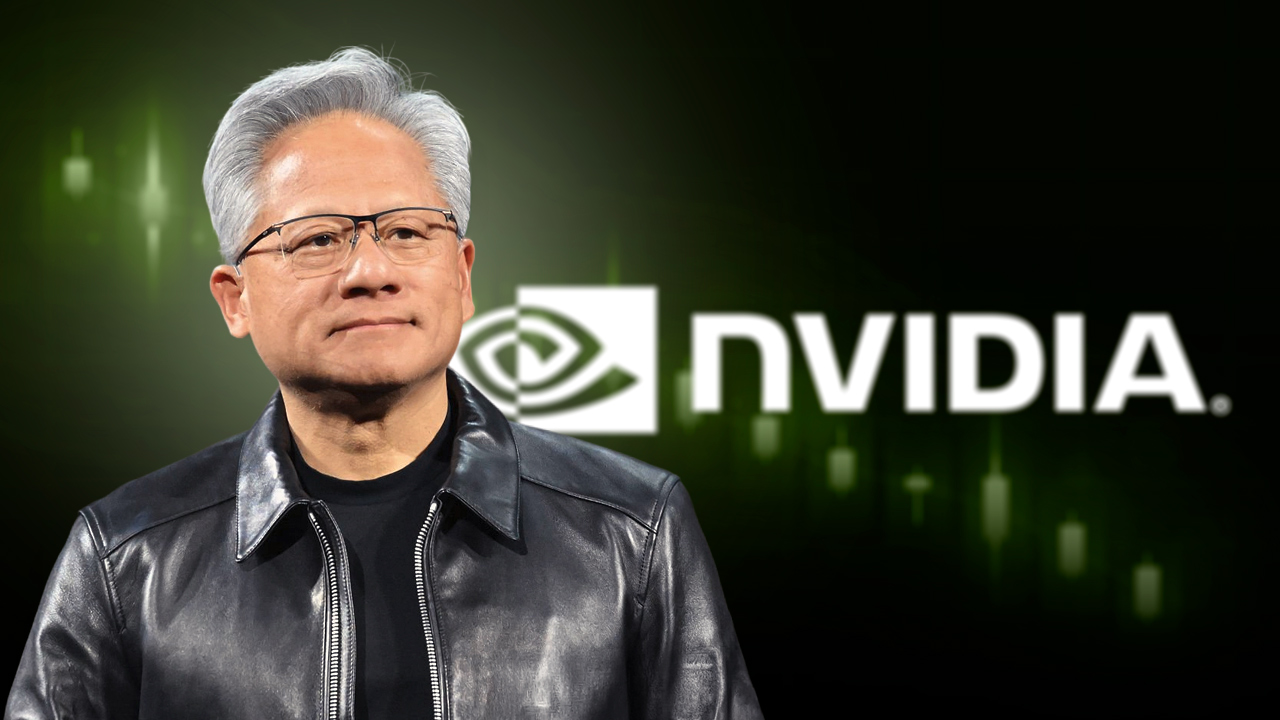
The fall of Jensen Huang not only represents an unexpected episode in Nvidia’s history, but also places back on the table one of the most delicate issues in corporate governance: how far does a CEO’s private life extend when personal decisions can compromise the interests of a company, its shareholders, and thousands of employees?
Private life, yet public
The answer is not simple, yet there is something that large corporations are increasingly clear about: the conduct of the person holding the top executive position is not an exclusively personal matter when it can generate conflicts of interest, call into question the enforcement of internal rules, or compromise the organization’s reputation.
The case of Huang, who stepped down this Thursday, November 12, from the presidency, chief executive role, and his seat on Nvidia’s board of directors after 33 years at the helm of the company, constitutes a particularly illustrative example.
The departure occurred after the businessman publicly acknowledged having been unfaithful to his wife and reports surfaced regarding romantic relationships allegedly involving a woman suspected of maintaining ties to Chinese intelligence services and a Nvidia executive who, according to media reports, reported directly to him. The company had previously opened an independent investigation and retained external legal counsel. Although the resignation statement did not expressly attribute the decision to a specific cause, the sequence of events turned the personal episode into a corporate governance and reputational crisis.
Investor reaction was immediate. Nvidia shares plunged around 14% during early trading on Thursday, November 12, touching an intraday low of $148.80 before ultimately closing at $166.19, down 4.34%.
The company, whose market capitalization hovers around $4.2T, had to announce that Colette Kress, until then Chief Financial Officer, would assume the interim chief executive role while the board searches for a permanent successor. The market reacted not only to the departure of one of the most influential figures of the artificial intelligence revolution, but also to the uncertainty entailed by losing the man who built much of the company’s technological and strategic identity.
Other corporate scandals
The case of Nvidia’s CEO is not inaugurating a new category of corporate scandal. In fact, one of the closest precedents occurred at Intel in 2018, when Brian Krzanich had to resign as CEO after an internal investigation confirmed he had engaged in a consensual relationship with an employee, in violation of the company’s non-fraternization policy applicable to all executives.
The board’s decision was decisive: if the rest of the workforce was obligated to respect internal rules, the company’s top executive could not place himself above them. The similarity to the Nvidia episode is evident: the corporate problem does not necessarily consist of passing judgment on a romantic relationship, but rather determining whether a reporting relationship, a conflict of interest, or a breach of the rules meant to guarantee impartiality in business decisions exists.
A year later, in 2019, McDonald’s faced a similar situation. Its then-CEO, Steve Easterbrook, was fired after the company discovered he was engaged in a consensual romantic relationship with an employee, something prohibited by its internal policies.
However, the matter did not end with his departure. A subsequent investigation revealed other undisclosed relationships with employees and raised questions regarding the information he had provided to the company. The case escalated to the U.S. Securities and Exchange Commission (SEC), which in 2023 sanctioned the former executive for making false or misleading statements to investors regarding the circumstances of his termination.
It also scrutinized McDonald’s disclosure of his separation agreement, which had allowed him to retain compensation exceeding $40M. The company ultimately recovered approximately $105M in cash and stock. The lesson extended far beyond infidelity: concealing information, manipulating internal processes, or prioritizing personal interests can turn into an issue directly tied to shareholder protection.
More recently, in September 2025, Nestlé fired its CEO Laurent Freixe after confirming he was maintaining an undisclosed romantic relationship with a direct subordinate, in violation of its code of business conduct.
The investigation took place following internal complaints related to potential preferential treatment toward the employee. The episode underscored that integrity policies are not merely compliance mechanisms for operational tiers: they can also determine the tenure of a multinational’s top executive. And, above all, that the issue takes on another dimension when a personal relationship can influence promotions, compensation, evaluations, or decisions regarding company resources.
Loss of trust and other scandals, the blow to corporate culture
Nevertheless, romantic relationships represent only part of a much broader list of behaviors that have ended up shaking major corporations and eroding market confidence.
Volkswagen was at the center of one of the largest industrial scandals of recent decades with the so-called Dieselgate, uncovered in 2015, when it was revealed that the automaker had used software to manipulate emissions tests on its diesel vehicles. The crisis triggered the resignation of its then-CEO, Martin Winterkorn, in addition to fines, settlements, and a deterioration of its global reputation. In this instance it was not a matter of romantic conduct, but rather business decisions that compromised an organization’s ethics, transparency, and accountability toward its customers and regulators.
Enron represents another of the most forceful examples of how ambition and an absence of controls can destroy corporate trust. The U.S. energy giant collapsed in 2001 after complex accounting practices, debt concealment, and manipulation of its financial results came to light.
Its top executives, among them Kenneth Lay and Jeffrey Skilling, became associated with one of the largest corporate frauds in U.S. history. The bankruptcy wiped out thousands of jobs and retirement savings belonging to workers and investors. The case made clear that a company can project an image of success, innovation, and growth for years while its top leaders erode from within the very principles meant to sustain it.
There is also the case of Wells Fargo, where the opening of millions of bank accounts without customer authorization, driven by aggressive sales targets and high-pressure practices placed on employees, led to a crisis of confidence that culminated in the departure of its CEO, John Stumpf, in 2016.
Uber, for its part, saw its corporate culture falter under the leadership of Travis Kalanick, amid allegations of harassment, management failures, and scrutiny over the workplace environment, until he stepped down as chief executive in 2017. These are distinct episodes, yet they share a common thread: when an organization’s culture ceases to align with the principles it proclaims, the cost ultimately transfers to its reputation, its ability to attract talent, and the confidence of its investors.
What unites these cases is not necessarily the nature of the infractions, but the position of those at the center of them. A CEO is not just another employee. A CEO manages other people’s capital, represents the organization before the markets, participates in strategic decisions, and bears a special responsibility in building a culture of integrity.
For that reason, romantic relationships with subordinates, undisclosed conflicts of interest, abuse of power, manipulation of information, accounting fraud, or the concealment of problems cannot be analyzed solely from a personal standpoint. At a publicly traded company, any of those behaviors can carry financial, legal, and reputational consequences.
The issue is also tied to a paradox of corporate leadership: companies routinely demand strict levels of compliance, transparency, and accountability from their employees, yet when irregularities involve their top executives, boards of directors face a far more complex test. They must decide whether to protect a figure who may be vital to the business or uphold the rules, even when doing so means losing a founder, a successful executive, or the person who publicly represents the company. Nvidia has just confronted that dilemma, and its decision will carry consequences reaching far beyond Huang’s succession.
Ultimately, Wall Street can forgive strategic missteps, quarterly earnings below expectations, or even misguided investment decisions if there is a reasonable explanation and a path to recovery. What proves far harder to restore is trust when investors begin questioning the integrity of those leading a company.
The private life of a CEO should be, in principle, precisely that: private. Yet when personal decisions compromise impartiality, safety, transparency, or compliance with corporate rules, it ceases to be so. Nvidia, Intel, McDonald’s, and Nestlé, to name a few cases, serve as reminders that at major corporations power also entails obligations. No CEO, however successful or indispensable they may appear, should stand above them. The market knows it, and the market remembers.