Global investors, policymakers, and business leaders gathered in Miami during the sessions organized by the FII Institute to analyze how capital is shifting across regions, sectors, and technologies in a period marked by geopolitical and economic changes and shocks.
One of the main conclusions was the key role that Latin America is playing in the reconfiguration of global capital flows. At the center of the debate on its role are nearshoring, infrastructure, energy, and human capital as key drivers of long-term growth.
In this context, participants highlighted Latin America’s transformation into a safe haven and a growth engine, with abundant natural resources, expanding capital markets, and increasing geopolitical relevance. “This is the moment to move from fragmentation to alignment, from hesitation to action. The new Latin American order will not be defined by speeches, but by decisions, alliances, and investment,” said Richard Attias, Chairman of the Executive Committee and Acting CEO of the FII Institute.
Capital in motion
Among the most notable themes during the event were strong capital inflows into key markets such as Brazil, Latin America’s role in global food and energy security, and the need to invest in infrastructure and education to unlock long-term returns.
“We are moving away from viewing social investment as a cost and recognizing it as the foundation of economic growth, because addressing early childhood, health, education, and sanitation is what truly shapes a country’s future,” said María José Pinto González Artigas, Vice President of Ecuador.
Throughout the sessions, three messages were consistently emphasized: capital is shifting toward new geographies, including Latin America; it is increasingly focused on long-term resilience and real-economy impact; and it is moving rapidly, driven by geopolitics, technology, and energy transitions.
They also agreed that in a world where disruption is the “new normal,” capital is being repositioned. “As global leaders continue their conversations in the coming days, the focus remains the same: how to align capital with opportunity and how to turn that movement into measurable impact,” noted the FII Institute.
Energy, infrastructure, and the next investment cycle
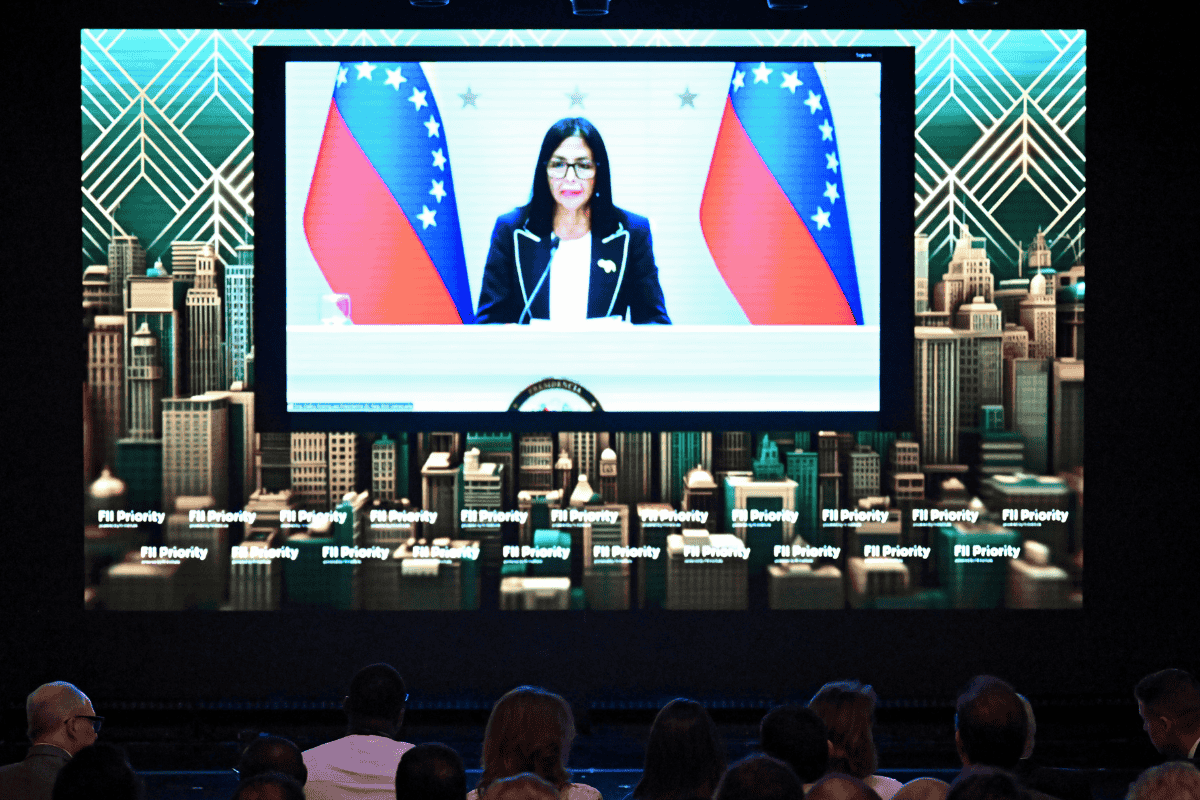
When it comes to turning challenges into opportunities, Venezuela and the new opportunities in its technology sector took center stage. Speaking remotely, Delcy Rodríguez Gómez, Acting President of the Bolivarian Republic of Venezuela, highlighted that the country is welcoming more than 120 energy companies from the United States, the Middle East, Asia, Africa, and Europe amid legal reforms. According to her, Venezuela’s hydrocarbons law and broader legal reforms have been designed to provide the legal certainty investors need.
Another clear area of opportunity is infrastructure. According to experts participating in a panel on the topic, discussions in this sector are focused on the challenges that energy and electricity supply constraints pose for nearshoring, as well as the rapid expansion of industrial infrastructure and data centers. Participants also highlighted the role of tourism, logistics, and cultural infrastructure in generating long-term returns.
In this regard, Manfredi Lefebvre d’Ovidio, Chairman of the World Travel & Tourism Council, emphasized the importance of Miami and investment partnerships for Latin America’s success: “Global public-private collaboration is essential for Latin America’s success, and Miami is proof of that. Most flights from Europeans traveling to Latin America pass through Miami.”