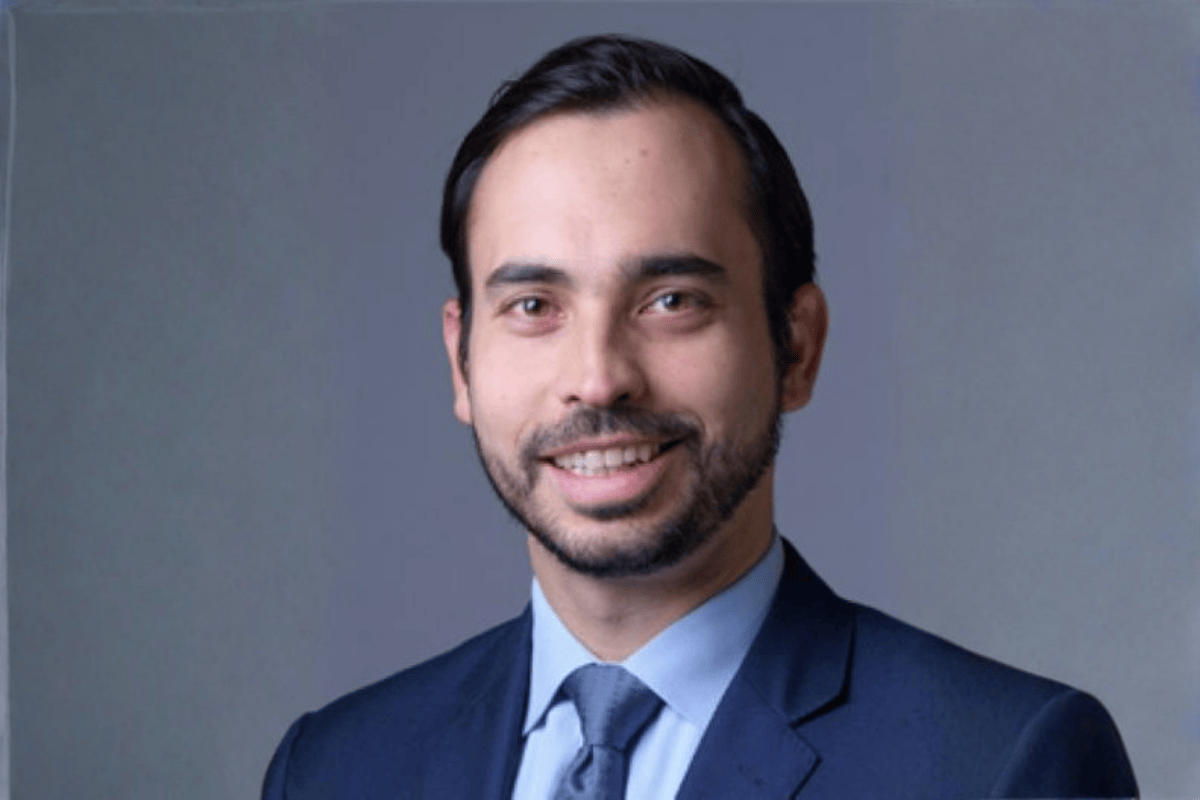
Throughout the day, Shanti Das-Wermes, Portfolio Manager at MFS Investment Management and lead manager of the Prudent Capital Fund, faces numerous reports, headlines, and analyses. As she acknowledges, her trick to isolate herself from the noise is to focus on the numbers, work hard, be willing to learn and change her mind, and to surround herself with people who have strong expertise.
This is her work mantra for managing the Prudent Capital Fund, a multi-asset vehicle with a portfolio concentrated in a variety of fixed income instruments and bonds, and which can invest in cash and derivatives to manage market exposure and downside risk. The strategy invests with a long-term approach, emphasizing absolute value rather than relative value. To discuss how to approach a multi-asset portfolio, the role these types of portfolios play today, and why they have fallen out of favor, we spoke with Das-Wermes in this interview.
What lessons from your professional career do you consider helpful in your role as a fund manager?
I have had several experiences throughout my career. I started in strategy consulting, then worked in private equity, and finally in public markets, from which I have learned to feel comfortable with the idea that you can be wrong. The current context requires us to think in terms of probability and to remain open to changing our minds. Additionally, for me, something consistent and universal has been the value of hard work and continuous learning instilled by my family. Thinking this way and having these values, I believe, is very helpful.
Of course, to this we must add relying on numbers and data to manage any fund. Many times, the market tells us one narrative, but the numbers show us a different one. A clear example of this is artificial intelligence (AI), where the numbers of many companies tell a somewhat different story from what the stock price or the rhetoric or the messages on social media might suggest.
In the current context, we talk about noise, geopolitical risks, stagflation, and even a possible energy or inflation shock. Do you think there is something the market is underestimating?
The structural change that I believe has been underestimated since the end of 2020 is the cost of capital. After all the monetary and fiscal stimulus, I consider this something the global market has underestimated. And this, obviously, led to serious repercussions in asset performance in 2022, when interest rates rose.
Another aspect that I believe is underestimated is the impact of structural changes on valuations. We are in a historical moment where decades seem to pass in just a few years, where all megatrends are moving very fast—technology, demographics, energy, artificial intelligence, wars—yet in some ways the market shows us that valuations imply a high degree of certainty about what may happen. I believe there is a great deal of uncertainty about how these structural changes will impact the economic, political, and market order.
How has the market environment and the way of building portfolios changed with the new interest rate environment and its outlook?
For our multi-asset portfolios, which are capital preservation funds, this has led us to focus on shorter durations in fixed income and to remain focused on companies without leverage and with pricing power in equities. For us, our philosophy of creating value in real terms remains very important, which, put simply, means generating a real return above the inflation rate in order to increase our clients’ purchasing power. To achieve this, we see it as necessary to be dynamic within the portfolio, both when selling assets and when adding new positions.
In the past 12 months, we have seen many launches of fixed income and equity strategies, but not multi-asset products. What can be said in defense of this type of vehicle in the current market context?
I believe the flexibility it offers to move between different asset classes is very relevant, and I say this from experience, not theory. With a multi-asset strategy, we can be much more dynamic and diversified. For example, in our fund, which has no constraints, we can move across markets, countries, or sectors where we see opportunities. Our job is simply to find those opportunities and take them wherever they are. And we do so in a concentrated way, which is very different from a typical multi-asset fund that may hold 300 or 350 stocks. We aim to hold around 20 to 40 positions.
When an investor includes a multi-asset fund in their portfolio, what role are they seeking for that fund within their overall investments?
It depends greatly on the client. Many of our distribution channels, of course, involve intermediaries, and the fund may serve the function of constituting the entire portfolio or, in other cases, be considered a somewhat more conservative position compared, for example, to equity funds that provide much higher beta; sometimes it may even be used to offset a more contrarian position. Without a doubt, this depends heavily on the client profile and the intermediary profile. For our mandate—and I do not think this is necessarily the same for all multi-asset funds—the strategy serves the function of capital preservation across different stages of the cycle.
Among all the assets in your portfolio, where do you currently see the best opportunities?
It is worth noting that the fund is positioned relatively conservatively, as we believe that current valuations imply low or possibly negative future returns. That said, one of our largest positions is in U.S. Treasury bonds, on the short end of the curve, since the base currency is the dollar, but also in mortgage-backed securities and corporate credit. In equities, we are finding opportunities in subsectors related to AI, within this context of winners and losers that has been shaping the sector. We also see other sectors that, cyclically, are in a position favored by AI, where it is interesting to take long-term positions, as well as some cyclical sectors such as chemicals or construction. In defense, we have also maintained our exposure, which began after COVID, particularly on the European side.