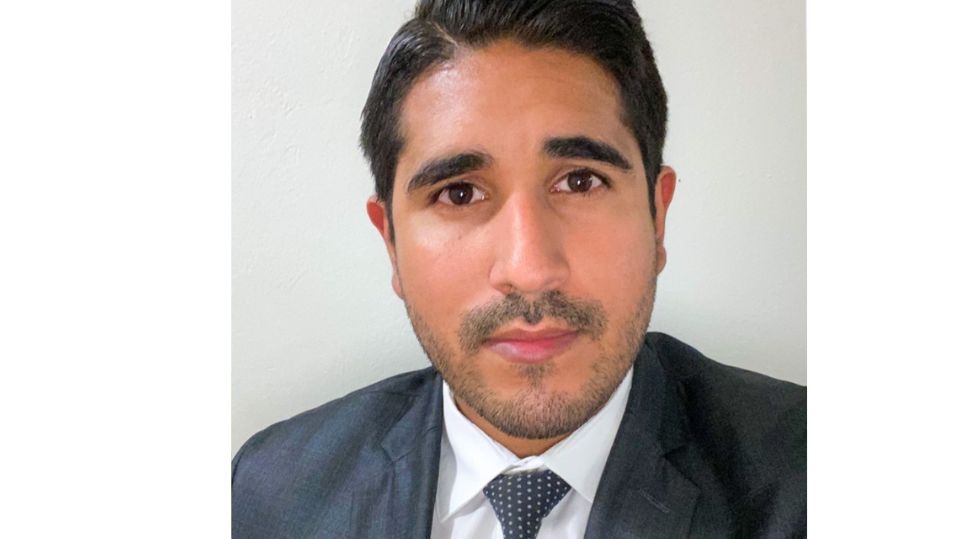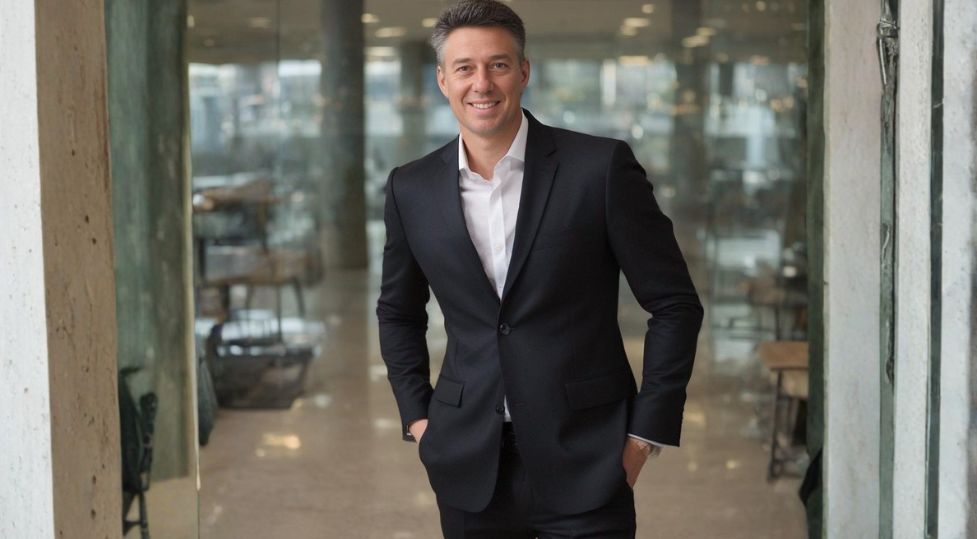
With three decades of experience in the financial industry, Christian Gherardi, Senior Partner & Managing Director at Snowden Lane, is optimistic about the future of the offshore business in the United States, specifically from Miami. In a conversation with Funds Society, he anticipates a growing flow of capital from Latin America into the U.S., driven by the search for stability, access to the dollar, and investment opportunities, especially in a context where major banks have reduced their exposure due to regulatory pressures. He also highlights the strategic positioning of the Coral Gables office as one of the firm’s key hubs.
Gherardi, son of an Italian father and Brazilian mother, has built a career marked by persistence and experience gained through various roles and companies within the financial system. “I started working very young, washing cars door to door when I was nine years old,” he recalls. “I kept doing it until I was twelve. I must have washed hundreds of cars, to the point that after I turned twelve, I never washed another car again in my life,” he jokes.
He later joined the family business during college and took his first steps in financial services as an intern at Merrill Lynch, in what was then a rare commodities office in South Florida.
After a brief stint at a remittance company, Uno Remittance, he joined Citigroup, where he spent 19 years. He later moved to Bulltick, an independent firm with Mexican origins operating in the U.S. and Mexico, before joining Snowden Lane, where he has now spent more than two years as a senior partner and leads his international advisory team.
Cultural Ties as a Foundation for Client Relationships
Gherardi emphasizes the importance of cultural and emotional connections with clients. “I believe it’s very important to have experience in the markets you’re doing business with,” he says. “My mother is Brazilian, my father is Italian, and my three sisters are first-generation Americans.”
He also notes that, although he was educated in the United States, he never lost touch with his roots. “I have many friends and family across South America, particularly in Peru and a few other places. Based on all of that, I’ve gained a lot of experience. I’ve been exposed to these cultures, the languages, the people. And that makes it much easier to do business in markets where you understand the language, the culture, and the people. All of that is very important,” he explains.
Offshore Business in the U.S.: Setback and Opportunity
From his perspective, the U.S. offshore business has gone through several stages. “It went from practically non-existent, to becoming a major market, and then experienced a sharp decline,” he explains. Over the last decade, stricter regulations, fines, and increased compliance demands led many large institutions to scale back or exit the segment.
However, Gherardi believes this retreat created room for specialized firms. “Many institutions were spooked by the risks of doing things improperly. But that doesn’t eliminate the client’s need,” he says. In this sense, he points out that Snowden Lane is well positioned to meet that demand, with a strong structure and a focus on proper advisory.
A key pillar of that strategy is the Coral Gables office, now one of the largest in the firm globally. “Not just in size, but in terms of strategic location,” he emphasizes. Miami, he adds, is the natural entry point for Latin America into the U.S., due to both geographic proximity and cultural and financial ties.
The diversity of the team is another distinctive element. Coral Gables is home to advisors from multiple nationalities, Brazilians, Italians, Venezuelans, Dominicans, Mexicans, and Koreans, among others. This is complemented by the New York office, which also serves as an important hub within the organization. Gherardi tells Funds Society that he is looking to expand his team.
Capital Flows and Macroeconomic Outlook
“I don’t see any short-term possibility of a major repatriation of funds to South America or Latin America. In fact, I believe more money will flow into the U.S. than will leave for those countries,” he states.
Regarding the impact of the macroeconomic context, he acknowledges it constantly influences investment decisions but stresses the importance of avoiding emotional reactions. “The challenge is understanding where we’ll be in six months or a year. If there are no clear signs of a drastic change, the best approach is usually to stay the course,” he explains, recalling how his clients responded in early 2025 to Donald Trump’s tariff policies and their direct market impact.
Gherardi believes learning is a continuous process. In 2025, he learned most about Japan, as many of his clients inquired about the yen. Looking ahead to 2026, he continues to believe that most high-net-worth clients from Latin America, South America, and abroad have confidence in the U.S. and its economy. He envisions a scenario where “there will continue to be a strong influx of money into the U.S., into U.S. investments, U.S. banks, U.S. brokerage firms, and U.S. family offices.” In his view, interest in fixed income, alternatives, and U.S. equities will remain strong. “I believe all those sectors will continue to see high demand,” he adds.
According to Gherardi, last year there were two products that investors asked about, almost for the first time: artificial intelligence and cryptocurrencies. “And they can only really be found here in the U.S.” In his view, “that was a major trend in 2025, and I believe it will remain so in the future. I don’t think that’s going to change in 2026,” he predicts.
The expert also notes that, years ago, no one talked about alternative assets. Today, however, “we see the alternative investment space as very important, as it helps diversify portfolios. It’s critical to diversify any portfolio because diversification reduces risk. But at the same time, you don’t want to diversify so much that you eliminate all risk, because then you don’t make any money either. There’s a fine line between one and the other,” he reflects. “In other words,” he continues, “if you diversify to the point that everything becomes a hedge, you’re essentially flat. You win and lose, win and lose.”
On ETFs, he believes they are “a great opportunity” for clients. “Sometimes, when you invest in managed funds, unfortunately, some of them have very high expense ratios, whereas ETFs have very low expense ratios, and that’s a huge advantage. What’s the point of paying all those fees to professionals who don’t outperform the index?” he asks.
Emotional Discipline and the Value of Advice
Finally, Gherardi underscores the value of professional guidance in times of market volatility. In his experience, clients appreciate having advisors who help them avoid impulsive decisions. “The more emotion is removed from investing, the better the results,” he concludes.