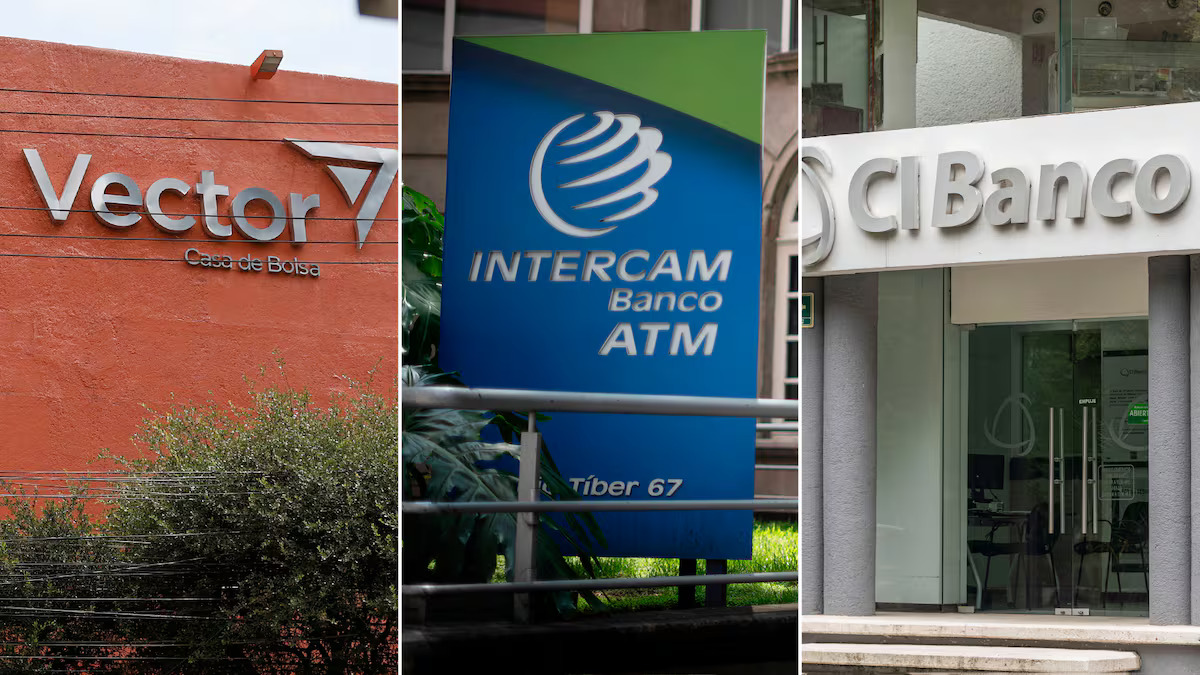
On the morning of June 25, 2025, the Mexican financial system discovered that, in certain circumstances, the difference between an accusation and a sentence can be nothing more than a press release. Unbeknownst to anyone at the time, that day would be etched into the history of the country and of finance in the region, while CI Banco, Vector Casa de Bolsa, and Intercam Banco would never again see another day without the shadow of suspicion hanging over them. It was the beginning of the end.
What happened that day was historic for two reasons:
- It was the first time the United States used the powers granted under legislation stemming from the fight against fentanyl to act directly against Mexican financial institutions.
- Although it was technically not a traditional sanction by the Office of Foreign Assets Control (OFAC), it did impose restrictions on certain transfers and transactions involving the U.S. financial system, which in practice triggered a severe erosion of market confidence.
The fate of the accused institutions had been sealed. There were no handcuffs, raids, or court orders. Nor was there a final ruling from Mexican or U.S. courts. A document issued in Washington by the Financial Crimes Enforcement Network (FinCEN) of the United States Department of the Treasury was enough for three Mexican financial institutions—CI Banco, Intercam, and Vector Casa de Bolsa—to begin the path toward their disappearance as participants in the national financial system.
The accusation was devastating: facilitating money laundering operations linked to fentanyl trafficking and Mexican criminal organizations. The tool used was equally significant. For the first time, Washington invoked powers granted under legislation specifically designed to combat the financing of the synthetic opioid trade.
From that moment on, it no longer mattered whether judicial proceedings had been initiated, whether additional evidence would emerge, or whether the institutions would be able to defend themselves. In financial markets, the presumption of innocence rarely survives the loss of access to the U.S. financial system.
Clients began withdrawing funds, international correspondent banks reviewed business relationships, and counterparties, trustees, investment funds, and service providers activated contingency protocols. The question was no longer whether the three institutions could prove their innocence, but how long they could continue operating under suspicion.
The Mexican government responded by demanding evidence and defending the strength of the national financial system. Authorities insisted there was insufficient evidence to substantiate illicit activities and opted for temporary interventions aimed at preserving stability and protecting clients. But the market had already delivered its own verdict.
Because in global finance, there are institutions too big to fail, but there are also institutions too heavily accused to survive.
One year later, the cases of Vector, Intercam, and CI Banco left an uncomfortable lesson for Mexico and for any economy integrated into the international financial system: the U.S. dollar is not only the world’s reserve currency; it is also a foreign policy instrument and a mechanism of financial discipline capable of crossing borders without the need for judicial rulings.
This story is not merely about three Mexican institutions. It is about the immense power the United States continues to wield over the global financial infrastructure and how, under certain circumstances, an accusation issued from Washington can have deeper and faster consequences than any judicial decision handed down in another country. One year ago, the Department of the Treasury made the accusation, while the market, clients, and counterparties did the rest.
Financial Death
On June 25, 2025, the United States Department of the Treasury reminded the world of a truth that financial markets have known for decades but that is rarely seen so starkly: in global finance, it is possible to survive a bad investment, a liquidity crisis, or even a recession, but it is virtually impossible to survive being shut out of the U.S. financial system.
With the designation by the Financial Crimes Enforcement Network (FinCEN) of Mexico’s CI Banco, Intercam, and Vector Casa de Bolsa as institutions of “primary money laundering concern” in connection with fentanyl trafficking and Mexican criminal organizations, the new powers derived from U.S. legislation specifically designed to combat the financing of the fentanyl trade were officially deployed against financial-sector companies in a partner country.
Formally, it was not a judicial sentence. In practice, it was. Because within the international financial system there exists an unwritten but unmistakable concept: financial death. With the Department of the Treasury’s announcement alone, the fate of CI Banco, Vector, and Intercam had been sealed, and their disappearance became only a matter of time.
Financial death does not mean the immediate closure of offices or the automatic revocation of a banking license. Nor does it require a liquidation order or a final judicial ruling. Instead, it occurs when counterparties stop returning calls, correspondent banks terminate relationships, clients begin withdrawing funds, and the rest of the market decides that the reputational cost of continuing to do business has become too high.
That is exactly what happened. Within hours, questions began coming from institutional clients, trust settlors, exporting companies, fund managers, and corporate treasuries. The issue was not whether the allegations were true or false. The issue was much simpler: what happens if tomorrow this institution loses access to U.S. dollars?
In a globalized financial system, that question alone is enough to trigger a stampede. Mexican authorities responded by defending the strength of the national financial system and demanding that Washington provide concrete evidence supporting its allegations. The official response was clear: if crimes had been committed, Mexico would act, but the accusations had to be supported by verifiable evidence.
However, financial markets rarely wait for the courts. The financial business operates on an extremely scarce commodity: trust.
Trust has one uncomfortable characteristic: it takes decades to build and only hours to disappear. The administrative intervention of the three institutions by Mexican authorities sought to contain systemic risk and protect depositors and investors, while confirming something many market participants understood from the very first day: the problem was no longer legal, but reputational and operational.
Over the following months, there was a slow but steady migration of clients, assets, and business from the accused institutions to other firms in the sector. Deposits declined, business relationships deteriorated, and the dismantling of much of the business the three entities had built over decades began.
The question that remains one year later is an uncomfortable one for Mexico: Can a foreign government effectively destroy Mexican financial institutions without a judgment issued by the country’s own courts? The answer over the past year appears to be yes.
Not because the United States has jurisdiction over Mexico, but because it possesses something arguably even more powerful: control over the world’s reserve currency, the international payments system, and access to the U.S. dollar. For many institutions, being shut out of the U.S. financial system is equivalent to losing access to oxygen.
The paradox is evident. For decades, financial globalization was described as a process of integration and efficiency. The cases of Vector, Intercam, and CI Banco revealed the other side of the phenomenon: the concentration of global financial power in a handful of critical infrastructures controlled directly or indirectly by the United States.
SWIFT, correspondent banking, dollar clearing, and international markets form a network whose main gateway remains in Washington and New York. And whoever controls the gateway largely controls who gets in and who stays out. That is why this case will likely be studied for years in schools of economics, law, and international relations.
Not only because of the money laundering allegations, and not only because of the fight against fentanyl, but because it demonstrated in practical terms the geopolitical reach of the U.S. dollar in the twenty-first century. One year ago, the Department of the Treasury issued an accusation, but the market delivered the sentence—and that may well be the most important lesson of the entire story.