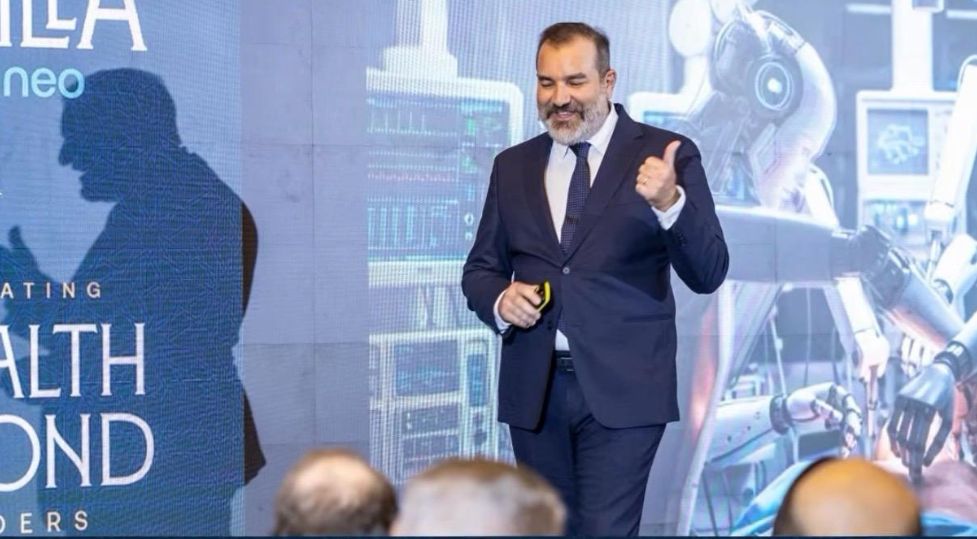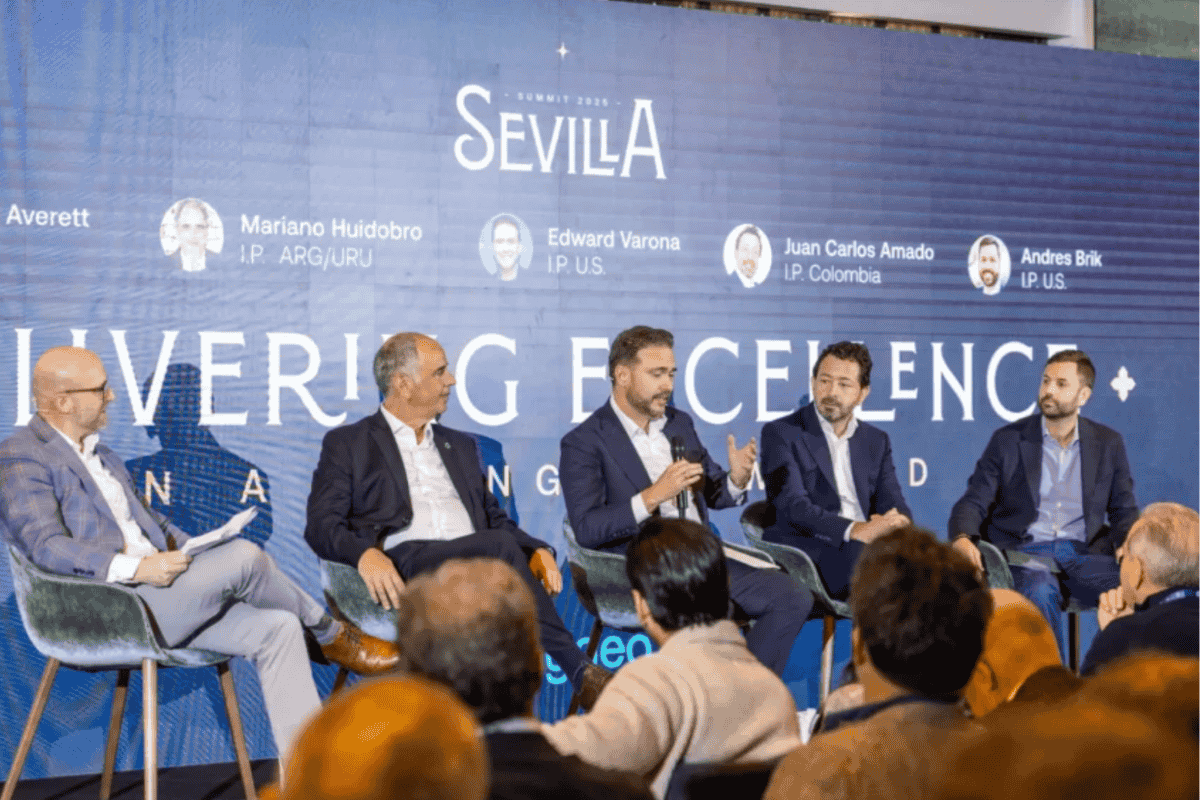
During Insigneo’s triennial event held in Seville in November 2025, several of the firm’s financial advisors shared their vision on how they are guiding their clients through the transition toward advisory services, moving away from the more traditional transactional model common among broker-dealers in the region. Far from framing it as a simple “account change,” the panelists agreed that the shift to the advisory model is driven by a combination of good timing, financial education, transparency, and client connection. Above all, they recognize that this change stems from the advisor’s ability to deliver excellence to their clients.
“For me, in a broad sense, excellence is about giving more of yourself—something similar to what happens in sports. For example, Kobe Bryant used to do something different; he didn’t have extraordinary talent. His team was willing to give more, just like we want to give more to our clients every day, and that’s why I believe excellence is built when no one is watching. Working late nights, training hard, improving 1% in every small thing 1,000 times, it’s a process of hard work, not a single performance. We aspire to excellence as a team, and I believe we have the best team,” said Juan Carlos Amado, Financial Advisor at Insigneo.
In the view of Edward Varona, Insigneo advisor, excellence is achieved by adopting a different mindset. “If we analyze a problem, for example, how to manage volatility, we need to step back and figure out where we might fail so we can avoid it. The key is, if we can prevent volatility by explaining to clients that it’s not about constantly watching the screen, then that kind of proposal and way of thinking will add value,” Varona explained during the panel discussion.
A Transition Built on Experience
Advisors are confident in their ability to provide excellence and added value to clients; now comes the more complex part: transitioning to a model of explicitly paid advisory services. Along this path, one of the concepts most often mentioned by advisors was the use of so-called “natural transition moments.” Situations such as a platform shutting down or structural changes in a firm, for example, the closure of Wells Fargo Advisors, force clients to move their assets. Rather than replicating the old setup, advisors use this moment to reframe the relationship and focus on becoming more efficient and improving client service.
That was the case in the experience shared by Varona, a former Wells Fargo advisor, during the panel. “In my case, I was quite lucky, it was like being in the right place at the right time. We built our business from our branch with a synergy-focused approach and a solid team. So, when the shutdown happened, I almost saw it as my own ‘Liberation Day,’ because I was able to continue working within a model where advisory is a key and integral part of the business and your frontline operations,” Varona recalled.
For Andres Brik, Senior Vice President at Insigneo, the journey was a mix of conviction and passion, culminating in a single proposition: the advisory model. “We like to take the reins of investment, even in more complex assets like alternatives and private markets. I do believe that, as markets evolve, clients need to understand that financial education is extremely important, especially for private assets. This is work we do by combining education, the technology from various providers, and quarterly reviews. The result is that when something happens in the market, like last year’s ‘Liberation Day’, we don’t get calls from clients asking what’s going on, because they know exactly what they have in their portfolios and how those assets behave. They’re fully aware of what they hold,” he explained.
Making the Case to Clients and the Next Generation
When it comes to knowledge, advisors aren’t just referring to how assets or portfolios work, but also to the cost of investment, of advisory services, and the margins involved. As Varona acknowledged, that was one of his strongest arguments when guiding clients through this transition. “I showed clients, openly and transparently, the fees—so they could decide for themselves. We were also lucky because, right in the middle of the transition, we saw that Insigneo’s IMAPS program was available. The other thing we did was, for every new client opening an account, I’d set up a dual scheme: a transactional account and an advisory account. And I’d explain: ‘Look, we have these mutual funds. And math doesn’t lie; it comes down to that, math doesn’t lie. There’s an internal expense ratio. These firms need to keep the lights on, you know. So, if we move from here to here, from this share class to that one, you’re going to save money.’ That’s basically it,” Varona recalled during the event.
Beyond transparency with the client, advisors emphasized that the advisory model is better aligned with today’s expectations, and especially with those of the next generation. “One of the common and key factors is listening to what your client has to say. We have two ears, two eyes, and only one mouth, there’s a reason for that. To connect with the client and understand their needs, you have to listen: what is their body language telling you, what is their attitude saying? It’s essential to earning their trust. And having younger professionals on the team also helps improve that empathy, especially with younger generations,” noted Mariano Huidobro, SVP Financial Advisor at Insigneo, who shared his experience on the panel.
Among other conclusions presented by the advisors regarding the advisory model were the importance of professional and ongoing management, consistency with goals and risk profile, long-term planning, and a clear fee structure, all of which are increasingly valued by heirs and younger clients. These elements become especially relevant when navigating uncertain cycles and environments, as in 2025. In this regard, Amado emphasized that advisors must prepare clients for volatility. “Volatility is the price you pay to stay in the game. But then comes the question of how you can reduce volatility with the range of products we have. And I firmly believe that Insigneo has a platform that gives clients access to an unmatched range of products. For me, private infrastructure plays a very important role in reducing volatility without sacrificing returns, taking fees into account. When you go through those storms with the client, explaining why something is happening now and how their portfolio is positioned for it, and show them that every time we’ve been through this before, the market recovered and so did the portfolio, then the transition becomes much more manageable,” he pointed out.
The Value of Advisory
Up to this point, Insigneo’s advisors are clear on the value they deliver, but as they themselves admit, it’s difficult to price their service. “The transactional part of the business is like a commodity: it’s very hard to prove your value if you’re not adding any. That’s why, among brokers, we do a lot of non-discretionary advisory. But I also think it’s important to move forward and start developing the advisory business. IMAPS is a very good solution because you have the entire senior team, strong performance, and it’s a way to start building an advisory business. Another path is through the technology we have, Orion, which integrates accounts and lets you access other parts of the client’s wealth held on other platforms. That way, you can provide real advisory on their true asset allocation,” concluded Huidobro.