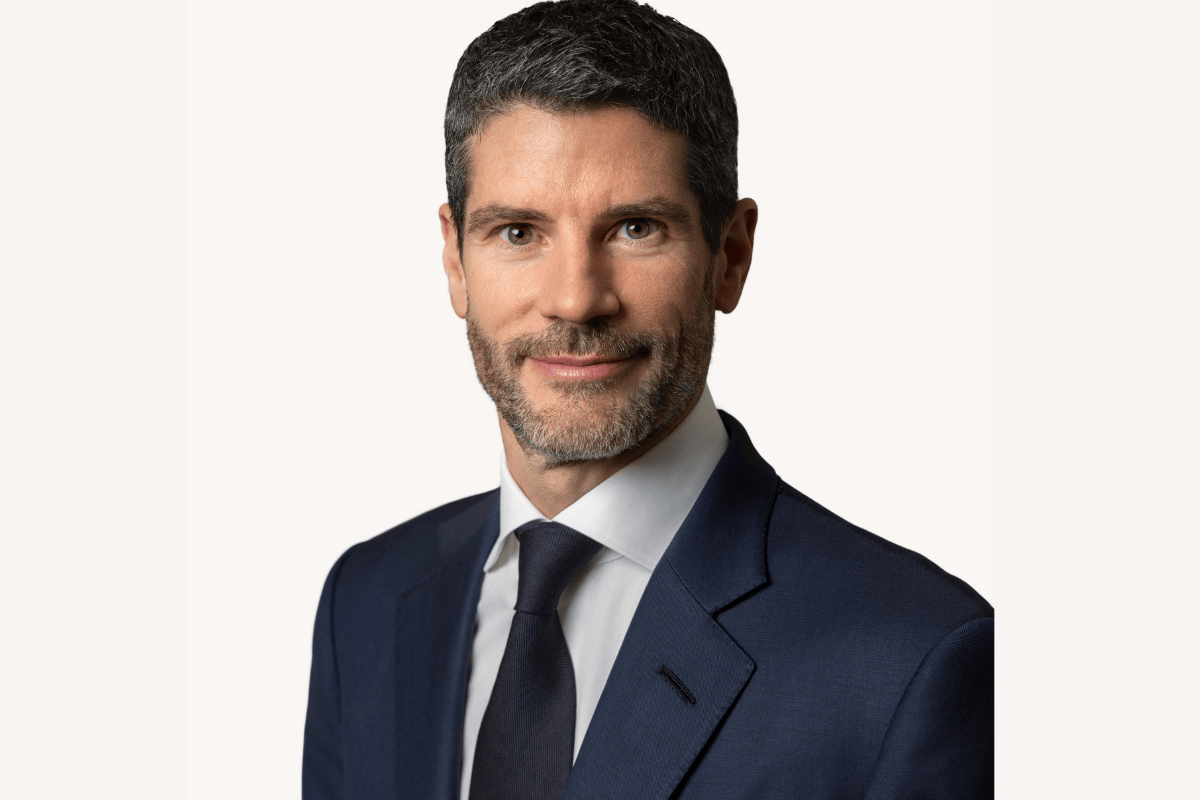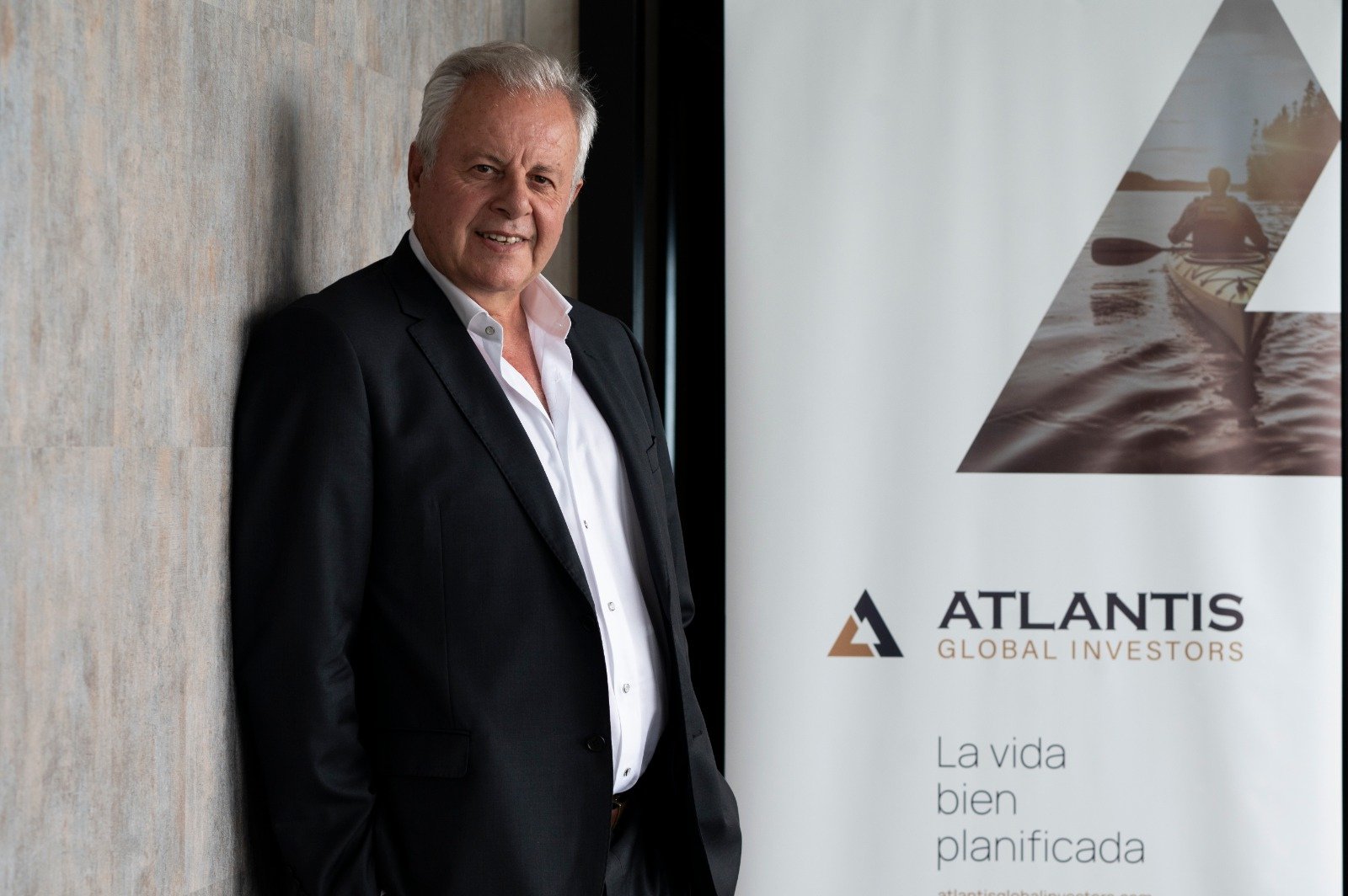
Atlantis Global Investors is one of the wealth management firms that best represents the evolution of Uruguay’s financial industry—through its origins, development, and future objectives. Talking about the independent private banking model is easy now, but when it all started in Montevideo eleven years ago, the path was far from clear. Miguel Libonati can tell the story now that, as he himself says, Atlantis “has moved beyond the survival stage.”
With offices in Montevideo, Asunción, and Miami, Atlantis is regulated by the Central Bank of Uruguay as an investment advisor and has institutional agreements with Morgan Stanley, Insigneo, EFG, Raymond James, Julius Baer, and UBS.
The paragraph above reads quickly, but when in 2014 Miguel Libonati and his son Bruno decided to leave big international banking and launch themselves as independent advisors, the idea was a leap into the void. The year before, Julius Baer had acquired Merrill Lynch’s international business outside the United States, and the deal officially closed in Uruguay on April 1, 2013.
“We saw an opportunity. We thought that merger between Julius Baer and Merrill Lynch was like mixing oil and water: an American bank, a broker, and then a first-rate Swiss institution—conservative, with different principles and standards,” explains Libonati.
To the surprise of the banker, who at the time had 20 years of professional experience in international institutions, several advisory teams wanted to join his venture. It was negotiated that three would leave with the Libonatis, and once that stage was complete, the hard work began to build the company from the ground up.
“It was a tough process: transferring clients, building a company, complying with regulators, with foreign banks, and above all maintaining client portfolios, which are always our fuel. When you move from one bank to another—which I did several times in my career—you only need to worry about your clients. This was something else; there were people who had followed us, who took a leap of faith because they trusted us,” explains the founder of Atlantis.
The initial process lasted four years, during which they built the entire framework of a financial firm offering global asset management: “We were already working in Argentina, we had hired more people—it wasn’t just about building and surviving anymore, we could start the development phase.”
Currently, Atlantis is a consolidated company growing at a rate of 10% annually, with 40% of clients from Uruguay and 60% from other countries in the region, especially Argentina. The development stage’s main challenge was the opening of an office in Miami—a Registered Investment Advisor (RIA) called Innova Advisors, which is now operating at full capacity.
“I’d like to mention my two sons, Bruno and Stefano, who are part of the company and have been a fundamental pillar of our development—the first from the beginning as a founder, and Stefano for the past three years. I’d also like to mention the company’s team, who have been a key factor in our growth,” says Libonati.
Reborn on December 15
Miguel Libonati is a textbook Uruguayan: born in Salto 65 years ago, a die-hard Peñarol fan, an affable man, unpretentious and genuine, who uses formal address and always prioritizes decorum. His account of the creation of Atlantis is inseparable from one date—December 15, 2015—the year he was, as he puts it, “reborn.”
It was a time full of adrenaline and stress, of being extremely focused, and one night Libonati literally collapsed to the ground from an ailment he didn’t immediately recognize. The next morning, feeling better, he went to the office.
“I’m here on borrowed time, on borrowed time, on borrowed time,” he says. “At the office I signed some checks and decided to stop by the emergency room, where they ran the first tests and sent me straight to the operating room. Then the doctor told me to change my date of birth,” he adds.
As he recounts how he decided to go finish having a heart attack after stopping by the office, Ana Inés Gómez, General Manager of Atlantis, nods with a face that says “that’s exactly how it happened because I lived it”: Libonati is the kind of person who, literally, would rather die than leave his checks unsigned.
Ana Inés Gómez has been part of Atlantis’s independent adventure from the start: “Today, we have an undeniable track record. We are proud to be one of the few companies that trains its staff, its assistants. We hire young people who are not necessarily from the financial sector—they might be economists, but they don’t have to know the business. For us, their first year is an investment in their training, something that has brought some disappointments because people do leave, but also the reward of building a culture of excellence.”
Investing in the Real Economy, Dreaming Big for Uruguay
How does the founder define Atlantis today? Libonati circles around the question, preferring to avoid the label “global private banking,” which he considers overused: “We are a wealth management office that seeks excellence. And I don’t think that’s a tired phrase—we’ve truly survived all these years and created a brand in the shadow of the giants. So much so that we’ve received countless acquisition offers.”
The future involves consolidating the business in the United States, maintaining a good growth rate, and embracing innovations such as artificial intelligence.
But Libonati’s ambition goes far beyond that: “We are investing in the real economy; we are looking for those projects.”
The founders of Atlantis are considering creating an office to serve ultra-high-net-worth clients: “There is no institution of that kind in Uruguay. That’s where we should create a project that allows us to serve clients with accounts exceeding five million dollars—something in the family office segment.”
Miguel Libonati thinks big, believes in Uruguay’s potential, and wants to place it among the ranks of developed countries. He envisions the future by participating in and promoting the country’s economic and business fabric, driving innovation.
“I see progress, developments like artificial intelligence, and I’m not an alarmist—I never think everything will get worse, or that, for example, machines will replace us. I firmly believe that everything is moving toward improvement.”

 By Fórmate a Fondo